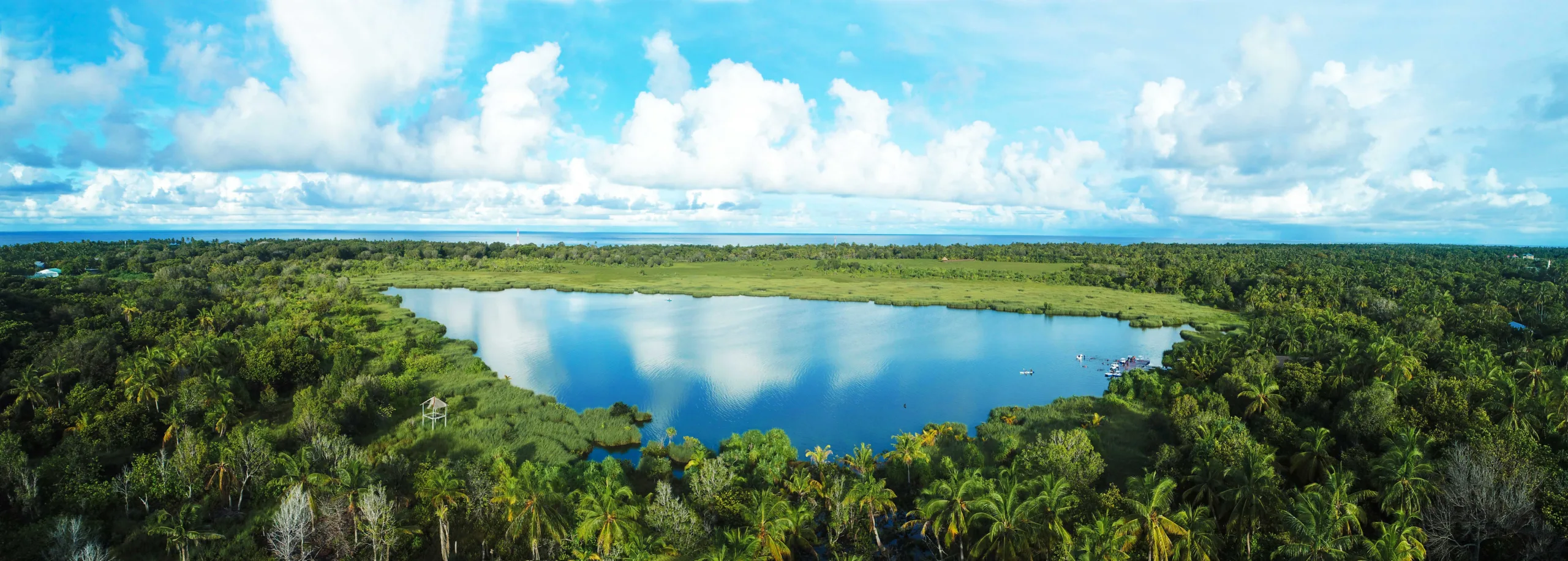
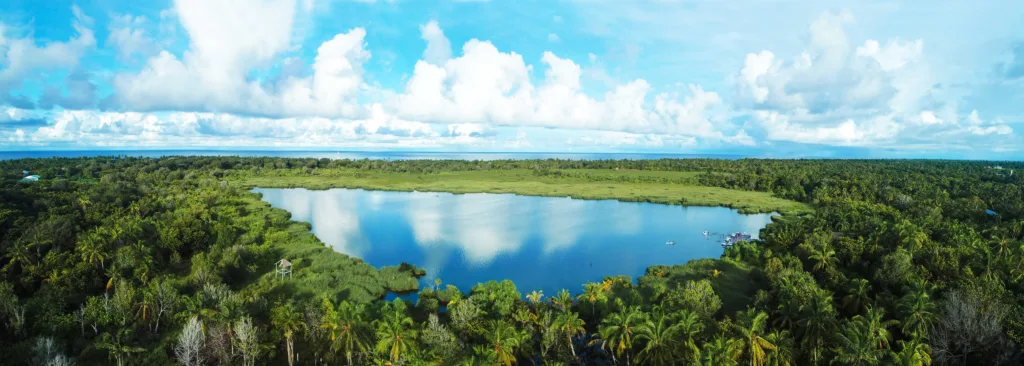
In the Maldives, land is a precious and fleeting resource. While the world’s eyes are often fixed on our vibrant coral reefs, a different kind of guardian watches over our shores. These are the mangroves—locally known as “kulhi” or “chasbin”—tangled, salt-tolerant forests that bridge the gap between the island’s interior and the unforgiving Indian Ocean.
A Masterclass in Adaptation
Surviving in the intertidal zone requires a unique biological toolkit. Maldivian mangroves are masters of extreme environments, coping with high salinity and oxygen-poor soils. Species like the Small-leafed Orange Mangrove (Bruguiera cylindrica) utilize specialized “breathing roots” (pneumatophores) that rise from the mud like wooden fingers to capture oxygen.
Meanwhile, the Red Mangrove (Rhizophora mucronata) anchors itself with massive stilt roots. These roots do more than stabilize the tree; they create a submerged labyrinth that serves as a vital nursery for juvenile Black-tip Reef Sharks and various herbivorous fish.
The Archipelago’s Silent Sentinel
These forests are a primary line of defense against natural disasters. During the 2004 tsunami, islands with intact mangrove systems, such as Kendhikulhudhoo, experienced significantly less destruction as the forests absorbed the lethal energy of the waves. Beyond protection, they are historical lifesavers; the fruit of the B. cylindrica (locally called “Kan’doo”) provided essential food security during the national famine of World War II.
Biodiversity at a Glance
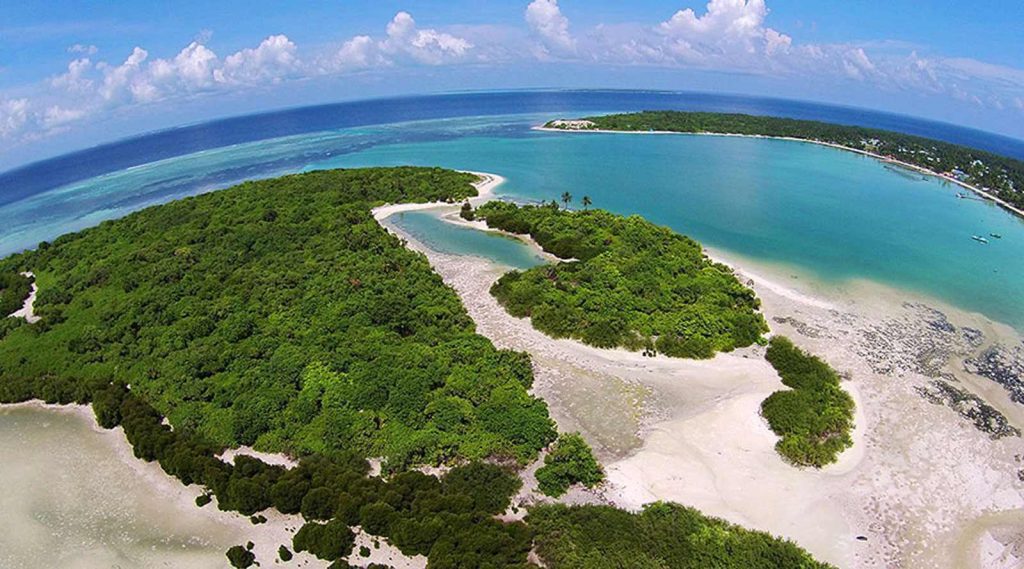
While mangroves are found on 108 Maldivian islands, they are most diverse in the northern atolls. Among the 14 documented species, the “Eye of the Crocodile” (Bruguiera hainesii) stands out as a global rarity—a critically endangered hybrid found on the island of Kelaa.
Technical Reference: Species of the Maldives
For your records or a technical sidebar, here is the full species list documented in Maldivian waters:
| Species Name (Dhivehi / Scientific) | Classification | Species Name (Dhivehi / Scientific) | Classification |
| 1. Baru (Avicennia marina) | True Mangrove | 2. Kan’doo (Bruguiera cylindrica) | True Mangrove |
| 3. Bodukandoo (Bruguiera gymnorrhiza) | True Mangrove | 4. Kelavaki (Bruguiera hainesii) | True Mangrove (CR) |
| 5. Bodavaki (Bruguiera sexangula) | True Mangrove | 6. Karamana (Ceriops tagal) | True Mangrove |
| 7. Burevi (Lumnitzera racemosa) | True Mangrove | 8. Thakafathi (Rhizophora apiculata) | True Mangrove |
| 9. Ran’doo (Rhizophora mucronata) | True Mangrove | 10. Kuhlhavah (Sonneratia caseolaris) | True Mangrove |
| 11. Marugas (Xylocarpus moluccensis) | True Mangrove | 12. Thela (Excoecaria agallocha) | Controversial |
| 13. Kaharuvah (Heritiera littoralis) | Controversial | 14. Kuredhi (Pemphis acidula) | Controversial |
A Note on Controversial Species
In the world of Maldivian biodiversity, not all mangroves are classified the same way. While our directory lists 14 species, you will notice that Thela (Excoecaria agallocha), Kaharuvah (Heritiera littoralis), and Kuredhi (Pemphis acidula) are labeled as “Controversial”.
This classification arises because these three species are considered “mangrove associates” rather than “true mangroves”. Unlike true mangroves, which grow exclusively in intertidal saltwater and possess specialized adaptations like breathing roots (pneumatophores) or salt-secreting glands, controversial species are far more versatile. They are perfectly adapted to the swampy “kulhi” environment but are also capable of thriving on rocky shorelines or further inland where the soil is drier and salt levels are lower. Regardless of their official label, they remain vital guardians of our island ecology, providing structural stability and habitat for local wildlife.