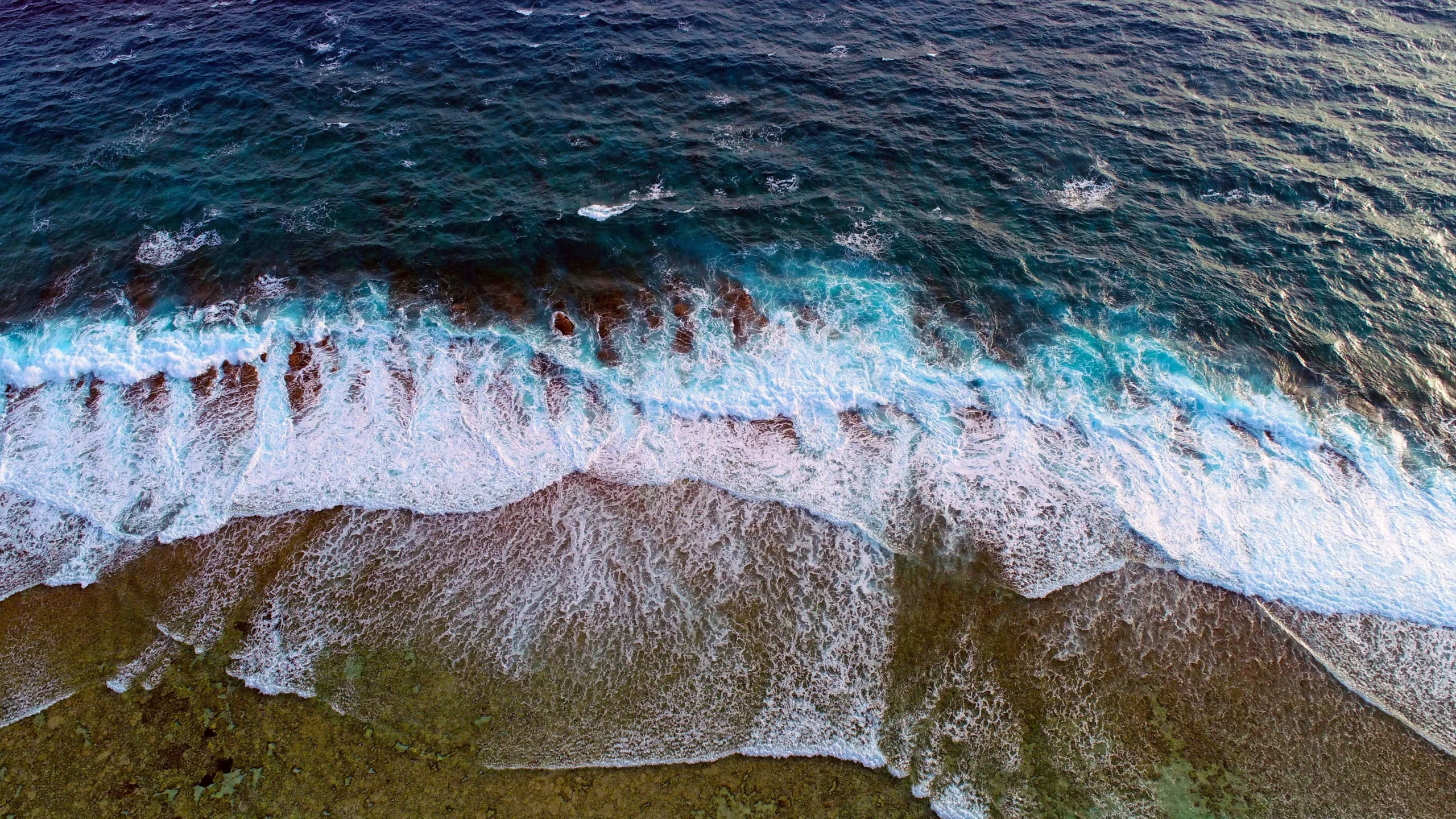
We were born on small islands where the vast ocean seems to cover everything. But beyond the deep blue of the open sea lies a vibrant and vital “system” that encircles our shores. For generations, this faru has been the lifeblood of our islands, providing the fish that sustain our everyday lives. It is a world as complex and fascinating as it is dangerous; on islands that lack lagoons, the people have always relied on these vast reef systems to hunt and survive.
In the Maldives, the reef has never been just a natural feature at the edge of an island. It is a living threshold—a space where people move, work, and live. While the world may see these reefs as pristine wilderness, for Maldivians, they are the nation’s original workshops.
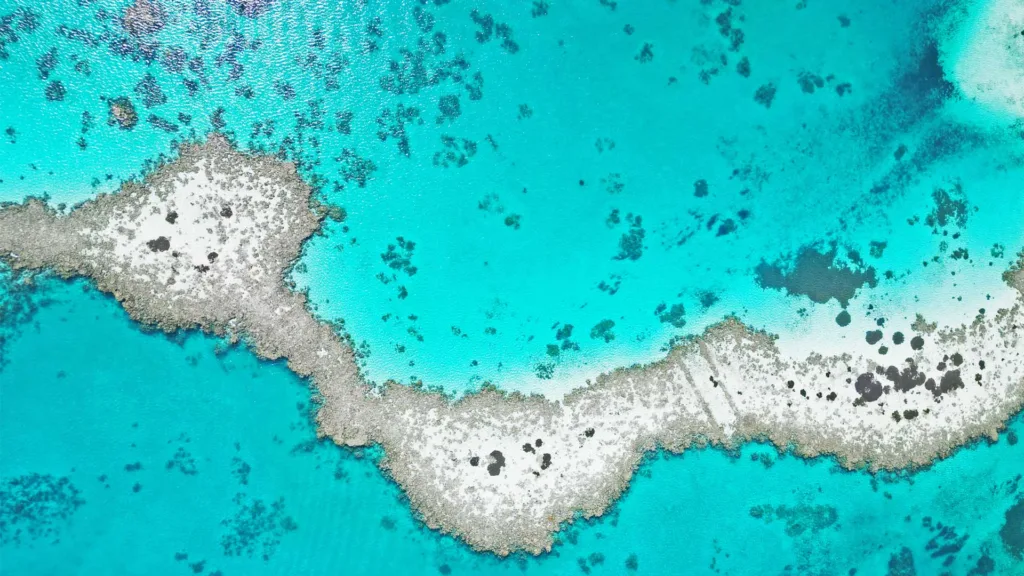
Literally, the word Faru (ފަރު) translates to “reef” or “wall,” acting as a sturdy, protective barrier against the power of the open ocean. Geographically, it describes a faro—a large, ring-shaped reef system common within Maldivian atolls that often possesses its own central lagoon. Rising from the depths to the surface, a Faru serves as a “living threshold” and a critical stage in the archipelago’s formation; it is a stable limestone foundation upon which islands are born and where the nation’s original workshops of fishing and tradition have thrived for over a millennium.
The Architecture of a Workspace
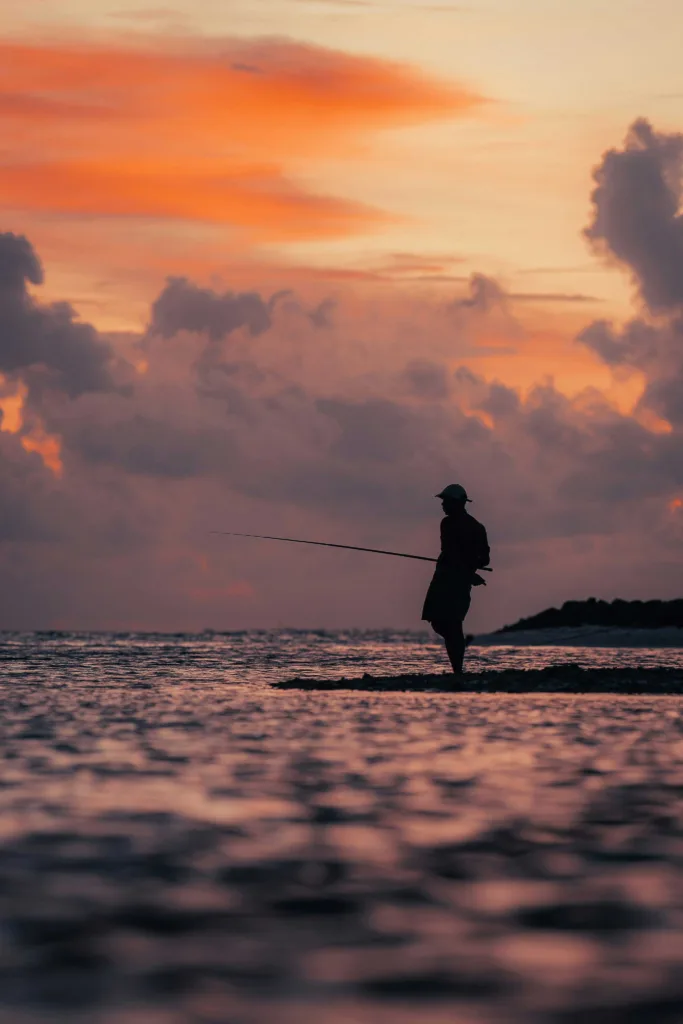
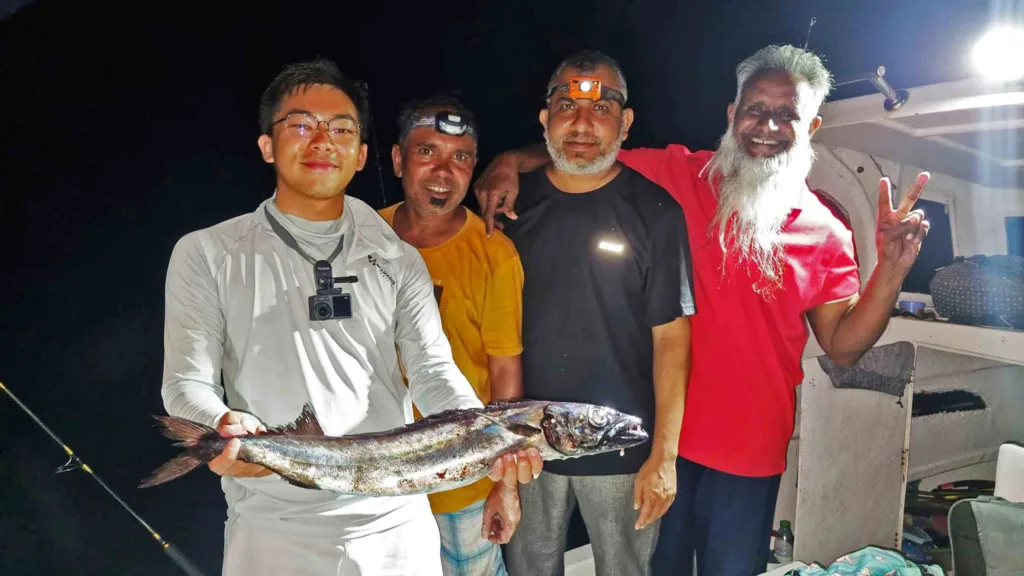
For over a millennium, fishing on the faru has been a rhythmic, expected part of island life. On islands like Fuvahmulah, which lack the sheltered lagoons typical of other atolls, the reef is the primary stage for daily labor. Here, the open ocean meets the land directly, making the faru the frontline of survival.
This “pedestrian fishery” is an intimate art. Islanders traditionally walk onto the reef flats at hiki dhiya (low tide), using the coral structure itself as a bridge to reach the “drop-off” where life is densest. In a nation where 99% of the territory is water, the faru provided the only stable ground for gathering food without a vessel. It is a workspace built on a staggering foundation; Maldivian reefs represent roughly 3.14% of the world’s total coral area, sitting atop limestone structures that are, in some areas, over 3,000 meters thick.
The Geography of Risk
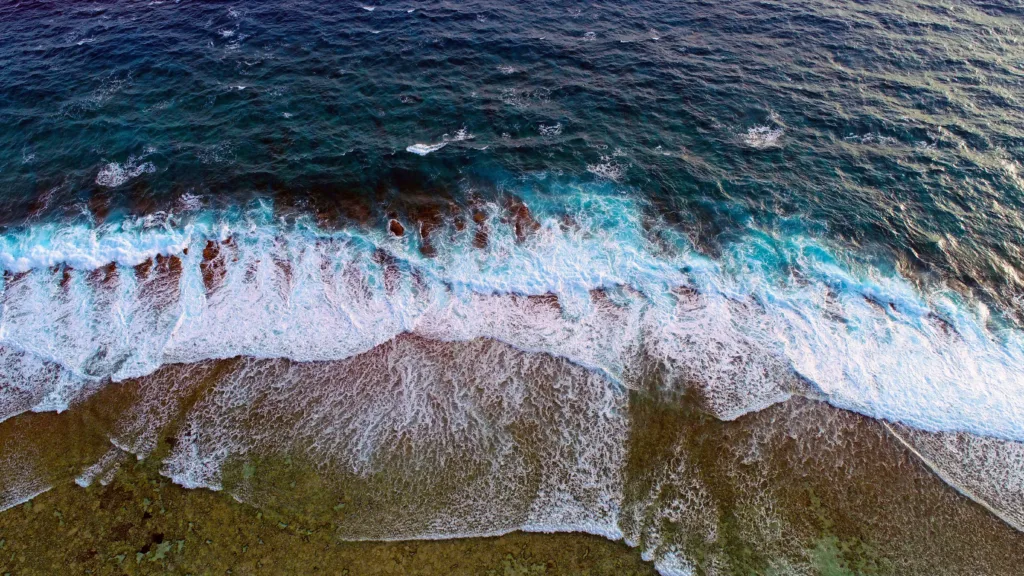
To work the faru is to engage in a constant dance with physics. The reef is an unforgiving environment, an obstacle course of sharp stony corals and sudden swells. Knowledge of tides, weather, and safe footing was never learned from a book; it was passed down through experience, shaped by the soles of the feet and the sharp eyes of elders.
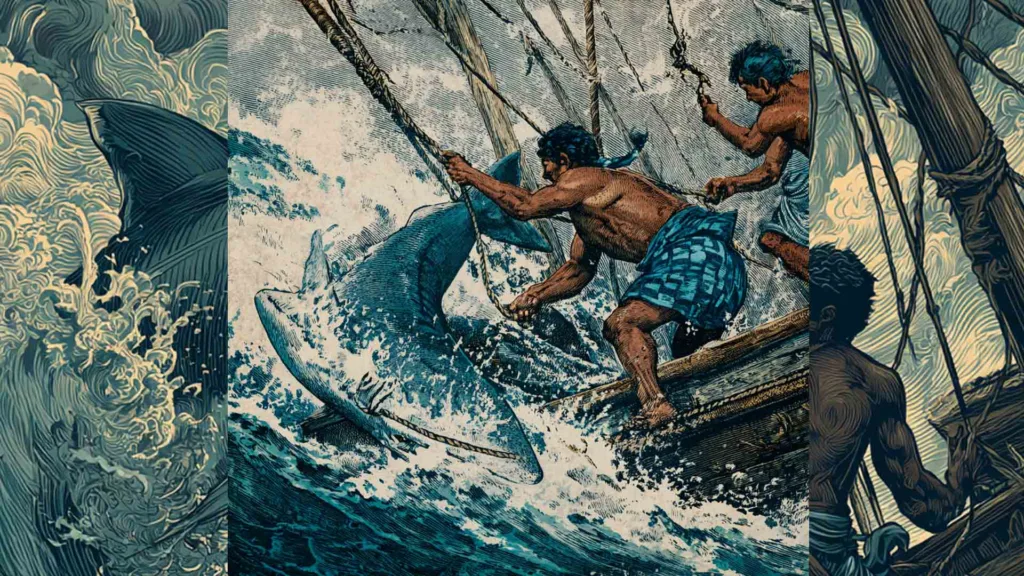
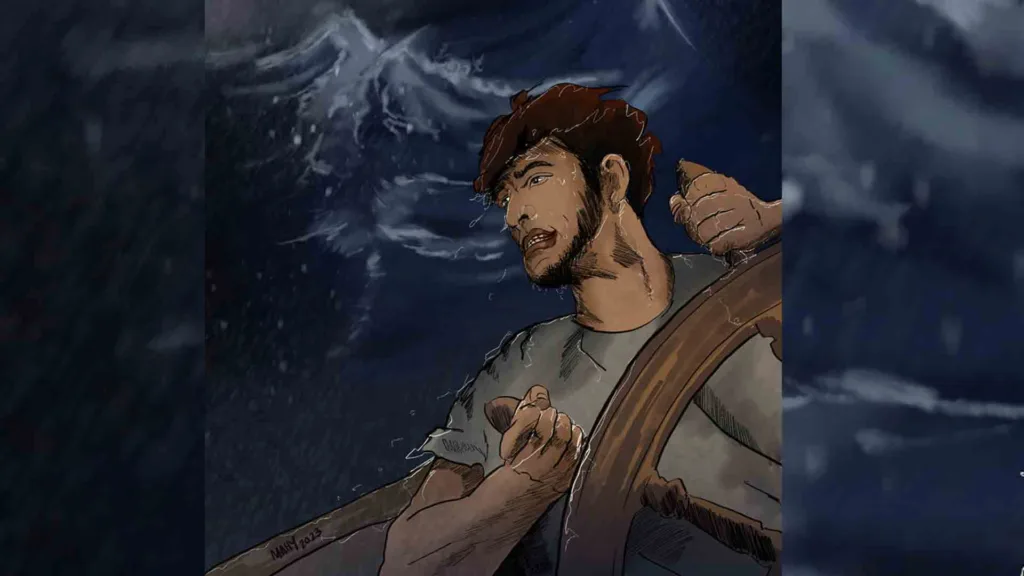
The dangers are both physical and atmospheric. A sudden surge can sweep a fisherman off the reef edge into the maakan’du (the deep blue) in seconds. This risk also gave rise to a deep oral tradition and a reliance on fanditha—traditional knowledge and rituals used to ensure a successful catch and a safe return.
Soundscapes and Spirits
The faru also occupies a powerful place in belief and imagination. It is never silent; it speaks through the roar of waves crashing through coral gaps and the haunting echoes carried by the wind. In Maldivian folklore, this auditory chaos marks the thinning of the veil between worlds.
Many stories place spirits—the dhevi and fereytha—at the reef edge, where land and sea meet. The sounds of the reef were rarely seen as mere noise; they were a language of warning and presence. The kandu fureytha, or reef monsters, are said to emerge from these waters, crude monsters that embody the ocean’s untamable power.
A Threshold, Not a Boundary
Ultimately, the reef is best understood as a threshold. It is the point where labor, risk, sound, and belief converge. Fishing there required more than just a net; it required a profound respect for forces beyond human control.
This relationship explains why reef fishing has remained a continuous thread in Maldivian life. It was not a desperate measure, but a sophisticated partnership with the sea—one that balanced the harvest of over 1,100 species of fish with the spiritual and physical demands of the “living workspace.” On islands like Fuvahmulah, the faru remains the heart of the island—where generations have worked, listened, feared, and fished, day after day.