For a few days each year, the Maldives shifts from resort paradise to something more personal — a nation celebrating together.
Just after sunrise, the streets begin to fill.
On small islands across the Maldives, families walk toward morning Eid prayers dressed in freshly pressed white shirts, embroidered dresses and sandals still dusty from coral roads. Children run ahead of their parents carrying balloons and packets of sweets. Near the harbor, fishing boats sit unusually still.
For visitors used to seeing the Maldives through resort brochures and drone videos, Eid Al-Adha offers a completely different picture of the country — one shaped less by tourism and more by community life.
Locally known as Bodu Eid, or “Big Eid,” the holiday is among the most important dates in the Maldivian calendar. Across the islands, schools close, ferries fill with families returning home and kitchens stay busy from morning until late at night.
A Different Rhythm Across the Islands
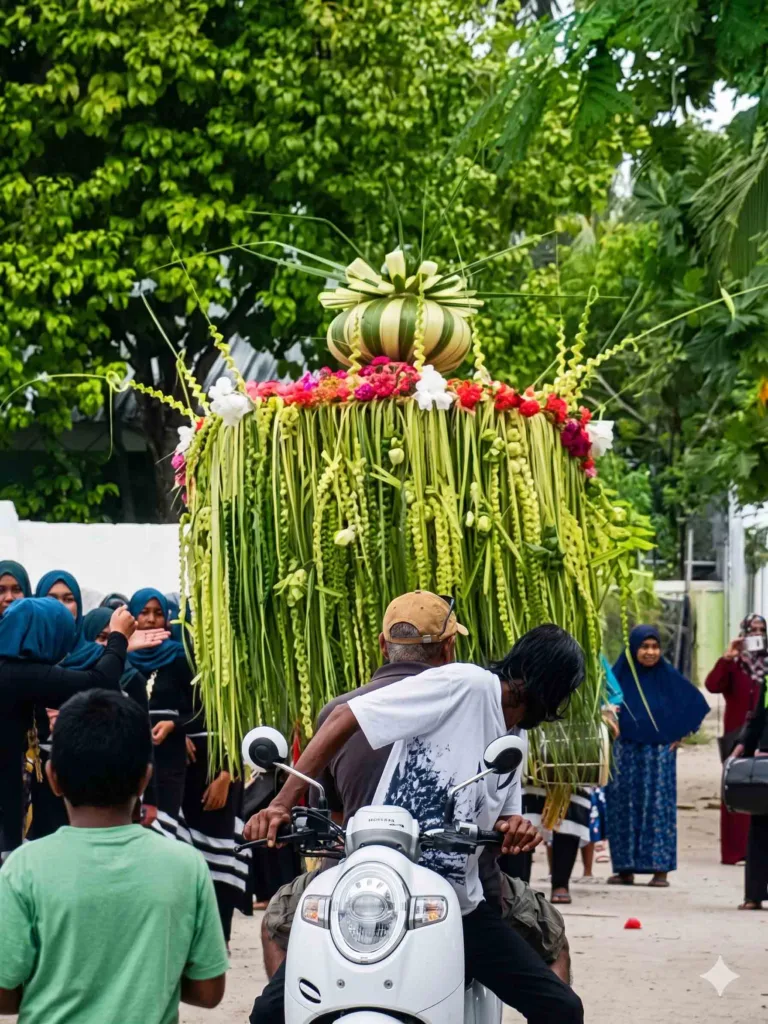
The Maldives moves differently during Eid.
In Malé, cafés stay crowded long after midnight in the days leading up to the celebration. On smaller islands, temporary lights appear near football grounds and harbor fronts where evening events will later take place. Shops stock up on soft drinks, snacks and children’s toys. Tailors work late finishing Eid clothes before the holiday begins.
Then comes the quiet of Eid morning.
After prayers, people begin visiting relatives almost immediately. Homes remain open throughout the day as neighbors move in and out carrying plates of food. It is common to be invited inside even as a first-time visitor.
For travelers staying on local islands, this is often the moment when the Maldives feels least like a tourism destination.
The Tradition of Sharing
At the center of Eid Al-Adha is sacrifice and generosity.
Families prepare meals not only for relatives, but also for neighbors and anyone who may need support. Food is shared constantly throughout the day — grilled meat, rice dishes, sweet snacks and cups of black tea poured one after another.
The atmosphere is relaxed and social. Conversations stretch across verandas while children move between houses with groups of friends. Elderly men gather near shaded cafés discussing island news and ferry schedules.
There is celebration everywhere, but rarely in a loud or extravagant way.
Food That Defines the Holiday
No Eid in the Maldives happens without food.
In many homes, the kitchen becomes the busiest room in the house. Coconut, curry leaves, tuna, rice and chili remain at the center of Maldivian cooking, even during major holidays.
Guests might be served kulhi boakibaa, a dense spicy fish cake usually sliced into squares, alongside sweet milk tea. On some islands, families prepare large rice dishes for extended relatives arriving throughout the afternoon. Children wait for desserts and packaged sweets handed out during visits.
What stands out is not luxury, but generosity. Nobody arrives empty-handed and nobody leaves hungry.
When Boduberu Starts
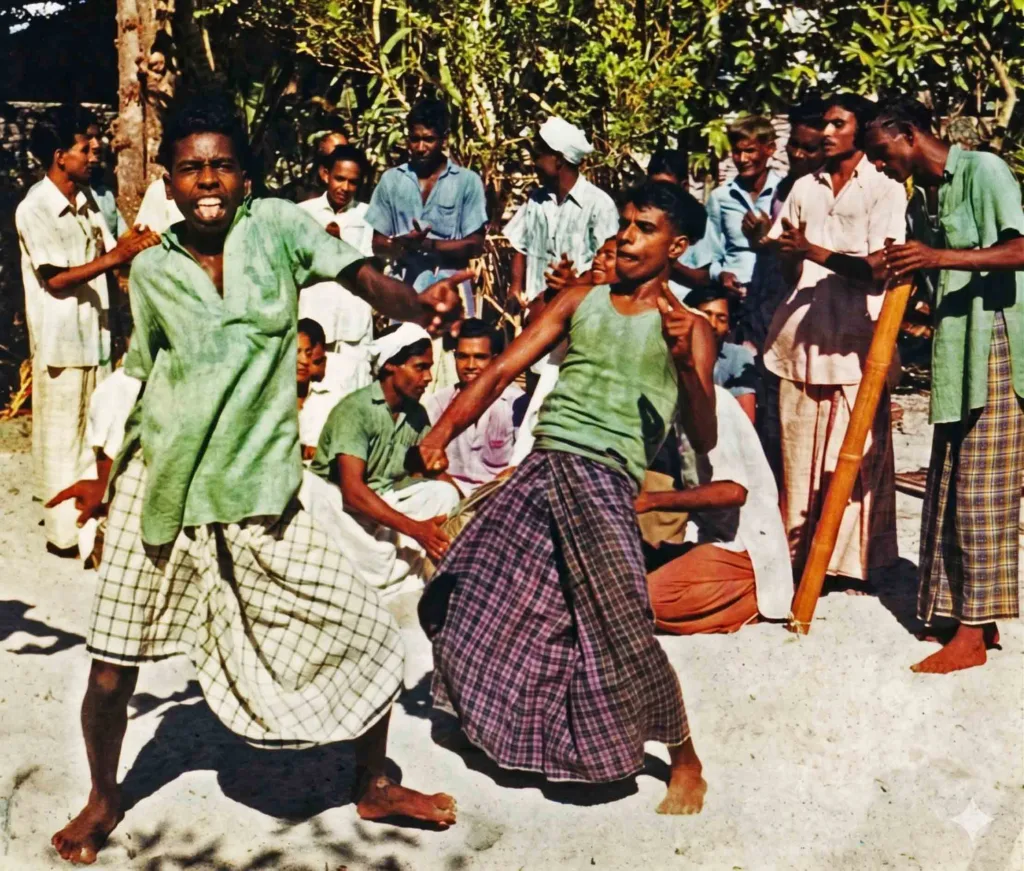
By evening, the islands sound different.
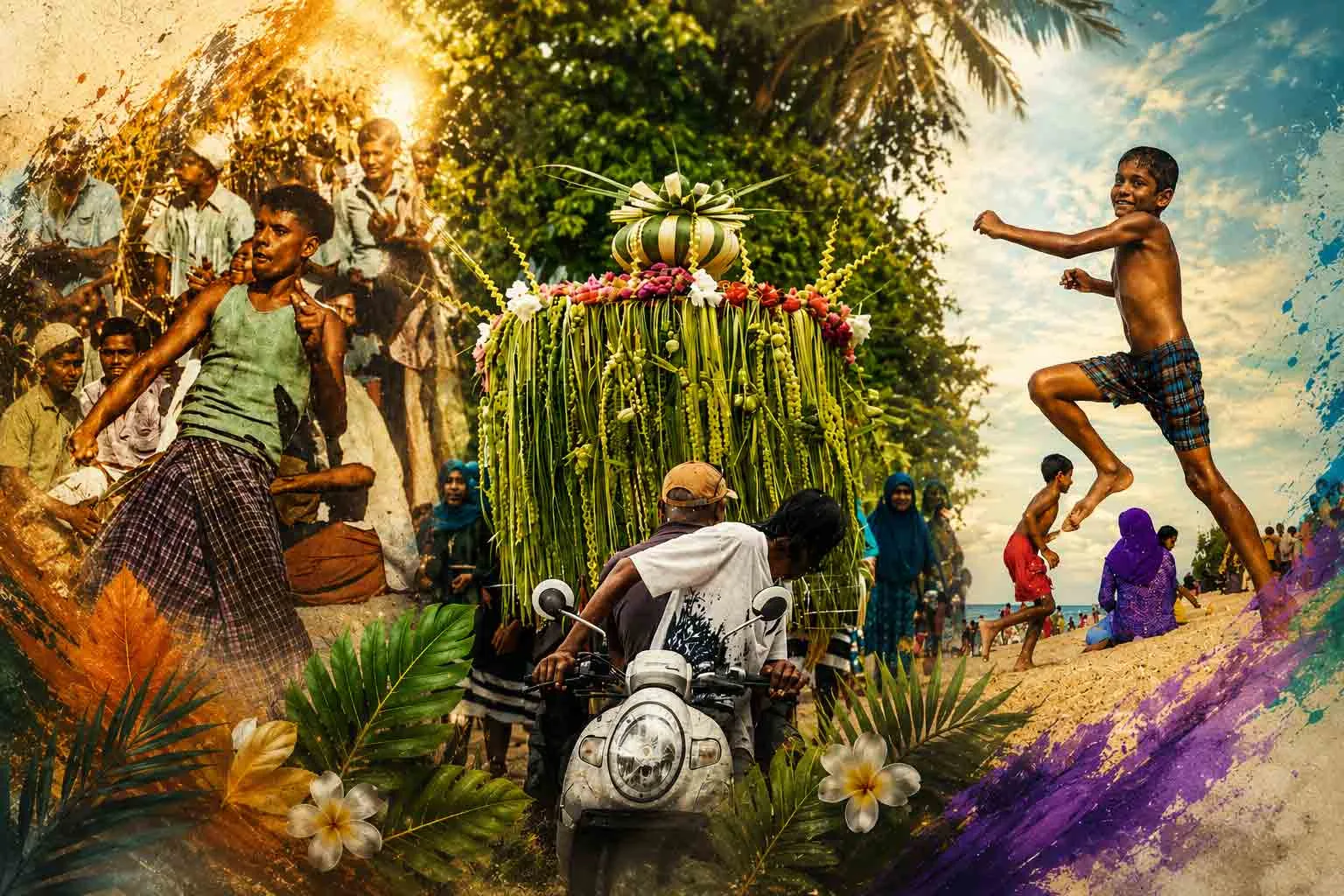
The steady rhythm of Boduberu drums begins near beaches, cafés and open grounds. Teenagers gather in groups while younger children weave through the crowds carrying glow sticks and ice cream. In some islands, live music and cultural performances continue well past midnight.
Along the waterfront, families sit together in the sea breeze watching the celebrations unfold.
For international visitors, these moments can feel surprisingly intimate. The Maldives seen during Eid is not curated for tourists. It feels local, spontaneous and real.
Beyond the Resort Image
Most travelers arrive in the Maldives expecting silence, privacy and overwater villas.
Eid reveals something else entirely: a country built around close communities spread across nearly 200 inhabited islands. Away from resort compounds, daily life revolves around neighborhood cafés, fishing harbors, evening gatherings and inter-island family ties woven across the atolls.
That sense of closeness becomes most visible during Eid Al-Adha.
And for travelers lucky enough to experience it, the holiday offers something increasingly rare in modern travel — the chance to see the Maldives not as a backdrop, but as a living culture.
Memories of Eid in Fuvahmulah
When we were young boys in the 1980s, Eid mornings in Fuvahmulah had their own rhythm.
After Eid prayers, many of us from our district gathered along Finivaamagu road. One of my clearest memories is rushing around with friends collecting areca nut, betel leaf and the other ingredients people used for chewing. We carried them in tiny hand-sewn cloth bags, small enough to fit in our palms. We called those little bags goani.
Once everyone had filled their bags, we would run toward the Dhadimago Fanno area near the shoreline. By then, the entire district seemed to be there. Families gathered in large groups while cultural games and community events unfolded near the beach.
Back then, the roads were still unpaved. But the island carried a kind of calm that is difficult to describe now — a sense of peace, familiarity and togetherness. During Eid, that feeling became even stronger. The celebrations were simple, but the whole island felt connected.
What I remember most is not a single event, but the atmosphere itself: the laughter on dusty roads, the sea breeze moving through coconut trees and the feeling that Eid belonged to everyone.