Exploring the wetlands, fruit-bearing trees and childhood memories that connect people to the land.
The Maldives is made up of countless islands, each surrounded by the vast Indian Ocean. The waters around them are rich in marine life, with remarkable biodiversity and fascinating ecosystems, from shallow shores to the deep ocean. Whether we row our small bokkuras out for fishing, travel across the open sea or dive beneath the waves, we are constantly reminded of the beauty and wonders of our ocean.
Yet, on some islands, there is just as much to discover on land. Fuvahmulah is one such place.
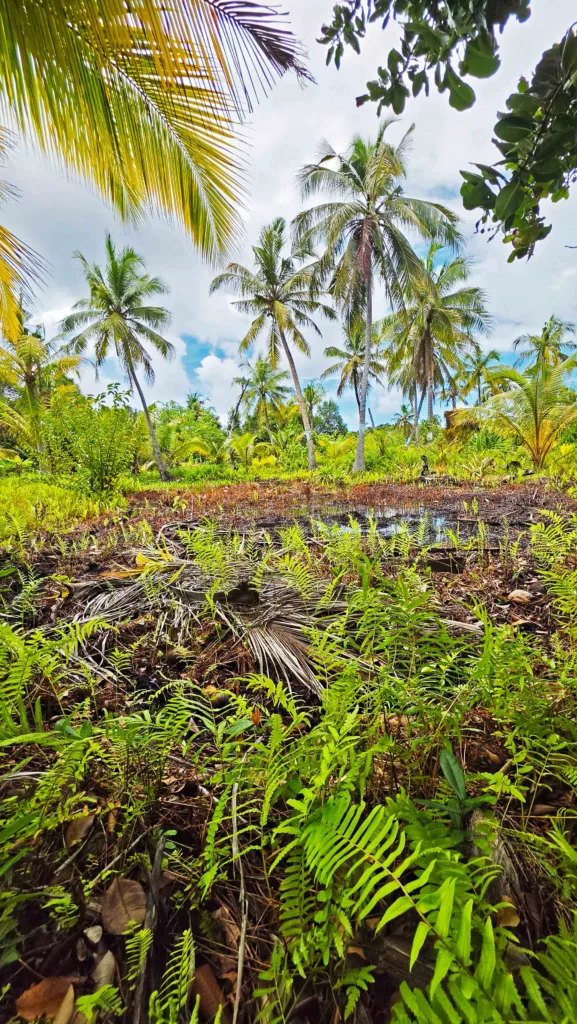
When we were children, our mornings often began with the calls and songs of birds in our backyards. Our homes stood close to the island’s wetlands, where birds found food and shelter among the trees and other vegetation. Their songs were part of our everyday lives, bringing a sense of peace to our surroundings. The land offered us its own gifts, too, with fruits growing among the greenery.
Among the familiar plants of Fuvahmulah were pond apple trees and pineapples. As children, we often visited the kilhi, the island’s freshwater lakes. We walked along narrow paths through ferns, Indian almond trees and screw pines, exploring the green landscape around us.
Pond apple trees were a familiar sight in many parts of the island. They grew in wetland areas, among taro fields and on other stretches of land. Their presence across these different landscapes is part of what makes Fuvahmulah so interesting. The island’s vegetation is not confined to the edges of its freshwater lakes. It extends across the land, blending with the places where people live, grow crops and go about their daily lives.
These childhood walks brought us closer to the natural world around us. The birds, trees, wetlands and fruit-bearing plants were not distant wonders to be discovered on a special trip. They were simply part of growing up on the island.
The Pond Apple, a Familiar Tree of Fuvahmulah
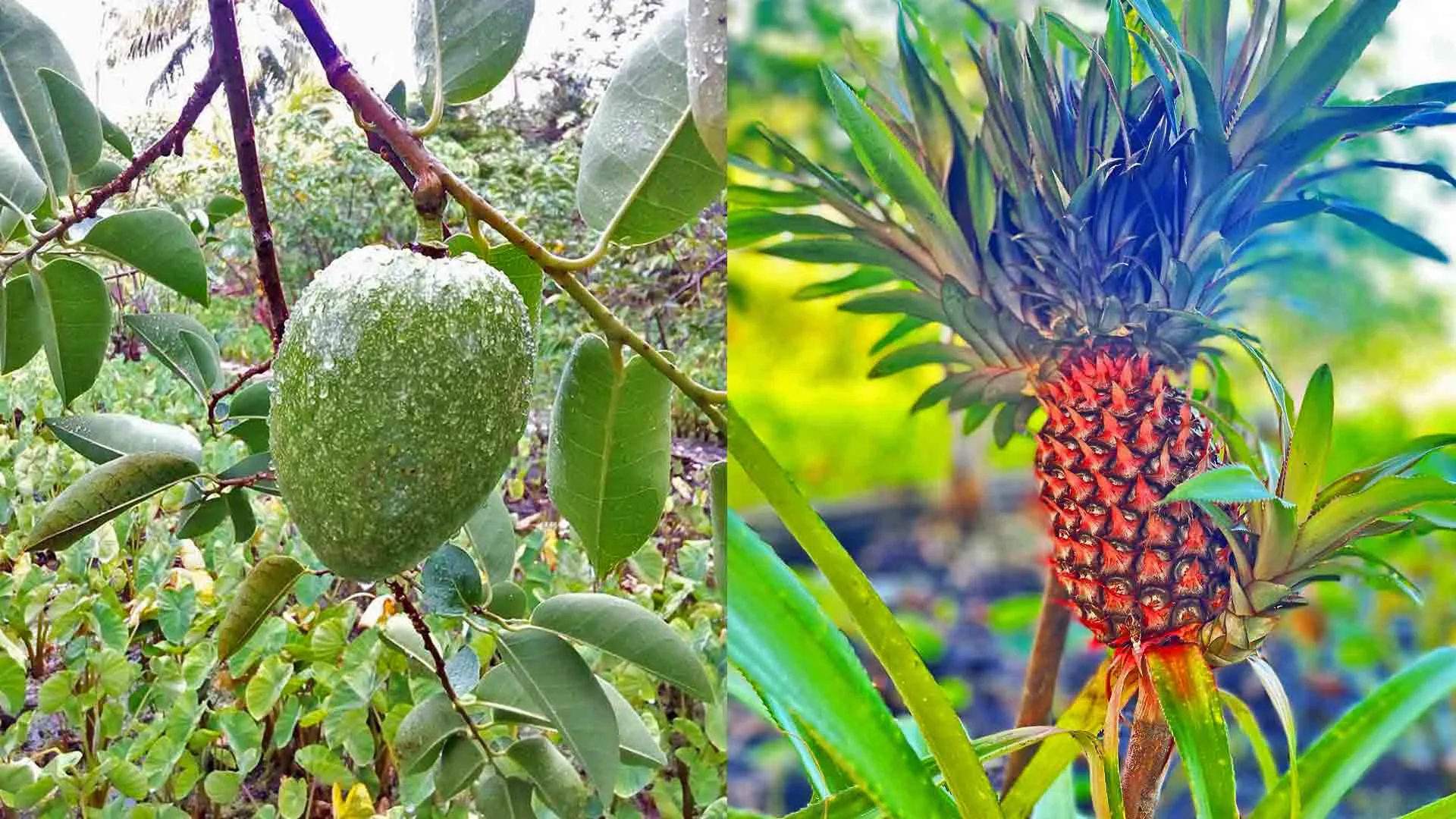
The pond apple is one of the trees that add character to Fuvahmulah’s green landscape. Known scientifically as Annona glabra, it has glossy green leaves and produces rounded fruits that turn yellowish as they mature.
As its name suggests, pond apple is well adapted to wet conditions. It can grow in waterlogged soils, making it well suited to wetland habitats. However, in Fuvahmulah, the tree is not found only beside freshwater lakes. It also grows among taro fields and on other areas of land, making it a familiar part of the island’s wider landscape.
Its ability to grow in different settings makes it an interesting feature of the island’s vegetation. In wetland areas, it grows among other plants along the water and across damp ground. In taro fields, it shares the landscape with a crop that has long been part of local agriculture.
The tree also contributes to its surroundings. Its leaves fall and break down, adding organic matter to the soil, while its fruits may provide food for wildlife.
For those who grew up in Fuvahmulah, the pond apple is more than a tree to be identified by its scientific name. It belongs to the landscape of childhood, to the paths we walked, the fields we passed and the green places where we spent our time.
The Pineapple, A Gift of the Cultivated Land
Pineapples (Ananas comosus) offer another glimpse into Fuvahmulah’s relationship with the land. Unlike pond apple, which can grow in wetlands, taro fields and other areas of the island, pineapple grows best in well-drained soil and does not thrive in waterlogged conditions.
With its stiff, pointed leaves and sweet, fragrant fruit, the pineapple is a familiar tropical plant. Its growth depends on suitable soil conditions, warmth and care. Where the ground is well drained, it can flourish under the island’s tropical sun.
Farming has long been part of life in Fuvahmulah. Generations of islanders have grown crops such as taro, bananas and pineapples, making use of the land and passing their knowledge on to their children. The cultivated landscape reflects years of experience in working with the island’s different soil and growing conditions.
The pineapple represents this human side of the landscape. It reminds us that the island’s natural resources have also supported livelihoods, food traditions and everyday life.
For many of us, the plants and fruits of Fuvahmulah bring back memories of childhood. They recall walks through the greenery, visits to the kilhi and the familiar sights of fields and fruit-bearing plants. These memories connect us to a landscape that has shaped our lives in ways we may not have fully appreciated when we were young.
Two Plants, One Island
Fuvahmulah is often celebrated for its remarkable marine life, but the island has another story to tell. Its freshwater wetlands, trees, birds and cultivated fields reveal a rich natural landscape that deserves just as much attention.
The pond apple and the pineapple offer two different perspectives on this landscape. The pond apple grows in wetland areas, among taro fields and on other stretches of land. The pineapple, meanwhile, represents the cultivated ground where islanders grow crops and harvest fruit.
Their stories are not simply about two plants growing in different places. They are also about the close relationship between nature and human life on the island. Wild vegetation and cultivated crops often exist side by side, forming part of the landscape that generations of islanders have known.
For those who grew up here, this landscape holds memories of birds singing in the morning, narrow paths through the greenery and visits to the freshwater lakes. These are ordinary experiences, perhaps, but they are also part of what makes Fuvahmulah special.
The island’s beauty does not end at the shoreline. It continues inland, through its wetlands, fields and fruit-bearing plants. Sometimes, the most meaningful stories of a place are found in the familiar landscapes we have known since childhood.