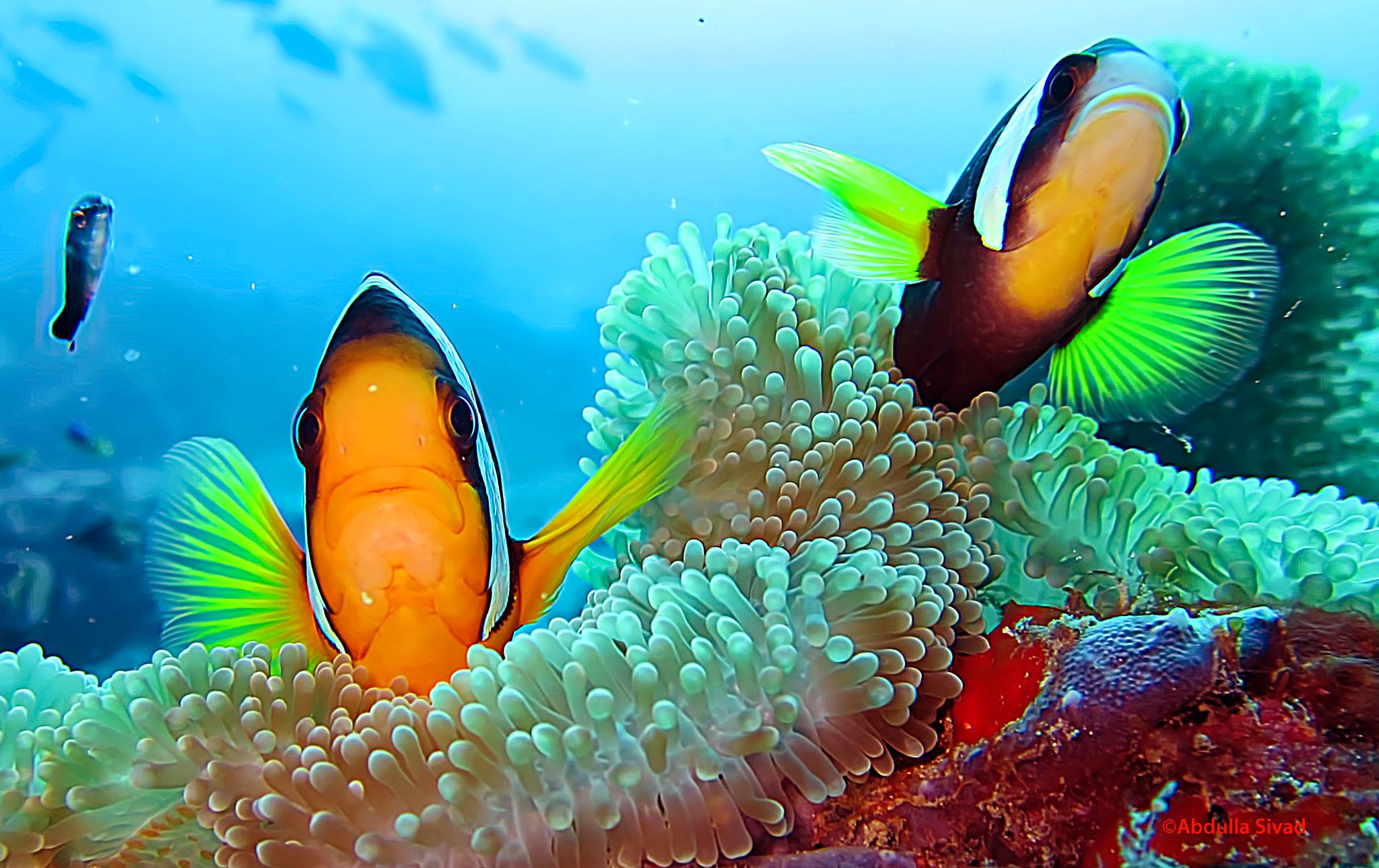
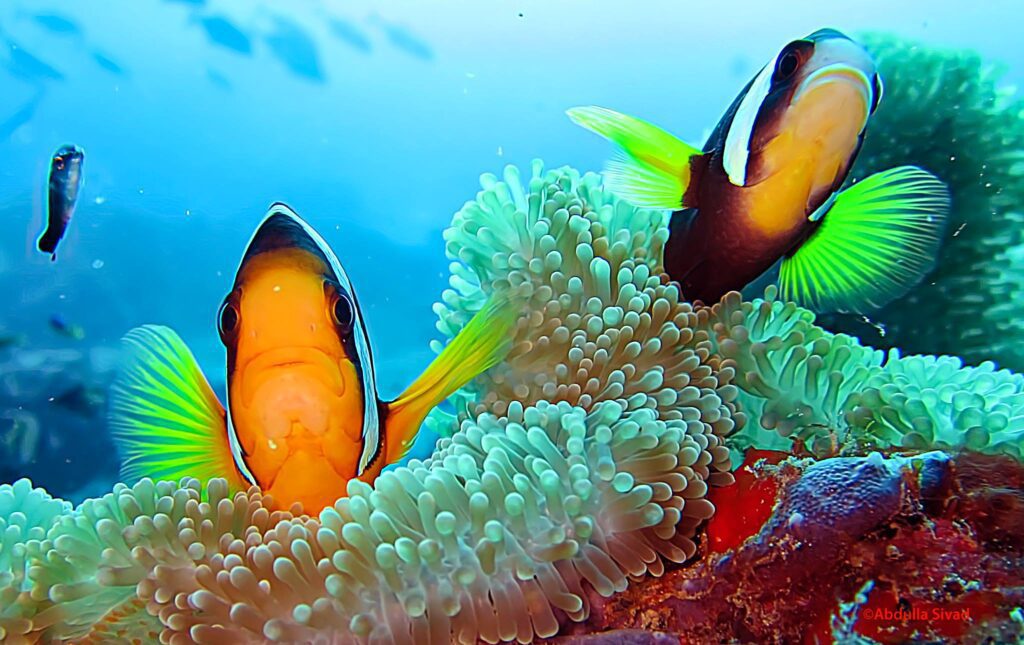
Clark’s Anemonefish is one of the most adaptable and widespread anemonefish species on coral reefs. Known for its variable coloration and exceptional ability to live with all host anemone species, it plays a vital role in reef ecosystems through a close, mutually beneficial relationship with sea anemones.
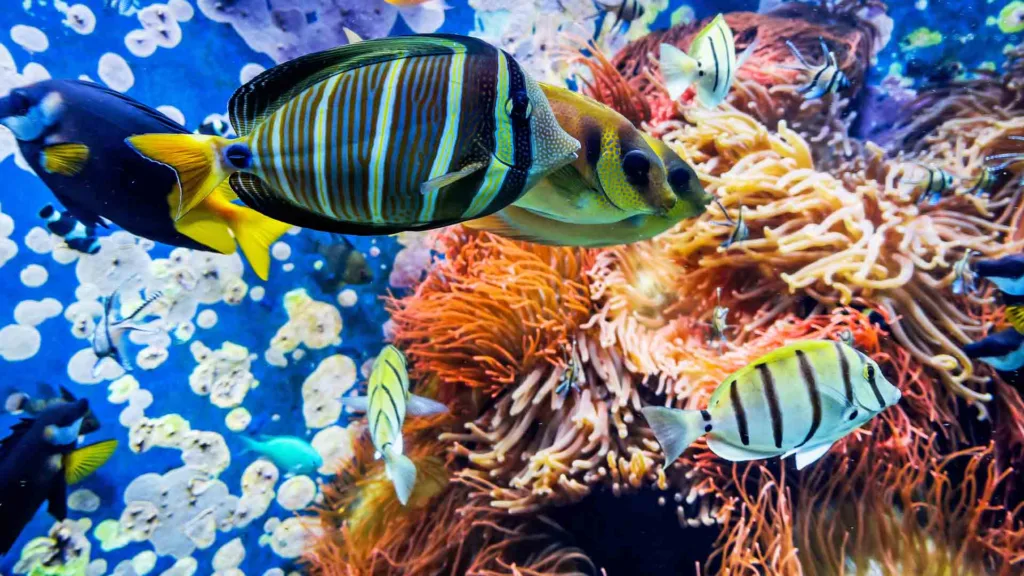
Clark’s Anemonefish (Amphiprion clarkii) is common in most coral reef habitats and is one of the most adaptable anemonefish species. Its coloration is highly variable, changing with geographic location and the species of host anemone. In the Maldives, Clark’s anemonefish is typically darker in color and can be distinguished from similar species by its comparatively narrow white bars. Adults reach an average length of about 14 centimeters.
View this post on Instagram
This species is unique among anemonefish: it is the only one known to associate with all recognized host anemone species. In the Maldives, it is also one of the three most common anemonefish found on reefs. While most anemonefish live with only a single anemone species, Clark’s anemonefish can inhabit up to ten different types of sea anemones.
Clark’s anemonefish shares a remarkable symbiotic relationship with its host anemone. The anemone provides food scraps and protection among its venomous tentacles. Although the tentacles can sting most fish, the anemonefish is shielded by a special mucus layer that prevents it from being harmed. This allows the fish to weave safely among the tentacles, using them as a refuge from predators.
In return, Clark’s anemonefish defends the anemone against potential predators and parasites, creating a mutually beneficial partnership essential to both species’ survival.
The diet of Clark’s anemonefish consists mainly of zooplankton drifting in the water column, but it also feeds opportunistically on algae and the dead tentacles of its host anemone.