On the sun-washed shores of the Maldives, coral was more than a natural wonder — it was the foundation of island life. Long before imported building materials were available, generations of Maldivians relied on coral rock as the primary material for constructing houses, walls, and other structures.
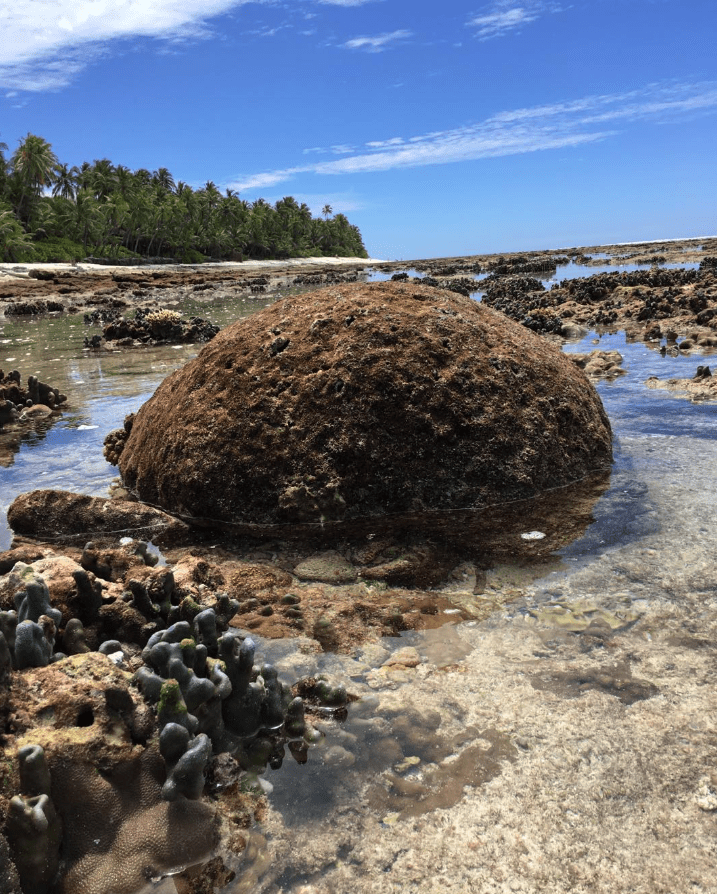
Coral mining was once a widespread activity in Maldivian islands, especially where house reefs lay close to shore. Islanders ventured to nearby reefs to extract large coral blocks, particularly from massive coral species that grew in the lagoon and reef margins. These coral stones were essential because there were no traditional sources of rock or aggregate to build homes.
This work was incredibly demanding. Men would form groups and head out with simple tools such as iron rods, axes, and hammers to break pieces of coral from the reef. The labour was intense, requiring strength and teamwork under the tropical sun.
Once extracted, the coral blocks were left on land to dry. Sun and air helped remove salt and reduce the strong natural odor of the stone. After drying, the stones were transported — often by gaadiyaa (wagon) — to households or special work areas where they were broken down into smaller, irregular pieces using tools like axes.
These broken pieces of coral were then bonded together using uva, a traditional lime made from coral, to form walls and other structural elements. The process melded raw natural resources with deep-rooted local craftsmanship.
Though the practice of coral mining has largely faded and is now regulated due to environmental concerns, the legacy of coral-built homes and buildings continues to shape the cultural history of the Maldives. Structures such as traditional coral stone mosques stand as remarkable reminders of a time when people drew directly from the reefs to build their world.