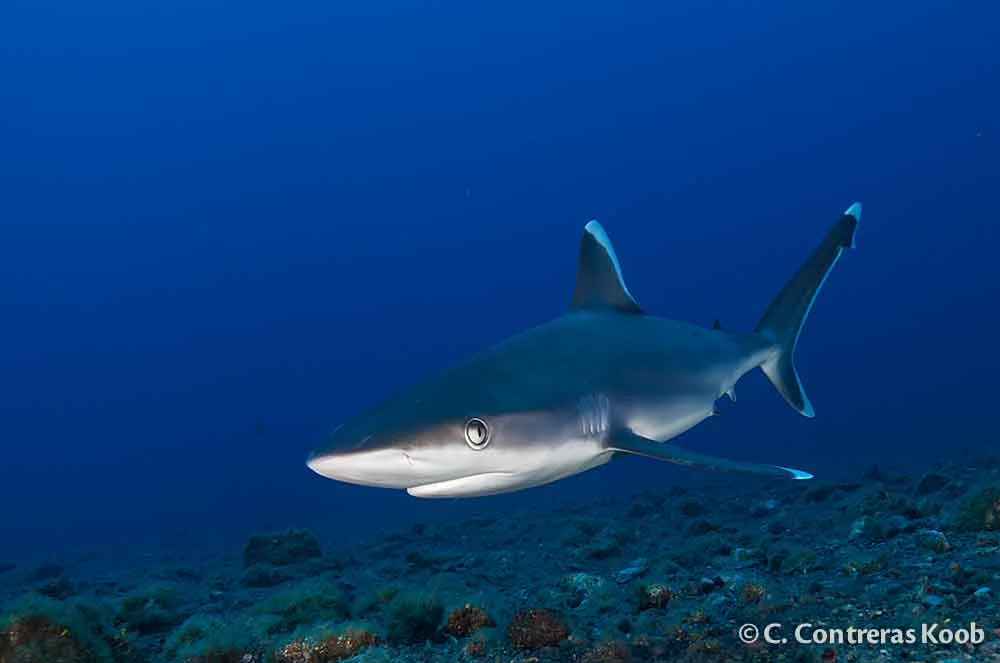
The Silvertip shark (Carcharhinus albimarginatus) is a large, sleek apex predator that commands respect wherever it roams. While it bears a passing resemblance to the common Grey Reef shark, its bolder temperament and distinctive white-edged fins mark it as a unique and formidable inhabitant of the tropical Indo-Pacific.
In the Maldives, where it is known locally as Kattafulhi miyaru, the Silvertip is a rare and prized sighting for divers, representing the raw, untamed beauty of the archipelago’s deep-water ecosystems.
Distinctive Morphology and Identification
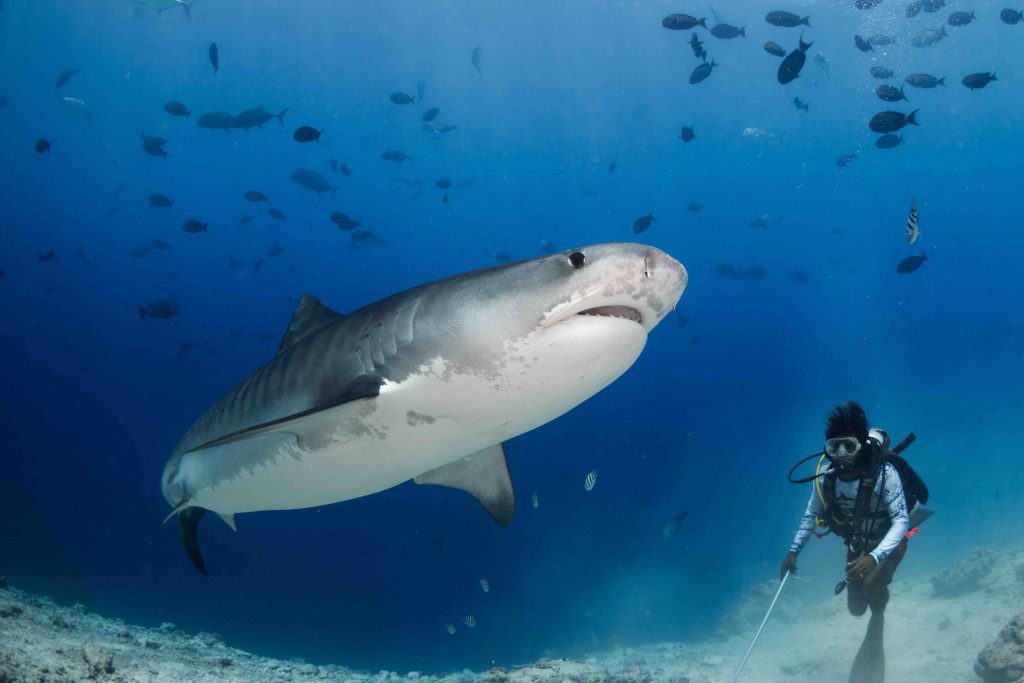
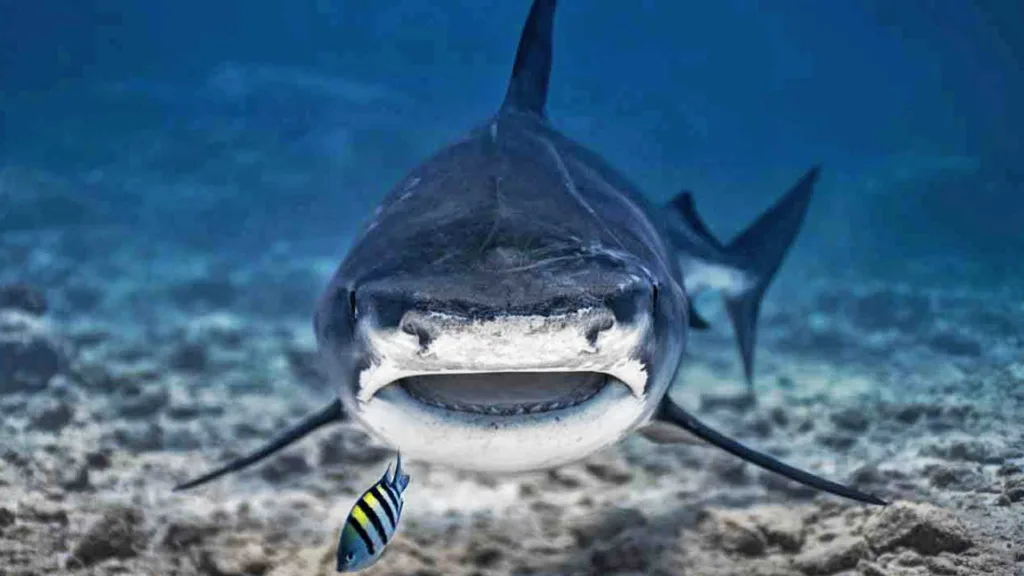
Growing to a maximum length of approximately 3 meters, the Silvertip is built for power and precision. Its most striking features are the “extremely conspicuous” white tips and posterior margins on the first dorsal, pectoral, pelvic, and caudal fins.
Unlike many of its relatives, the Silvertip possesses a moderately long, broadly rounded snout and a prominent ridge running between its two dorsal fins. These physical traits, combined with its broadly triangular upper teeth, make it a highly efficient hunter of both bottom-dwelling and pelagic fish, including rays and cephalopods.
Biology and Habitat
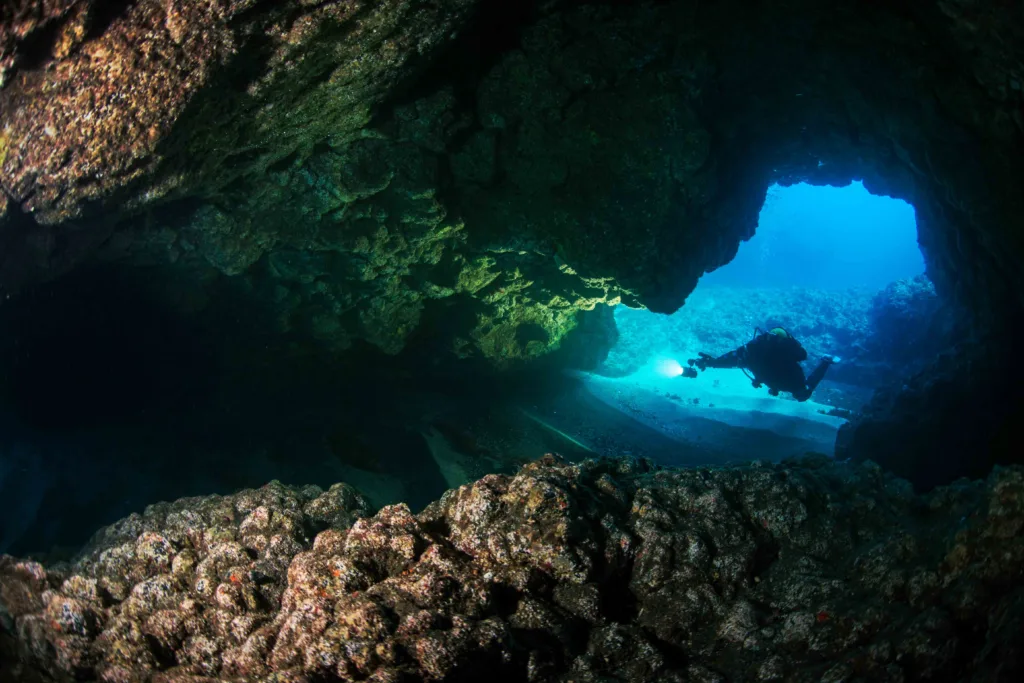
The Silvertip is a vertical wanderer, comfortable at the surface and capable of diving to depths of at least 800 meters. This wide range allows it to exploit different thermal layers of the ocean.
Biologically, the species is viviparous, utilizing a yolk-sac placenta to nourish its young. Litters typically range from 1 to 11 pups, though 5 or 6 is most common. Because they are slow to reach sexual maturity—often not breeding until they reach nearly 2 meters in length—their populations are highly sensitive to environmental and human pressures.
Behavioral Insights and Maldives Sightings
Known among marine biologists for its aggressive nature, the Silvertip is a dominant force in feeding aggregations. Many individuals bear combat scars, evidence of intense intraspecific competition. While it is considered potentially dangerous to humans due to its bold curiosity and defensive posturing, it is generally wary of divers unless provoked or in the presence of food.
In the Maldives, sightings are localized. While they are found throughout the Indo-Pacific, they are rarely encountered on typical dive routes. However, regular sightings have been documented at specific sites in Ari Atoll, where deep-water upwellings provide the perfect hunting ground for this silver-clad sentinel.
Silvertip Shark
Carcharhinus albimarginatus
Scientific References
- IUCN Red List of Threatened Species: Carcharhinus albimarginatus – Globally assessed as Vulnerable (VU).
- Marine Research Centre, Maldives: Specimen Profile MRS/P031 1/88.
- Florida Museum of Natural History: International Shark Attack File (ISAF) Biological Profiles for Carcharhinus albimarginatus.
- FishBase: World Wide Web electronic publication, Species Summary for Silvertip Shark.
- Ebert, D.A., et al. (2021): Sharks of the World: A Complete Guide. Princeton University Press.
- M.R.S. (1997). Fishes of the Maldives. Marine Research Section, Ministry of Fisheries and Agriculture, Republic of Maldives.