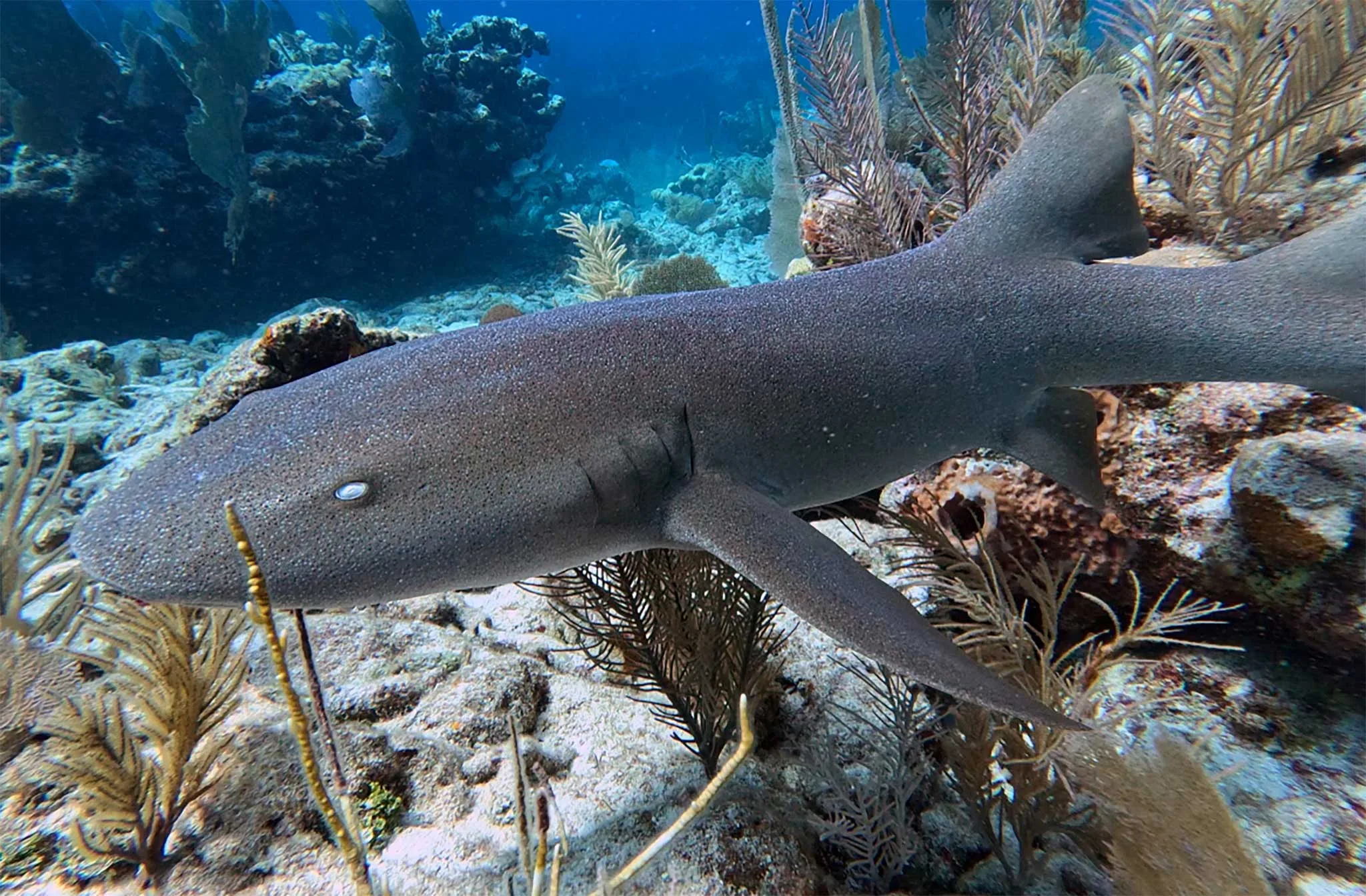
By day, it is a dormant tenant of the reef’s shadowed catacombs. By night, the tawny nurse shark becomes a living vacuum, scouring the Maldivian seafloor for life.
Deep within the labyrinthine corridors of a coral overhang, time seems to stand still. Here, in the cool, oxygen-rich shadows, heavy tan bodies lie stacked like cordwood. They are motionless—golden-brown skin sandpaper-rough, small eyes seemingly glazed in a deep trance. To the passing diver, they are the very definition of lethargy.
This is the tawny nurse shark (Nebrius ferrugineus), known to Maldivian fishers as the nidhan miyaru—the “sleeping shark.”
Evolutionary Stillness
The tawny nurse shark is a master of stillness. Unlike many of its shark relatives that must swim constantly to force oxygen over their gills, the nidhan miyaru relies on an alternative strategy known as buccal pumping. By actively drawing water into its mouth and pushing it across its gills, the shark can remain anchored to the seafloor for hours at a time.
View this post on Instagram
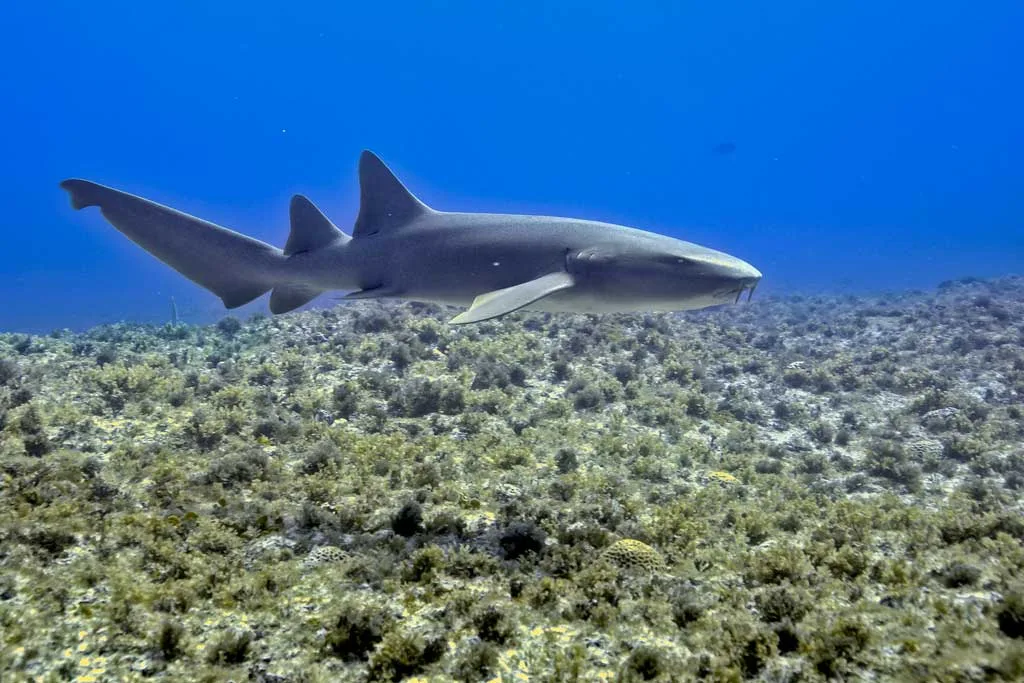
Reaching just over three meters at full maturity, its body is a study in demersal design. It lacks the raised dorsal ridges seen in many bottom-dwelling sharks, instead presenting a smooth, streamlined profile. Its most striking feature is its tail. Accounting for nearly 30 percent of the shark’s total length, the caudal fin is a long, muscular sweep capable of delivering sudden bursts of speed—useful for lunging into crevices or evading larger predators.
The Suction Hunter
When the sun slips below the Indian Ocean horizon, the stillness fades. The “sleeping shark” wakes into a world defined by scent and vibration.
A member of the order Orectolobiformes, the tawny nurse shark is a highly specialized suction feeder. Its mouth is relatively small, but it is backed by a powerful pharyngeal cavity. When the shark encounters a crab wedged deep within coral, or an octopus clinging stubbornly to rock, it creates a sudden, forceful vacuum—literally inhaling its prey.
Its teeth tell the rest of the story. Compressed and fan-shaped, with a dominant central cusp, they are built not for tearing flesh but for crushing—ideal for breaking through hard carapaces and calcified reef structures.