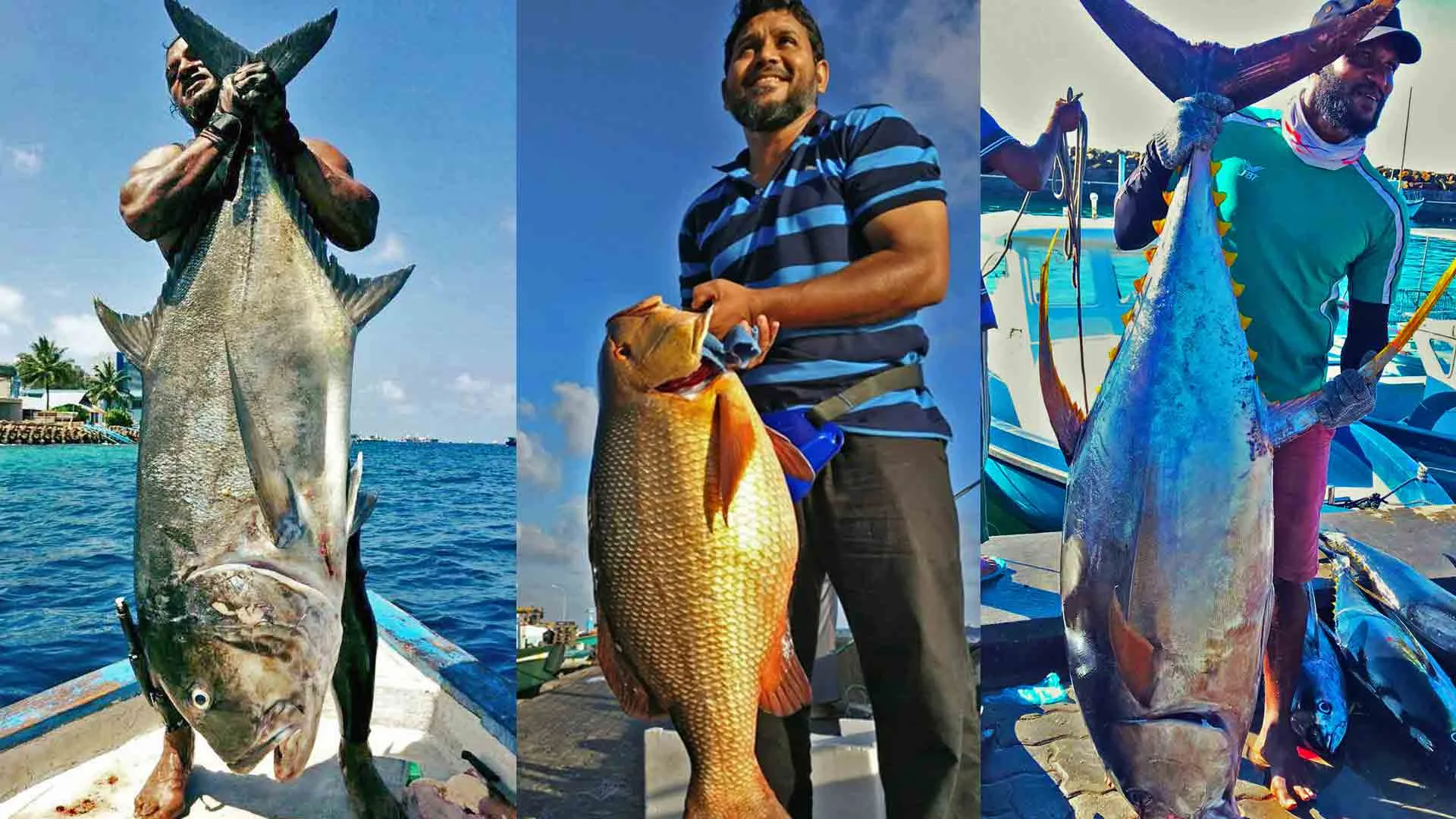
Across the Indian Ocean, few destinations command the respect of sport anglers quite like the Maldives. Isolated coral atolls, dramatic ocean drop-offs, and nutrient-rich currents create ideal conditions for some of the world’s most sought-after game fish. From explosive surface predators to powerful pelagic hunters, these waters offer challenges that draw anglers from every corner of the globe.
Although hundreds of fish species inhabit the reefs and open waters of the Maldives, only a handful have earned legendary status among sport anglers. Some are renowned for their explosive power, others for their blistering speed or relentless endurance. Together, these five species represent the pinnacle of popping, jigging, trolling, and traditional handline fishing in one of the world’s greatest blue-water fisheries.
Giant Trevally
The King of the Reef
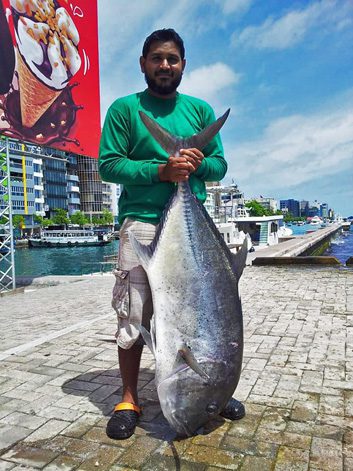
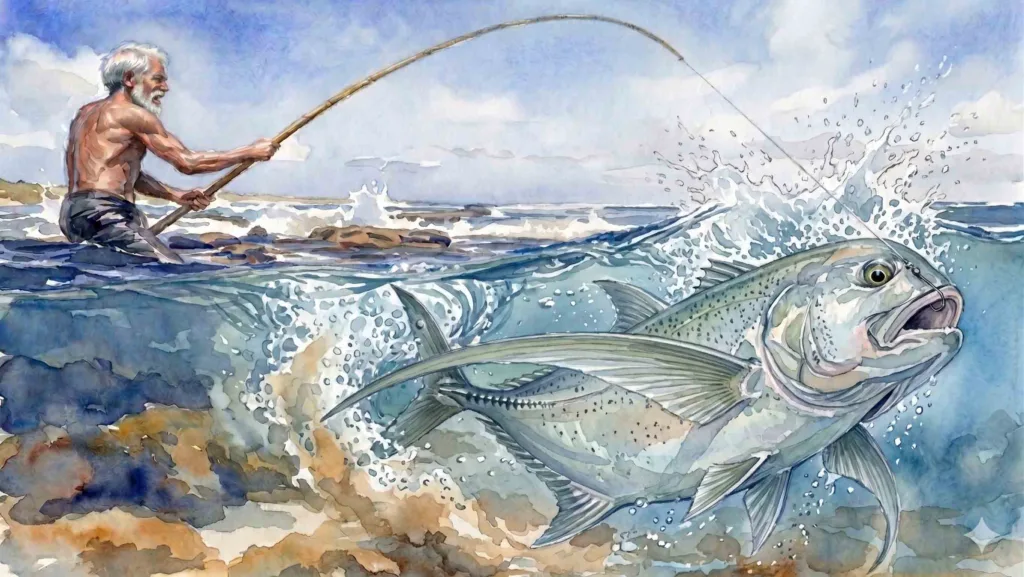
Few fish inspire more excitement among sport anglers than the Giant Trevally (Caranx ignobilis), universally known as the GT. Renowned for its explosive strikes, immense strength, and relentless determination, it has earned legendary status in tropical sport fishing.
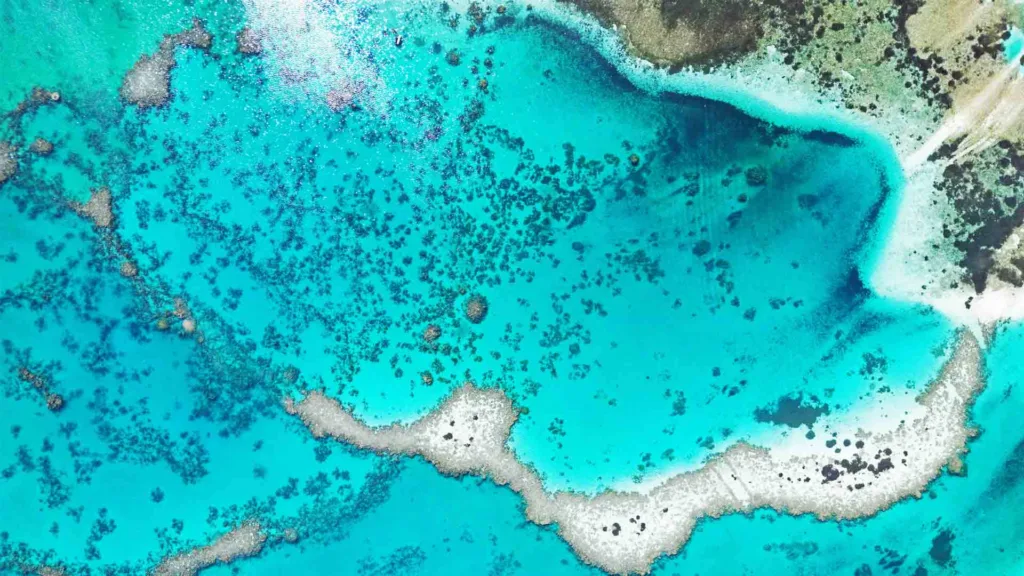
GTs patrol reef edges, channels, and shallow coral platforms, ambushing baitfish with astonishing speed. Watching one erupt from beneath the surface to smash a large popper is widely regarded as one of angling’s greatest spectacles.
Popping remains one of the most popular ways to target these reef giants, but traditional handline fishing is equally thrilling. Across the Maldives, anglers commonly use bigeye scad as live bait, particularly when schools gather inside lagoons and around island reefs. These periods often produce spectacular GT fishing.
In southern islands such as Fuvahmulah, flying fish have long been a favourite bait for targeting Giant Trevally. In earlier times, fishermen traditionally used 8–10-foot bamboo poles fitted with relatively short handlines, known locally as nano, measuring about 25–30 feet (7.5–9 metres) in length. A dead flying fish was attached as bait, and the technique was known in the Fuvahmulah dialect as vevelhejehun. During the monsoon season, when large GTs patrol reef drop-offs and shallow waters in pursuit of flying fish and other baitfish, this traditional method proved exceptionally effective.
Preferred techniques
- Surface popping
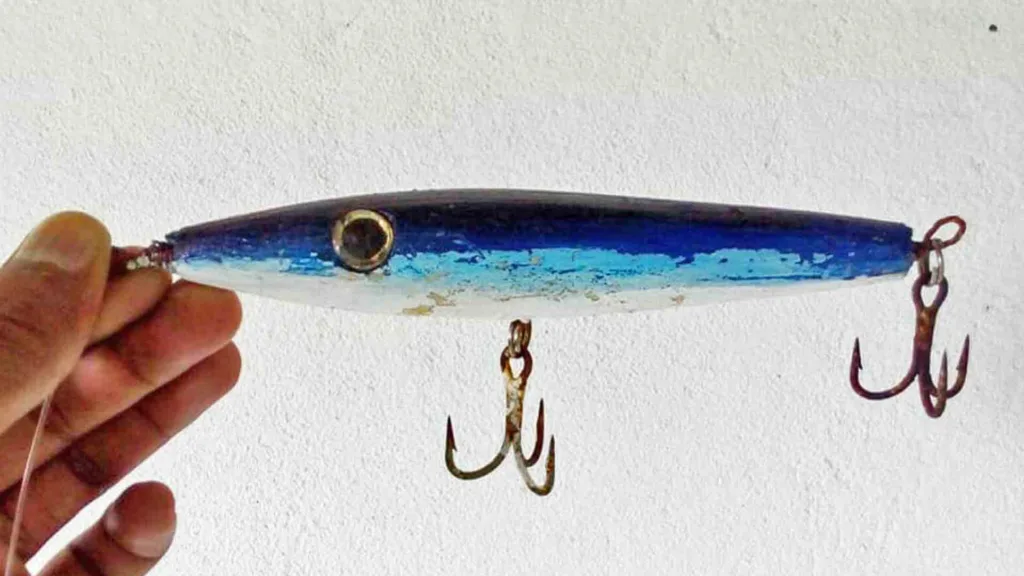
- Heavy stickbait casting
- Traditional handline fishing with live or dead bait
- Fish heads, fish fillets, eel, and whole baitfish
GTs exceeding 30 kg are regularly encountered around the Maldives, particularly along the outer reef systems of the southern atolls, making the country one of the world’s premier destinations for GT fishing.
Yellowfin Tuna
The Prize of the Deep
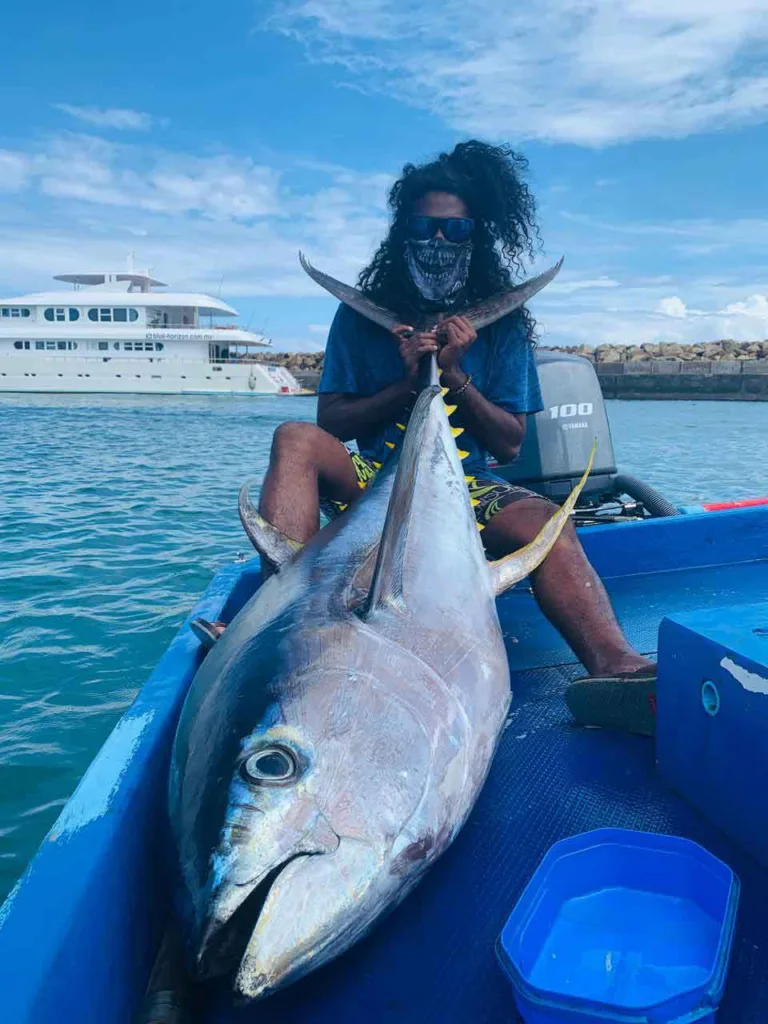
The Yellowfin Tuna (Thunnus albacares) occupies a special place in the Maldives. It is not only one of the nation’s most valuable commercial fish but also among the most exhilarating game fish in the Indian Ocean.
Built for speed and endurance, yellowfin are capable of blistering runs that test even the strongest tackle. Schools often erupt on the surface while chasing flying fish and baitfish, creating unforgettable moments for anglers.
Modern techniques such as popping, jigging, and casting with live bait—including mackerel scad and flying fish—have become increasingly popular. Yet many Maldivian fishermen would argue that nothing compares to landing a 20–50 kg yellowfin on a simple monofilament handline.
It is an experience that is both exhilarating and physically demanding. On rare occasions, fishermen have even been pulled overboard when loops of line unexpectedly tightened around their fingers or arms during the tuna’s first powerful run.
Preferred techniques
- Offshore trolling
- Vertical jigging
- Surface casting and popping during feeding frenzies
- Live-bait fishing
- Chumming
Although yellowfin are present throughout the year, larger fish are generally more abundant during the transitions between the southwest and northeast monsoons, when oceanic conditions concentrate bait around the atolls.
Dogtooth Tuna
The Reef Bandit
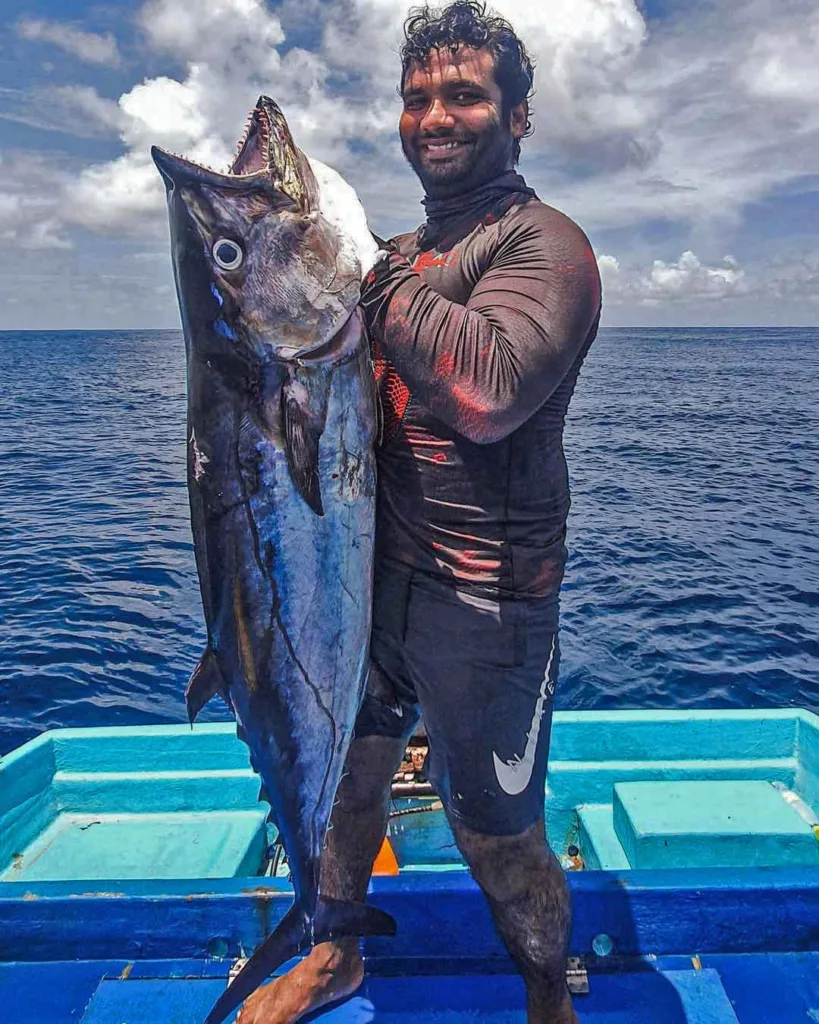
If the Giant Trevally rules the reef top, the Dogtooth Tuna (Gymnosarda unicolor) dominates the deep reef wall.
Powerful, unpredictable, and notoriously difficult to land, dogtooth tuna strike with incredible force before diving straight for steep coral drop-offs. Many battles end within seconds as lines are cut against the reef, making every successful capture a hard-earned achievement.
Dogtooth tuna are also highly prized by Maldivian spearfishermen. Shore anglers target them from jetties and rocky coastlines where deep water lies close to shore, using heavy metal jigs or large natural baits such as mackerel scad.
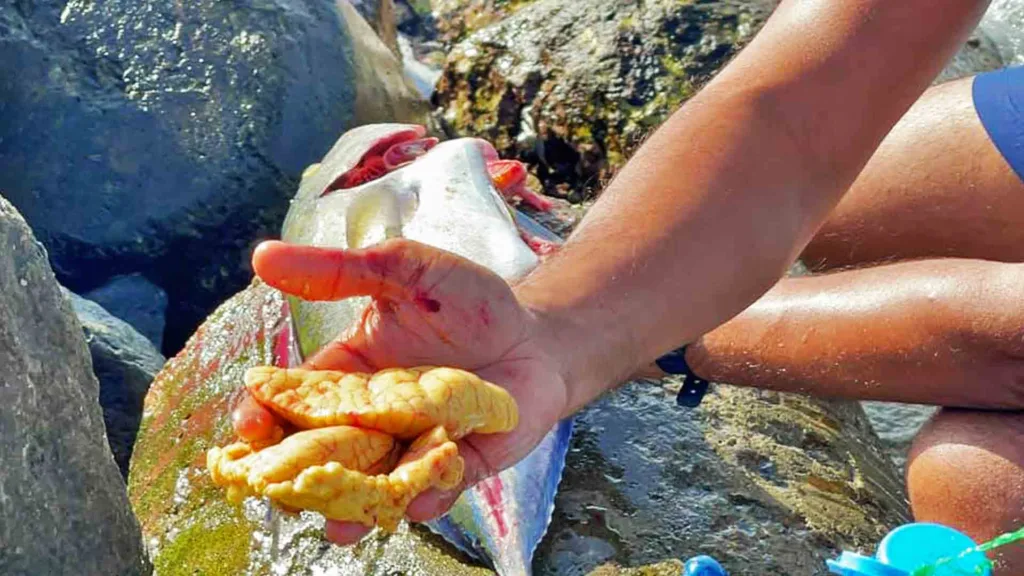
I still remember one unforgettable encounter. I was fishing for green jobfish using fish bait and a standard reef-fishing rig. As I reeled in my line after the bait had already been taken, a dogtooth tuna suddenly charged the bare hook and hooked itself. When I finally brought it ashore, I could hardly believe what had happened.
Preferred techniques
- High-speed vertical jigging
- Deep mechanical jigging
- Heavy live-bait fishing
- Spearfishing
Found along dramatic outer reef slopes and submerged pinnacles, the dogtooth tuna remains one of the most coveted prizes for experienced anglers.
Billfish
The Aerobatic Icons
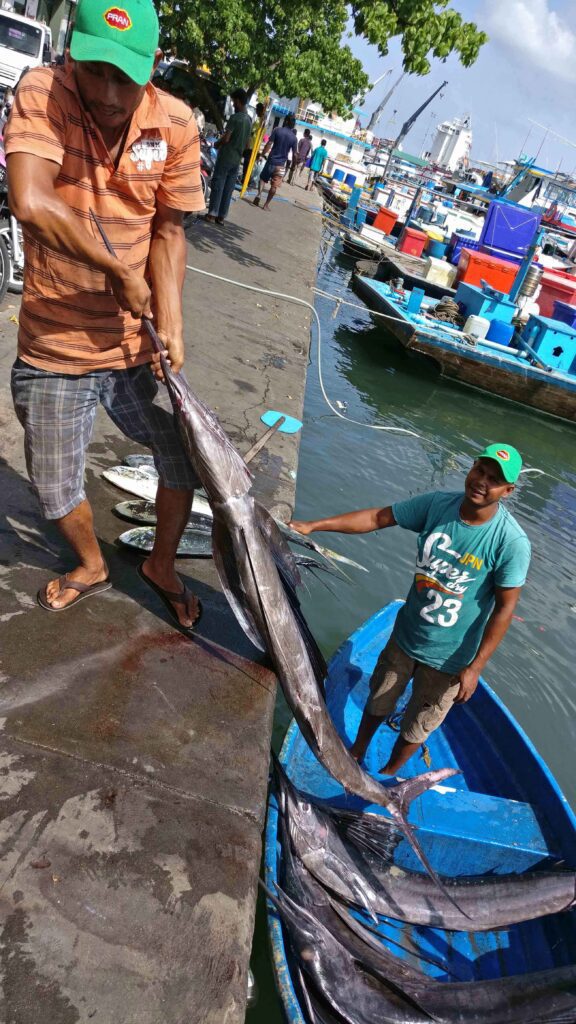
The open ocean surrounding the Maldives is home to magnificent billfish, including sailfish, blue marlin, and black marlin.
Sailfish are encountered most frequently and are famous for their spectacular leaps, shimmering dorsal sails, and extraordinary speed. Blue and black marlin are less common but remain the ultimate trophy for many offshore anglers.
At first light, trolling skirted lures or simple rubber lures across calm blue water often produces unforgettable encounters. Seeing one of these magnificent fish launch itself clear of the ocean is among the greatest sights in offshore fishing.
Preferred techniques
- Offshore trolling with artificial lures
- Live-bait trolling
The calm seas of the northeast monsoon generally provide the best opportunities for targeting these magnificent pelagic predators beyond the atoll reefs.
Two-spot Red Snapper
The Masters of the Reef
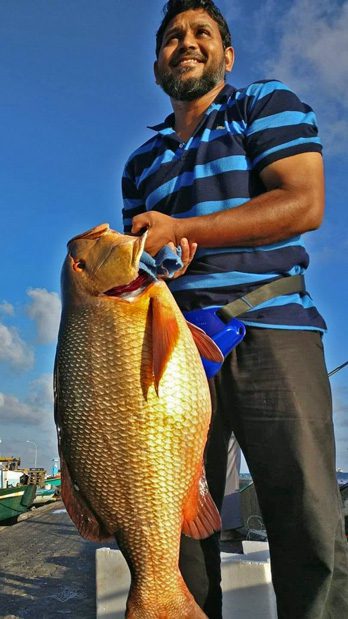
Not every memorable battle takes place in blue water. The coral reefs of the Maldives are home to powerful bottom predators that provide outstanding sport throughout the year.
Among the finest is the Two-spot Red Snapper, locally respected for its crushing power and aggressive strikes. The species attacks jigs and lures with remarkable force, making it a favourite among anglers exploring the reefs between offshore expeditions.
Traditional handline fishing using fish bait or fish heads remains one of the most effective methods, although modern jigging techniques have become increasingly popular.
Preferred techniques
- Slow-pitch jigging
- Light popping
- Soft plastics
- Stickbaits
- Traditional handline fishing
Their accessibility, combined with the spectacular reef environments they inhabit, makes these fish ideal targets for anglers of all experience levels.
A World-Class Fishery
What truly sets the Maldives apart is not simply the diversity of its game fish but the remarkable range of habitats found within a single destination. In the space of one day, anglers can cast poppers across shallow coral reefs for Giant Trevally, jig deep reef walls for Dogtooth Tuna, troll the open ocean for Yellowfin Tuna and billfish, and finish the afternoon exploring colourful reefs for hard-fighting snappers.
Few places on Earth offer such extraordinary variety within such pristine tropical waters.
For sport anglers, the Maldives is far more than a destination—it is one of the world’s greatest natural arenas for blue-water fishing.