Monsoon Skies Over Fuvahmulah
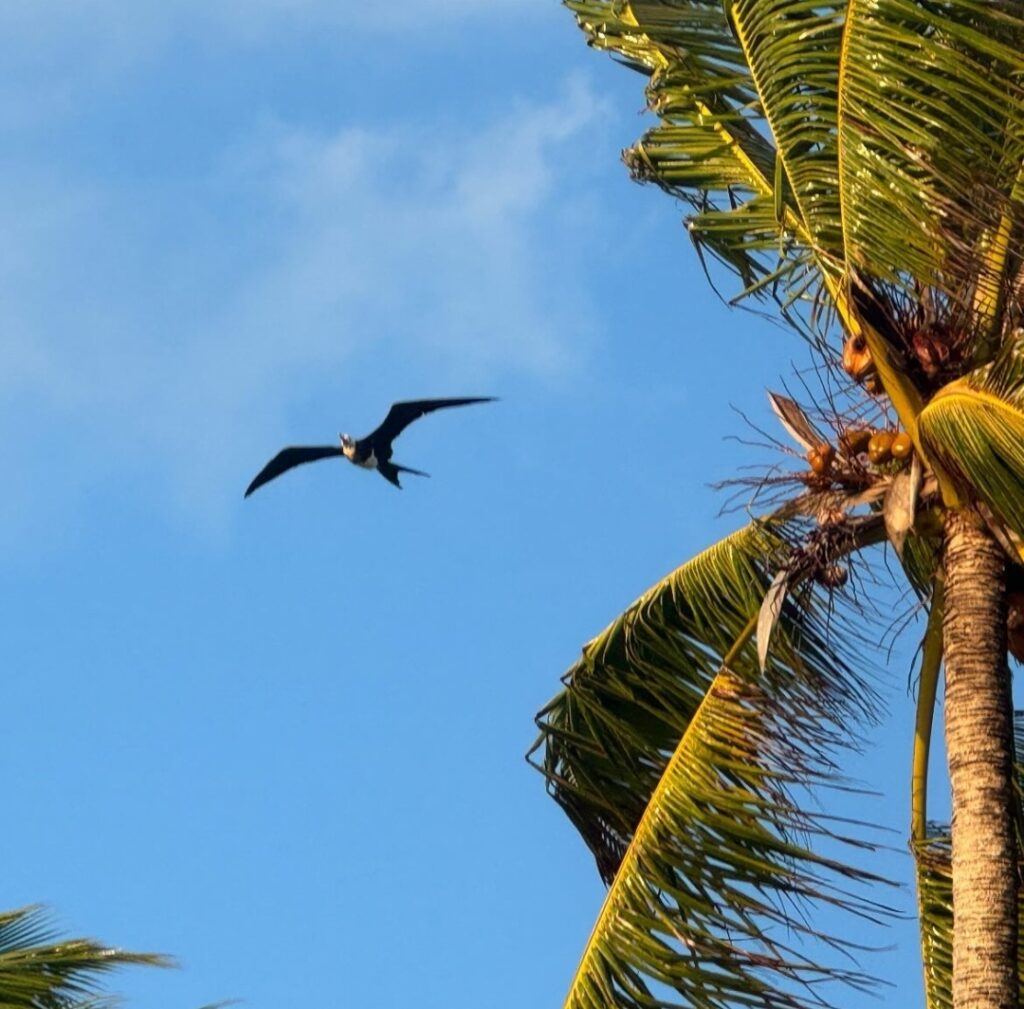
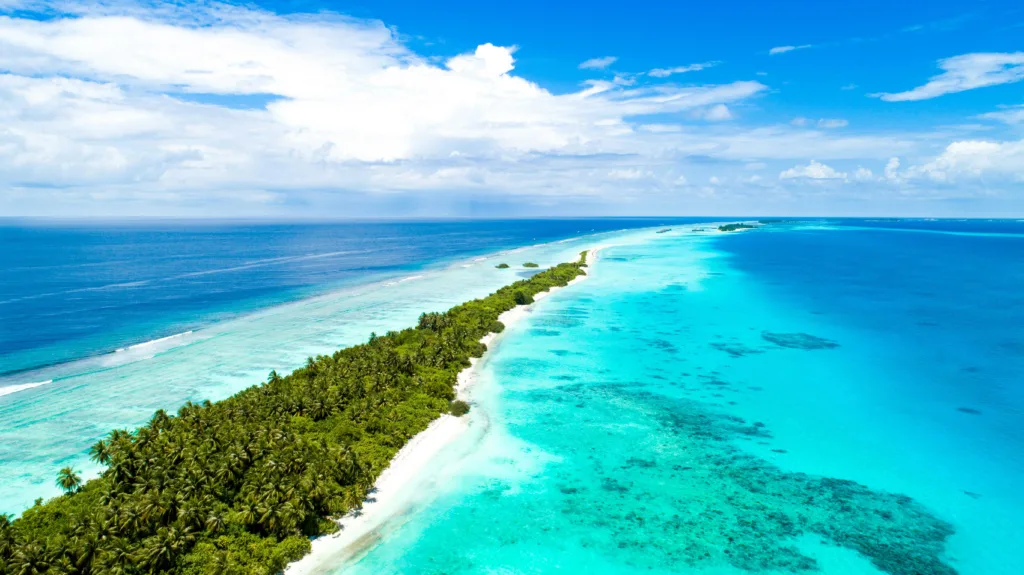
Each monsoon season, the remote island of Fuvahmulah becomes a gathering ground for thousands of frigate birds—known locally as huraa. Drawn by shifting winds and fertile seas, these aerial nomads arrive in vast numbers, transforming the island’s skies into a living theater of motion.
Masters of the Wind
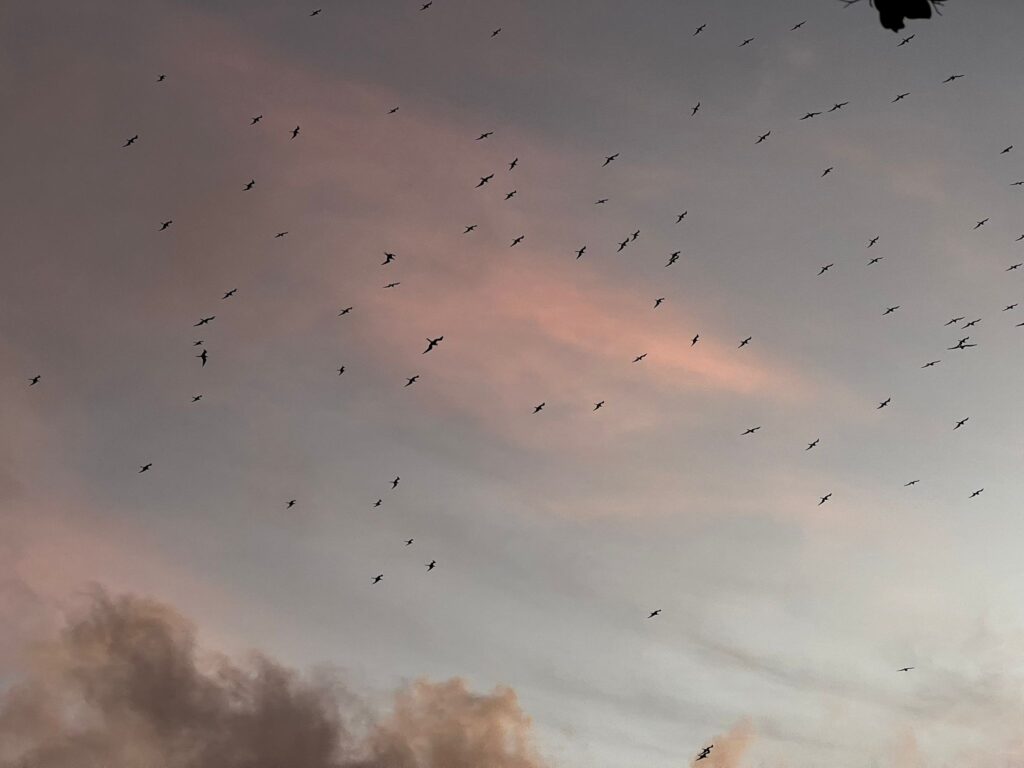
Frigate birds are supreme aerialists. With long, narrow wings, streamlined bodies, and remarkably low weight, they are built for endurance and agility. When monsoon winds collide with the island’s volatile atmosphere, flocks spiral thousands of feet overhead, riding invisible currents with effortless precision. Against the bright sky, their silhouettes wheel and circle, suspended as if gravity itself has loosened its hold.
From above, the predators wait.
Gliding silently, frigate birds scan the ocean below for signs of life. At the faintest disturbance near the surface, a bird folds its wings and plunges like a falling blade, striking with sudden accuracy. When flying fish—called hulhanmaha by locals—burst from the sea in shimmering arcs, the birds seize the moment, diving from on high to snatch their prey midair before it can return to the water.
When Humans Hunted the Sky
In the mid-1980s, there was a time when these birds were not only admired but hunted. On Fuvahmulah, frigate birds were once valued as food, prepared for local households. Long before wildlife protection laws came into force, their capture was woven into island life—an endeavor that demanded patience, precision, and rare skill.
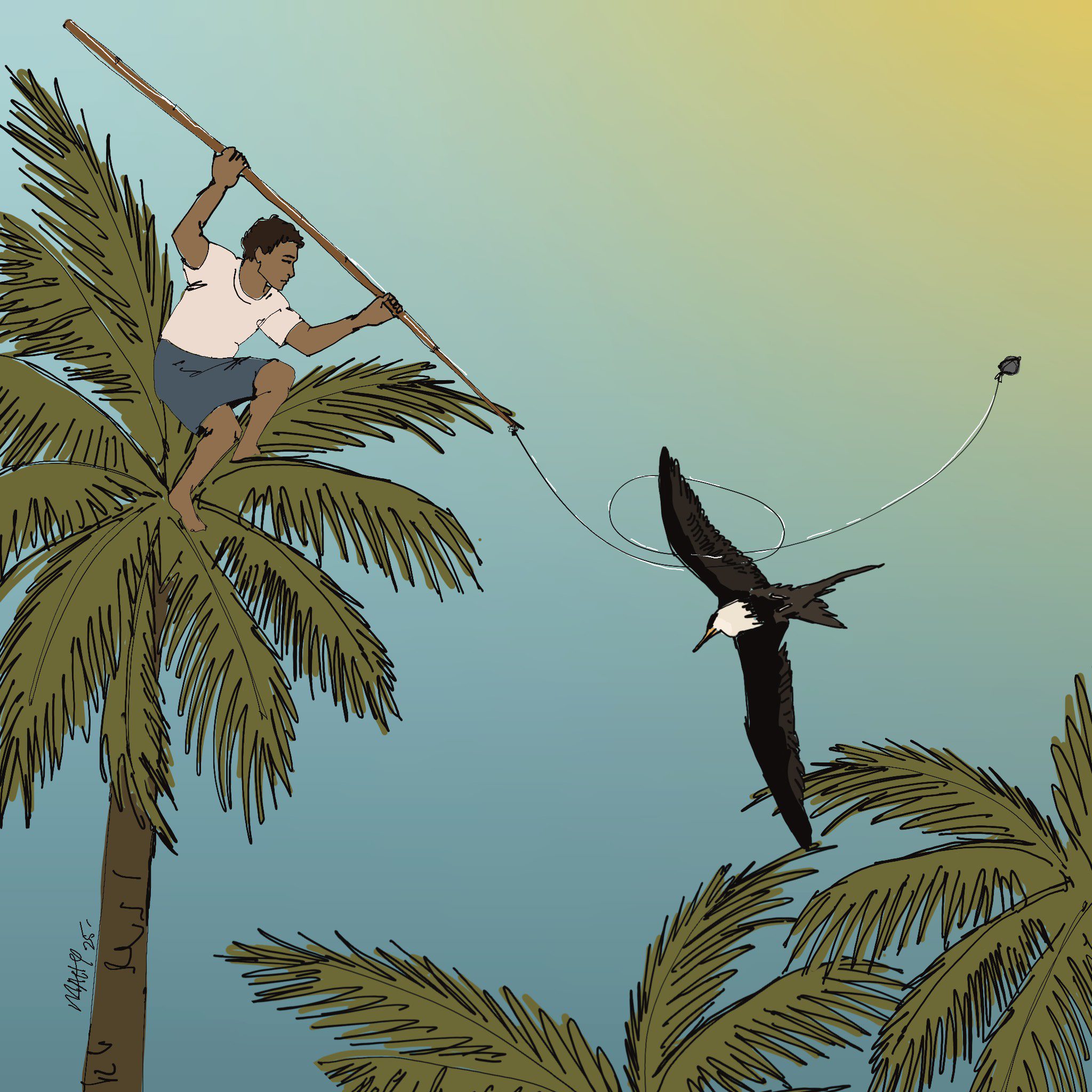
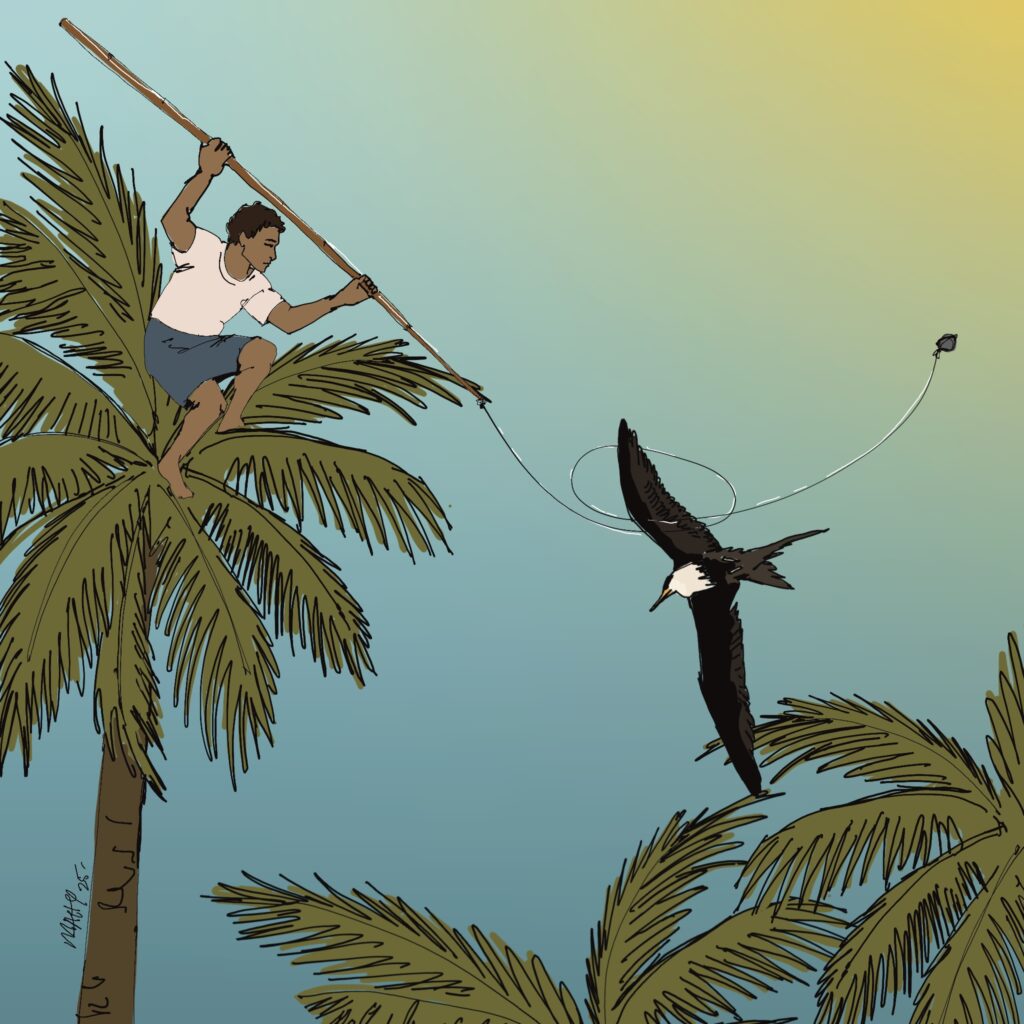
Only a handful of men possessed the expertise, some capable of taking 10 to 20 birds in a single day. Armed with long bamboo poles, they climbed select coconut palms reserved exclusively for this purpose.
At the tip of each pole hung a strong string, much like a fishing line, measuring nearly three times the length of the pole itself. Attached at the end was a small lead weight known locally as bari. Concealed among the upper fronds, the men waited—motionless and unseen—as frigate birds wheeled overhead.
When a bird drifted into range, the hunter struck.
With a swift, practiced motion, the bamboo pole was launched skyward. The weighted line spun rapidly, looping around the bird’s wings in midflight. Once entangled, the frigate bird was carefully secured, its wings tied to prevent escape. The hunter then lowered—or released—the bird to the ground below, where another person waited to collect it.
Wings That Now Go Free
Today, this practice survives only in memory. Laws now protect frigate birds, and their presence is celebrated rather than pursued. What remains is a story—a reminder of a time when humans and nature met not only in observation, but in direct, intimate engagement, shaped by survival, tradition, and extraordinary skill.
Above Fuvahmulah, the frigate birds still soar—silent, watchful, and untouchable—carrying the echoes of the island’s past on their endless wings.