For the people of Fuvahmulah, life unfolds in harmony with a unique natural rhythm. Each morning, as the sun begins to crest the horizon, it illuminates the island’s traditional taro fields—vibrant, water-logged garden patches that form the emerald heart of the local landscape. In the stillness of dawn, the air comes alive with a chorus of birdsong. While many familiar voices fill the air, there is one special resident whose call stands out as a constant in daily life: the Common Moorhen (Gallinula chloropus). Hearing this bird join the morning melody is more than just a sound; it is an everyday reminder of the island’s rare biodiversity and its role as a singular sanctuary for this species.
In the cerulean expanse of the Indian Ocean, the Maldives is a nation primarily defined by its coral atolls and sea-faring voyagers. Yet, on the solitary island-atoll of Fuvahmulah, a different kind of treasure hides within the dense vegetation surrounding the archipelago’s rare freshwater lakes. Known locally as the Valikukulhu or Olhuvalu kabili, this bird represents one of the most remarkable examples of geographical exclusivity in the region.
While the Common Moorhen is a cosmopolitan species found across much of the globe, its distribution within the Maldives is famously restricted. For decades, this species has been found natively and exclusively on the island of Gn. Fua Mulaku (Fuvahmulah). Its success here is tied to the island’s unique “Kilhi” (freshwater lakes) and marshes—habitats that are virtually non-existent in the rest of the thousand-island chain. Local records indicate the bird was first identified on the island in 1945, and for nearly half a century, it was never recorded elsewhere in the country.
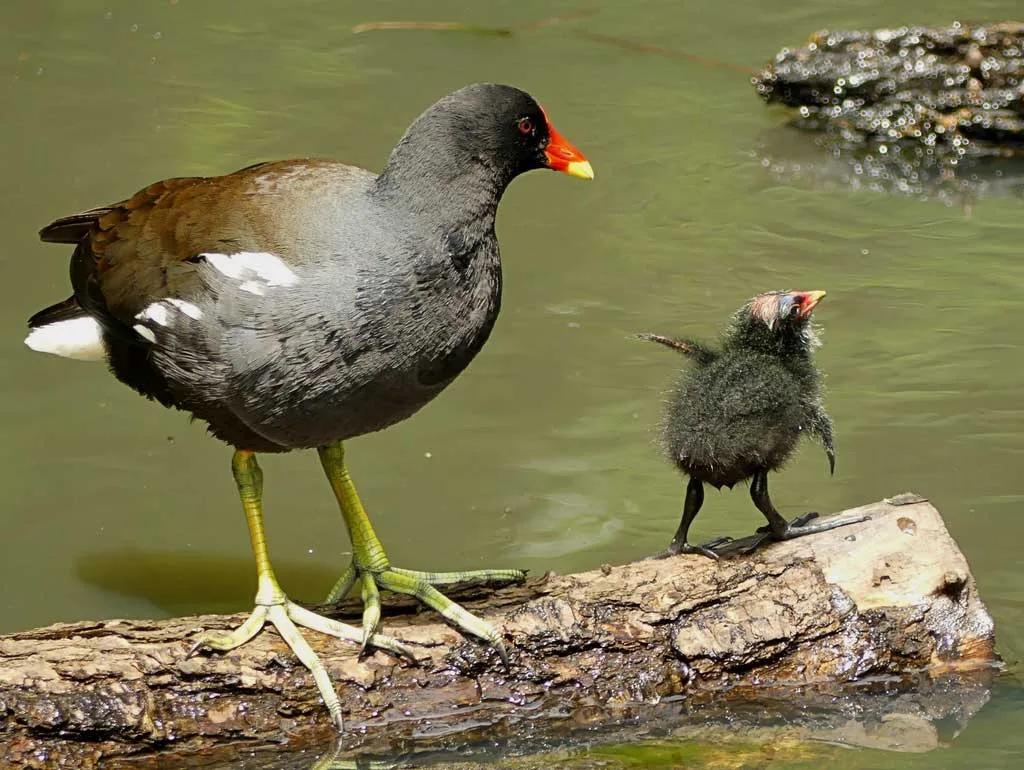
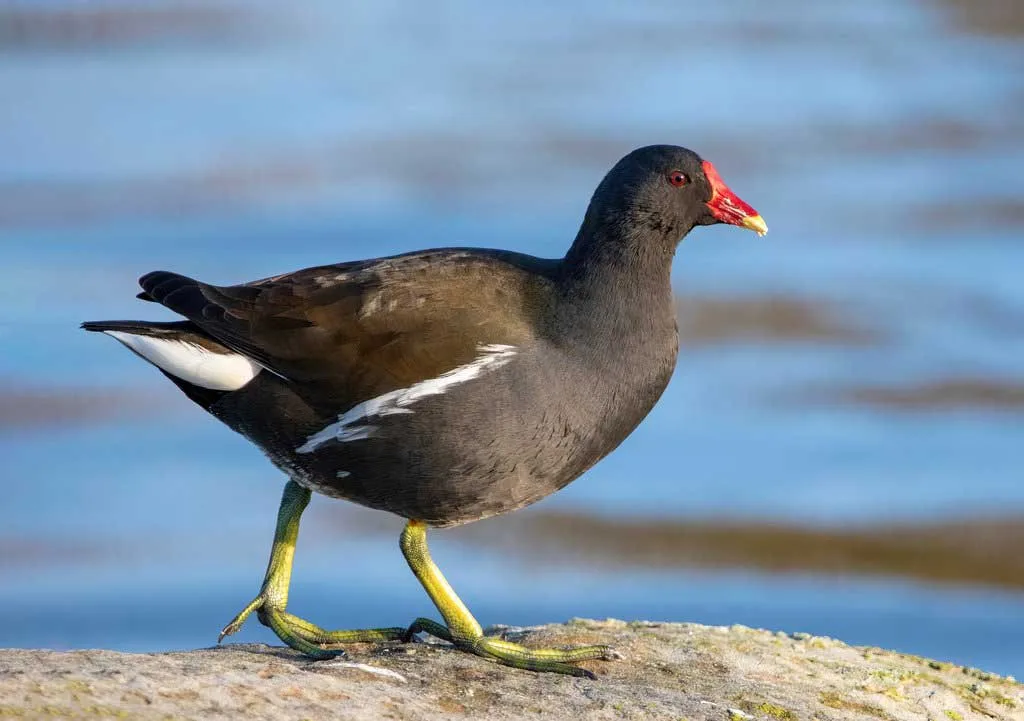
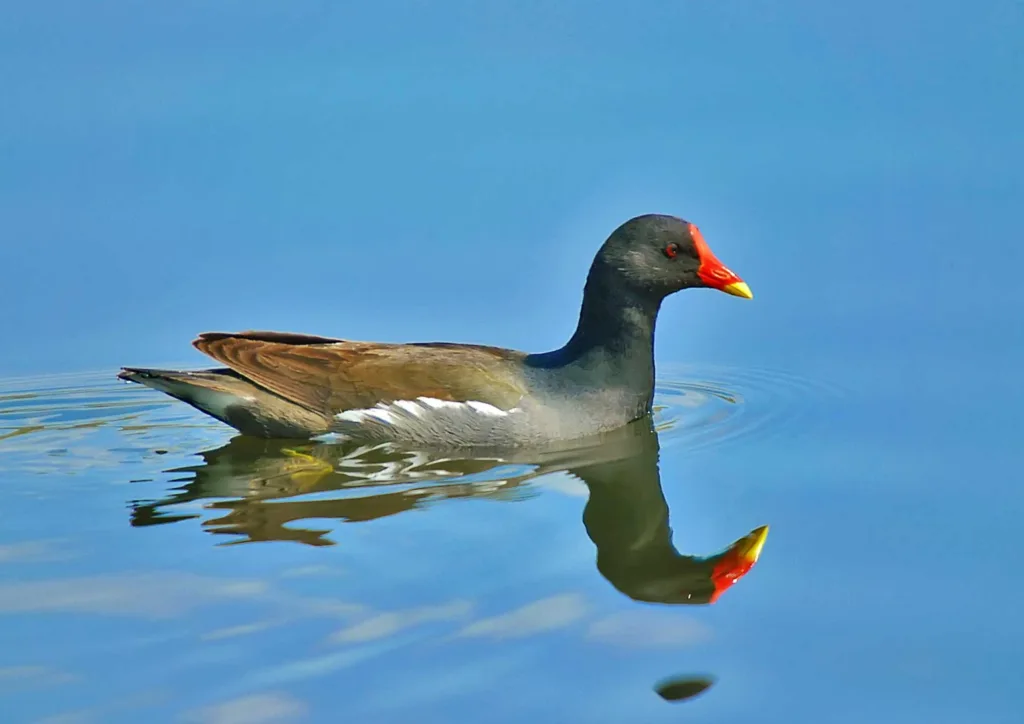
The Olhuvalu kabili is a medium-sized bird, often described by islanders as a “swamp chicken” for its distinctive, bobbing walk and silhouette. Adults possess dark, slate-grey plumage that provides perfect camouflage in the shadows, contrasted sharply by a brilliant red frontal shield and a yellow-tipped bill. Nature has gifted the bird with long, yellow-green legs ending in exceptionally large, unwebbed toes. These act as biological snowshoes, allowing the bird to walk effortlessly over soft mud and floating lily pads. Beyond its physical traits, the Moorhen is highly territorial and intelligent. In a curious ecological twist, the more common White-breasted Waterhen (Kanbili) has even been observed laying its eggs in Moorhen nests, seeking a safe harbor for its own young.
Because of its scarcity throughout the rest of the Maldives, the Moorhen historically held a high profile in the local bird trade. In 1994, a Common Moorhen carried a retail value of Rs 60, significantly higher than the ubiquitous White-breasted Waterhen. Historically, these birds were a frequent sight in village house compounds, where they were kept as flightless companions.
Today, the Common Moorhen is a protected species under Maldivian law. It serves as a sentinel for Fuvahmulah’s fragile freshwater ecosystems. Ornithologists emphasize that protecting the island’s breeding colonies—one of which was documented as a nest with two eggs in August 1983—is vital for the survival of this localized population. By preserving the wetlands of Fuvahmulah, the Maldives protects a bird that exists natively nowhere else in its vast oceanic territory.
Quick Facts: The Common Moorhen (Valikukulhu)
Found exclusively in the Maldives on the island of Fuvahmulah.
Freshwater wetlands, specifically the Bandaara Kilhi and Dhadimagi Kilhi lakes.
Year-round; however, the dry season (January to April) offers the best visibility for exploring the marshlands.
Strictly Protected. It is illegal to capture, trade, or keep these birds in captivity.
“The bird remains a central part of the islanders’ morning chorus, a sound inseparable from the dawn light over the taro patches.”
References:
- Ash, J. S. and Shafeeg, Ali (1994). Birds of the Maldive Islands, Indian Ocean. Forktail 10: 3-32.
- BluePeace Maldives (2011). Common Moorhen; Exclusive Bird to Fuvahmulak in the Maldives.
- Maldives Protected Areas (2025). Common Moorhen Gallinula chloropus.
- Fuvahmulah Nature Park. Visitor Information & Conservation Guidelines.