An Island Unlike Any Other
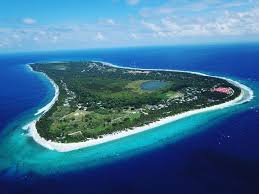
In the far southern reaches of the Maldives lies Fuvahmulah, the nation’s only atoll consisting of a single island. About 494 km from Malé, the capital, it sits in striking isolation—its closest neighbor, Addu, lies roughly 75 km away. From the shores of Fuvahmulah, no other island or landmass appears on the horizon. Yet this remoteness only enhances its appeal: the island’s dramatic beauty, lush landscapes, and rare geological features captivate both visitors and locals.
Fuvahmulah’s isolation, however, once shaped a very different reputation. Early Maldivian leaders saw the island not as a paradise, but as a place for exile, likely due to its distance from the rest of the archipelago.
A Fierce Reef and a Fearsome Reputation
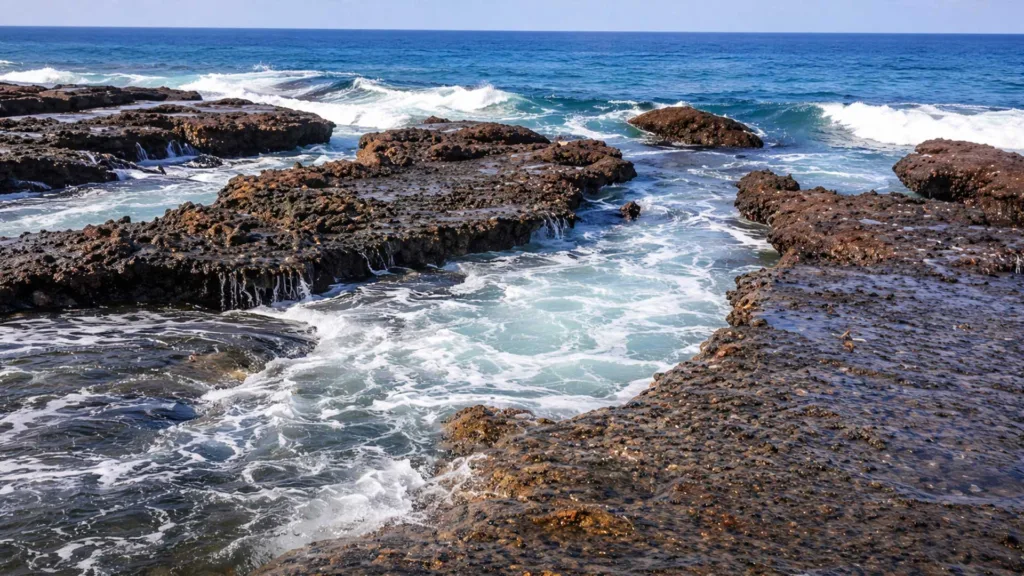
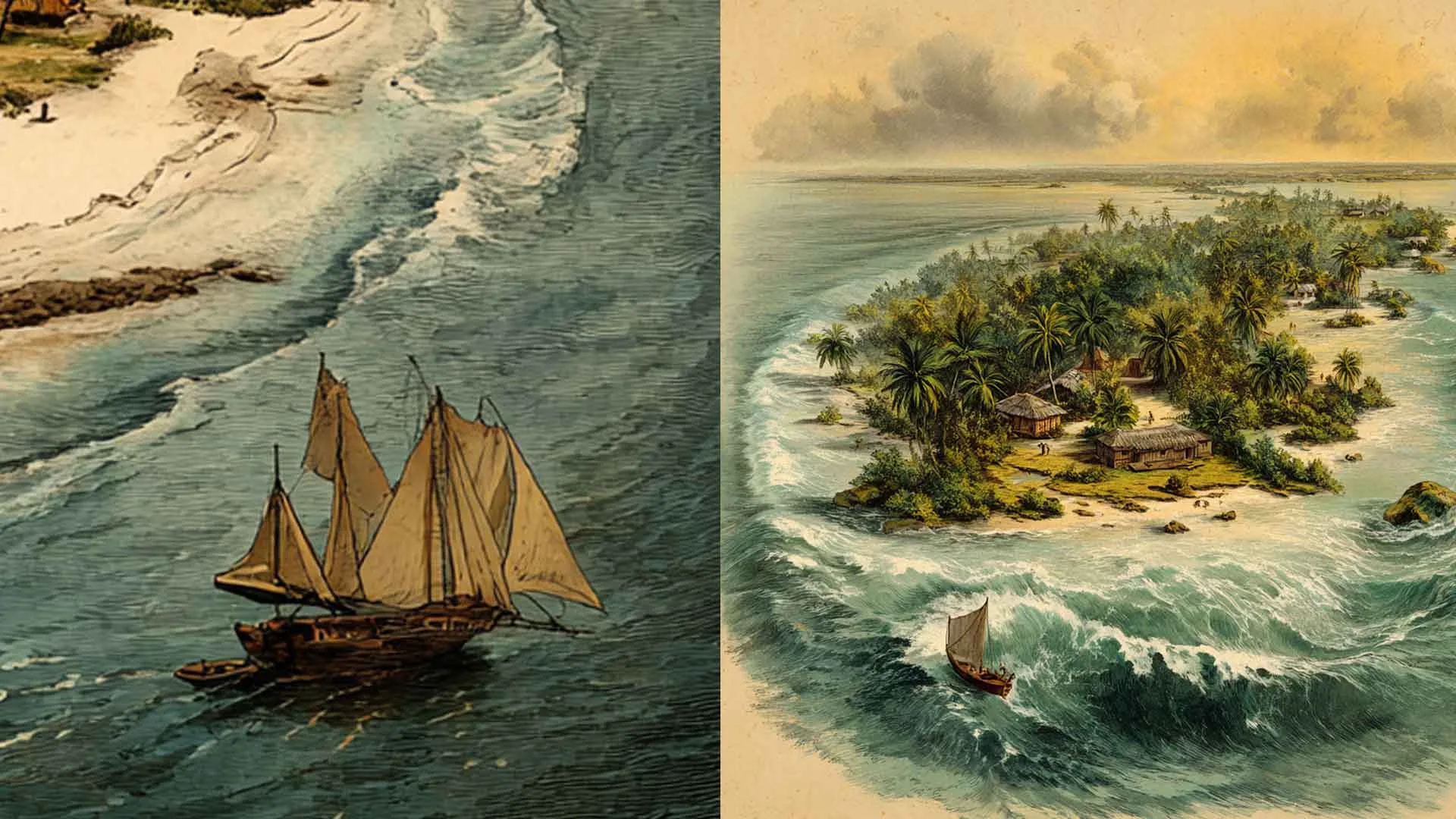
A strong, unyielding reef encircles the island’s 4.5 km coastline. Constantly struck by heavy waves, it has challenged sailors for centuries. Even modern forces struggle: landing an amphibious attack here would test even the world’s most advanced special forces.
History proved this strength during the southern uprising of the 1960s, when a government ship carrying troops under President Ibrahim Nasir became stuck on the reef. Local islanders fought off the stranded troops using coral stones, eventually forcing them to retreat. Such events helped solidify Fuvahmulah’s image as an island both resilient and formidable.
Some rulers may even have believed the island’s natural phenomena were ominous—reinforcing the idea that Fuvahmulah was a suitable site for exile and banishment.
A Remote Island Turned Political Exile
Because of this remoteness, Maldivian rulers used Fuvahmulah to punish high-ranking political figures who challenged government authority. Many early exiles were intelligent, influential leaders.
One of the most notable was Mohamed Didi of Velaanaage, accused of plotting to overthrow the government in the early 20th century. During his exile, he married five women from Fuvahmulah:
- Aisha Didi of Funaad Ganduvaru, with whom he had two children: Abdul Majeed Mahir and Aminath Mahir
- Fathimath Didi of Dhonthakaanubeage, mother of Shareefa Mahir (also known as Dhon Didi of Haji Edhuruge)
- Fathimath Didi of Ranuaraa Feeshi, mother of Ali Mahir
- Amina Manike of Maadhadige
- Fathumei Faan of Dhadimaguge
Mohamed Didi’s father, Ahmed Didi, later traveled to Fuvahmulah to visit him and ended up marrying a woman from the island as well. From this marriage came Ibrahim Nasir, who would eventually become one of the Maldives’ most prominent national leaders.
Royal Exiles: Princes in Isolation
Exile to Fuvahmulah was not limited to political rebels—royalty was sent here too. Sultan Mohamed Shamsudheen III was exiled alongside his son, Prince Hassan Izudheen. They lived in the Dhadimagu ward, close to the narrator’s home in Dheyliya, under strict orders that no one was allowed to meet them.
To escape the loneliness of isolation, they spent time catching barred flagtail (kattafulhi) and flying raaraa gudi, the island’s large traditional kites. Prince Hassan Izudheen was particularly skilled at flying them.
He died on Fuvahmulah and was buried at Hukuri Miski—the island’s historic Friday Mosque—on September 25, 1940.
Other Exiles and Legacies
Another prominent exile was Ibrahim Faamdheri Kilegefaanu. He was brought to Fuvahmulah by a couple shortly before his execution during the reign of King Mohamed Mizudheen. His descendants remain on the island today, known as the Kilegefaanu family.
Historical accounts also mention the exile of Saamiyaafashaana.
In the 1950s, Ibrahim Hilmy was sent to Fuvahmulah after being accused of supporting then-President Mohamed Ameen. He lived in the Dheyliya home where Prince Hassan Izudheen and Sultan Shamsudheen had previously stayed.
The tradition of political exile continued into the modern era. In 1975, Ahmed Zaki, the former prime minister, was banished to Fuvahmulah. He became well known on the island and also resided in Dheyliya.
A Place Where History and Beauty Meet
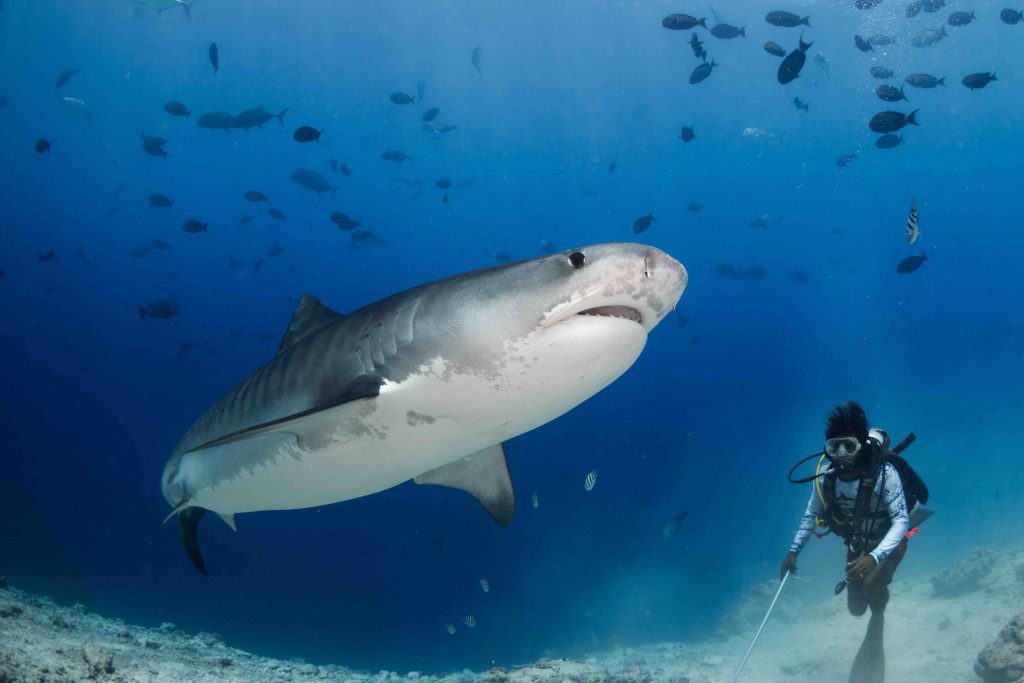
Today, the same isolation that once made Fuvahmulah a place of punishment has transformed it into one of the Maldives’ most intriguing destinations. Travelers come for its raw natural beauty—tiger sharks, freshwater lakes, black-pebble beaches, and vibrant culture—but also for the stories that linger in its villages and historic sites.
Fuvahmulah is more than an island. It is a living archive of resilience, royalty, rebellion, and heritage—an unforgettable stop for anyone seeking the deeper, lesser-known stories of the Maldives.