Fuvahmulah is known for its freshwater lakes, tiger sharks, and lush tropical landscape—but beneath its natural beauty lives a world of folklore passed down for generations. Every island in the Maldives has its legends, and in Fuvahmulah, few stories are as captivating as that of the handi, the mysterious spirit said to wander the island at night.
One of the most memorable accounts of the handi was told to me by an elderly man named Rekibea, a long-time resident of Dhadimago ward. His story offers a rare glimpse into the cultural beliefs that continue to shape island life today.
“She Was Walking Ahead of Me…” — Rekibea’s Story
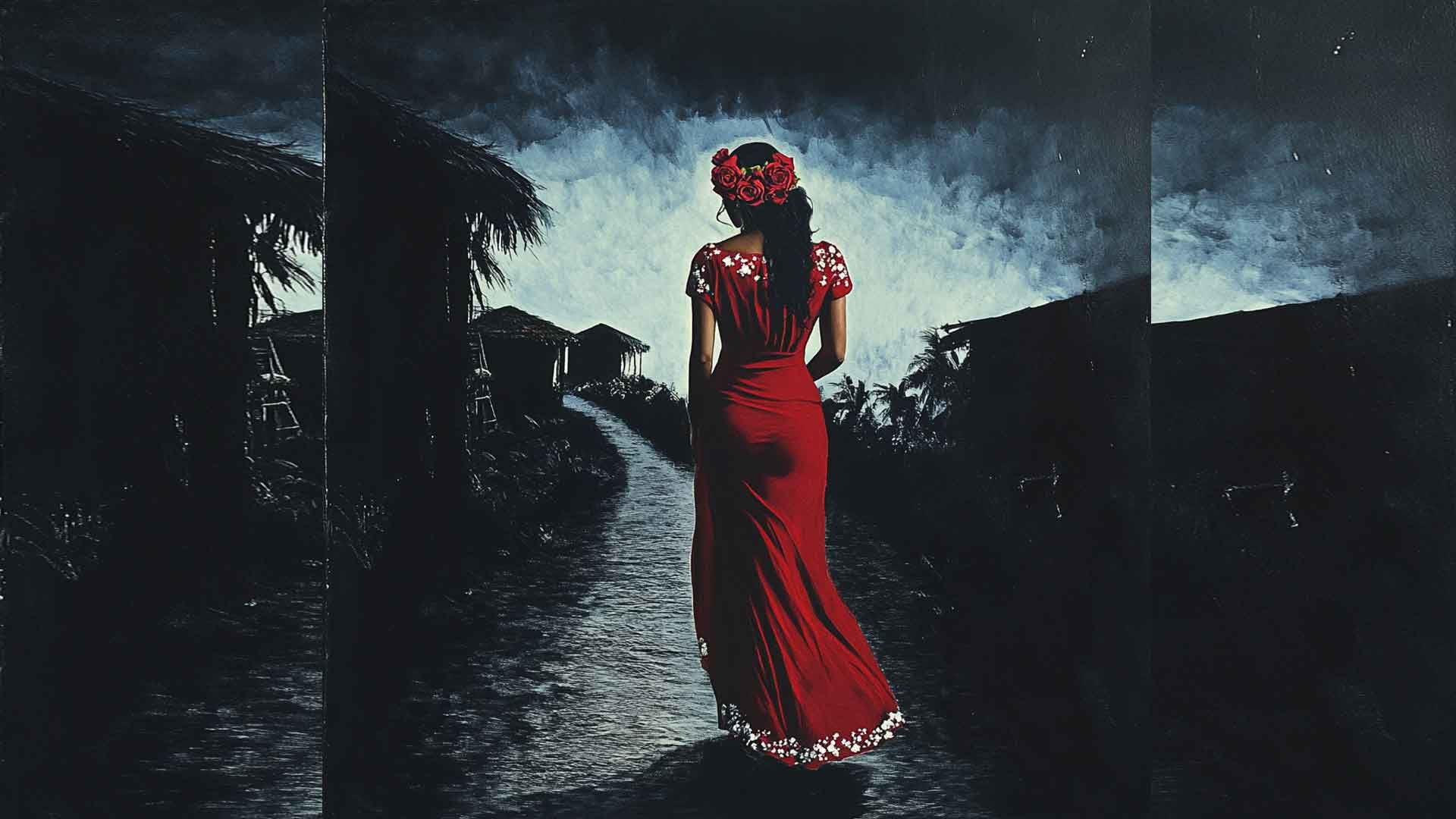
“I was walking down Finivaamagu Road one night,” Rekibea began, his voice steady with memory. He told me he had spotted a woman ahead of him, dressed in a traditional red libaas. Her long hair was woven with fresh flowers, filling the night air with a sweet fragrance. Silver ornaments shimmered on her hands as she walked.
“She moved quietly,” he said. “When I walked faster, she did too. When I ran, she ran. I almost reached her… almost close enough to touch. But she never looked up or down—not even once.”
Just as he reached out to stop her, she vanished.
“I looked all the way down the road,” he told me. “She was gone. That’s when I knew it was a handi.”
Who—or What—is Handi?
In Maldivian folklore, the handi is one of the most well-known spirits. She is believed to take the form of a beautiful young woman, often dressed in red, appearing near quiet roads, thick vegetation, and isolated areas at dusk or after dark.
Common beliefs describe her as:
- long-haired and graceful
- walking silently without turning her head
- surrounded by the scent of flowers
- moving swiftly when followed
- sometimes leaving a person with fever or weakness after the encounter
Despite her mysterious nature, handi is usually considered benign, unless disturbed.
The Fragrance of Flowers and the Poison Bulb Plant
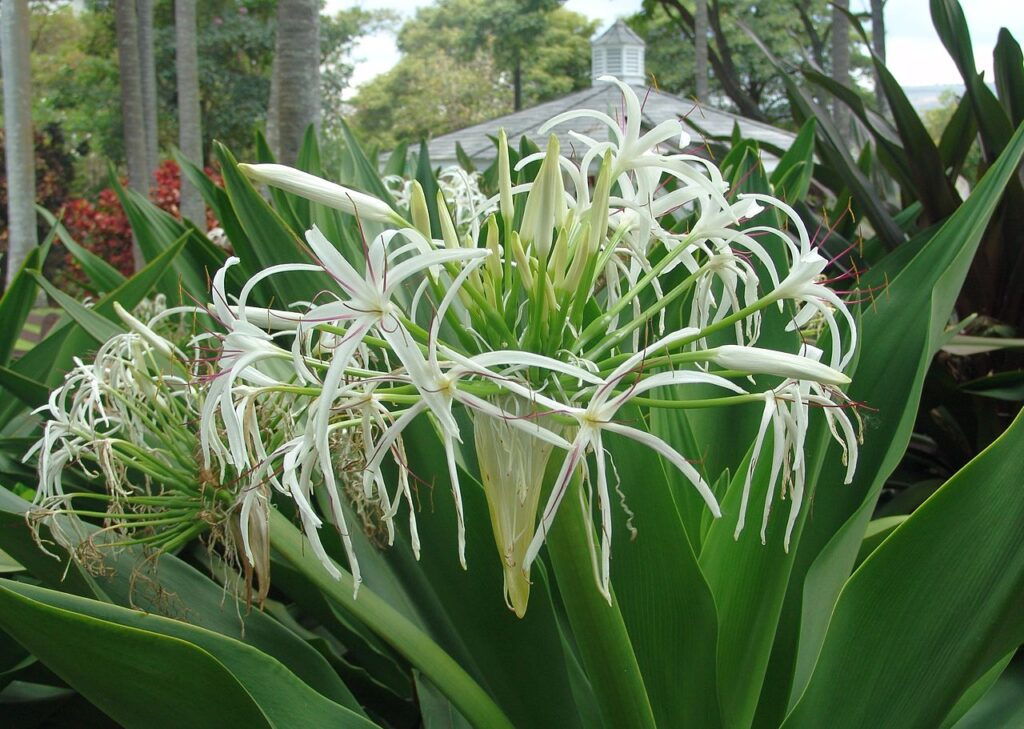
One of the strongest beliefs connecting handi to the natural landscape of the Maldives involves the poison bulb plant, known locally as kendhulhu. Its flower is beautiful but feared. Elders warn children not to pick it at night, as it is said to attract the handi.
The belief goes:
- handi may reside near the plant
- picking the flower could draw her attention
- those who take it might fall ill afterward
These stories, passed down for generations, reveal how Maldivians have long blended the natural world with the supernatural.
Ancient Roots of a Modern Legend
Spanish anthropologist Xavier Romero Frías, in The Maldive Islanders, links the word handi to the Sanskrit Candi, a form of Devi, a goddess believed in folklore to possess or influence humans. This suggests that the myth may be far older than the Maldives itself, carried across cultures and adapted into local island beliefs.
Because of such legends, elders often warned people to avoid certain areas at night, including:
- mangroves
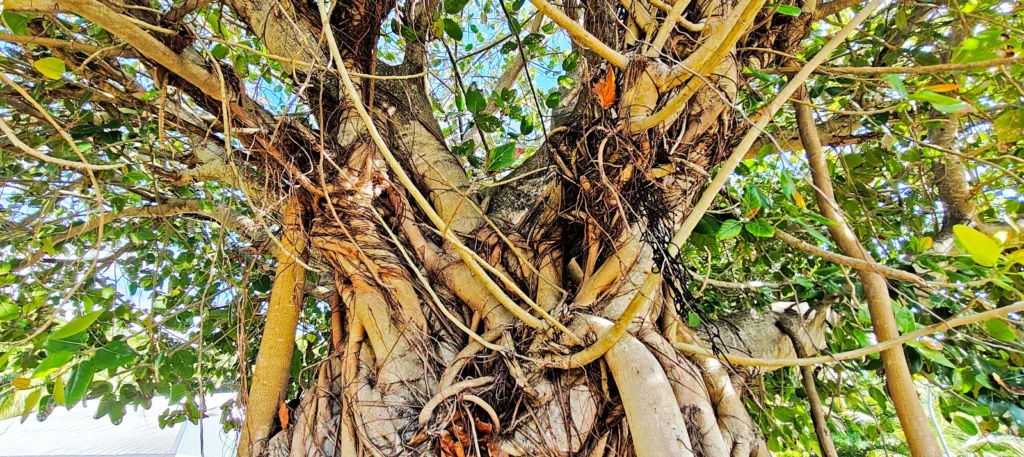
- frangipani trees
- screw pine groves
- kaani and berebedi trees
- and thick vegetation around the island
These places were believed to be the preferred dwellings of spirits.
A Spirit With Many Faces
While handi is commonly described as gentle, some versions of the story say she can take a more frightening form—sometimes resembling a witch or having claws hidden in her heels. However, most stories simply describe a mysterious woman whose presence leaves people confused, enchanted, or suddenly ill afterward.
Even today, locals tell stories of seeing girls walking alone at night, never responding when called. Riders on bicycles or motorcycles follow them out of curiosity, only to feel unwell once they return home.
These tales remain part of the island’s cultural memory, shaping how people view the night and the natural world around them.
Folklore as Part of the Fuvahmulah Experience
While Fuvahmulah has embraced modernity—with cafés, dive schools, and a growing tourism scene—its identity is still deeply rooted in oral history and folklore. Stories like that of the handi offer travelers a unique window into the island’s heritage, reminding visitors that the Maldives is more than beaches and lagoons; it is a culture shaped by centuries of storytelling.
For travelers exploring Fuvahmulah:
- walk down Finivaamagu Road in the early evening,
- listen to local elders share stories,
- explore the island’s lush natural areas—always respectfully,
- and immerse yourself in a part of the Maldives rarely seen in guidebooks.
The island’s beauty lies not just in its landscape, but in the stories whispered across generations.
And perhaps, on a quiet night, with the scent of flowers drifting through the air and the road stretching silently ahead, you’ll understand why legends like the handi continue to captivate the people of Fuvahmulah.