Long before fishing rods and metal jigs became part of deep-sea fishing, catching Kattelhi in Fuvahmulah began with a hammer, pieces of coral and fibre stripped from a tree. It took hours of preparation before a traditional wooden boat, the bokkuraa, could leave shore.
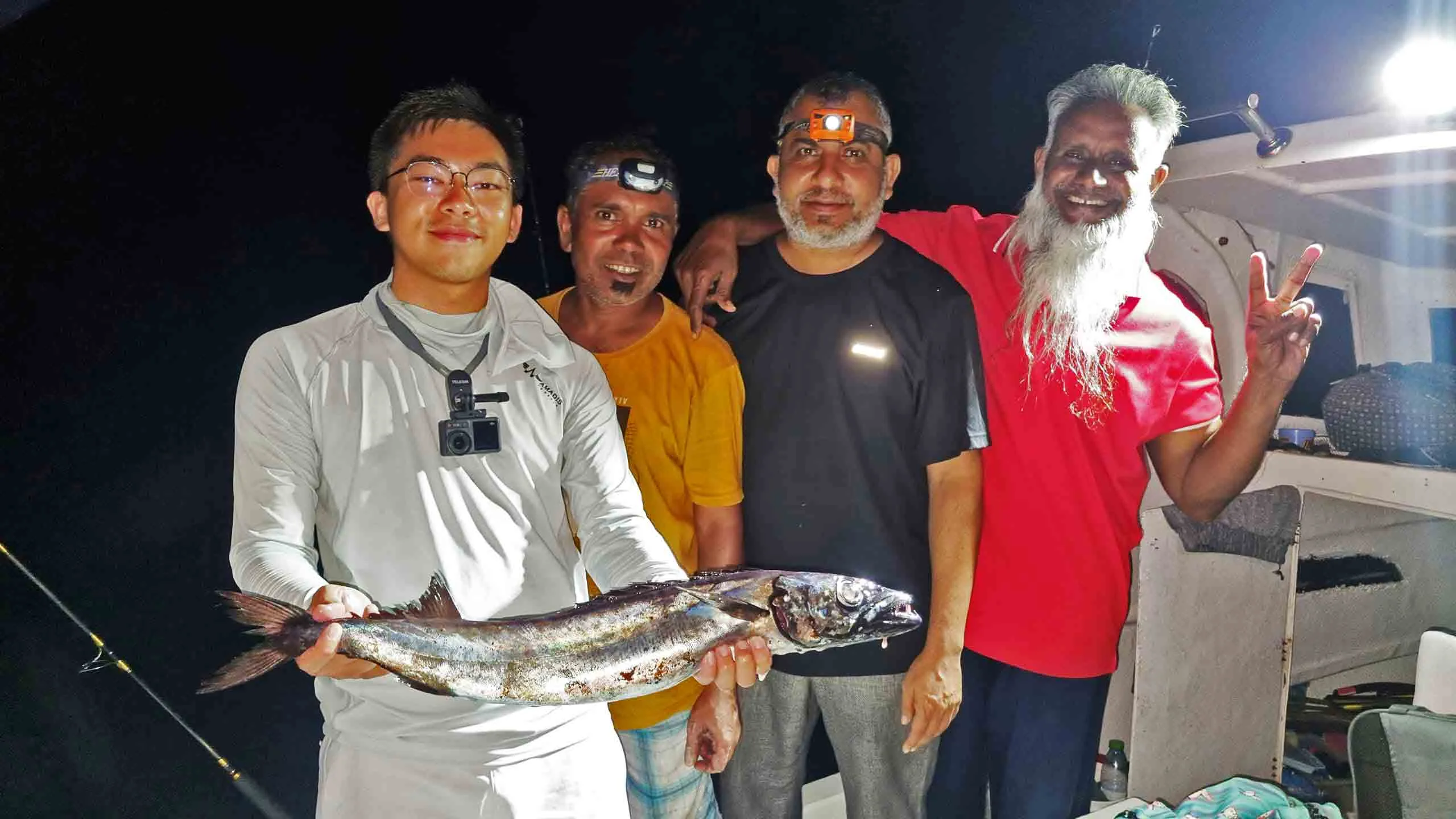
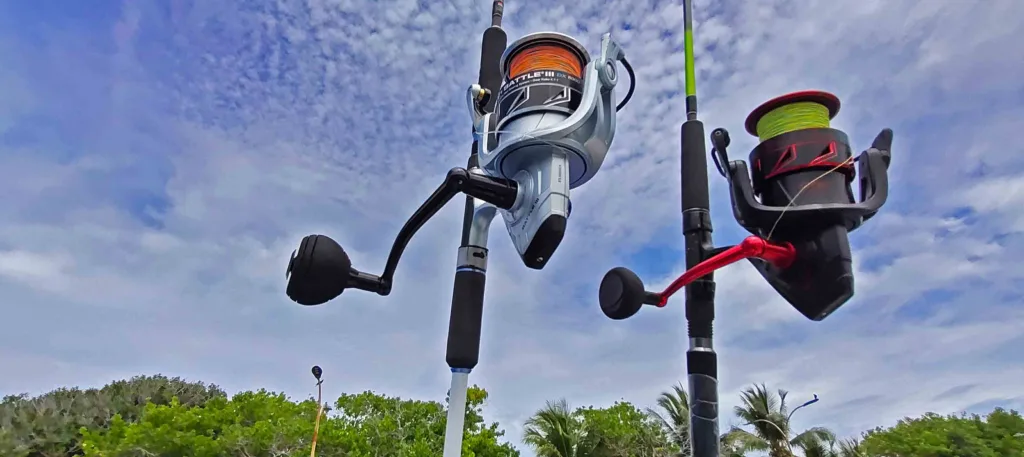
Today, fishermen use modern rods and reels to reach the deep waters around the island. Some even make their own metal jigs from iron bars to avoid the expense of losing commercial lures to sharks. The equipment has changed considerably, but the target remains the same: Kattelhi, the Promethean escolar (Promethichthys prometheus), a deep-water fish closely associated with Fuvahmulah.
Preparing the Old Way

In the traditional fishery, preparations began on land. One essential material was vaanaa, thin fibre obtained from the bark of the sea hibiscus tree, known locally as dhigai. Fishermen stripped the bark, extracted the fibres and twisted them into strands strong enough for the fishing setup. They used the material to attach hooks to the fishing line and secure the coral stones that carried the bait down into deep water.
The stones required considerable work. Fishermen broke large pieces of coral into weights of around three to four kilograms. According to local accounts, the chief fisherman, known as the Keyoulhu, could require about 80 pieces for a trip.
Breaking so many stones was hard physical labour. The men needed a heavy hammer, but obtaining one was another task in itself.
The tool was known as the saudharaatha marotheyli, a hammer weighing approximately six kilograms. According to local accounts, there was only one in the entire Dhadimago ward. It belonged to the Abeage household, and fishermen had to arrange to borrow it before beginning their preparations. If another crew had booked the hammer first, the waiting fishermen had to delay their work.
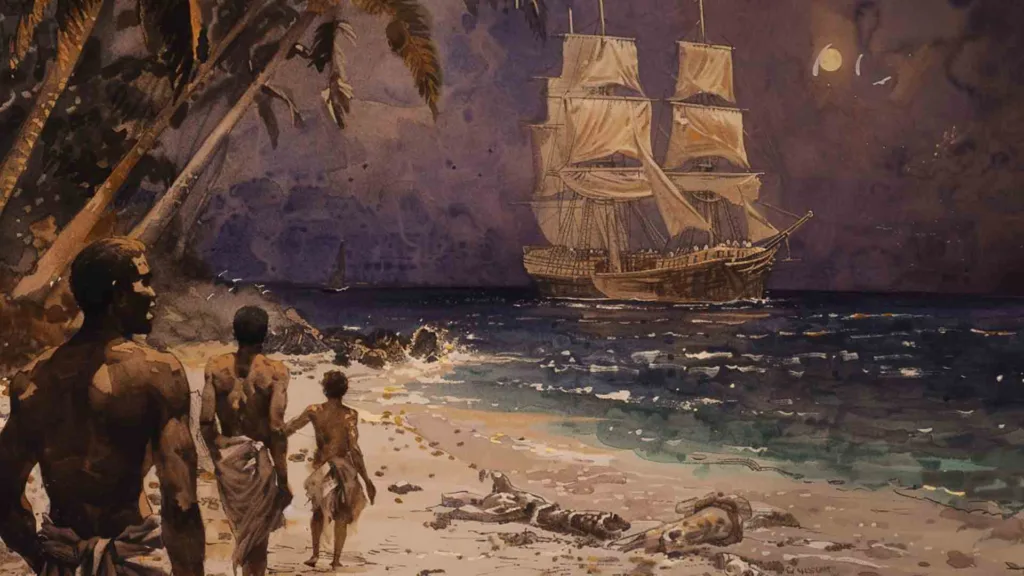
Once they secured it, two men went to the beach, where large pieces of coral lay scattered along the shoreline. They struck the blocks repeatedly until they broke into manageable weights. The finished pieces were carried in a mudeyshi, a bucket woven from coconut leaves, to the waiting boat.
A traditional Kattelhi fishing trip could involve five to eight men aboard the bokkuraa. The crew had to manage the oars, fishing line, hooks and coral weights, with each man responsible for a particular task. Four men, including the Keyoulhu, handled the fishing line. Another man controlled the rear steering oars, called the Dhekedefaali, while two rowers worked the main side oars, known as the bandofaali. Other crew members helped attach the stones and remove hooks from the catch.
From Handlines to Jigging Rods
Flying fish were among the preferred baits, although reef fish such as groupers were also used. Fishermen threaded the hook through the bait at least twice, leaving its point exposed.
Once the boat reached the fishing grounds, the crew lowered the coral stone, which carried the baited hook towards the seabed. A sharp tug on the line released the hook from the weight. The fisherman then worked the line with repeated jerks and short movements to attract fish.
The technique required a feel for the line and an understanding of how to present the bait in deep water. Local accounts recall successful trips bringing 50 to 100 Kattelhi aboard a single bokkuraa.
Modern fishing gear has changed the process considerably. Anglers targeting Kattelhi now use rods, reels and heavy metal jigs to reach the deep waters around Fuvahmulah. Instead of preparing coral weights and attaching them with natural fibre, they lower a metal lure to the required depth and work it with repeated lifts and drops. Its movement is intended to attract predatory fish, while the rod and reel allow the angler to control the lure and retrieve the catch.
Yet hooking a fish is only part of the challenge. Bringing it safely to the boat can be just as difficult.
When Sharks Take the Catch
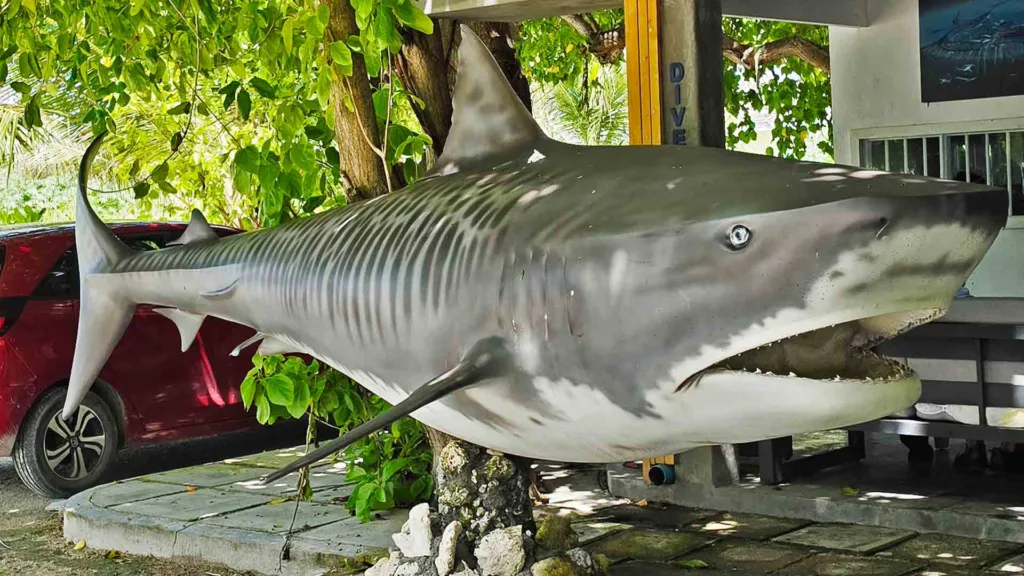
Fuvahmulah’s surrounding waters are known for their large sharks, and they can complicate the task of landing Kattelhi. A shark may seize a hooked fish as it is being brought towards the surface. Sometimes the fisherman loses the catch; in other cases, the line is cut and the metal jig disappears with it.
Commercial jigs can be expensive, and repeated losses add to the cost of fishing. Some local anglers have responded by making their own lures from inexpensive materials.
Making Metal Jigs from Iron Bars
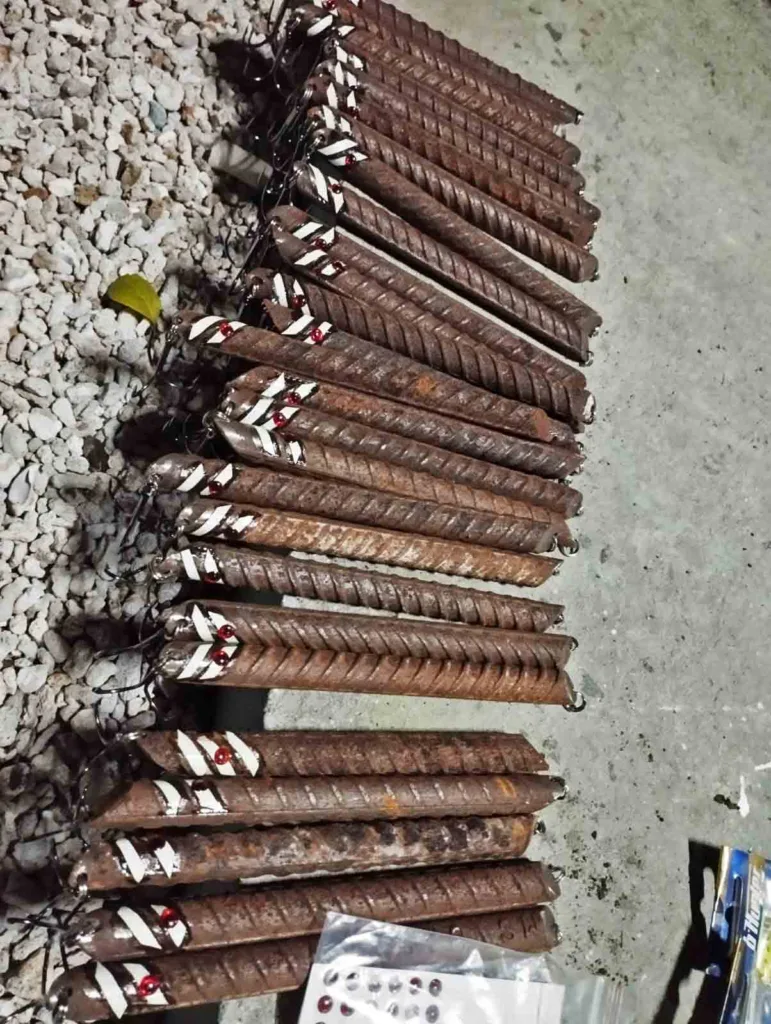
One practical solution is to use iron reinforcement bars, commonly called rebar. Pieces of 12 mm or 16 mm-thick bar are cut into lengths of about five to ten inches. The pieces are then painted in bright colours or decorated with reflective stickers to resemble baitfish before being fitted with suitable hooks and rigging.
These homemade jigs provide a cheaper alternative to commercial lures. If a shark takes the line, losing an improvised iron lure costs considerably less than losing a specialised store-bought jig.
It is a practical response to a recurring problem. Rather than allowing the cost of lost equipment to dictate every fishing trip, local anglers make use of readily available materials to produce lures they can afford to lose.
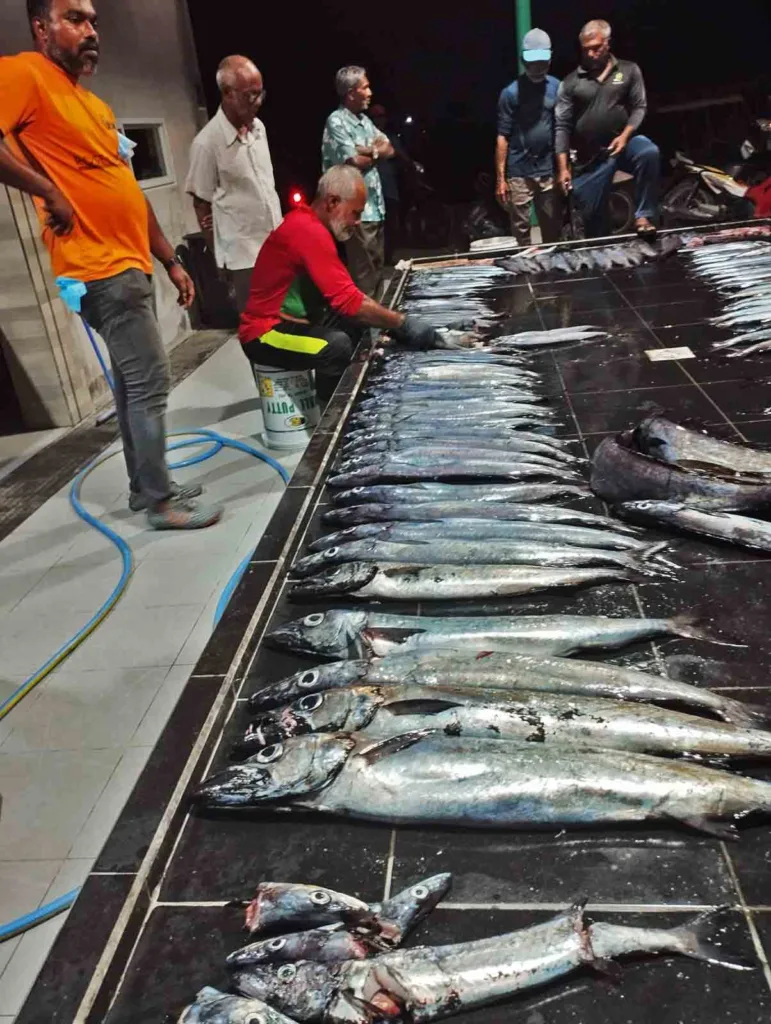
The contrast with the old method is striking. Earlier generations depended on a borrowed hammer, dozens of coral weights and fibre prepared by hand. Today, some fishermen carry homemade iron jigs alongside their modern rods and reels.
A length of construction steel, cut to size and marked with paint or reflective stickers, may look unremarkable beside a commercial lure. Yet it serves a specific purpose in the deep waters around Fuvahmulah: helping fishermen target Kattelhi without risking an expensive jig every time a shark strikes.
From coral stones carried in a mudeyshi to iron bars transformed into fishing jigs, the methods used to catch Kattelhi have changed with the times. The story can be traced through the equipment itself, from the heavy hammer once borrowed in Dhadimago to the homemade metal lure now lowered into the depths.