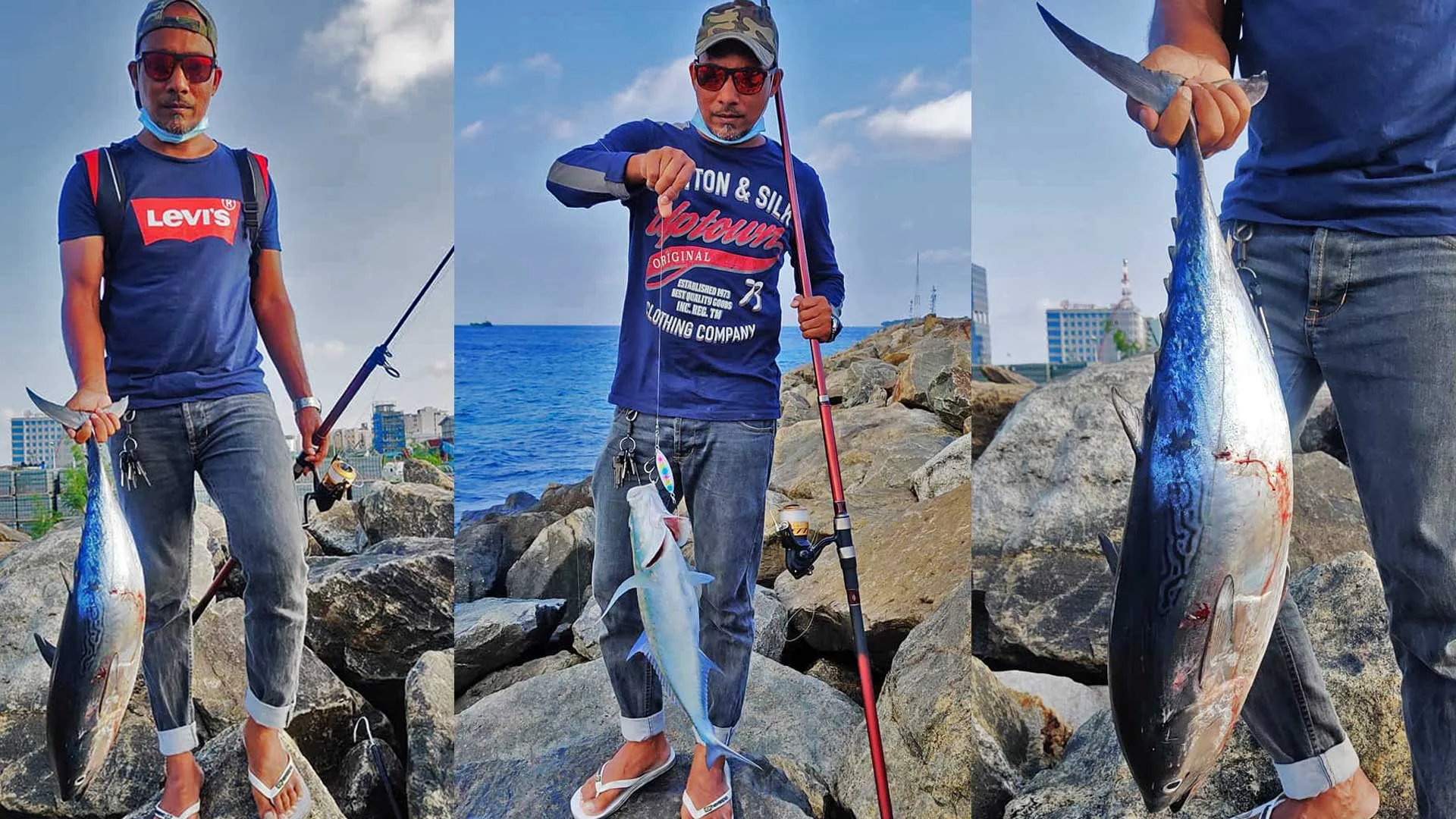

It was three years ago. As usual, I woke up early in the morning. After the prayer, I headed to Malé across the Hulhumalé Bridge. While riding along the highway, I could see the calm and peaceful sea.
When I reached the southern side of the beach where we usually go fishing, I opened my telescopic rod and prepared my gear as quickly as possible. The time to catch kawakawa (Euthynnus affinis) is very short. The best time is usually from 5:45 a.m. to 6:30 a.m. Kawakawa, locally known as latti.
When there are many kawakawa, we can see them chasing small fish on the reef flat and beyond the drop-off. On that day, there were about nine anglers on the jetty. I was using a Spinfisher reel, a 40 lb monofilament line, and a 60-gram lead lure.
After my tackle was ready, I cast my rod. The lure usually lands about 100 to 200 feet away. When it hits the water, we let it sink. Since it lands beyond the drop-off, we let it sink deep, usually for 30 to 60 seconds. After that, we reel in while moving the rod up and down, so the lure moves toward the surface at a diagonal angle.
By the time I began casting, three anglers had already caught kawakawa, one or two fish each. I cast about ten times, but no fish struck my lure. When kawakawa are active, they usually hit the lure while it is sinking. At the beginning, I had no luck, even though I cast several times.
Suddenly, I saw one angler struggling with his rod. A big fish was pulling his line. He let the line run so the fish could swim before trying to reel it in. The reel made a loud sound as the fish swam fast. We could see it was a large kawakawa. Suddenly, his rod went loose, and the fish escaped.
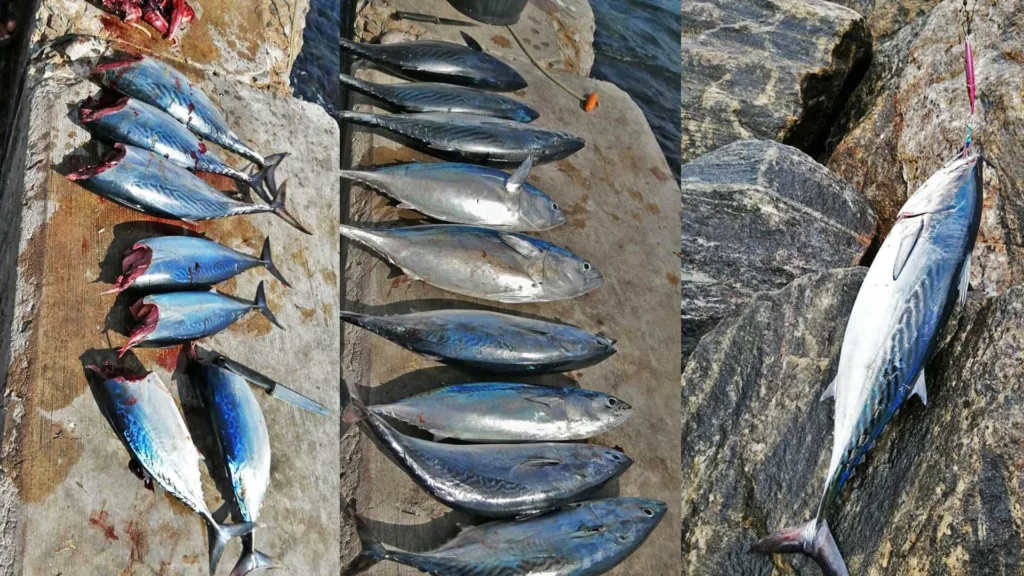
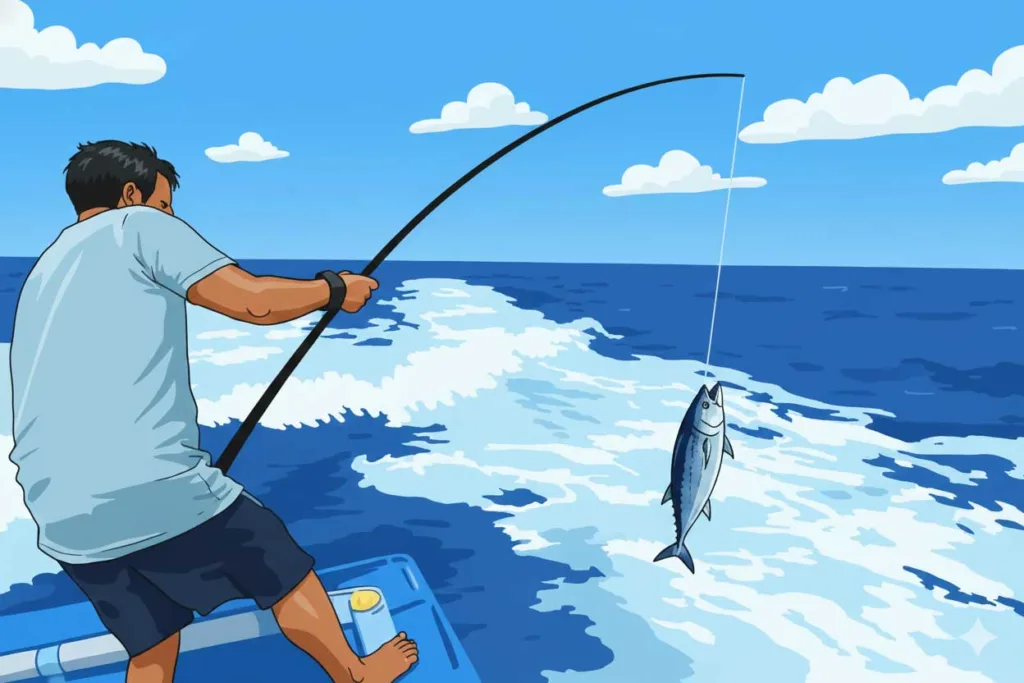
A few seconds later, something pulled hard on my rod. I let the fish run, and my reel screamed. After some time, I tried to reel in. Whenever I could, I lifted the rod and pulled in the line. The fish was very heavy, and I became tired. I was careful because the fish was big and could break my 40 lb line. I let out about 60 meters of line to make the fish weaker. In the first ten minutes, I could not reel in much line.
I let the fish run but kept the reel tight. Slowly, the fish began to weaken. The fight lasted about 20 minutes. When the fish was weak, I reeled it in. When it reached the shallow water, my friends helped me bring it onto the jetty.
When we looked at the fish, we saw my friend’s lure still in its mouth. This meant the fish I caught was the same one my friend had hooked earlier. That is how fishing is. It depends on luck and many other factors.
Kawakawa is also known as mackerel tuna, little tuna, little tunny, false albacore, and bonito. It is normally an unusual catch. When trolling or casting from the beach, the average kawakawa caught is usually between 10 and 15 inches in length.
The kawakawa that was caught on my lure, however, was around 32 inches long. In the Maldives, a kawakawa of this size is called “maa latti.”