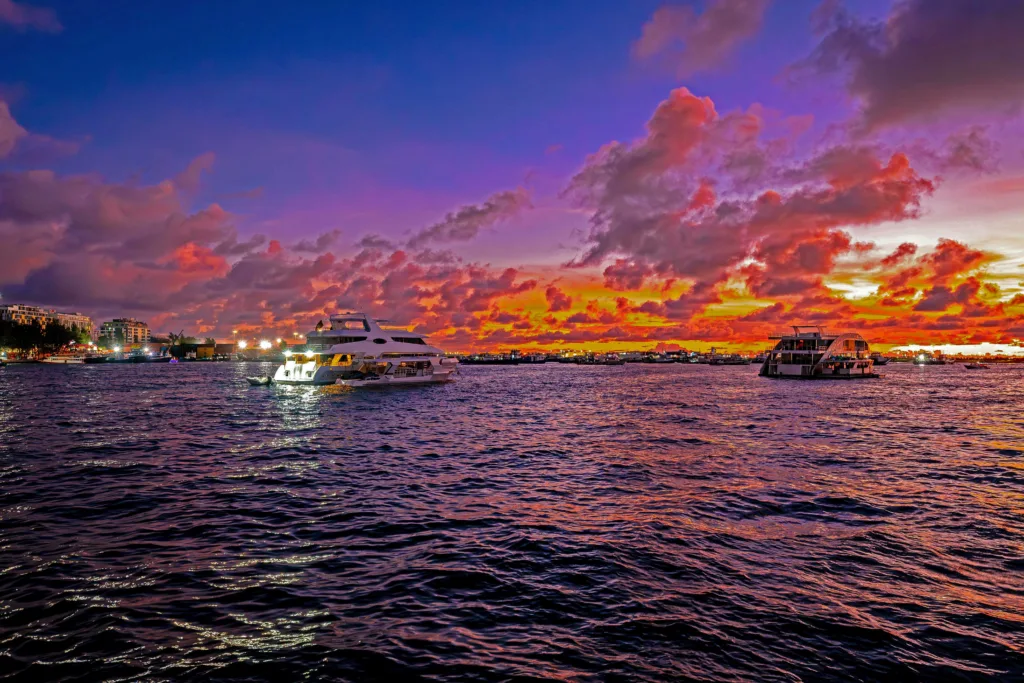
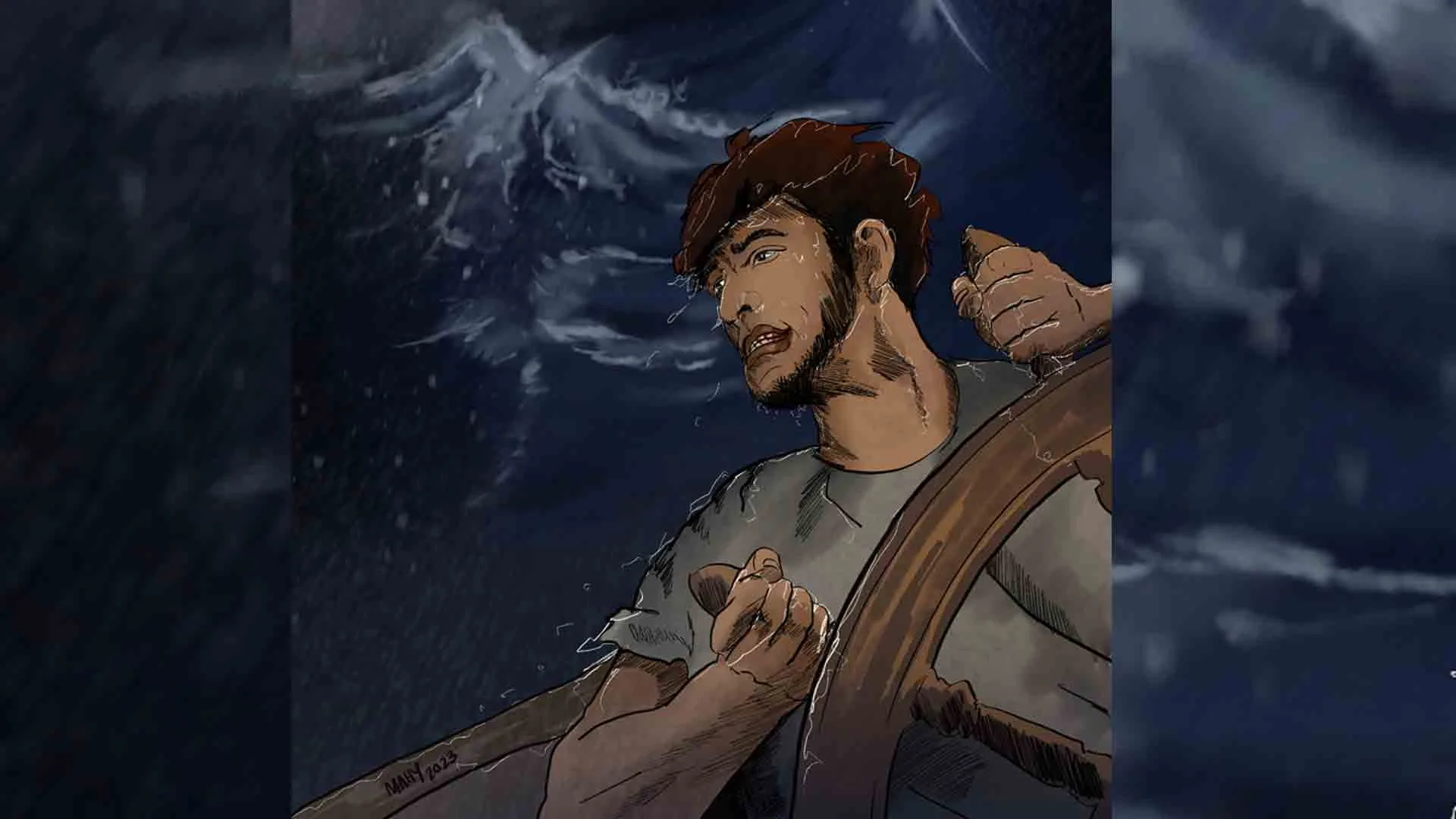
On a moonless night in the remote Maldivian islands, the boundary between the heavens and the earth does not merely blur—it vanishes.
For centuries, Maldivian navigators—the Maalimees—have whispered of a phenomenon known as Kandumathi Elhun. It is a state of being “marooned upon the deep,” a sensory trap where a vessel is held captive by a sea that has transformed into a mirror of the stars. To find oneself in the Phantom Sea is to enter a realm where phantom islands rise from the abyss, and the horizon is a memory.
But as modern oceanography catches up with ancient lore, we are discovering that these “hauntings” are the result of a rare, high-stakes intersection of marine biology and human psychology.
The Neon Inferno
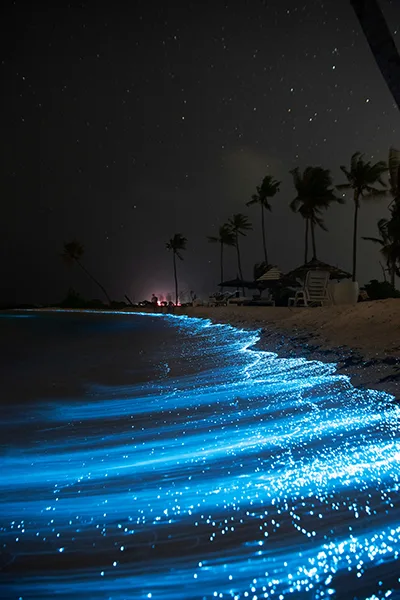
The catalyst for the Phantom Sea is Redhan—the Maldivian term for the fiery bioluminescence caused by the “burning” of the sea. While travelers flock to tourist beaches to see shimmering blue waves, the deep-sea Redhan is a different beast entirely. When billions of microscopic dinoflagellates are agitated in a “sea state zero”—a condition of absolute, glass-like calm—the ocean ignites.
The glow is not merely on the surface; it is an immersive, three-dimensional neon blue fire. On these rare nights, the light is so intense it reflects off the base of the clouds, bathing the entire atmosphere in a cold, spectral hue.
A Glitch in the Human Brain
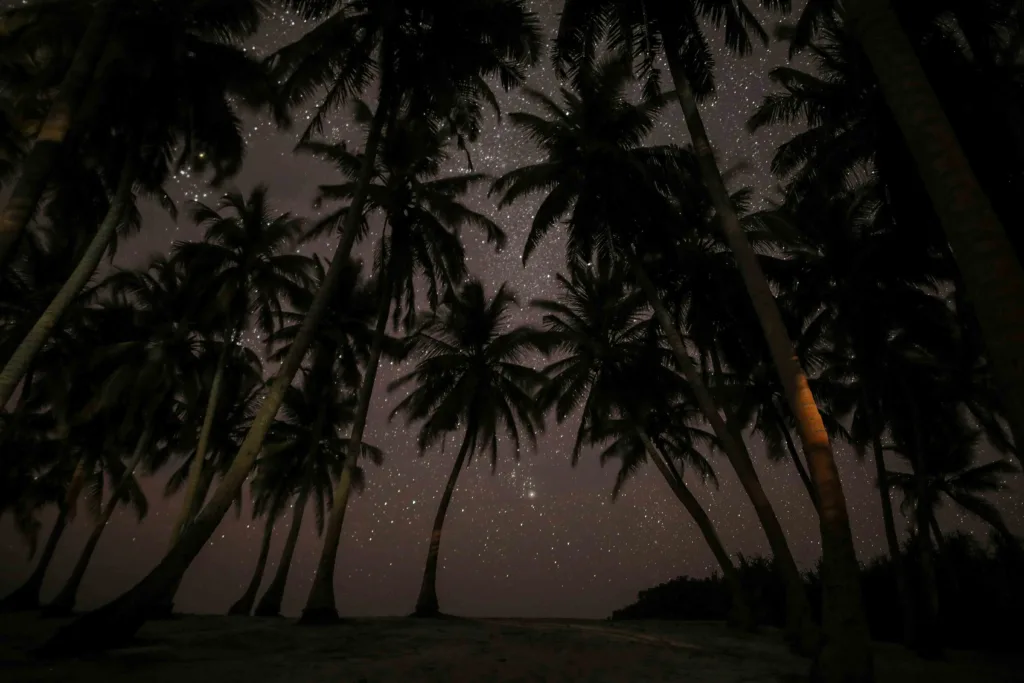
To the human eye, the loss of the horizon line is catastrophic. Without that singular line to divide the sky from the water, the brain suffers from acute spatial disorientation.
“When the stars above are indistinguishable from the bioluminescence below, the pilot loses the ‘upright’ perception,” explain maritime historians. In this sensory void, the brain begins to “fill in the blanks” to compensate for the lack of visual data. This is where the spirits are born. Sailors describe seeing the flickering lights of villages on the horizon where only open ocean exists, or the silhouettes of “ghost dhonis” sailing silently alongside them.
These are not just stories; they are the mind’s desperate attempt to reconstruct a world that has become a glowing void.
The Southern Stronghold of Myth
In his seminal study, The Maldive Islanders, Xavier Romero-Frias notes that southern maritime culture has uniquely preserved the lore of sea spirits, known as dhevi. Historically, when a Maalimee felt the grip of the Phantom Sea, he would turn to ancient rituals to appease the malevolent forces believed to reside in the “thin spots” of the ocean. It was a recognition that the sea was not just a resource, but a sentient power that required respect.
The Shield of Bahuru Kiyevuṅ
One of the most potent defenses against these maritime terrors was Bahuru Kiyevu. This ten-day communal chant and ritual was performed to safeguard the island and its vessels from spiritual or natural crises.
At the heart of this ceremony was the Ley Dhekkun (“Showing Blood”), a ritual sacrifice—often of a red rooster—offered to the sea to appease the dhevi. Led by a faṇḍitaveriyaa (practitioner of esoteric knowledge), these chants were intended to form a spiritual barrier between the human world and the unpredictable entities of the deep. For a sailor lost in the Redhan, the knowledge that these rituals were being performed back home provided a psychological and spiritual anchor in a world turned upside down.
Navigating by Bone
Before the advent of satellite navigation, how did these sailors escape the trap? They relied on a technique that can only be described as “navigating by bone.”
The master navigators of the Maldives understood that when the eyes are deceived, the body must take over. They would place their hands—or sometimes their feet—against the wooden ribs of the dhoni, feeling for the vibration of the hull. By sensing the subtle “pull” of deep-sea currents and the rhythmic frequency of the swells beneath the bioluminescence, they could calculate their position without ever looking at the deceptive horizon.
The Living Archive
Today, as we navigate an era of climate change and shifting marine patterns, the Phantom Sea serves as a potent reminder of the ocean’s enduring mystery. The Kandumathi Elhun is more than a maritime hazard; it is a bridge to an “Oceanic Civilization” that understood the deep long before we had the tools to measure it.
In the Maldives, the sea is a living archive. And on certain nights, when the wind dies, and the water begins to burn, that archive opens its pages, inviting us to see the world as the ancestors did—wild, terrifying, and impossibly beautiful.