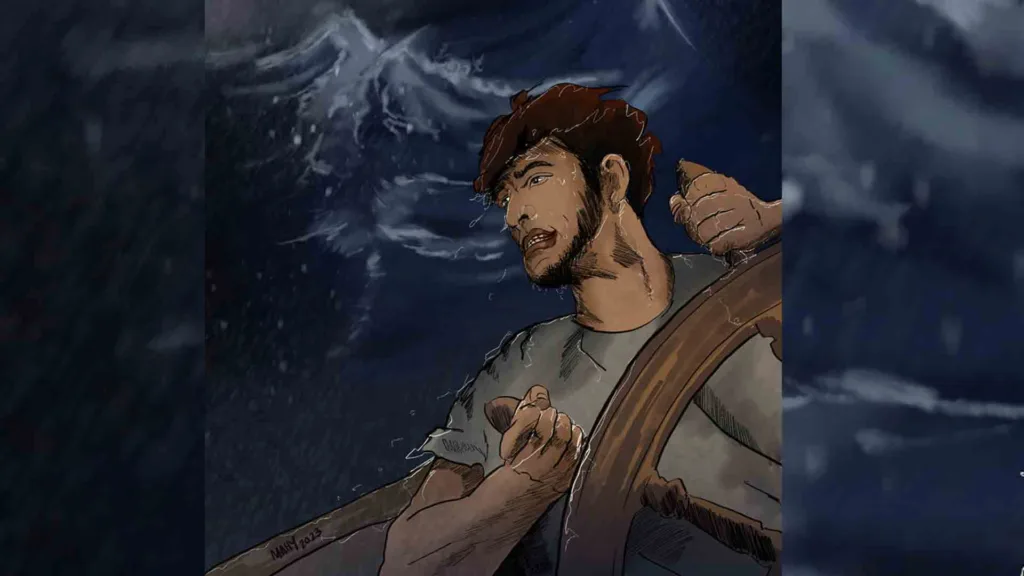
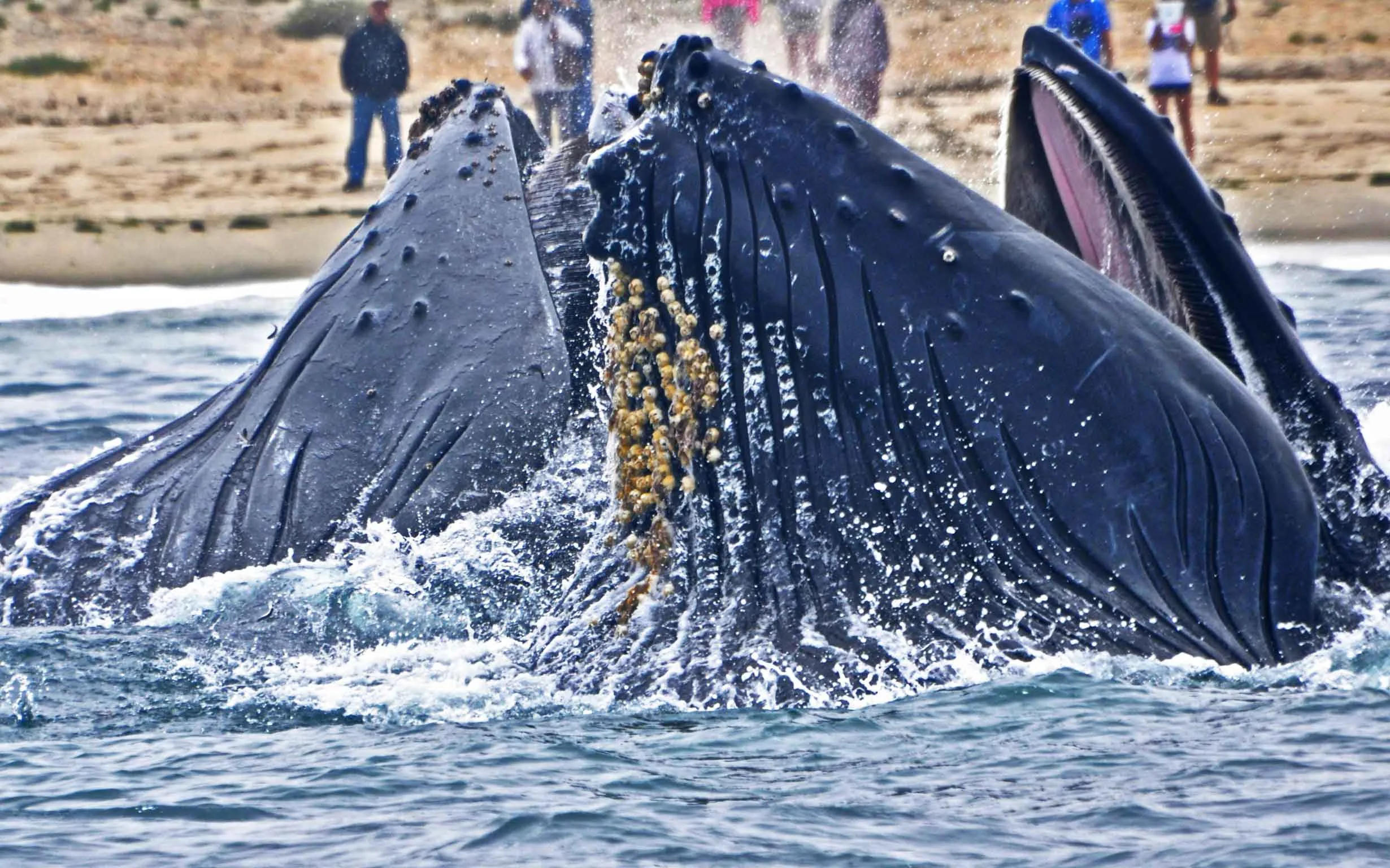
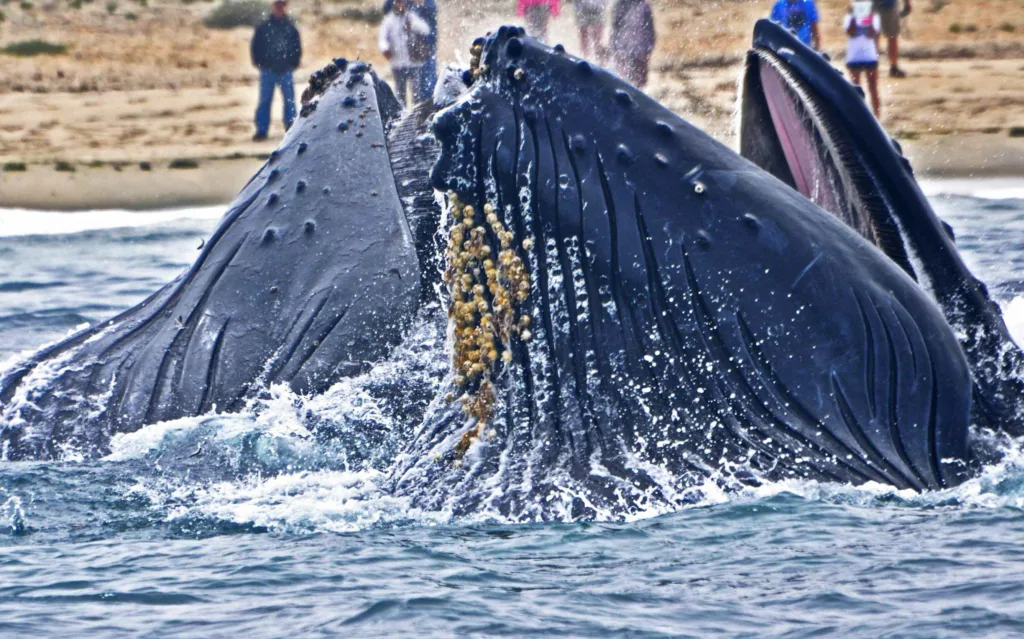
When we were children, the entire island of Fuvahmulah would spring into action whenever a massive marine creature washed ashore. People called out “bondo maha!”—literally “big fish.” At the time, none of us knew these giants were whales, not fish. Even our community elders and officials were unsure of the species; they relied on folklore and collective memory, not field guides or marine science. What we did know was that these events were serious. Word spread quickly, families gathered at a distance, and children were warned to stay well away from the carcass.
The island community worked together to deal with the remains, digging great pits in the sand and burying the enormous bodies by hand. One of the most memorable events from our childhood was the stranding of what was likely a sperm whale near Fuvahmulah’s famous Thoondu beach. The animal was buried where it washed ashore, and that place is still known today as “bondomaha vadilee than”—the place where the big fish was buried.
These early experiences left many Maldivians with lifelong curiosity about why whales strand and what species are most vulnerable. Science now provides much of the clarity we lacked as children.
Which Species Are Most Prone to Stranding?
Whale watching in the Maldives is one of the Indian Ocean’s great pleasures, but the archipelago has also recorded a significant number of strandings. Between 1990 and 2002, researchers documented 129 strandings, offering valuable insight into how different species behave in Maldivian waters.
The species that appears most often in stranding records is the sperm whale. These whales spent much of their lives in deep offshore waters. When weakened by age, illness, or injury, they may drift into shallow coastal areas where they cannot manoeuvre or breathe effectively. Their size, normally an advantage, becomes a fatal limitation once grounded. Many strandings involve solitary males or small groups that were likely already compromised before reaching the reef.
Next are the highly social blackfish species—short-finned pilot whales, melon-headed whales, and occasionally false killer whales. These whales travel in tight pods, communicating constantly and often acting as a unit. This strong cohesion is superb for migration and foraging but dangerous when one individual becomes disoriented near land. In the Maldives, melon-headed whales in particular show a strong pattern of sightings and strandings in the southern atolls, where currents and underwater topography differ markedly from the central and northern regions.
Deep-diving beaked whales, including Cuvier’s, Blainville’s and Longman’s beaked whales, also appear in stranding records even though they are rarely seen at sea. These animals spend most of their time at great depths, navigating steep underwater slopes. When they inadvertently enter shallow areas or become acoustically confused, they may run out of deep water quickly. Many of the Maldives’ beaked whale records come from strandings rather than sightings.
Even baleen whales occasionally appear. Bryde’s whales, often seen feeding alongside yellowfin tuna, may follow prey into areas where the seabed rises unexpectedly. Pygmy blue whales, which pass through Maldivian waters mainly from November to April, also risk entering shallow channels during their seasonal movements.
Why Do Strandings Happen?
Strandings are complex events influenced by many overlapping factors. In the Maldives, some whales strand because they are ill, injured, or elderly, losing the ability to keep pace with their pod or navigate safely. Geography plays a major role as well. The Maldives’ sandy, gently sloping beaches do not reflect sonar the way steep cliffs or rock walls do. Echolocation—so reliable in deep oceanic basins—can become misleading in these environments.
Many whales chase prey toward reef channels, not realizing how rapidly the seafloor rises. Once inside a lagoon, deep-diving species may find escape nearly impossible. For social whales, one poor decision can lead an entire group into danger.
Larger oceanographic forces matter, too. Events such as El Niño change the distribution of prey across the Indian Ocean, drawing whales into unfamiliar waters and increasing the chance of navigational errors.
Insights from Australia reflect similar patterns.
According to the Department of Climate Change, Energy, the Environment and Water (Australia), whales and dolphins strand for reasons that mirror those in the Maldives: poor health, disorientation, predator and prey interactions, gentle coastline shapes that distort sonar, and human-related noise that disrupts communication. Species most frequently involved in Australian strandings—especially pilot whales and sperm whales—are the same species commonly stranded in the Maldives. Their reliance on echolocation and tight social structures makes them vulnerable in similar ways across both regions.
A Deeper Appreciation for Ocean Life
For visitors and locals alike, understanding strandings deepens the meaning of whale encounters in the Maldives. These islands host one of the world’s richest communities of cetaceans, yet even here, whales navigate a world shaped by shifting monsoon winds, steep reef walls, complex currents and acoustic challenges. Recognising which species are most vulnerable—sperm whales, pilot whales, melon-headed whales and deep-diving beaked whales—highlights both the awe-inspiring resilience of marine life and the delicate balance that defines life in the open ocean.
Reference
This article draws on long-term cetacean research in the Maldives by R. Charles Anderson (1990–2002) and insights from the Department of Climate Change, Energy, the Environment and Water (Australia).