Herbs, Belief, and the Quiet Power of the Maldivian Landscape
Beyond the beaches and turquoise lagoons of the Maldives lies a quieter world—one shaped by plants, footpaths, and beliefs carried across generations. Long before clinics and pharmaceuticals reached the atolls, islanders relied on familiar trees and herbs not only to treat illness, but to navigate a landscape understood to be alive with unseen forces.
In Maldivian folklore, these plants were never exotic or rare. Their power came from closeness—from daily use, shared memory, and the meanings people attached to ordinary elements of their surroundings. What mattered was not secrecy, but familiarity.
Where Healing and Belief Met
Maldivian sorcery, known as faṇḍithaverikan, did not depend on mysterious ingredients imported from distant lands. It drew instead from the same environment that sustained everyday life. The boundary between medicine, ritual, and belief was fluid. A plant used to treat fever might also protect a traveler or ease spiritual unease, depending on intent.
Power was not locked inside the plant itself. It emerged through context—through words spoken, timing observed, and the place where the act occurred. Meaning shaped outcome, and healing was as much about alignment as it was about remedy.
Markers, Vessels, and Symbols
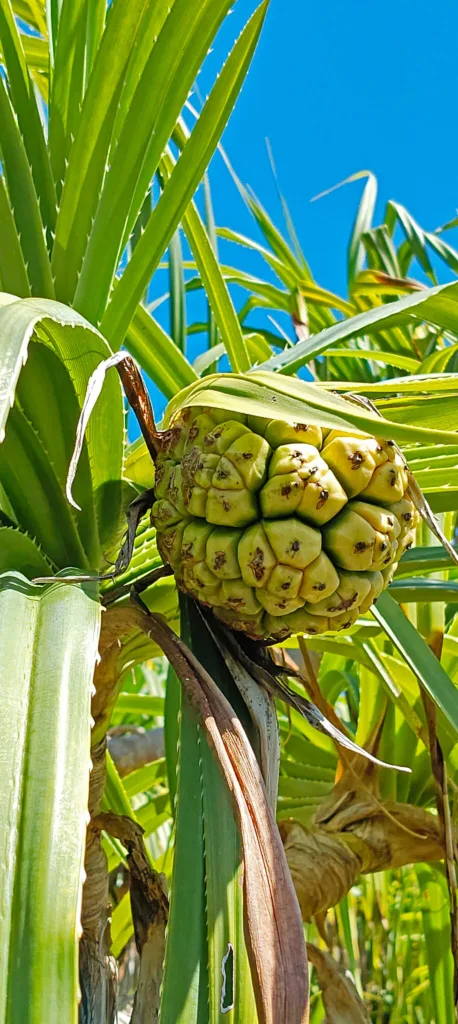
Some plants exert influence simply by standing where they do. Along beaches, swamps, and the blurred edges of islands, the screwpine—known locally as kashikeyo—takes root in ground considered spiritually thin. It is not cut for rituals or revered as a deity. Instead, it serves as a warning. Folklore holds that time spent near screwpine groves after dusk can bring illness, confusion, or encounters that leave no visible trace. The tree does nothing, yet it says enough.
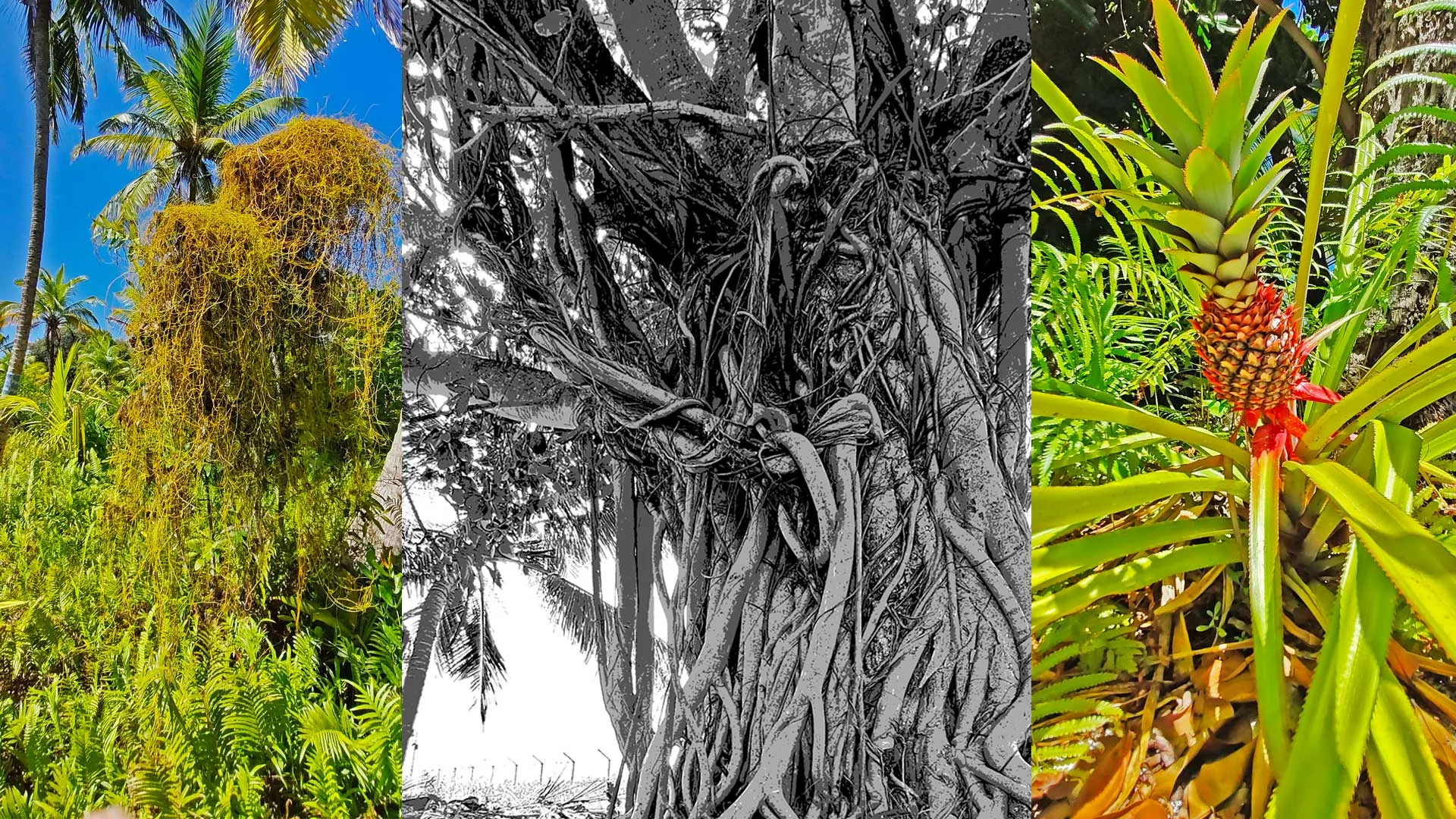
The coconut palm tells a different story. Essential to survival across the islands, it is regarded as spiritually neutral but deeply receptive. Its water washes the body in moments of ritual cleansing; its oil is rubbed into skin as protection against unseen harm; its shell becomes a container for substances and words alike. Spoken formulas give the coconut its charge. Power does not originate from the tree, but passes through it.
Betel leaf and areca nut—familiar companions in daily social exchange—carry a quieter symbolism. Linked to speech, vitality, and connection, they appear in rituals concerned with persuasion and communication. Here, the mouth itself becomes a threshold. Words are not merely spoken; they are believed to act.
Other trees loom larger in cultural memory. The hirundhu (Portia tree) is associated with local spiritual practices, its presence marking sites of attention. Neem, long valued for its medicinal and protective qualities, is used in purification and healing. The banyan, or nika, spreads its roots like a living shelter and is widely regarded as sacred—a symbol of endurance and spiritual authority. Moringa, fast-growing and nutrient-rich, bridges sustenance and medicine, its leaves folded into daily remedies.
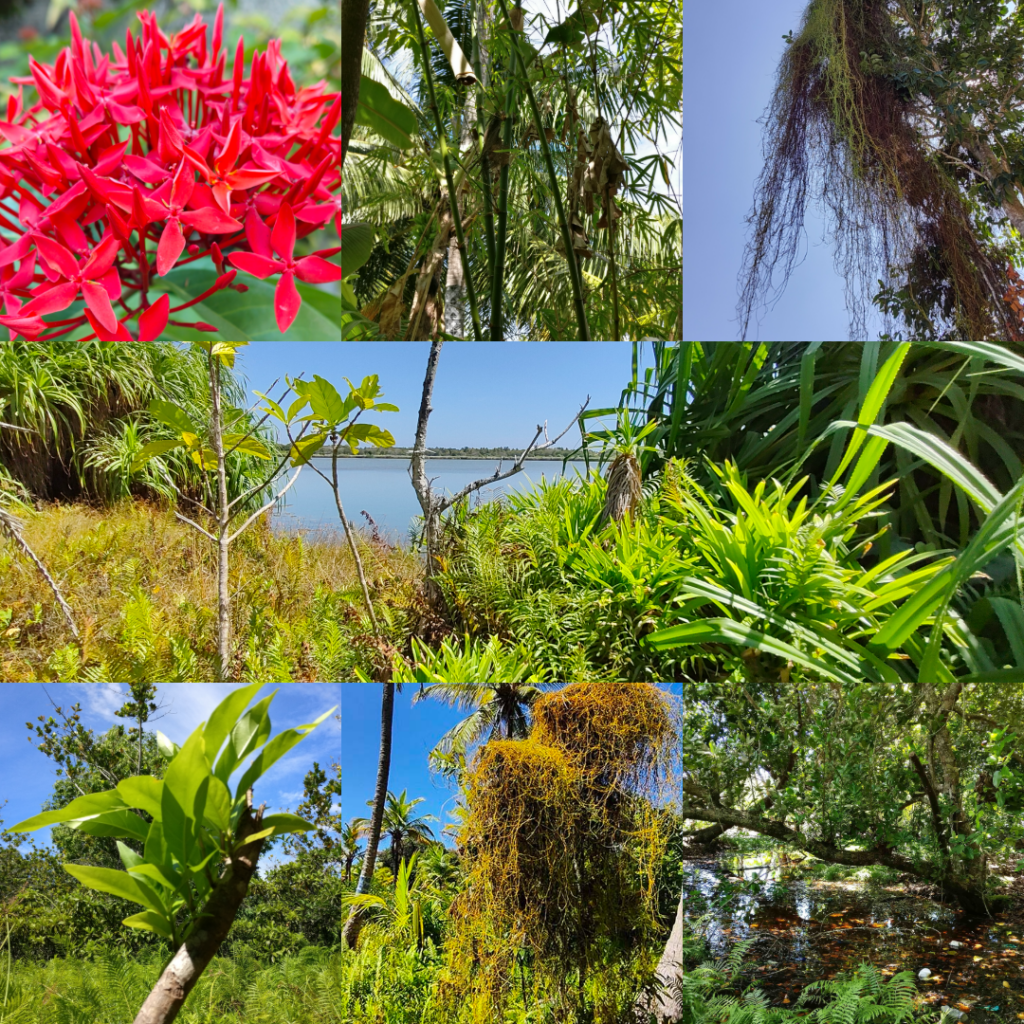
Closer to the ground, herbs carry their own quiet roles. Lemon basil (gandhakolahi) and mint (kudheenaa fai) are used to soothe fevers and ailments thought to arise from spirit disturbance. Others—the poison bulb tree, fragrant aloeswood (bokaru), and sandalwood (kelaa)—are valued for both medicinal and protective properties.
Taken together, these plants form a landscape of signs and containers rather than cures. They do not command power. They mark it, hold it, and, at times, warn when it lies too close.
Power in the Ordinary
Other local herbs—often unnamed beyond individual islands—are gathered for washing rituals and protective practices. These fresh greens are used for bathing, steaming, or scent-based treatments. Their effectiveness is believed to depend on timing and freshness rather than rarity. Where a plant is gathered, when it is collected, and who gathers it are all part of its meaning.
Turmeric and lime occupy a similar space between medicine and ritual. Turmeric, with its vivid color, is associated with purification and the strengthening of bodily boundaries. Lime and lime water are linked to cutting or breaking unwanted influence. These materials are often used after suspected spirit encounters or prolonged illness, reinforcing ideas of cleansing and separation.
What unites all of these plants is their ordinariness. Maldivian folk belief does not elevate rare herbs or guarded formulas. Instead, it draws power from what is close at hand—plants that feed, heal, and shelter islanders in daily life.
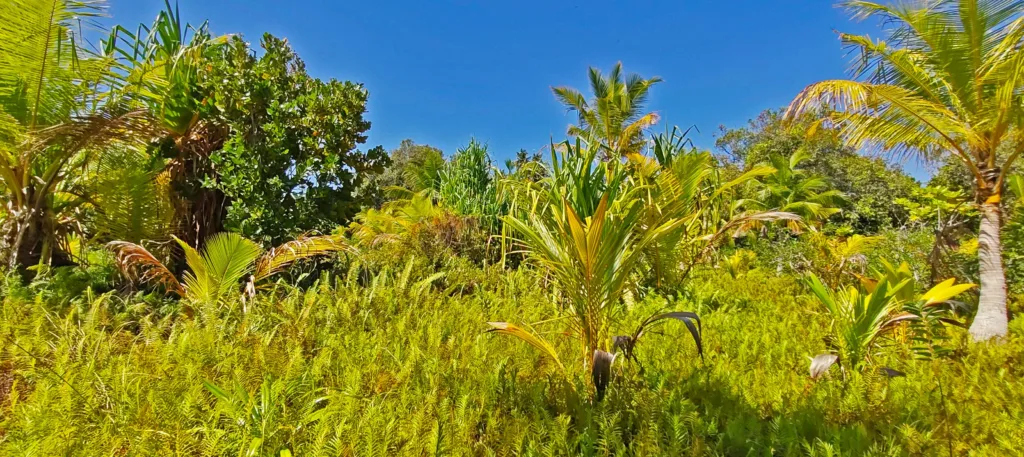
For travelers, this offers a different way to see the islands. A coconut palm becomes more than a postcard image. A stand of screwpine trees becomes more than coastal vegetation. These plants once formed part of a living system of knowledge that helped people manage uncertainty in an unpredictable environment.
Today, such beliefs are rarely spoken of openly, yet traces remain. Certain groves are still avoided at night. Washing rituals persist in altered forms. Quiet respect for particular plants endures. The plants of the Maldives remind us that the natural world was once read not only for beauty or utility, but for meaning—a reminder that even paradise has its hidden layers.