This article is based on Ash, J. S. & Shafeeg, A. (2008), Birds of the Maldive Islands, Indian Ocean, which documents confirmed bird records in the Maldives based on long-term observations and verified reports.
Among the many seabirds and migratory shorebirds recorded in the Maldives, a small number of sightings stand out as truly extraordinary. One of the most remarkable of these is the record of the Pied Cuckoo (Clamator jacobinus), a bird whose appearance in the Maldives is considered highly unusual from a biogeographical perspective.
The Pied Cuckoo at a Glance
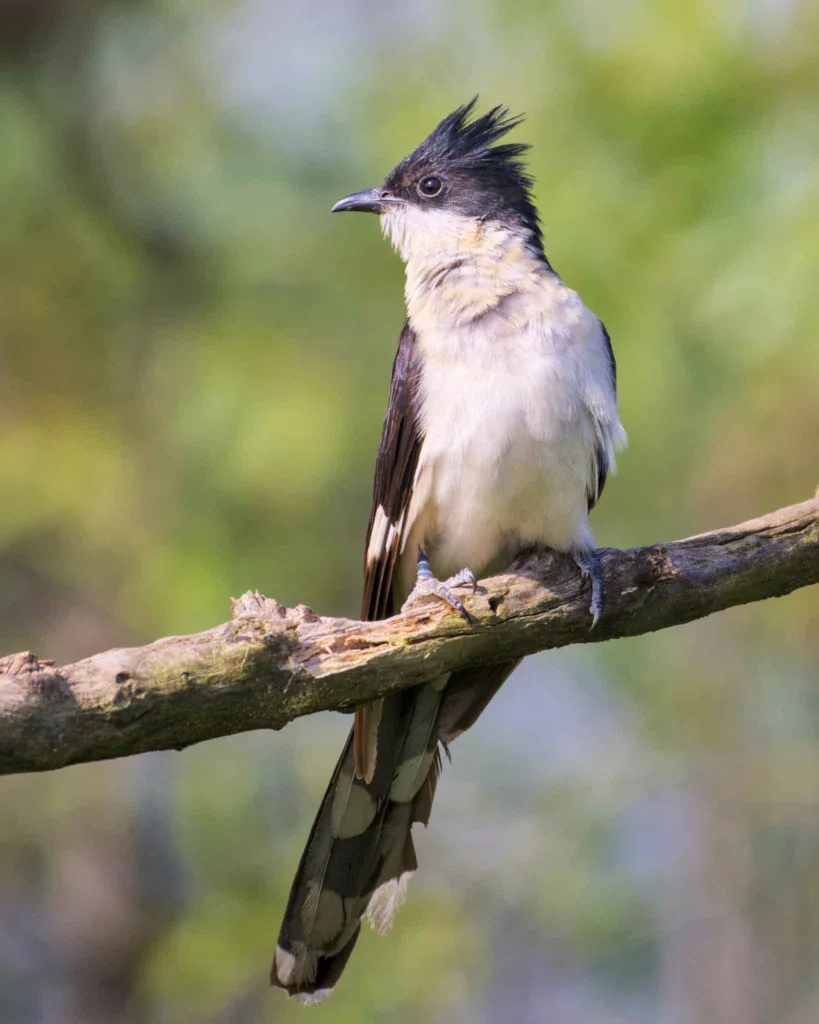
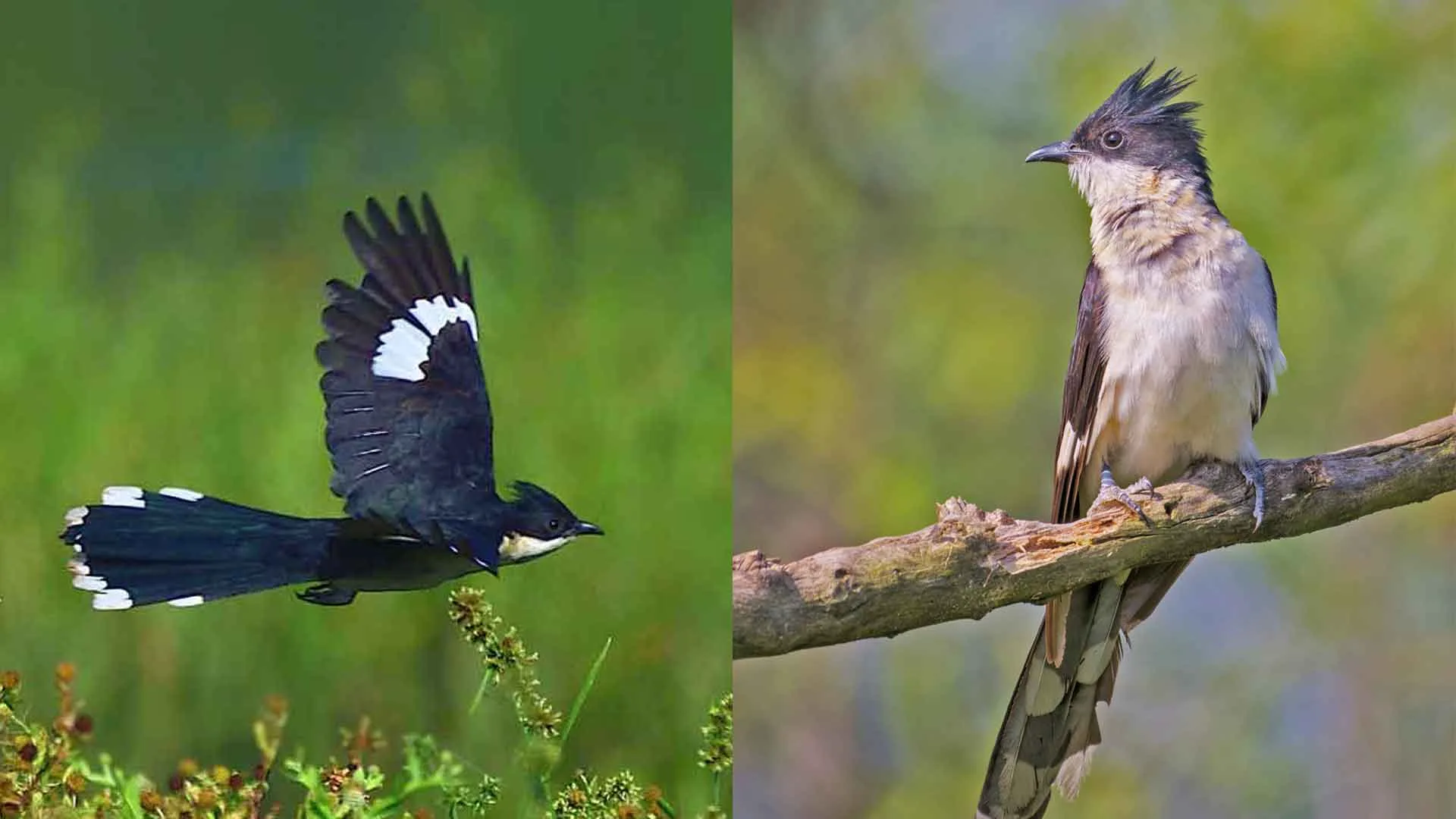
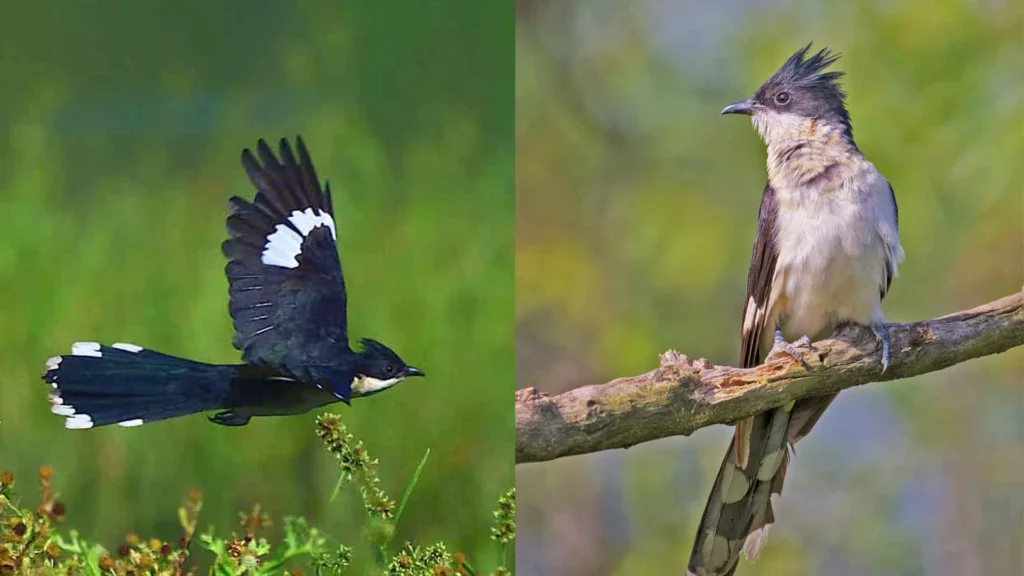
The Pied Cuckoo is a medium-sized cuckoo with bold black-and-white plumage and a distinctive crest. It is best known from the Indian subcontinent, where it is closely associated with the arrival of the southwest monsoon. The species typically inhabits open woodland, scrub, farmland, and grassland environments on the mainland.
Importantly, the Pied Cuckoo is a land bird, not a seabird or coastal species, and it is not adapted for life over open ocean.
Normal Range and Behaviour
Under normal circumstances, the Pied Cuckoo is found across:
- India and Sri Lanka
- Parts of mainland South and Southeast Asia
- Continental landmasses with seasonal rainfall patterns
It is not known for long-distance ocean crossings and does not regularly undertake migrations that would bring it anywhere near remote oceanic islands.
The Record in the Maldives
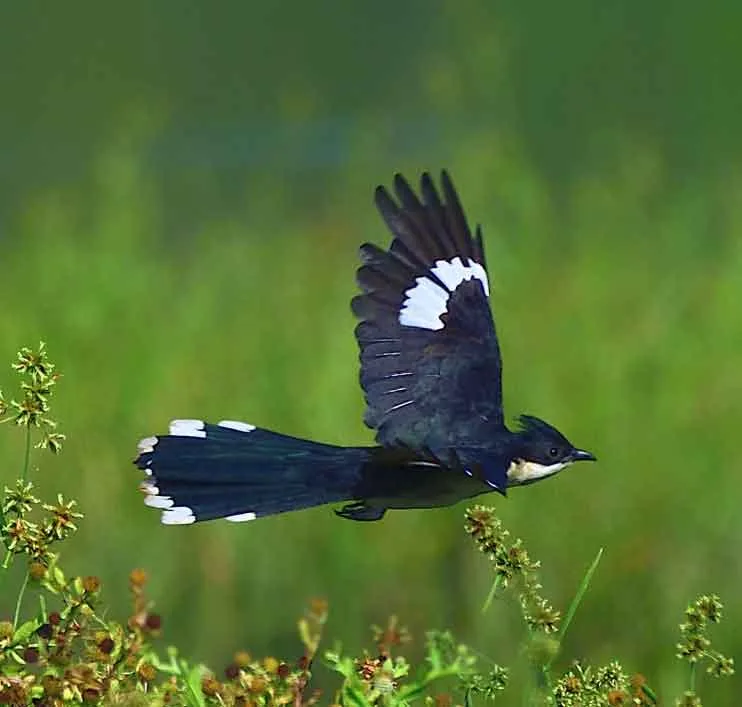
According to the reference, the Pied Cuckoo has been recorded from Fuvahmulah, a southern island of the Maldives that is ecologically distinct from most other islands in the country. Fuvahmulah contains freshwater wetlands, marshes, and dense vegetation—habitats that are absent from most coral atolls.
The appearance of a Pied Cuckoo on Fuvahmulah represents a highly anomalous record, given:
- the Maldives’ extreme isolation from continental landmasses
- the species’ strong dependence on terrestrial habitats
- the lack of stepping-stone islands between the Maldives and the mainland
Why This Record Is So Unusual
Most unusual bird records in the Maldives involve:
- seabirds
- shorebirds
- strong-flying migratory species
The Pied Cuckoo fits none of these categories. Its presence suggests an exceptional event, most likely involving weather-assisted displacement, such as strong monsoon winds carrying the bird far beyond its normal range.
In ornithological terms, this makes the Pied Cuckoo a true vagrant—a bird occurring far outside its expected geographic and ecological range.
The Importance of Fuvahmulah
The reference highlights Fuvahmulah as the most important island in the Maldives for unusual land-bird records. Its freshwater habitats and vegetation provide the only realistic refuge for displaced terrestrial birds arriving in the country.
Several of the Maldives’ most unexpected bird records are linked to this island, underlining its national importance for avifaunal diversity and scientific study.
Significance of the Record
The record of the Pied Cuckoo is significant because it:
- demonstrates the role of extreme weather in bird movement
- highlights the Maldives’ position within wider regional ecological systems
- underscores the scientific value of careful bird recording on remote islands
While the species is not resident and has no established population in the Maldives, its documented presence remains one of the most surprising bird records in the country.
A Rare and Remarkable Visitor
The Pied Cuckoo’s appearance in the Maldives stands as a reminder that even the most isolated island systems can receive unexpected visitors. Among all birds recorded in the country, it remains one of the most striking examples of how chance, weather, and geography can combine to produce extraordinary natural events.