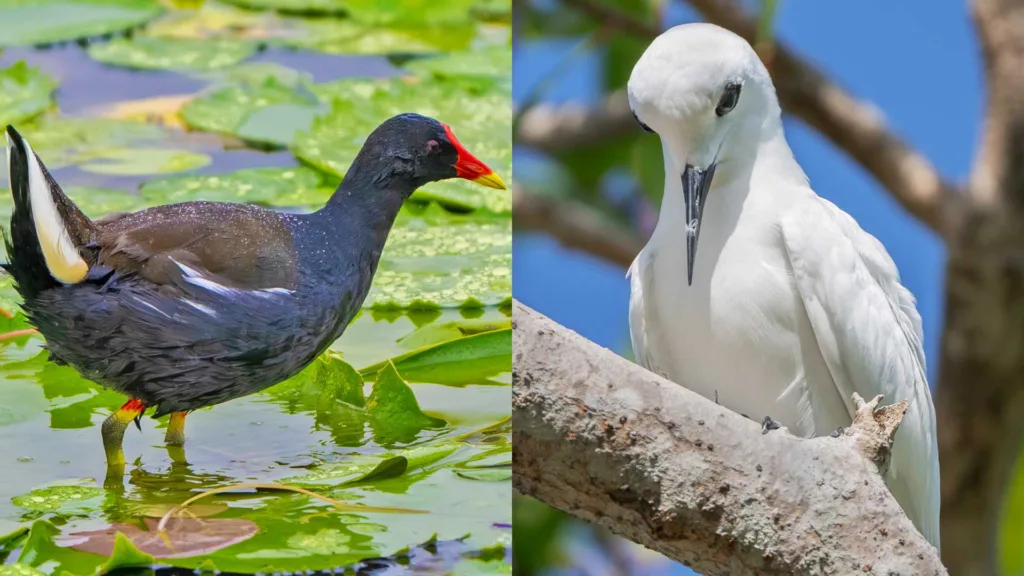
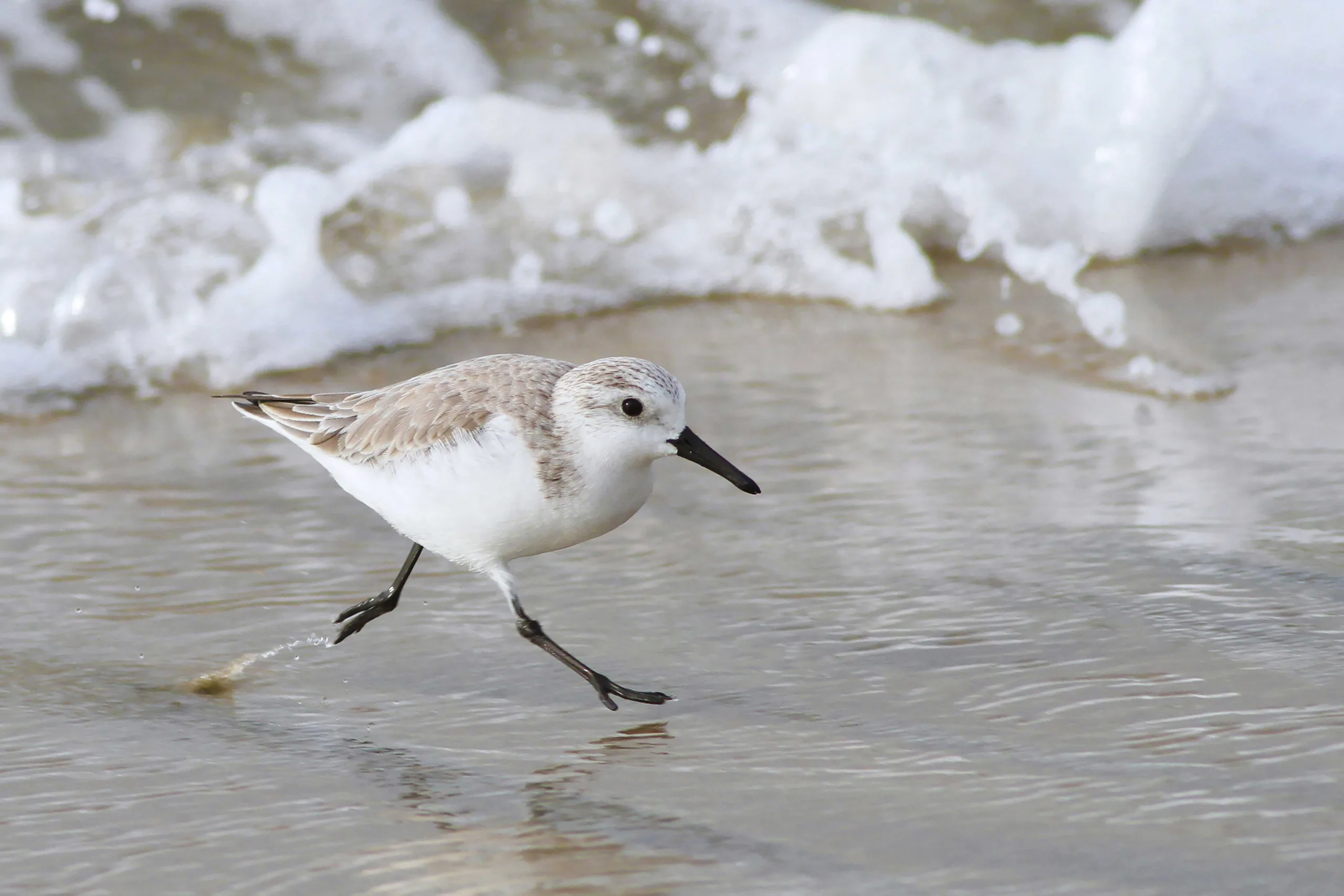
In the ephemeral world where the turquoise Indian Ocean meets the white sands of the atolls, a group of tireless travelers claims the coast. These are the sandpipers—avian marathoners that link the Maldivian archipelago to the distant corners of the globe.
Across the 1,192 islands of the Maldives, the rhythmic ebb and flow of the tide reveals a critical hunting ground for some of the world’s most determined migrants. While the archipelago is famed for its vibrant marine life, the intertidal zones belong to the sandpipers. These birds are part of a vast migratory network, arriving in the Maldives to escape the harsh northern winters.
The Common Sandpiper: A Ubiquitous Resident
The most frequent face among these shorebirds is the Common Sandpiper (Tringa hypoleucos), known locally as Findhana. Unlike some of its more reclusive cousins, the Common Sandpiper is a regular winter visitor found in moderate numbers across all atolls. Observations from North Malé to the southern reaches of Laamu Atoll reveal a bird that is as hardy as it is widespread, often seen bobbing its tail nervously as it hunts along the water’s edge.
The Rare and the Remarkable
The Maldives also serves as a refuge for specialized sandpipers that make only fleeting appearances:
- Marsh Sandpiper (Tringa stagnatilis): An irregular visitor, often identified by its needle-thin bill and elegant silhouette, occasionally spotted in Seenu Atoll.
- Terek Sandpiper (Tringa cinerea): A rare guest with an upturned bill, sporadically recorded in the southern atolls like Seenu and Laamu.
- Wood Sandpiper (Tringa glareola): Locally called Fidhan ilolhi, this annual winter visitor prefers the quiet shallows of islands like Gamu.
- Curlew Sandpiper (Calidris ferruginea): A powerhouse migrant, the Bondana ilolhi can be seen in massive flocks of up to 500 birds, with some individuals so enamored by the Maldivian climate that they remain throughout the summer.
A Fragile Existence
Despite their resilience, these birds face a growing gauntlet of threats. The upsurge in tourism and island development has led to increased disturbance of previously isolated feeding grounds. Perhaps most distressing is the long-standing tradition of bird-trapping. Sandpipers and other waders are frequently captured in snares or nets to be sold as “toys” or pets in local markets. In the compounds of many villages, it is not uncommon to see flightless flocks of these once-mighty travelers kept in captivity.
The Path Forward
The survival of these “shoreline sentinels” depends on a shift toward conservation. Experts suggest that if the persecution of these birds ceased and their feeding grounds were protected, the Maldives could quickly become a premier destination for “ecotourists”. By establishing reserves and curbing the wild bird trade, the Maldives can ensure that the “dance” of the sandpiper remains a permanent fixture of its natural heritage.
FIELD NOTES: THE SANDPIPERS AT A GLANCE
- Common Name: Common Sandpiper (Findhana)
- Status: Regular winter visitor (August to May)
- Market Value: In 1994, a Common Sandpiper was valued at roughly 20 Maldivian Rupees.
- Key Sightings: Recorded in all atolls, including K. Malé, M. Muli, and L. Isdhoo.
REFERENCES & RESEARCH
- Ash, J. S. and Shafeeq, A. (1994): Birds of the Maldive Islands, Indian Ocean. Forktail 10: 3-32.
- Phillips, W. W. A. (1963): The birds of the Maldive Islands, Indian Ocean. J. Bombay Nat. Hist. Soc. 60: 546-584.
- Oriental Bird Club: Annotated checklist of the birds of the Maldive Islands.