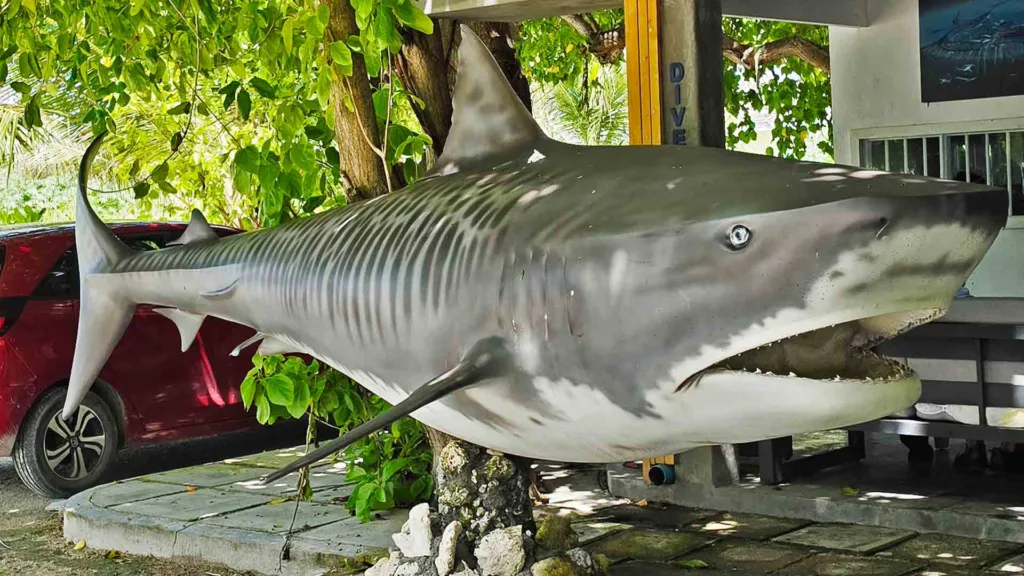
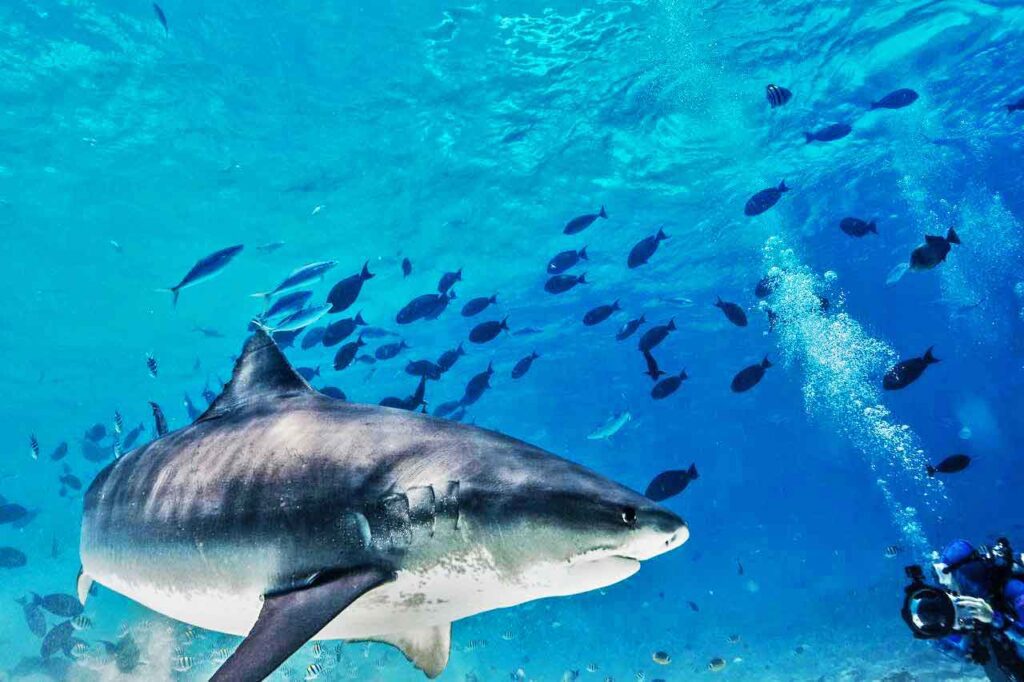
Thirty years ago, when I lived on Fuvahmulah, a tiger shark was simply a shark. We did not yet see them as icons, or as a reason for travellers to visit the island, but as part of the everyday life of the sea—familiar, expected, and rarely questioned.
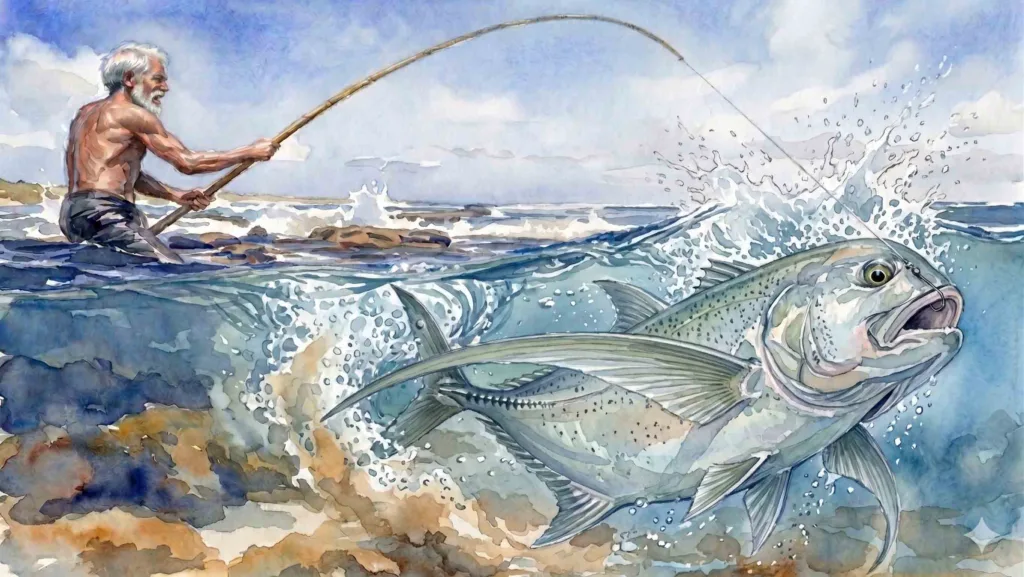
It was a bright afternoon when my late uncle, Abdulla Rafeeq, returned from fishing in his bokkura, a small traditional boat, near Neregando Beach. Around 1:30 p.m., my friends and I saw his vessel moving through the narrow reef passage toward shore. As it came closer, something about it felt unusual. Tethered alongside the boat was a dark mass far too large to be brought onboard. As the hull reached the sand, my uncle called out, “It’s a femunu”—a tiger shark.
The beach, usually alive with people waiting for the tuna catch, fell quiet as everyone gathered. In those days, sharks were part of everyday life—caught for meat, fins, and oil, and rarely given the attention they receive today.
As the crowd helped haul the shark onto the sand, a fisherman cut open the shark, and what followed has remained fixed in my memory ever since. From inside, he began removing pups—one after another—until there were twelve in total. Each was about two and a half feet long, and all were alive, moving as they touched the sand.
For a moment, my friends and I stood still, trying to understand what we were seeing. We were just boys, no older than thirteen, caught between surprise and instinct, unsure whether to step forward or simply watch.
Instinct quickly took over. One by one, we lifted the pups and carried them toward the water in the reef passage. The moment they touched the sea, they changed completely. They moved with sudden speed and direction. Some darted toward the reef, while others circled near our legs, startling us enough to step back—but not enough to stop what we had begun.
Soon, it became clear that the shallow passage was not enough. So we gathered them again, all twelve, and carried them beyond the reef edge, releasing them into deeper water where they could reach the open ocean. We stood there watching until each disappeared into the blue.
At the time, we did not understand what we had witnessed. It was a glimpse into the life of a species we barely understood.
Today, the Maldives is internationally recognised for shark conservation, and Fuvahmulah has become known around the world for its tiger sharks. Looking back, that day feels like a quiet turning point. We were simply boys acting on instinct, saving lives we barely understood—unaware that we were releasing future symbols of our island back into the sea.