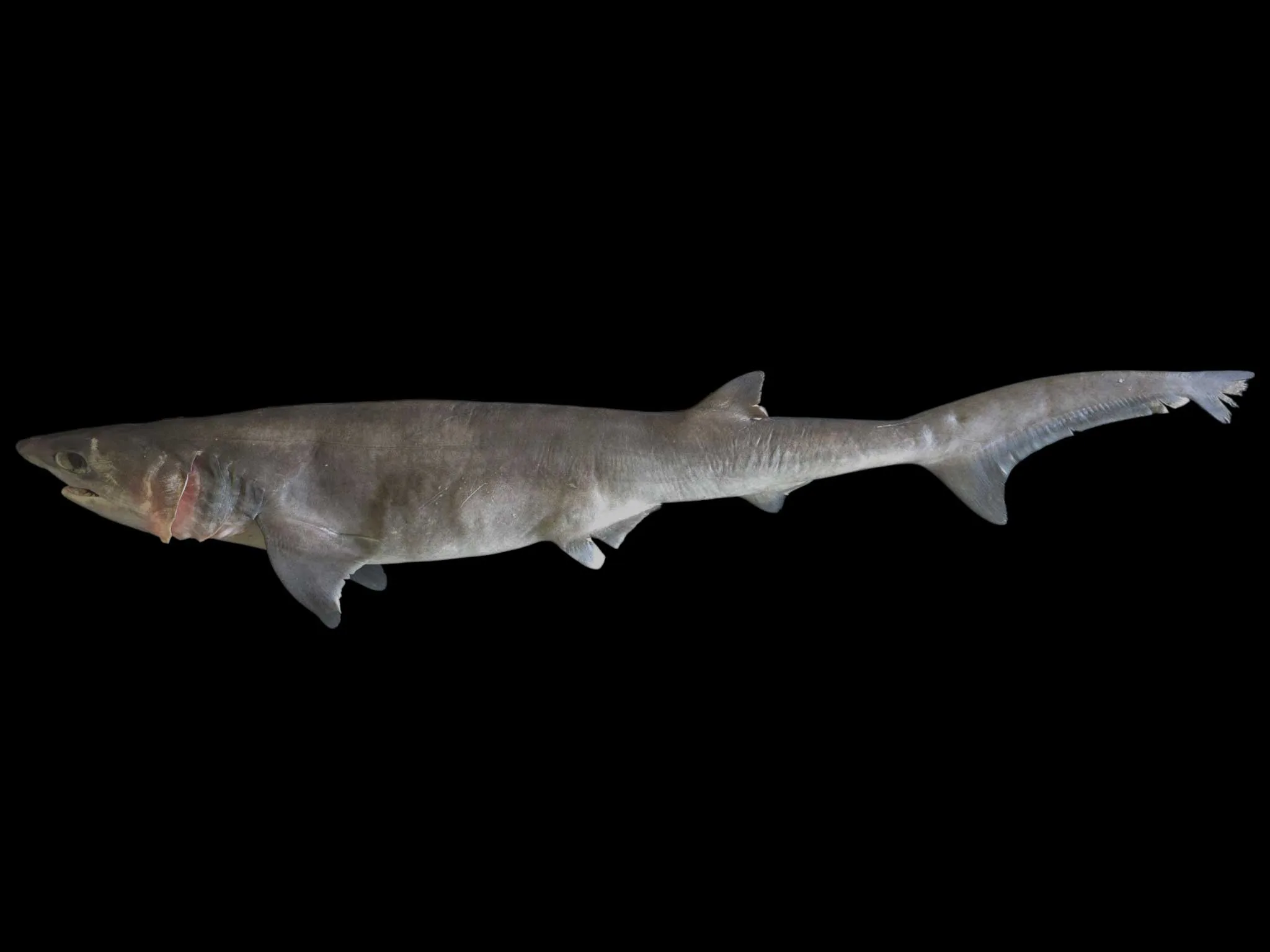
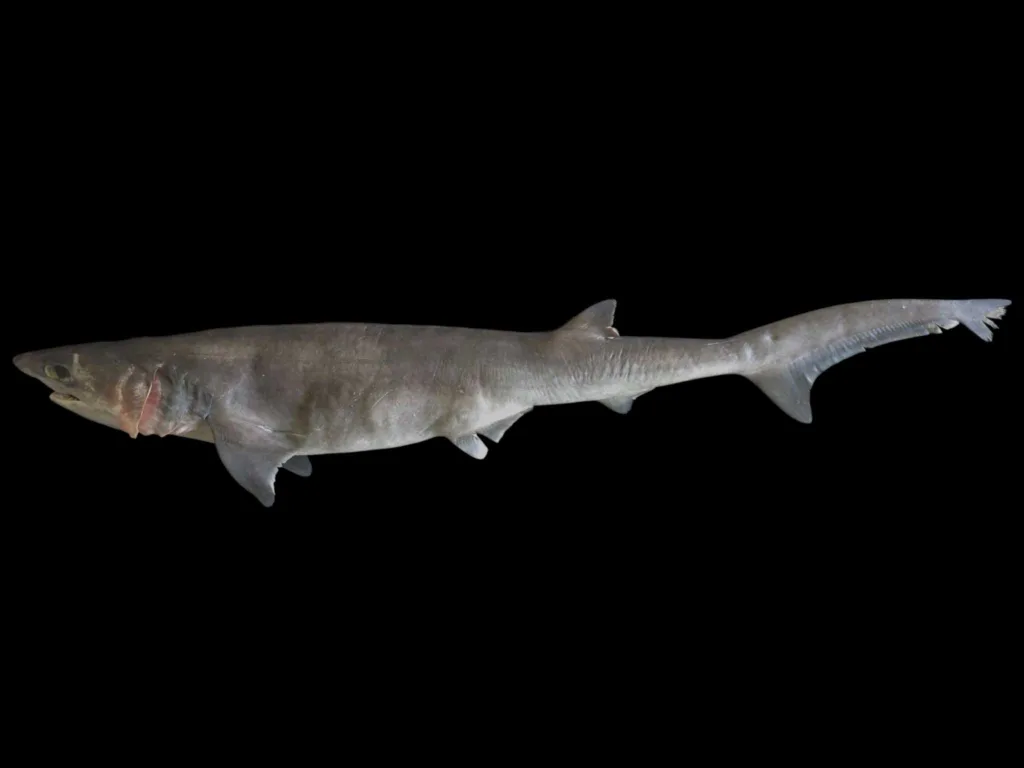
A living relic of the deep sea, the Sharpnose sevengill shark defies the biological norms of modern predators, patrolling the lightless slopes of the Maldivian atolls.
A living relic of the deep sea, the sharpnose sevengill shark defies the biological norms of modern predators, patrolling the lightless slopes of the Maldivian atolls.
In the deep, ink-black waters surrounding the Maldivian atolls, far below the reach of the tropical sun, lives a creature that seems to have drifted out of a prehistoric era. While almost all modern sharks possess five gill slits, the sharpnose sevengill shark (Heptranchias perlo) carries a rare, ancient anatomical signature: seven distinct slits on either side of its head.
Known locally as the Thundhigu madu miyaru, this shark is a deep-water specialist. It is rarely seen by divers, existing instead on the steep insular slopes and in the “twilight zone” of the ocean, where pressures are high and light is a luxury.
Anatomy of an Ancient Hunter
The sharpnose sevengill is a masterclass in deep-sea adaptation. Unlike the robust, blunt-headed sharks of the reefs, this species is sleek and narrow. Its head and snout are exceptionally slender—hence its English name—and its eyes are remarkably large, glowing with a phosphorescent green sheen in the dark to capture the faintest traces of bioluminescence.
It possesses only a single dorsal fin, located far back on its body near the tail. Inside its mouth, the shark hides a unique set of tools: its lower teeth are large and comb-like, featuring a series of short cusplets that allow it to grip and saw through prey.
The Deep Slope Resident
The Thundhigu madu miyaru is a benthic wanderer. While it typically resides at depths between 27 and 720 meters, it has been recorded plunging as deep as 1,000 meters into the abyss. In the Maldives, our knowledge of this shark comes from rare deep-sea encounters.
Marine Species Profile
Sharpnose Sevengill
| Scientific | Thundhigu madu miyaru Heptranchias perlo |
| ID Marker | 7 gill slits; very large eyes; single dorsal fin. |
| Habitat | Deep slopes; recorded at 240m near Thoddoo. |
| Biology | Ovoviviparous (9-20 pups). Deep-sea benthic predator. |
| Max Size | 1.4 meters. |
One significant record comes from the Norwegian research vessel Dr. Fridtjof Nansen, which hauled a 4.2 kg specimen from a depth of 240 meters near Alif Alif Thoddoo in August 1983. This discovery confirmed that the deep slopes of the atolls serve as a corridor for these widespread but elusive tropical wanderers.
Biology and the Abyss
Life in the deep moves at a different pace. The sharpnose sevengill shark is ovoviviparous, meaning the young hatch from eggs inside the mother and are born live. Despite its relatively small size—reaching a maximum of about 1.4 meters—it is surprisingly prolific, producing litters of 9 to 20 young.
In their youth, these sharks carry distinct black tips on their dorsal and upper caudal fins, markings that fade as they mature into their dark, ghostly adult coloration.
References
- Stromme, T. (1983): Survey of the abundance and distribution of fish resources in the Maldives, R.V. Dr. Fridtjof Nansen.
- FishBase: Biological metrics and distribution for Heptranchias perlo.
- IUCN Red List: Conservation status and deep-sea habitat assessment.