Women of the Maldives have long been admired for their distinctive beauty and cultural elegance. With lustrous black hair, graceful stature, and a natural poise, their appearance has captivated visitors for centuries. These striking features create an allure that feels both exotic and refined, leaving a lasting impression on those who encounter it. Early travelers and chroniclers often took note of this beauty, including the French explorer François Pyrard de Laval, whose writings offer one of the earliest detailed European accounts of Maldivian society. He described not only the women he met, but also their daily lives, relationships, and the ways in which communities functioned together. Among his observations, he noted that Maldivian women possessed an olive complexion and placed great importance on personal care.
“It is a beauty among women to have the hair very long, thick, and black; they dress and bathe it often… they let it float in the wind until it be perfectly dry, then they apply oils, very odoriferous, in such a way that their heads are always soaked and oily.”
Hair care in the Maldives has traditionally been far more than a matter of appearance—it is a deeply rooted cultural practice. Women are expected to keep their hair well maintained, moisturized, and lightly oiled, in accordance with long-standing customs passed down through generations. These practices reflect an appreciation for health, beauty, and self-respect, as well as a strong connection to tradition.
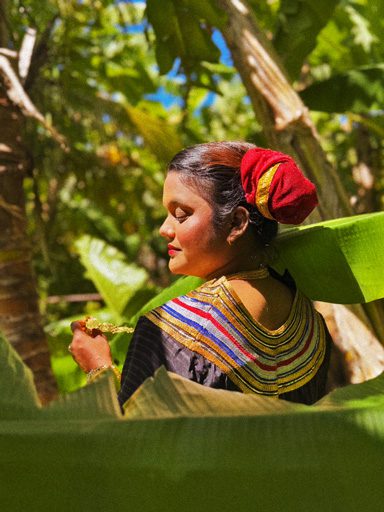
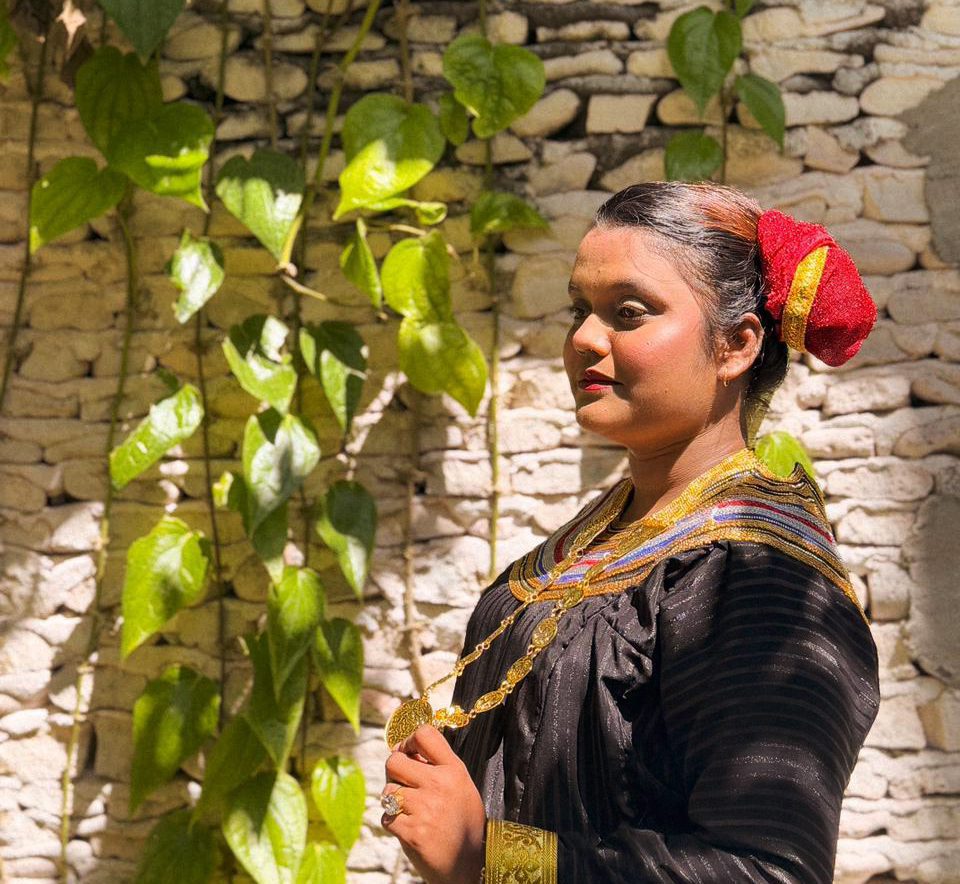
One hairstyle in particular stands out for its symbolic significance: the bun, known locally as hulhi. More than a simple way to arrange the hair, the hulhi serves as a subtle yet powerful expression of individuality and style. Keeping up with hairstyle trends has always mattered, as hair plays a key role in completing one’s overall appearance. A poorly styled hairstyle could detract from even the most carefully chosen attire, while a well-shaped bun could elevate it.
For generations, Maldivian women favored the bun worn high atop the head. This distinctive style became a defining visual marker of Maldivian femininity. The elevated bun created an impression of refined, ageless elegance, lending the wearer a youthful yet dignified appearance. It softened facial features, enhanced natural beauty, and conveyed a sense of calm confidence. The look was at once delicate and self-assured, making women appear approachable, relaxed, and effortlessly graceful.
The beauty of the hulhi lies in its simplicity and balance. It is an understated hairstyle, yet undeniably striking—one that speaks quietly of cultural identity and personal pride. Today, however, this traditional symbol of individuality and attractiveness is becoming increasingly rare. Its fading presence serves as a gentle reminder of the Maldives’ rich cultural heritage, and of the timeless elegance once expressed through everyday customs shaped by island life, history, and tradition.