In the vast, sun-drenched expanse of the Indian Ocean, the Maldives serves as a liquid sanctuary for the titans of the deep. Here, among the coral atolls, the modern world fades away, replaced by an ancient blue wilderness where prehistoric giants still roam. These are the living fossils—species that have patrolled the oceans for millions of years, embodying a scale of life that humbles the human observer.
For readers of www.maldivesmyislands.com, encountering these behemoths is a journey into the very heart of the ocean’s enduring mystery.
The Gentle Leviathan: Whale Shark (Fehurihi)
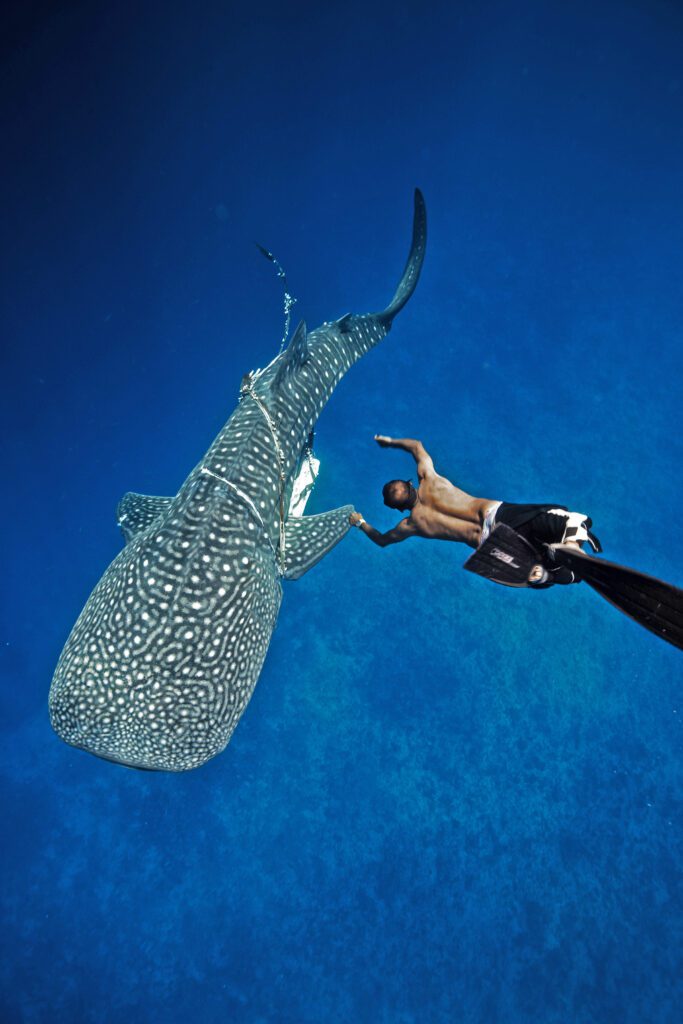
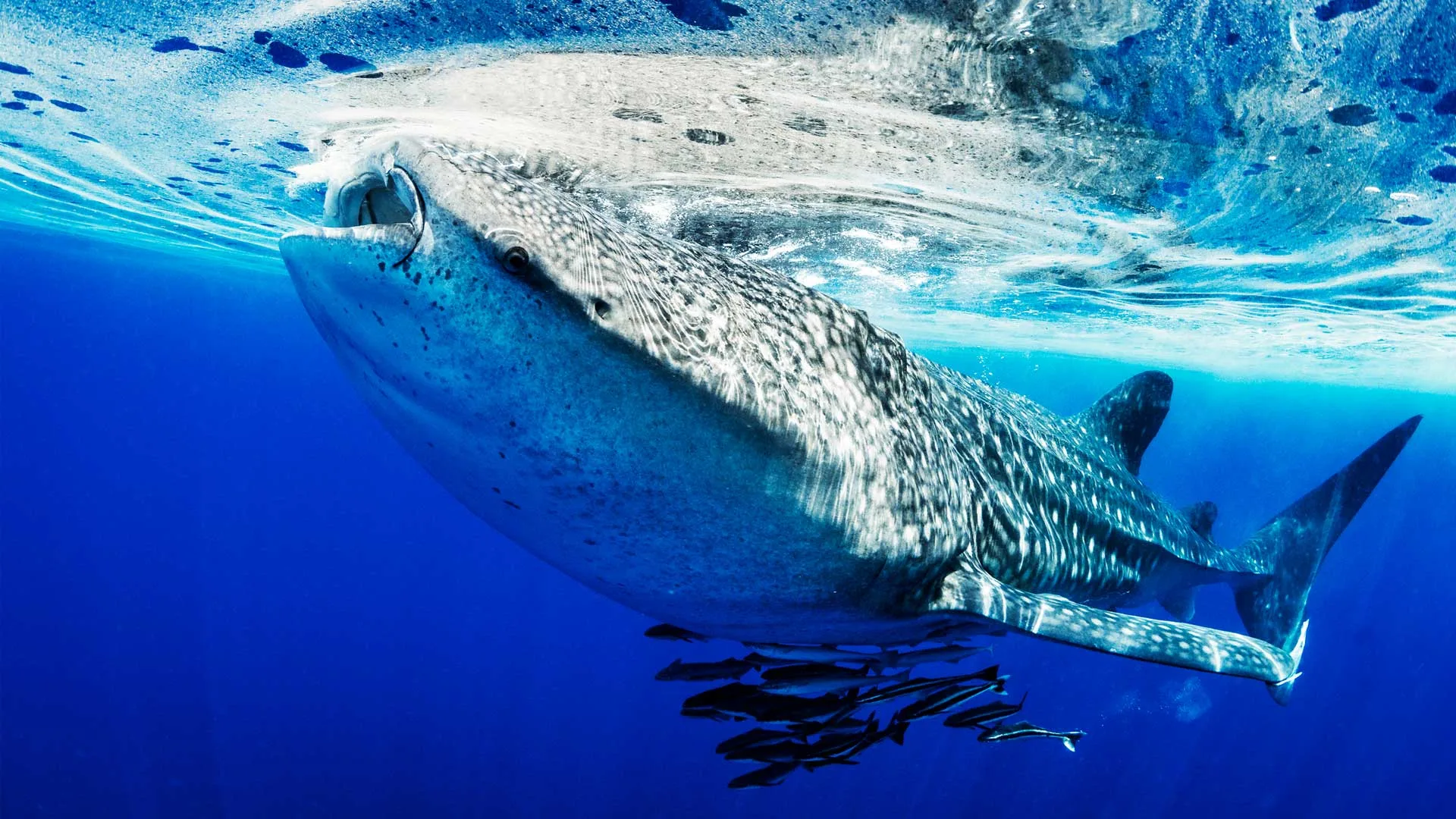
Floating like a constellation against the deep blue, the whale shark (Rhincodon typus) is the undisputed sovereign of the Maldivian seas. As the largest living fish on Earth, it is a creature of staggering proportions, capable of reaching lengths of up to 18–20 meters.
- The Pelagic Filter Feeder:
Despite its gargantuan size, the Fehurihi is a gentle giant. It survives on a diet of the smallest organisms in the sea—plankton and small nekton. As a pelagic filter feeder, it glides through the water with its massive mouth agape, straining life from the currents in a rhythmic, ancient dance. - The Monsoon Commute:
In the Maldives, the presence of these giants is dictated by the rhythm of the winds. They are most frequently sighted during specific monsoon transitions, when shifting currents concentrate vast blooms of plankton along the atoll edges, drawing the sharks from the open ocean into the reach of waiting divers. - A Protected Legacy:
Recognizing its vulnerability and ecological importance, the Maldives has declared the whale shark a protected species, ensuring that this living relic continues to grace the archipelago’s waters.
The Apex Enigma: Tiger Shark (Femunu miyaru)
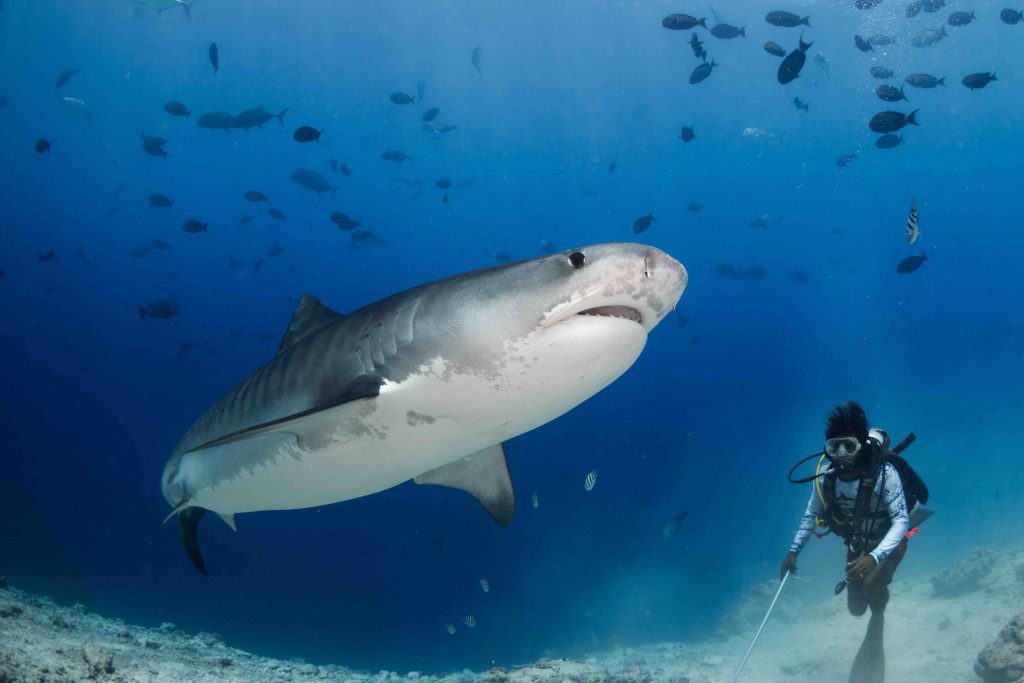
While the whale shark inspires wonder, the tiger shark (Galeocerdo cuvier) commands a primal respect. Known locally as Femunu miyaru, it is among the most powerful and formidable predators in the tropical oceans.
- The Shadow of the Atoll:
Capable of reaching lengths of up to 5.5 meters, the tiger shark is a marvel of evolutionary engineering. Its robust body and broad, serrated teeth allow it to occupy the very top of the marine food chain. In the Maldives, these sharks are most often encountered along deeper reef slopes and channel entrances. - A Fearless Hunter:
The tiger shark is legendary for its catholic diet. Both scavenger and hunter, it consumes everything from fish and turtles to smaller sharks. Its presence in Maldivian waters is a powerful indicator of a healthy, balanced ecosystem—one in which apex predators help maintain the delicate order of the reef.
Field Note: Guardians of the Blue
To witness a Fehurihi or a Femunu miyaru in its natural habitat is to gaze back through geological time. These giants are not merely residents of the Maldives; they are living links to the ocean’s distant past. By protecting them, the Maldives safeguards a realm of wonder and awe—one that has endured largely unchanged since long before the first islands rose from the sea.