In the isolated reaches of Fuvahmulah, a week-long trial by fire once transformed simple sea pebbles into the mortar of Maldivian civilization.
The Bedrock of Tradition
Before the arrival of modern industrial concrete, the people of the Maldives—specifically on the unique, solitary island of Fuvahmulah—relied on the sea and the earth to build their legacies. In an era without access to imported cement, the community perfected Uva Dhevun, the traditional process of burning lime.
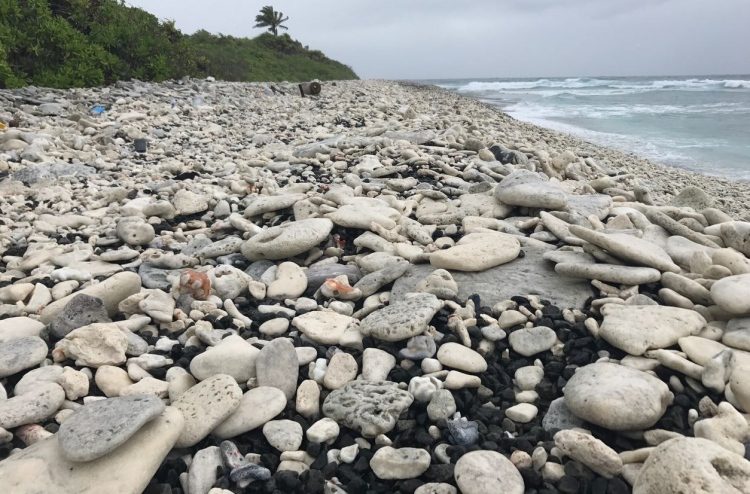
This was more than mere construction; it was a vital craft. Lime served as the essential binding agent for the majestic hiriga (coral stone) mosques and boundary walls that still grace the archipelago today. By transforming akiri (coral pebbles) through the power of fire, the people of Fuvahmulah demonstrated a deep, ancestral understanding of natural chemistry.
The Uva Vado: Preparing the Earth
The process began at the uva vado, a designated workspace where the islanders carved massive, crater-like kilns directly into the ground. These engineering feats usually measured 4 to 8 feet deep and up to 15 feet wide. The size was a matter of necessity; larger craters were excavated when a major communal project required a high volume of lime to secure its foundations.
The Trial by Fire
The success of the uva depended entirely on a delicate geometry of layers. At the base, workers laid a foundation of light, dry firewood, followed by meticulously stacked alternating layers of fuel and limestone pebbles.
A unique feature of the Fuvahmulah kiln was the “window”—a narrow passage running from the bottom to the top along the side. This allowed the fire to be ignited at the base and provided the oxygen flow required to reach searing temperatures. Precision was the only path to success; if the ratio of wood to akiri was off, the pebbles would fail to transform, rendering a week of grueling labor useless.
Once ignited through the window, the Uva Dhevun began. For two to three days, the kiln became a glowing furnace. Families remained nearby, standing guard against shifts in the wind or sudden tropical rains that could spoil the bake.
The Week of the Kiln
Day 1: Gathering akiri and loading the structure.
Days 2–4: The intense burn (Uva Dhevun).
Days 5–6: Cooling and chemical stabilization.
Day 7: Unloading and transport to the fallavaa (storage).
A Legacy in the Walls
When the fire finally died, the lime was quenched with water, collected, and moved to a fallavaa—a specialized storage area within the household to keep the powder dry.
Through this ancient cycle of fire and water, the people of Fuvahmulah turned the bounty of the reef into the literal foundations of their civilization. Today, while modern cement has taken its place, the towering coral walls of the island remain as a silent, sturdy testament to the era of the lime-burners.