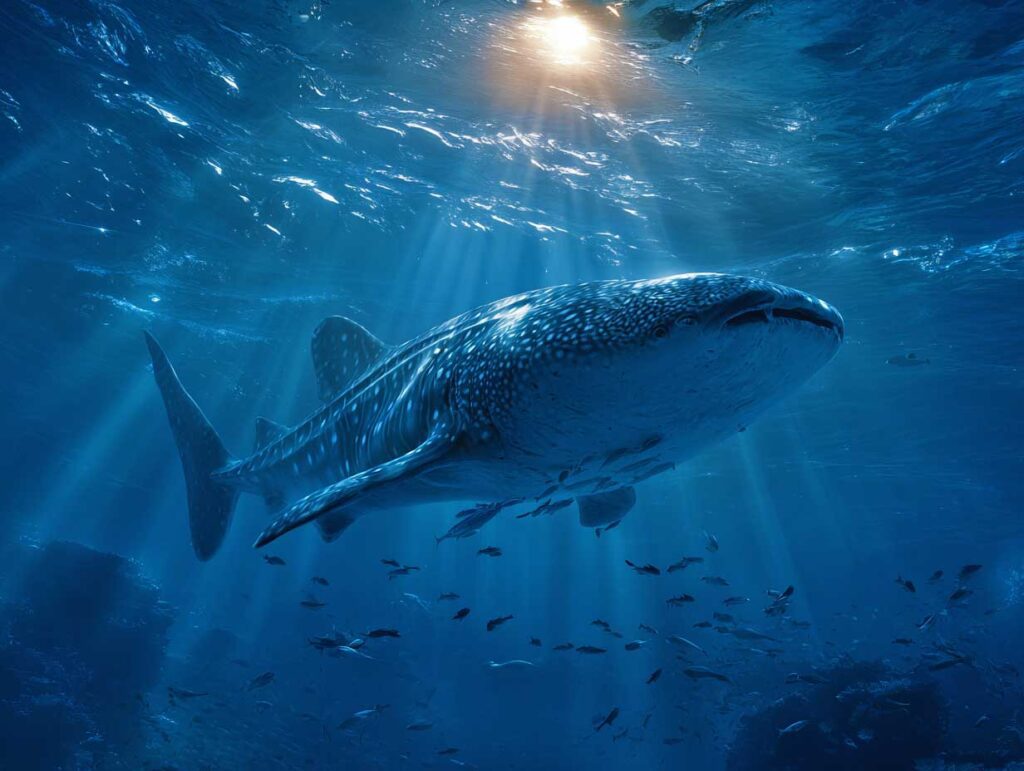
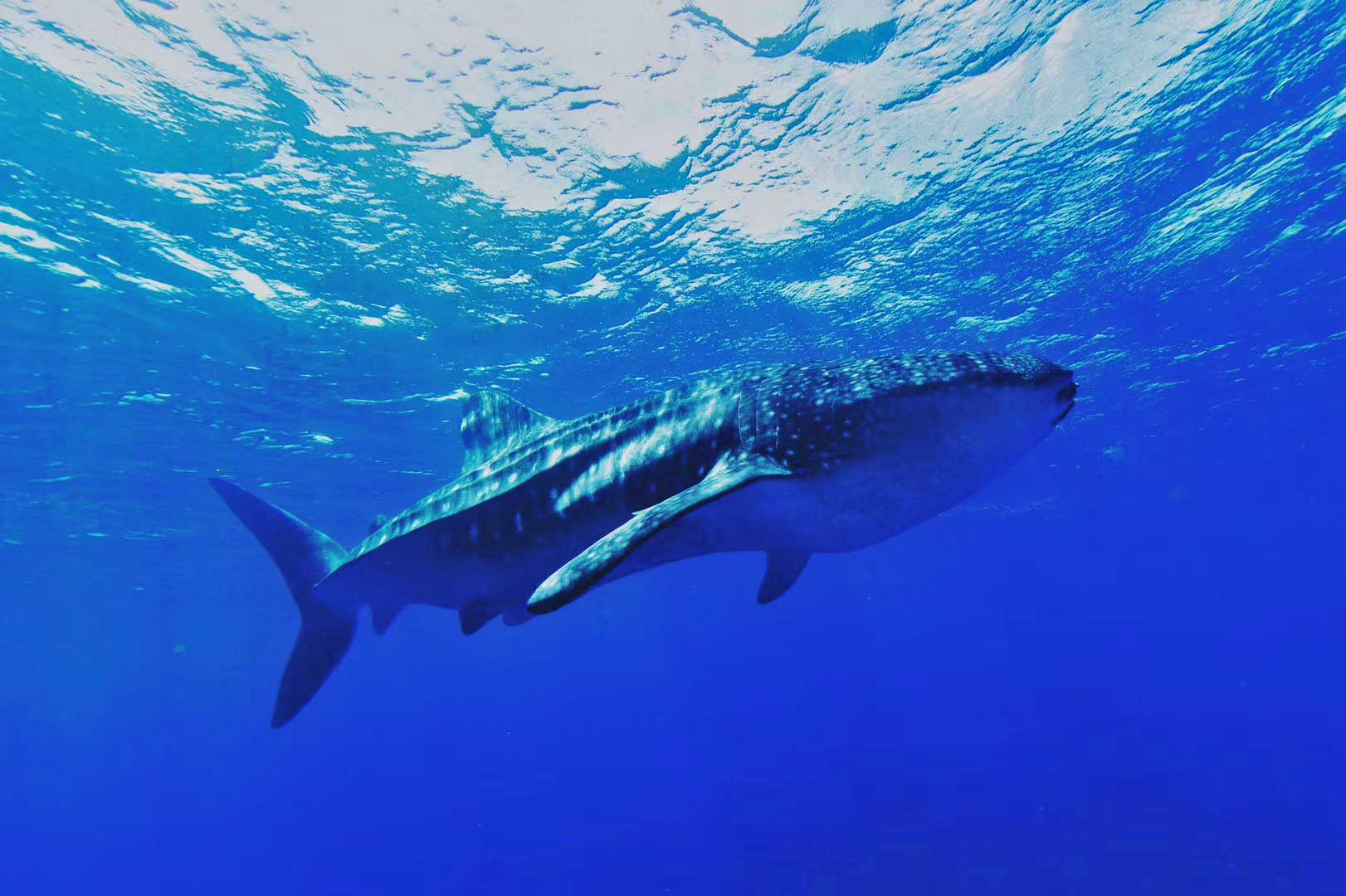
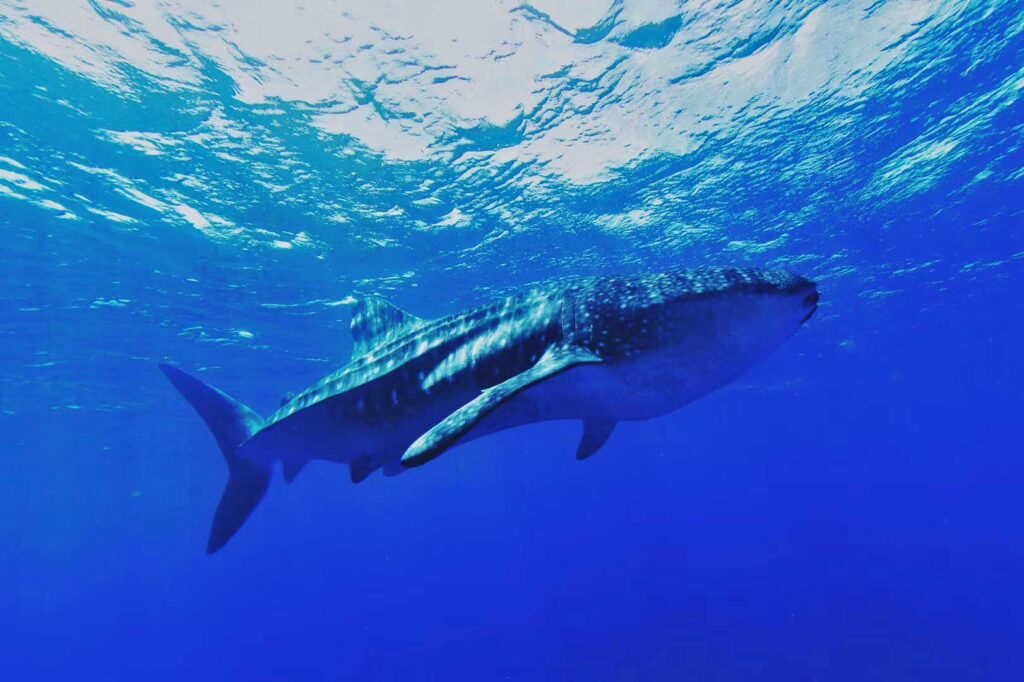
The whale shark (Rhincodon typus), the largest fish in the ocean, remains one of the least understood in terms of its reproductive biology. For much of the twentieth century, scientists debated whether this gentle giant laid eggs or gave birth to live young, largely due to the scarcity of direct observations. This article briefly outlines how scientific understanding of whale shark reproduction evolved, from early assumptions of oviparity to the eventual recognition of ovoviviparity.
For many years, the reproductive biology of the whale shark (Rhincodon typus) was poorly understood, leading to considerable debate among scientists. Early assumptions classified whale sharks as oviparous, meaning that, like many other fishes, they were thought to lay eggs that developed externally. This belief was largely based on limited anatomical observations and analogies with related shark species.
Subsequent research, however, revealed a far more complex reproductive strategy. Female whale sharks possess the ability to store sperm for extended periods—possibly for many months—allowing fertilization to occur long after mating. As a result, a single female can carry embryos at multiple stages of development simultaneously. This reproductive mode is now understood to be ovoviviparous, in which eggs develop and hatch inside the mother’s body, and the young are born alive rather than laid as shelled eggs.
As early as 1935, Dr. E. W. Gudger, a leading authority on whale sharks, questioned the prevailing assumption of oviparity. Based on anatomical reasoning and the absence of externally laid eggs, he wrote:
“It is my judgement that the whale shark will be found to be viviparous—i.e., a live bearer. The young, when born, must be a good size, too large to be hatched from a shelled egg extruded into water. The just-born young must be at least three to five feet long—perhaps as much as eight to ten. Quien sabe!” (Gudger, 1935)
Despite Gudger’s early insight, alternative interpretations continued to circulate. One influential observation was made by Southwell (1912–1913), who examined a whale shark specimen collected from Dutch Bay on the west coast of Sri Lanka. Southwell reported finding “a very ripe ovary, an oviduct full of eggs, 16 cases counted, and the same form as in dogfish.” These findings reinforced the idea that whale sharks were oviparous, as the egg cases resembled those of egg-laying sharks.
However, later researchers re-evaluated these conclusions. Drawing on Southwell’s observations, Bigelow and Schroeder (1948) proposed that the reproductive condition of Rhincodon might instead represent an intermediate strategy. They suggested that while eggs were present within the oviduct, development could occur internally—supporting the possibility of ovoviviparity rather than true oviparity. Even Gudger himself revisited the question in later work (1952), acknowledging that oviparity could not be ruled out entirely based on the evidence then available.
Definitive confirmation came decades later with the discovery of a pregnant female whale shark carrying hundreds of embryos at different developmental stages, conclusively demonstrating ovoviviparity. This finding resolved a long-standing scientific mystery and revealed one of the most remarkable reproductive strategies among fishes: the ability to produce large numbers of live-born young over extended periods.
Today, whale sharks are recognized as ovoviviparous giants of the ocean, combining internal egg development, sperm storage, and staggered embryonic growth. This reproductive adaptation likely enhances offspring survival in the vast and unpredictable pelagic environment, underscoring the evolutionary sophistication of the world’s largest fish.