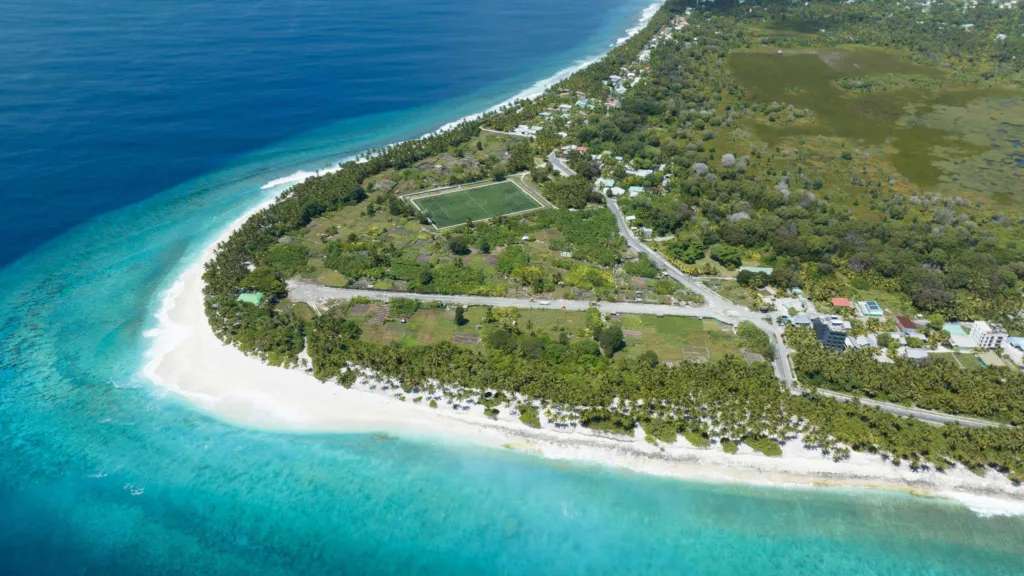
The stories of the Maldives are rich in every sense. Though its terrestrial footprint is small, the cultural memory of its people is vast—shaped by skill, tradition, and an enduring relationship with the sea. For centuries, Maldivians have drawn their identity not from land alone, but from the surrounding ocean, whose folklore and living inhabitants stretch back thousands of years.
Nowhere is this connection more vividly revealed than around the island of Fuvahmulah, a solitary emerald in the deep south where the “Chas bin” wetlands meet the relentless surge of the open ocean.
An Island That Caught the World’s Attention

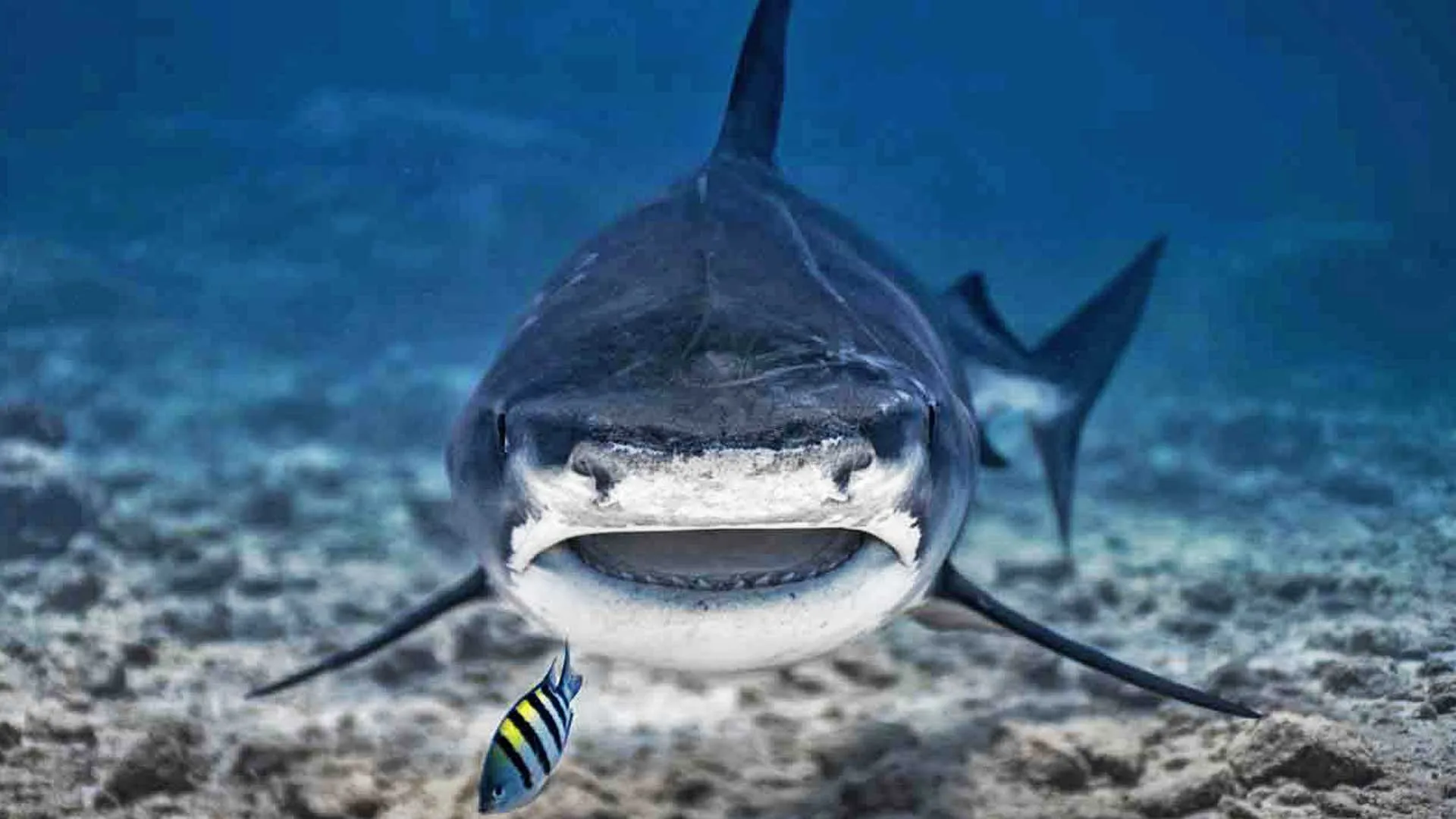
Over the past decade, Fuvahmulah has quietly risen onto the global map of marine exploration. International travelers now arrive drawn by a singular reputation: close encounters with one of the ocean’s most formidable apex predators—the tiger shark, known locally as Femunu miyaru. Alongside them appear other rare visitors, including hammerhead sharks, oceanic manta rays, and even whale sharks.
Yet for generations, these giants were not part of the island’s spoken identity.
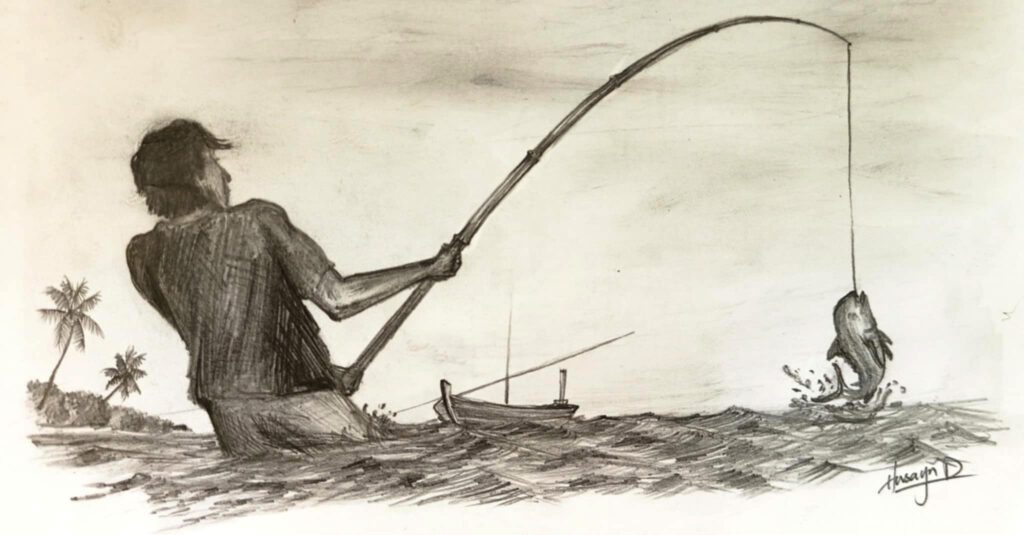
The oldest memories of Fuvahmulah never centered on tiger sharks. Islanders spoke instead about the island’s rare freshwater lakes, frigate birds, flying fish, its distinctive Thoondu sandbank, and local species such as the Kattelhi fish. Sharks were known, caught, and respected—but they were not celebrated. Few realized that the surrounding waters served as a natural aggregation site for some of the Indian Ocean’s largest predators.
The giants were there all along—unseen, unnamed, and unremarked.
Discovering the Guardians Beneath
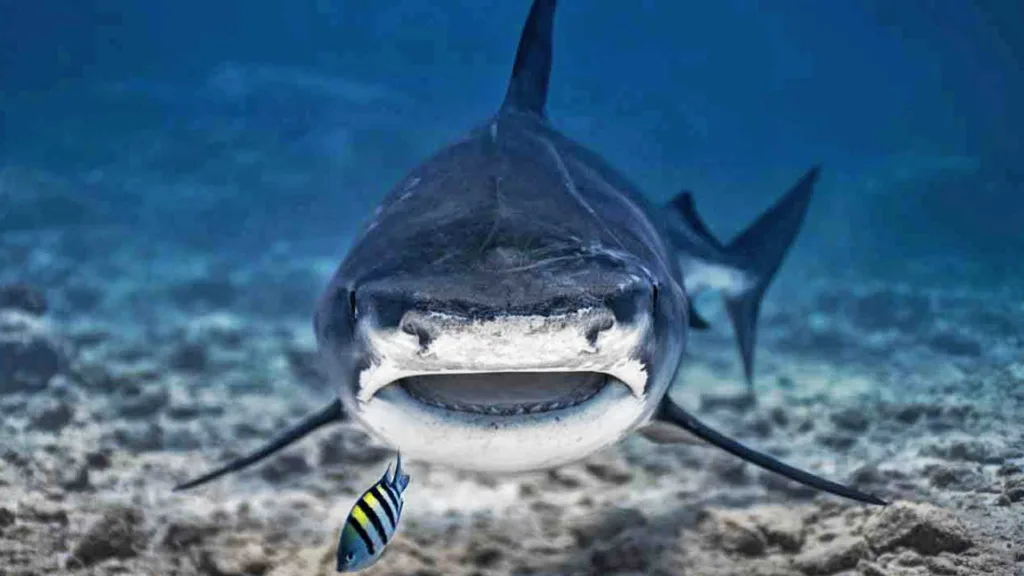
For decades, islanders fished the reefs and bathed along the shoreline, encountering only the familiar silhouettes of reef sharks. The idea that massive tiger sharks, whale sharks, and oceanic mantas moved through these waters in abundance remained largely unspoken.
That understanding began to shift only recently.
Near the island’s harbor—once a quiet reef edge shaped by millennia of currents—local fishermen occasionally noticed tiger sharks drawn close by live bait. What had once been an incidental sighting slowly revealed a deeper truth: these predators were regular residents, not rare visitors.
When divers recognized that tiger sharks could become a focal point for marine tourism, they began experimenting carefully. Fish waste discarded near the harbor attracted the sharks, whose extraordinary senses drew them into shallow water near the harbor mouth. What followed was unexpected.
The sea revealed itself.
From Silent Reef to “Tiger Zoo”
Today, the harbor of Fuvahmulah is one of the world’s most reliable locations for observing tiger sharks up close. The place once known only to fishermen has earned an informal name among divers: the tiger zoo.
It is not a zoo in the human sense—no cages, no enclosures—but rather a window into an ancient natural gathering point. A site that lay unnoticed for thousands of years has become one of the most iconic tiger shark viewing locations on Earth.
What changed was not the sharks. What changed was human awareness.
A New Chapter in an Old Story
The rise of Fuvahmulah’s tiger sharks is not just a tourism story. It is a reminder of how much remains hidden in familiar waters—and how easily ancient ecological relationships can go unnoticed until viewed through a different lens.
For the island, this discovery has reshaped identity, economy, and global perception. For visitors, it offers something rarer than spectacle: a chance to witness an apex predator not as a myth or menace, but as a long-standing guardian of the reef.
And for the Maldives, it reinforces an enduring truth—the ocean still holds stories older than memory, waiting patiently to be seen.