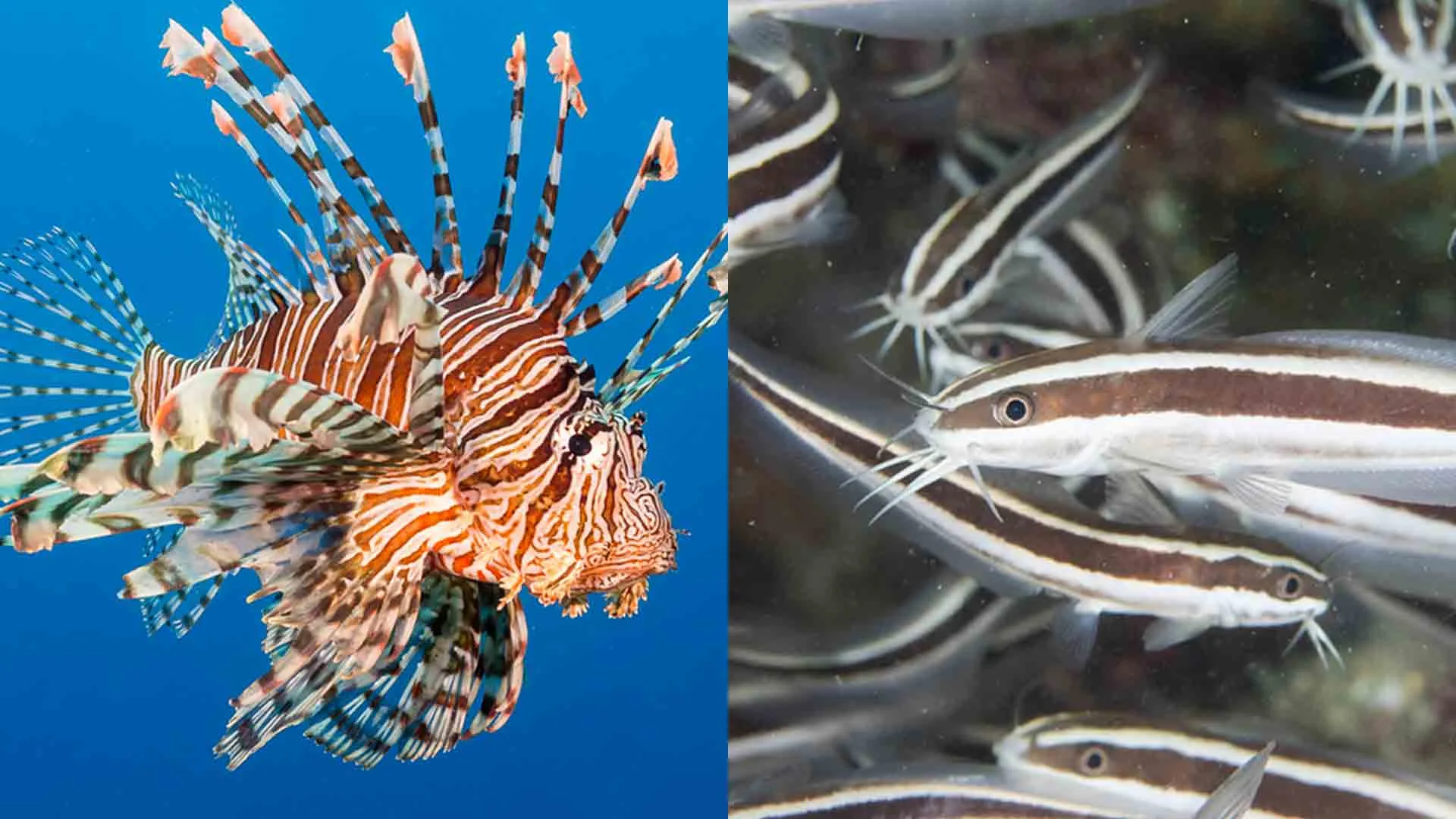
In the crystalline expanse of the Maldivian atolls, beauty often serves as a sophisticated mask for some of the ocean’s most potent defenses. While the vibrant coral gardens invite exploration, a select cast of residents has evolved a chemical armory designed to repel the inquisitive. For the divers and fishers of the archipelago, understanding these masterful inhabitants is essential to truly appreciating the rhythms of the turquoise wilderness.
Here is a field guide to the most striking, yet venomous, residents of the reef.
The Ornate Fortress: Lionfishes (Fanhaamas)
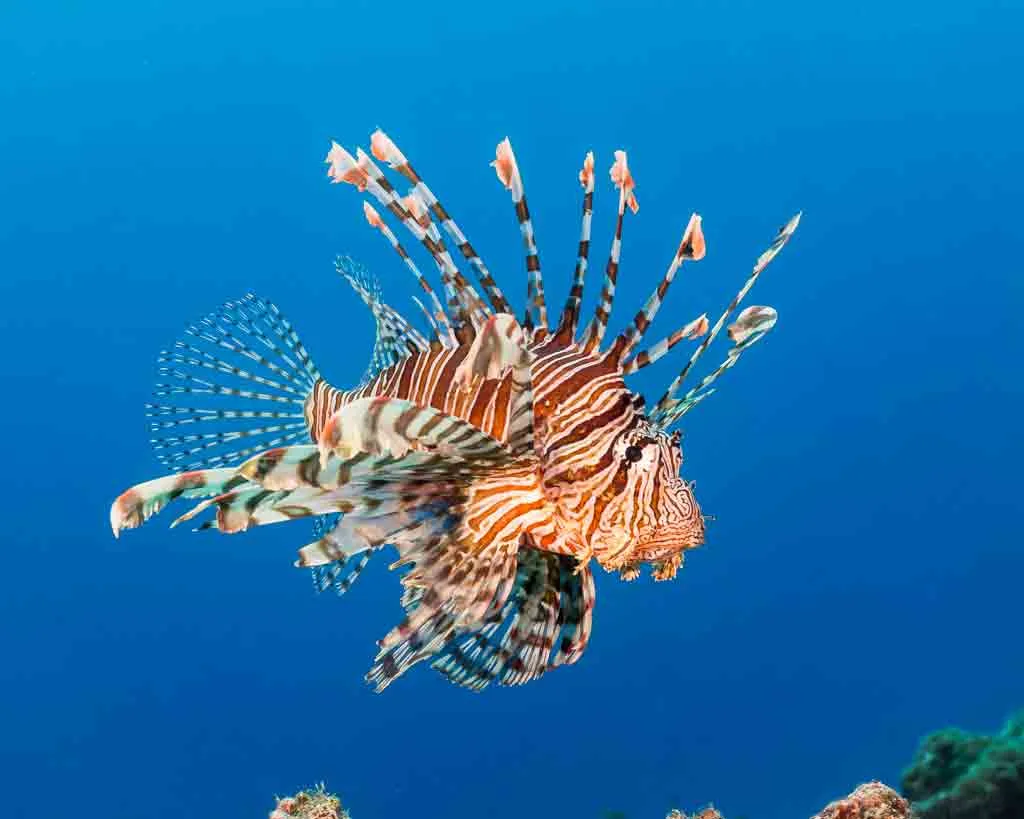
With their flowing, lace-like fins and bold zebra stripes, lionfish are the living masterpieces of the reef slope. Yet, this elegance is a defensive warning.
- The Arsenal: Hidden within those delicate, feather-like plumes are thirteen needle-sharp dorsal spines, each “extremely venomous.” When a predator or a careless hand approaches, the lionfish tilts its head down, presenting its spines like a phalanx of spears.
- The Encounter: These fish are masters of stasis, often found hovering motionlessly under ledges or drifting slowly through the water column. Because they do not flee, they are often overlooked until one drifts too close to their formidable perimeter.
The Rolling Shadow: Striped Eel-Catfish (E-ahttehi)
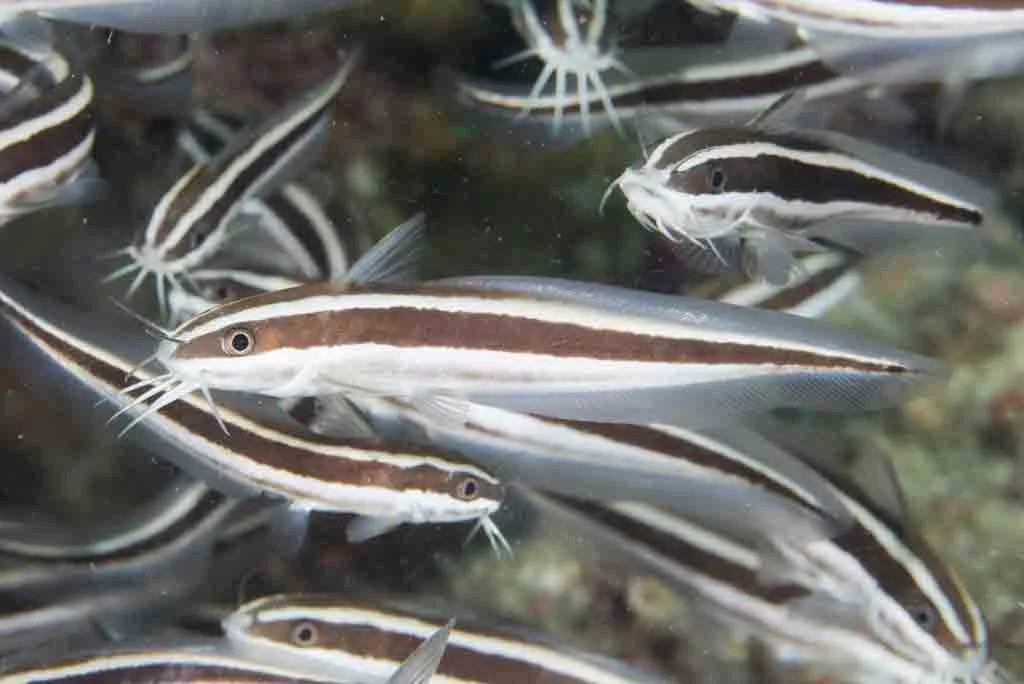
In the shallow, sun-drenched lagoons, a peculiar sight often greets the snorkeler: a dense, shifting ball of darkness rolling across the sandy floor. This is a “catfish ball,” a coordinated defensive formation of juvenile Striped Eel-Catfish.
- The Arsenal: Do not be deceived by their rhythmic, social behavior. Each individual is armed with three lethal points—one on the dorsal fin and one on each pectoral fin. These spines are “extremely venomous” and capable of delivering a staggering sting.
- The Encounter: These fish are the scavengers of the lagoon, constantly on the move. While they are not aggressive, their tendency to move in tight, unpredictable schools makes accidental contact a risk for those wading in the shallows.
The Armed Prize: Sabre Squirrelfish (Raiverimas)
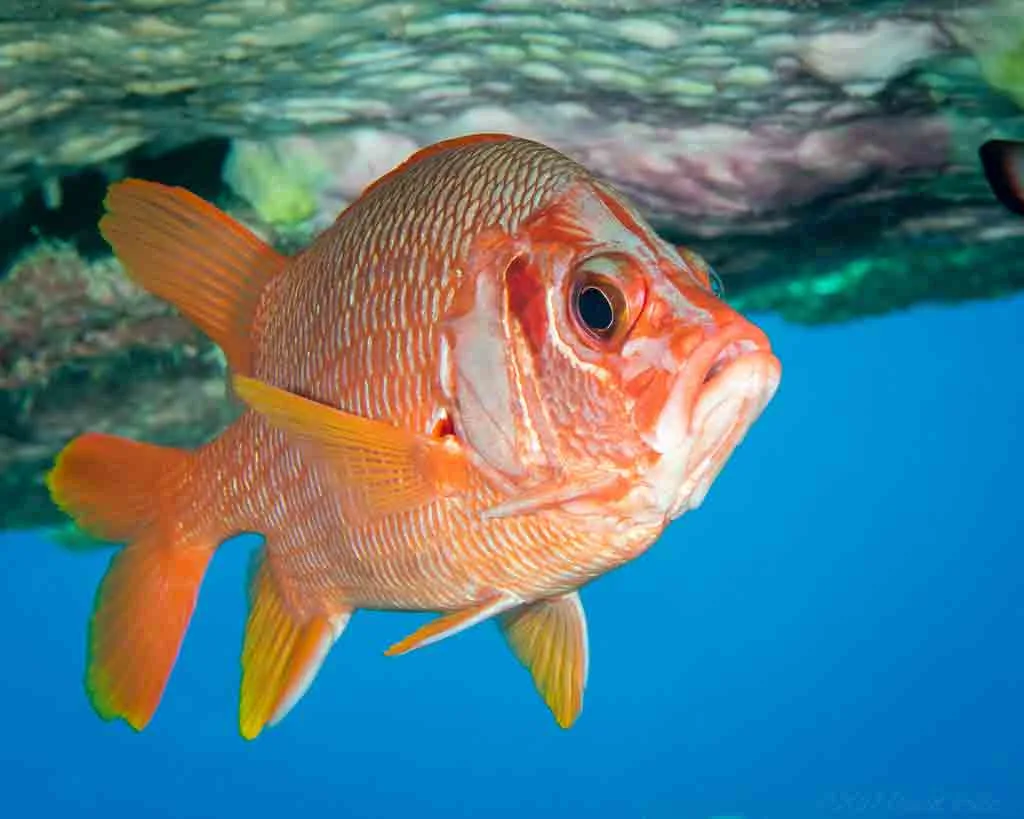
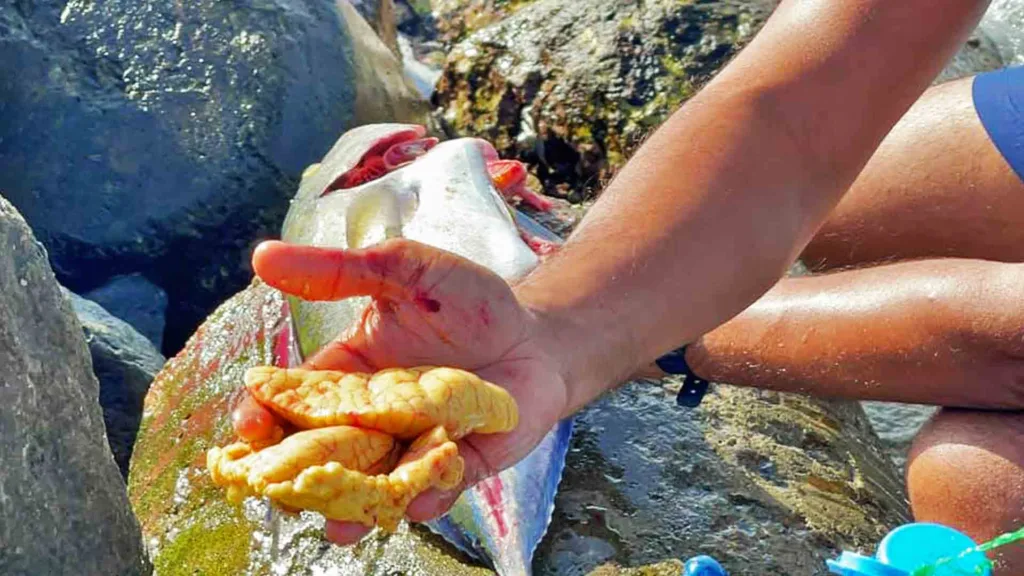
Venom is not always reserved for the exotic; sometimes, it is found in the very fish that sustain the islanders. The Sabre Squirrelfish is a common prize for night-fishers, but it is a catch that demands a professional’s respect.
- The Arsenal: Unlike the free-swimming defenses of the lionfish, the Raiverimas carries its weapon on its cheek. A long, sharp spine extends from the corner of its gill cover. This “sabre” is venomous, designed to punish any predator or fisherman who handles the fish without caution.
- The Encounter: With oversized, liquid-black eyes adapted for the deep dark, these crimson fish are iconic nocturnal hunters. They serve as a vital reminder that in the Maldives, even the most familiar faces of the reef can carry a hidden, stinging secret.
Field Note: The Silent Pact
In the logic of the reef, venom is rarely an instrument of unprovoked attack; it is a silent pact of mutual respect. These creatures use their toxins to ensure their survival in one of the most competitive environments on Earth. For those who visit their world, safety is found in a simple, ancient rule: admire the brilliance, but never touch the art.