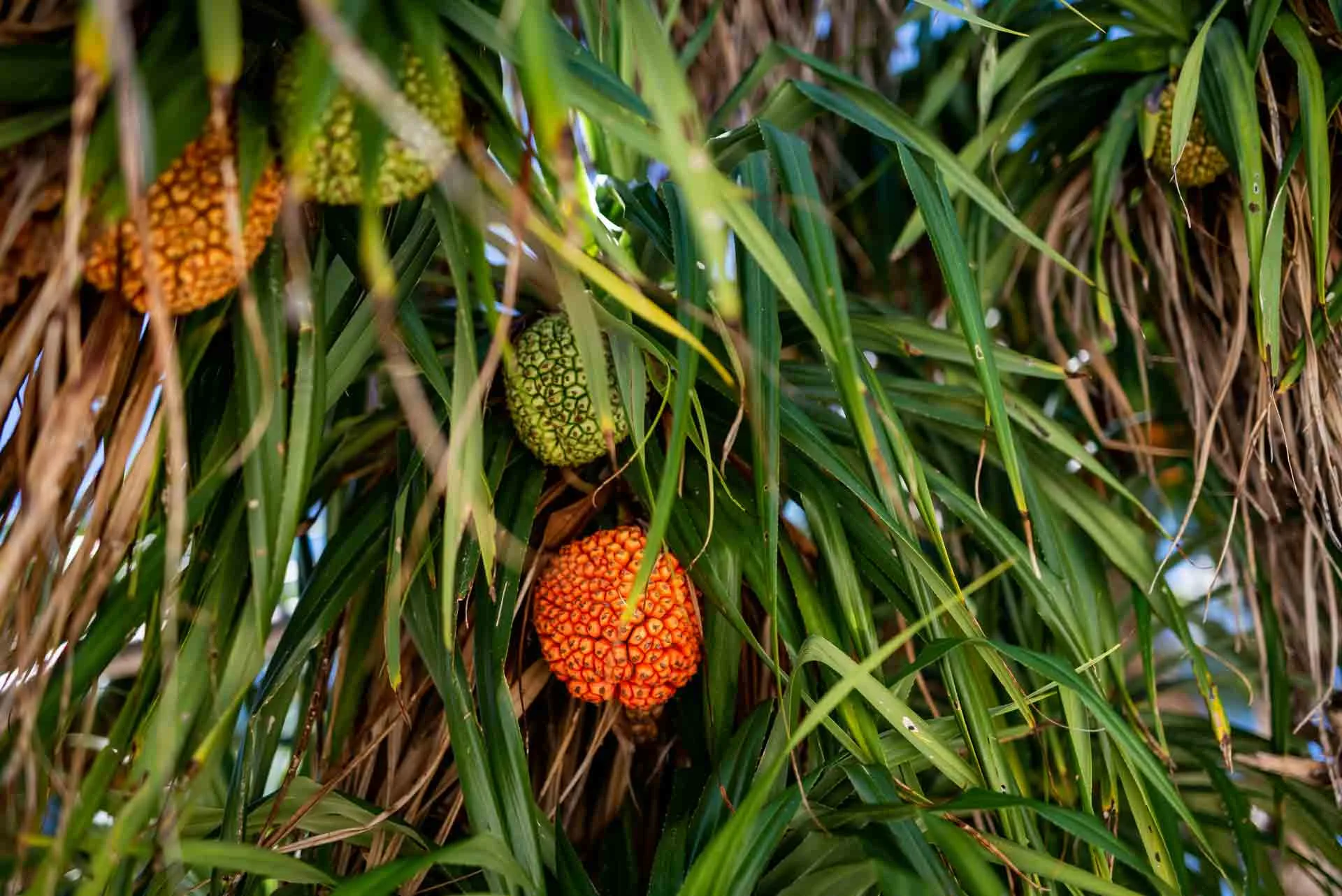
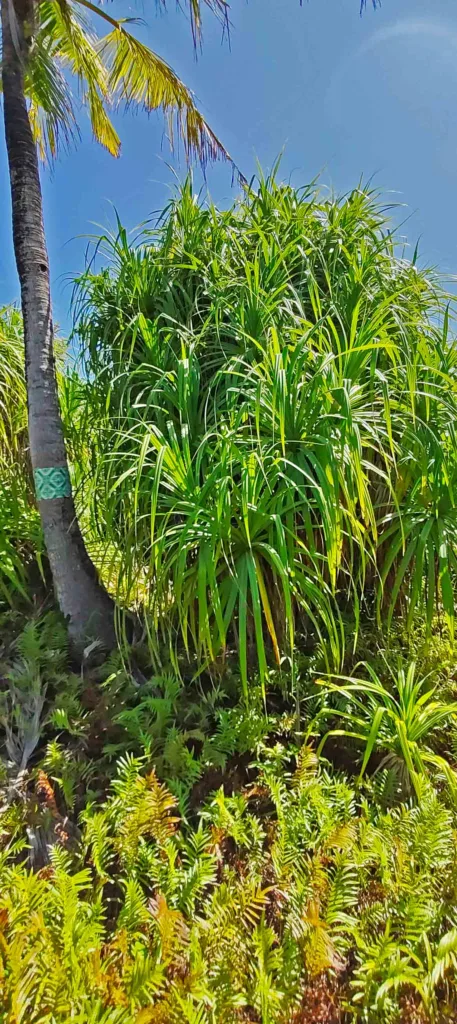
Along the salt-sprayed fringes of the Maldivian atolls, where the white sand yields to damp, brackish earth, stands the Keyvai. With its architectural prop roots and serrated, spiraling leaves, the Screwpine (Pandanus) is a staple of the tropical horizon. But to those who know the old stories, it is more than a coastal anchor. It is a living boundary marker—a signpost for a world that is “thin.”
The Geography of the Liminal
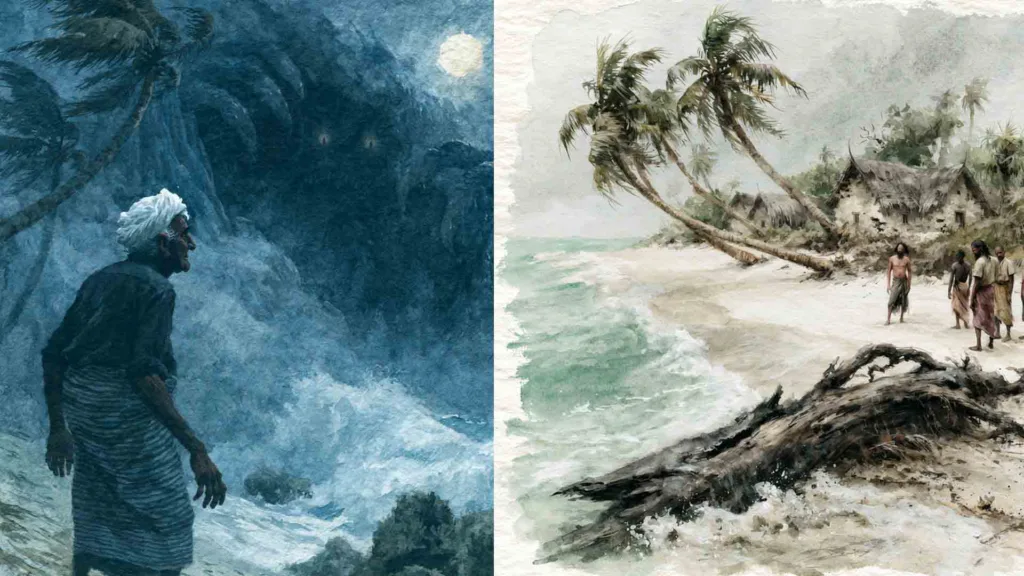
In Maldivian folklore, the landscape is never neutral. Spiritual energy is believed to settle in places of transition: the shoreline, the swamp’s edge, and the dense thickets where the village ends and the wild begins. This is the natural habitat of the Keyvai.
Unlike the sacred groves of other cultures, the screwpine is not worshipped, nor is it believed to house a singular spirit. Instead, it functions as a geographic warning. To find a grove of Keyvai is to find a portal—a “liminal” space where the veil between the human experience and the unseen world becomes permeable.
Encounters in the Damp Dusk
Islanders traditionally exercise a quiet caution near these groves, particularly after the sun dips below the horizon. The experiences reported here are rarely dramatic; they are subtle, psychological, and deeply disorienting:
- The Auditory Echo: Hearing a familiar voice call one’s name when no one is there.
- The Atmospheric Shift: A sudden, inexplicable heaviness in the humid air.
- The Lost Path: A brief, chilling disorientation on a trail the walker has known for a lifetime.
When a traveler returns from such a grove with a sudden fever, weakness, or recurring dreams, ritual specialists look not to the tree, but to the location. The Keyvai is merely the witness to a place that is “spiritually active.”
“The screwpine does not speak or threaten. It simply marks a threshold—a reminder that survival once depended on knowing where to walk, and when to keep one’s distance.”
The Southern Tradition
While these beliefs echo across the archipelago, they are most deeply etched into the oral histories of the southern islands:
- Fuvahmulah
- Huvadhoo Atoll
- Addu Atoll
In these regions, the dense vegetation and freshwater lenses create the perfect environment for the Keyvai to thrive. Here, the tree is symbolically linked to feminine forces. Its association with damp ground and fertility parallels broader Maldivian beliefs connecting women, blood, and spiritual vulnerability. In this worldview, power is ambivalent—it is neither strictly good nor evil, but simultaneously creative and dangerous.
A Relational Landscape
Despite the eerie reputation of the groves, the Keyvai remains a tree of immense utility. The fruit is a traditional culinary staple, and its hardy leaves are woven into the very fabric of island life.
This coexistence—of utility and caution—is the heartbeat of Maldivian folklore. The natural world is seen as relational; a single grove can provide both nourishment for the body and danger for the soul.
The Persistence of Silence
In the modern Maldives, overt talk of spirits and “thin places” is fading, replaced by the hum of development. Yet, the old patterns persist in the quiet moments. Paths are still avoided after dark. Groves are passed without lingering.
The Keyvai still stands at the edge of the island, its tangled roots gripping the shore. It remains a silent sentinel, reminding the modern traveler of an older way of reading the land—one where the landscape itself was alive with presence.