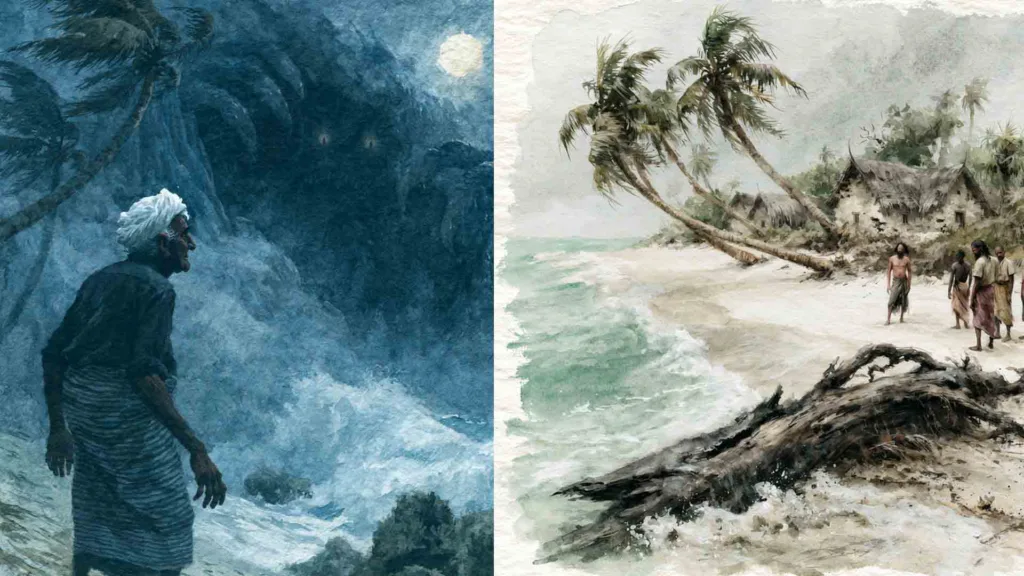
Every year, when the southwest monsoon arrives in the Maldives, the sea around Fuvahmulah begins to change. Heavy clouds gather over the island, strong winds sweep across the ocean, and waves crash hard against the reef fronts. In Dhivehi, this season is known as hulhangu.
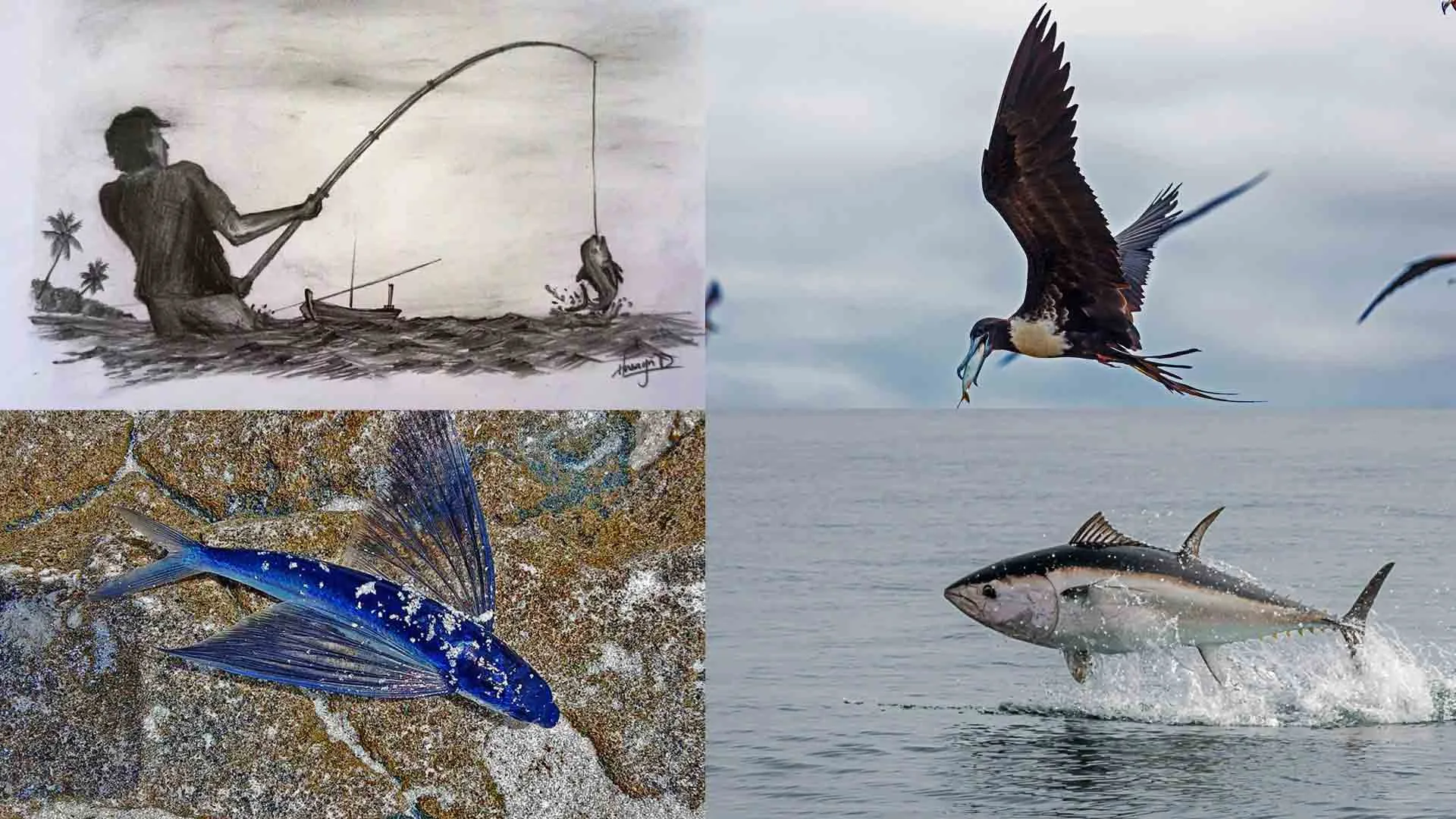
For many islands, hulhangu is a difficult time of rough seas and limited fishing. But in Fuvahmulah, it is also one of the most exciting times of the year. The ocean becomes full of life. Flying fish appear near the reef edge, giant trevally begin hunting close to shore, and frigate birds circle above the waves looking for prey. Further offshore, tiger sharks, thresher sharks and oceanic manta rays move through the deep waters surrounding the island. For the people of Fuvahmulah, hulhangu is not just a weather season. It is part of the island’s identity.
Where the Ocean Feels Close
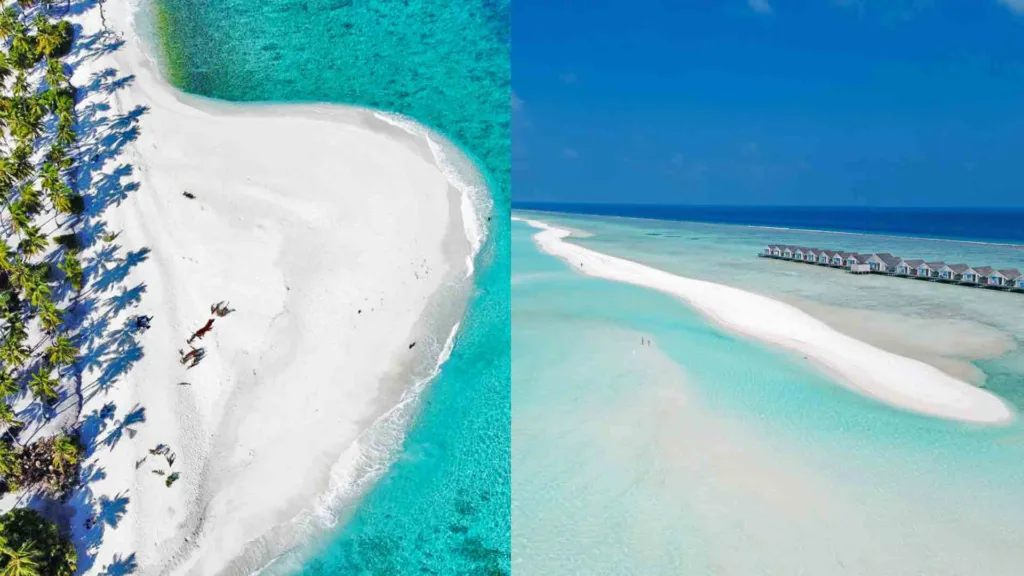
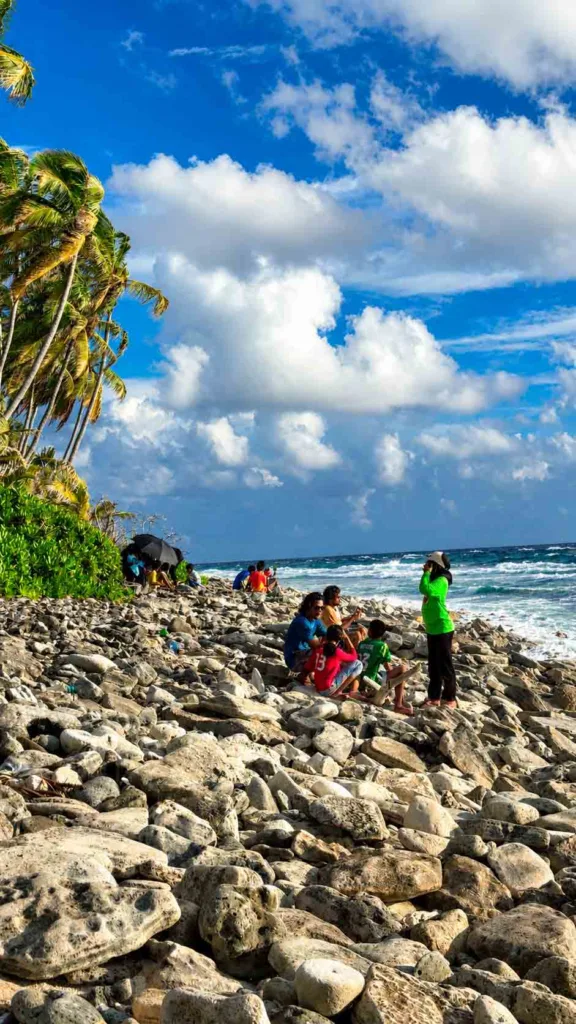
Fuvahmulah is different from many islands in the Maldives. It does not have a wide lagoon protecting it from the ocean. The sea feels close at all times, and during the monsoon the island becomes even more dramatic. Waves strike directly against the shoreline, and the sound of the ocean can be heard day and night.
Between May and October, strong currents bring schools of flying fish close to the reef. Chased by yellowfin tuna, tuna, giant trevally and other predators, the fish leap out of the water and glide above the surface in an attempt to escape. Some disappear back into the sea, while others are caught by frigate birds in midair. Many lose direction in the rough winds and end up on the beaches of Fuvahmulah.
That is when the island comes alive.
Predators Beneath the Waves
The flying fish season in Fuvahmulah is shaped not only by the monsoon, but by the predators moving beneath the surface. During hulhangu, strong currents bring large schools of flying fish close to the reef edge, attracting some of the ocean’s fastest hunters.
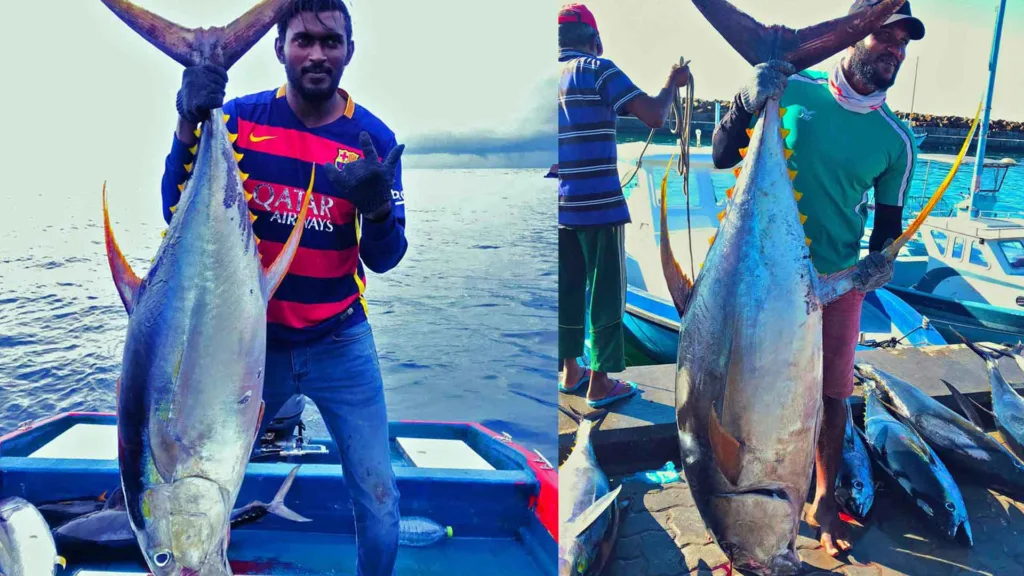
Yellowfin tuna, mahi-mahi, wahoo and giant trevally pursue the fish through the rough monsoon waters, driving them upward in sudden bursts of panic. Chased from below, flying fish leap out of the sea and glide above the waves in an attempt to escape. Some manage to return safely to the water, while others are caught midair by frigate birds circling overhead.
Closer to shore, giant trevally continue the hunt along the reef fronts. In rough weather, the sea around Fuvahmulah becomes a chain of constant movement — predators attacking from below, birds descending from above, and flying fish scattering through the wind and surf.
This activity is one reason the flying fish season becomes especially intense during stormy monsoon nights. Strong winds and crashing waves often disorient the fish, causing many to land directly on the beaches or among the coastal vegetation of the island.
For generations, islanders have watched this relationship between predator, prey and sea conditions unfold every hulhangu. The movements of frigate birds, the behaviour of the currents, and the sudden appearance of flying fish near shore all signal the changing rhythm of the ocean around Fuvahmulah.
The Flying Fish Season
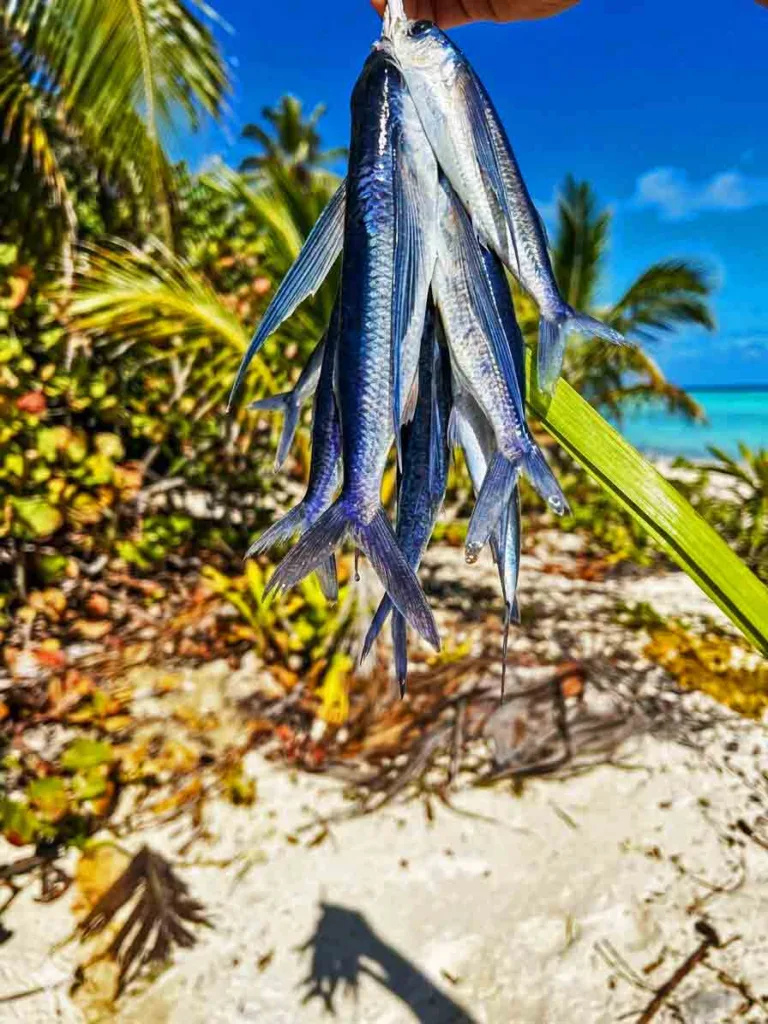
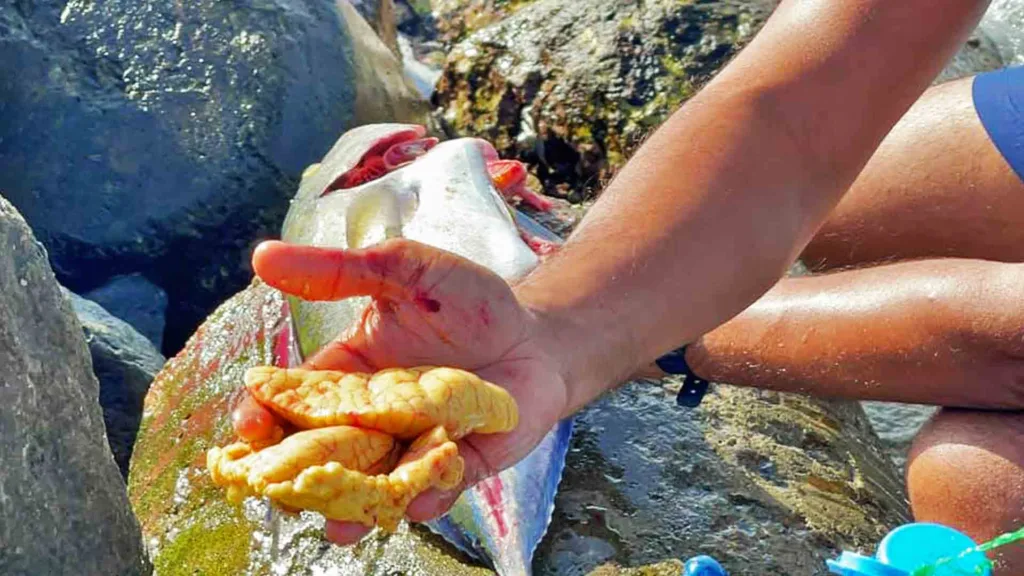
In Fuvahmulah, collecting flying fish is a long-standing tradition known as hulhanmaha negun. During stormy monsoon nights, people gather along the western and northern beaches waiting for the fish to land ashore. There are no boats or fishing rods involved. People simply stand near the surf carrying buckets, baskets and torches, waiting for the next wave to throw flying fish onto the sand. Children run along the beach laughing and chasing fish in the dark, while older fishermen quietly watch the sea and the changing currents.
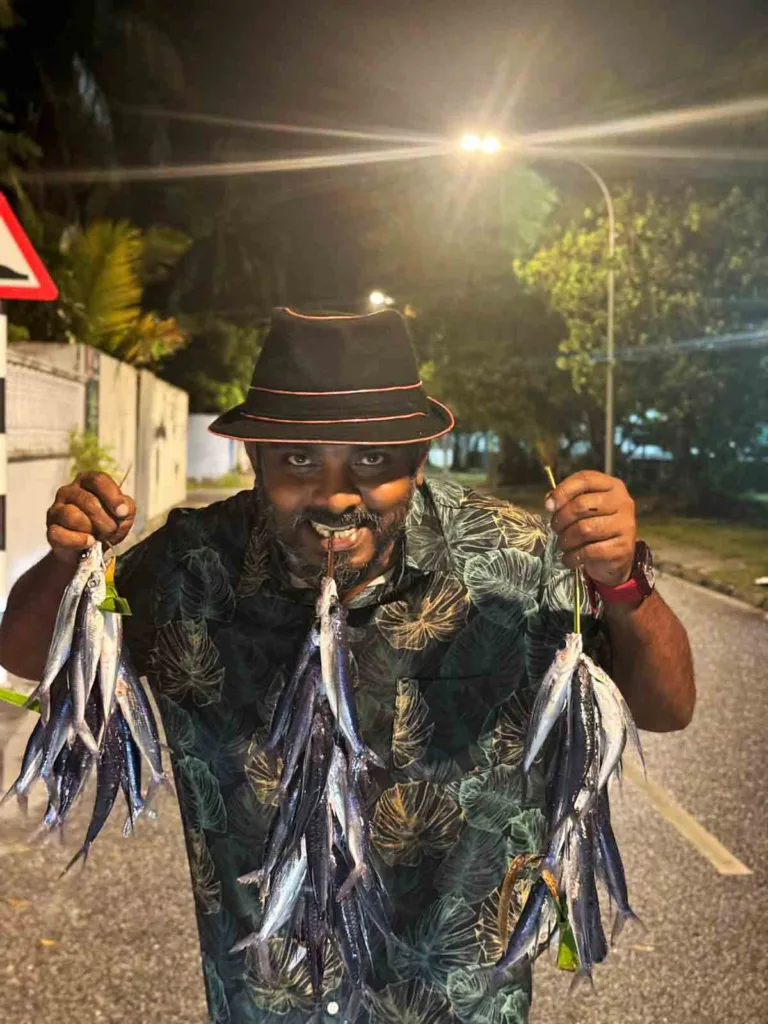
For visitors, it can feel unbelievable at first. Fish appear to fly directly out of the ocean and onto the island itself. But for locals, this has always been part of hulhangu. Years ago, the season carried even greater importance. During rough weather, fishermen were often unable to go out to sea, so flying fish became an important source of food for many families. The fish were fried, dried or smoked, and neighbours often shared their catch with one another. Even today, despite the growing attention from tourists and social media, the tradition still belongs to the island.
Giant Trevally Along the Reef Edge
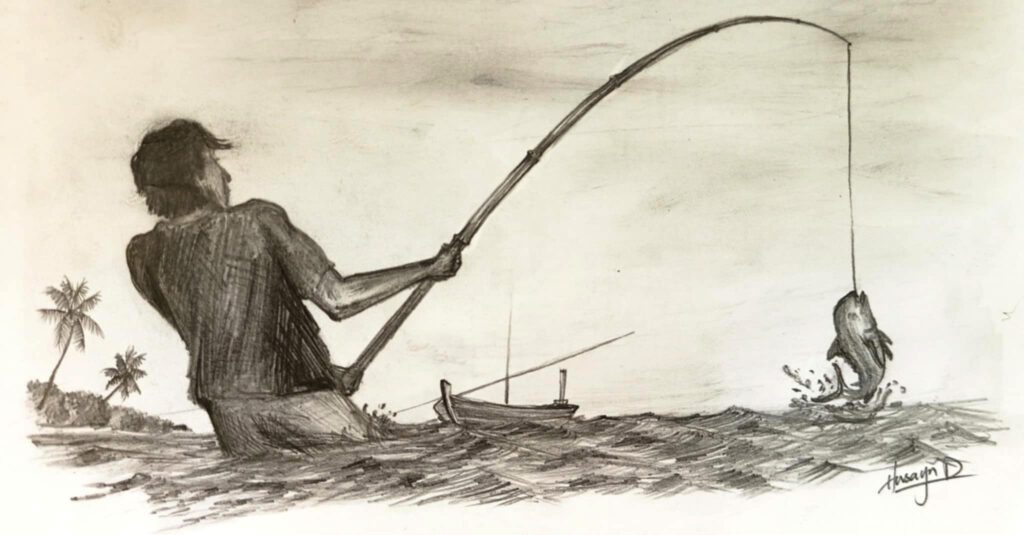
Where flying fish gather, predators are never far away. One of the most powerful hunters found around Fuvahmulah during hulhangu is the giant trevally, known locally as maamudu. Strong monsoon currents bring baitfish close to shore, creating perfect conditions for GTs to hunt along the reef edge.
Older fishermen still talk about vevelhe jehun, a traditional form of reef-edge fishing practiced from coral ledges facing the open ocean. Using bamboo poles and heavy handlines, fishermen used flying fish as bait while standing beside crashing waves waiting for the strike of a giant trevally. It was dangerous fishing. The rocks were slippery, the currents were strong, and the fish themselves were powerful enough to snap thick lines.
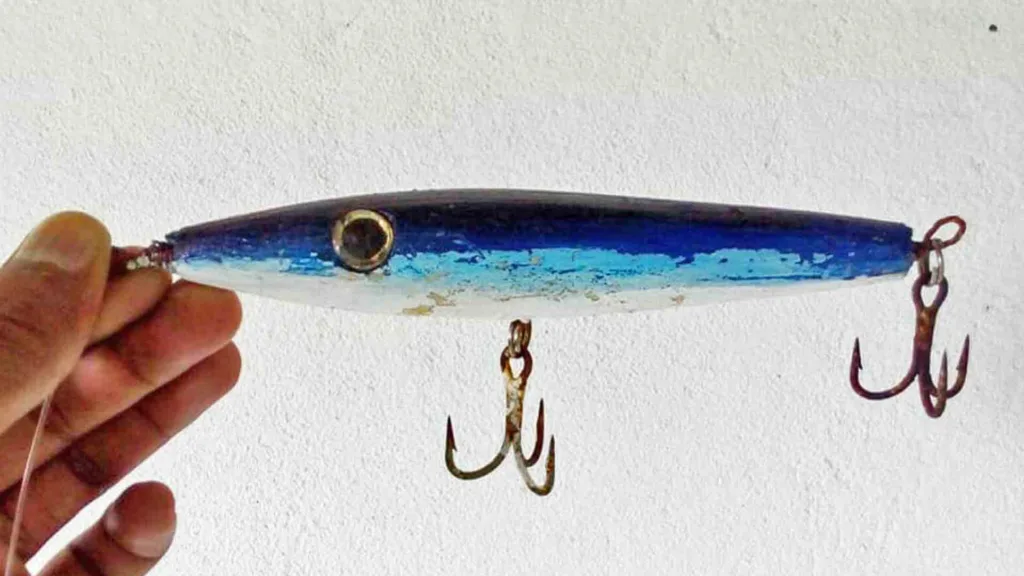
Landing a giant trevally was never only about catching fish. It demanded patience, balance and experience. Today, modern anglers continue targeting GTs around Fuvahmulah using poppers and stickbaits. Many international sport fishermen now visit the island specifically to experience GT fishing during the monsoon season. But even with modern equipment, the ocean still decides everything.
Sharks and Other Giants of Fuvahmulah
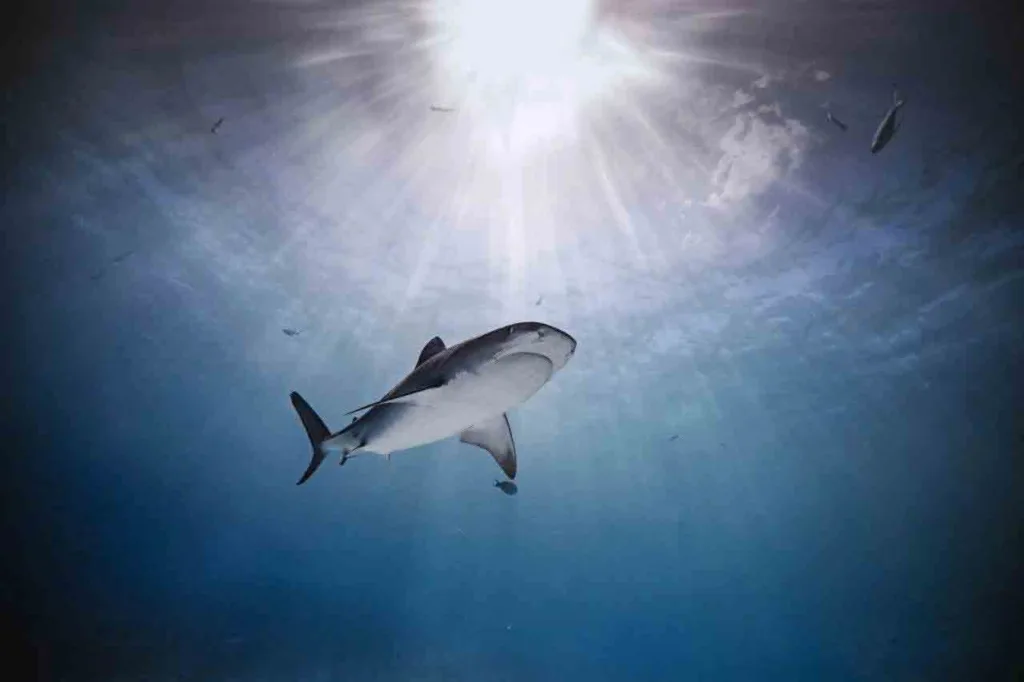
Fuvahmulah is now widely known for its large pelagic species. Divers from around the world visit the island hoping to encounter tiger sharks, thresher sharks and oceanic manta rays. Tiger sharks are the most famous. Large, calm and powerful, they are seen around Fuvahmulah throughout the year and have become closely connected to the island’s identity.
Thresher sharks are also found in these waters, especially during certain seasons. Easily recognised by their long tails, they are more shy and elusive than tiger sharks. Oceanic manta rays and mobulas are another important part of Fuvahmulah’s marine life, gathering around cleaning stations near the reef. All these species are connected to the same ocean conditions created by hulhangu. Strong currents, deep waters and abundant baitfish make the island one of the richest marine environments in the Maldives.
The Frigate Birds of Hulhangu
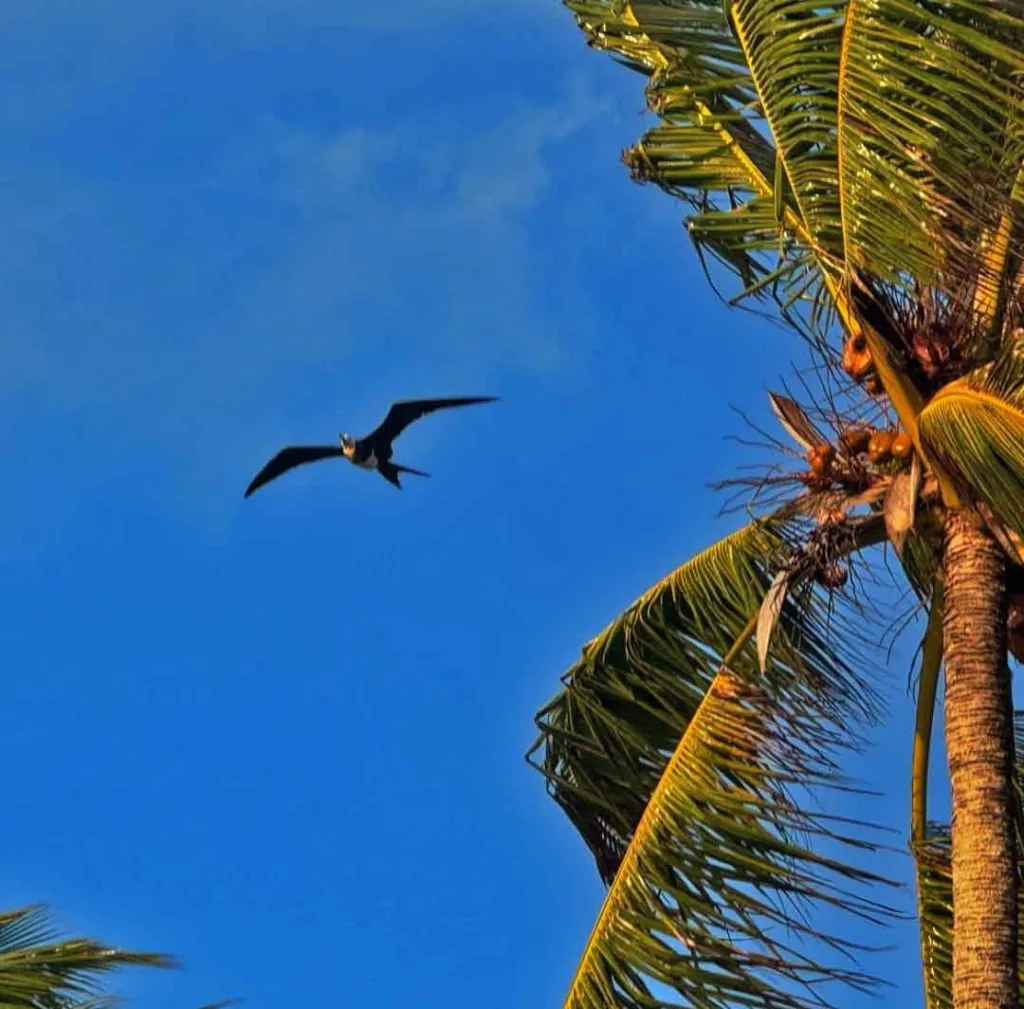
Above the waves, frigate birds continue circling through the monsoon winds. In Fuvahmulah, they are known as huraa. These birds are closely linked to the flying fish season. Unlike gulls or terns, frigate birds do not dive into the water. Instead, they hunt from the air, using their sharp eyesight to spot fish near the surface. When flying fish leap out of the sea, the birds swoop down and catch them midair.
For generations, fishermen have watched frigate birds carefully. Their movements often reveal where fish are gathering below the surface. In many ways, the birds are seen as guides to the sea. During hulhangu, they become part of the island’s landscape — circling above dark skies, rough seas and crashing waves.
More Than a Monsoon
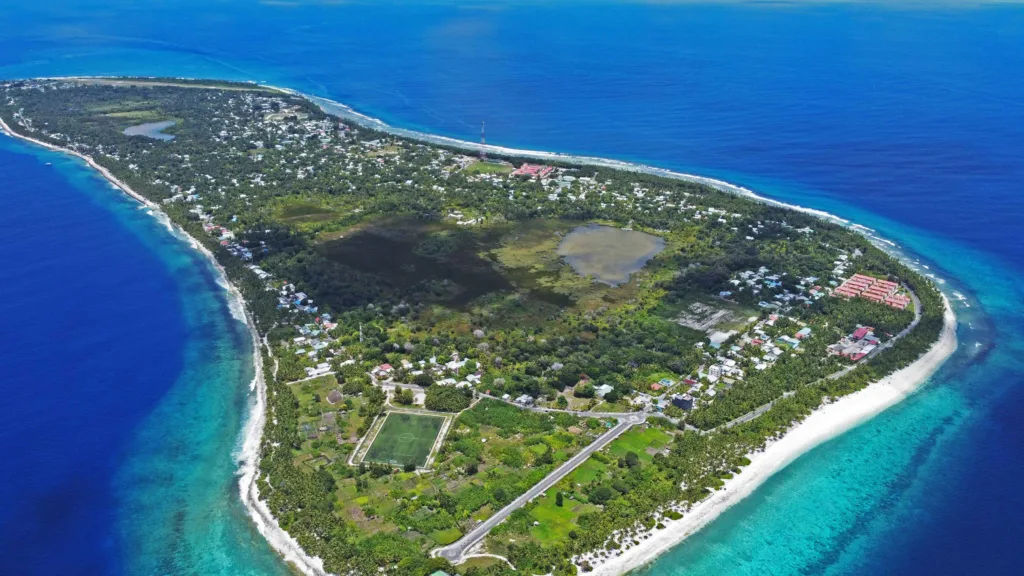
Today, Fuvahmulah is famous for diving and shark tourism. But beyond that modern image is an older story shaped by the monsoon, the reef edge and the people who have lived beside these waters for generations. When hulhangu arrives, the island changes. Flying fish scatter across the beaches, giant trevally hunt along the reef fronts, frigate birds glide through the storm winds, and deep waters attract sharks and manta rays from the open ocean. For the people of Fuvahmulah, this is not simply another season. It is a way of life.