The Maldives is famous for its turquoise lagoons and rich coral reefs, but for many underwater explorers, it’s the quirky and unexpected marine species that create the most memorable encounters. Among these unusual reef residents are the boxfish, a tropical family of oddly shaped, armor-plated fish that bring a touch of charm and curiosity to Maldivian waters.
This family contains six genera and around 20 species, though only one genus and two species are regularly observed around Maldivian reefs — a fact highlighted by marine expert Rudie H. Kuiter in his book Fishes of the Maldives (Atoll Editions). A few other genera occur only in deep water and are known mainly from scientific trawls or from the stomachs of large pelagic predators. For snorkelers and recreational divers, however, two species stand out as the most likely and most exciting encounters: the Yellow Boxfish and the Black Boxfish.
View this post on Instagram
Boxfish are instantly memorable because they look like no other fish on the reef. Their bodies are encased in a rigid, box-like shell made of fused bony plates, creating a natural suit of armor. This protective casing covers most of their body and leaves only small openings where the fins, eyes, gills, mouth, and tail can move freely. Their unusual structure gives them a distinctive, almost mechanical swimming motion, as if they glide and wobble rather than swim.
Some species from other regions — though not yet recorded in the Maldives — have additional features such as horn-like projections above the eyes or the back, adding an even more alien look.
Another fascinating aspect is that several boxfish species produce a natural toxin in their skin or mucus, released when stressed. This defense strategy discourages predators but also means boxfish must be handled with care in aquariums, as their toxin can affect other fish in enclosed spaces.
In the wild, boxfish are peaceful reef dwellers. They spend their days nibbling along sandy bottoms and coral rubble, feeding primarily on small invertebrates, including worms, crustaceans, and tiny benthic organisms.
Below are the Maldives’ two signature species — each with its own beauty, behavior, and habitat preferences.
Yellow Boxfish (Ostracion cubicus)
One of the Maldives’ Most Iconic and Photogenic Reef Fish
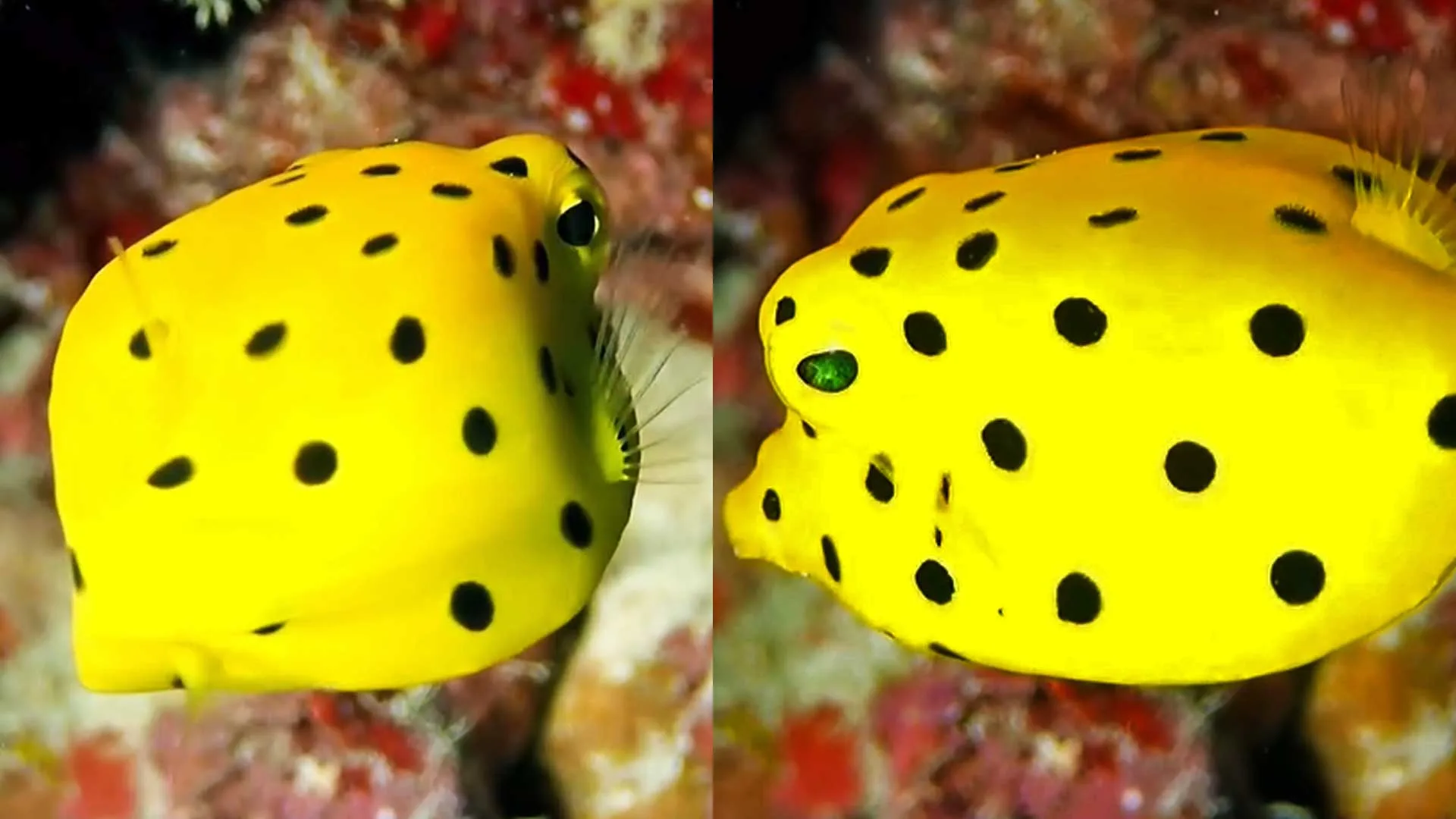
The Yellow Boxfish is a true reef favorite. Its bright colors and perfectly geometric shape make it one of the most photographed fish in the Maldives. This species is widely distributed throughout Indo-Pacific waters, and, as described in Rudie H. Kuiter’s Fishes of the Maldives, it is common across most reef habitats in the archipelago.
Where You’ll Find Them
Yellow Boxfish undergo noticeable habitat changes as they grow:
- Juveniles:
- Found in shallow, sheltered areas, including protected bays, lagoons, and harbors.
- Frequently hide under ledges, inside holes, and near sea urchins for protection.
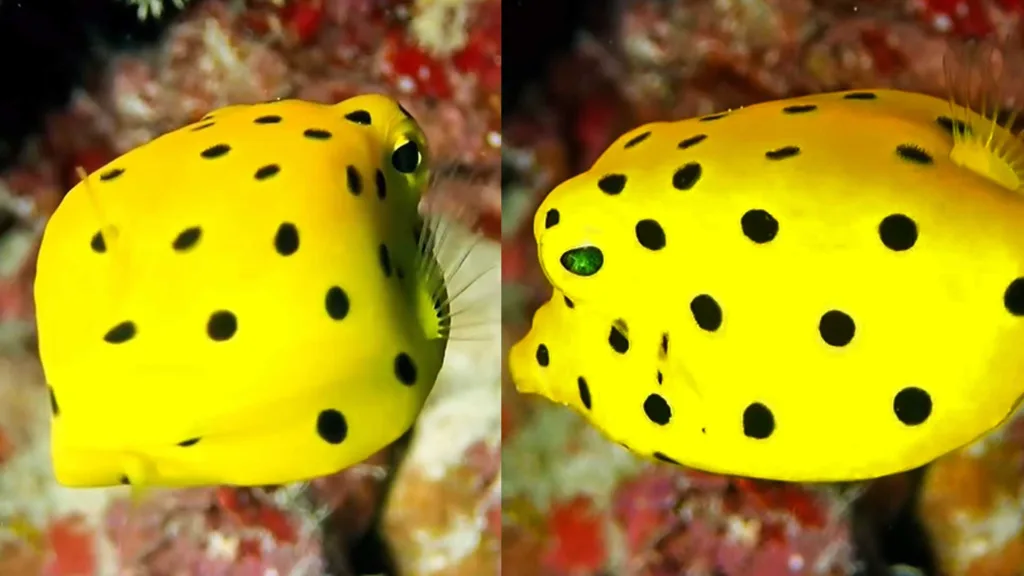
- Their small, cube-shaped yellow bodies covered in crisp black spots make them incredibly striking.
- Adults:
- Prefer deeper waters, usually on the drop-offs and steep slopes of protected reefs.
- Typically found from 40 meters and deeper, though occasionally seen shallower.
- Their body becomes more elongated with age, losing some of the juvenile sharpness in form and pattern.
Size & Distribution
Adult Yellow Boxfish can grow up to 45 cm, making them one of the larger boxfish in the Indo-Pacific. Their broad distribution means divers across the Maldives — from the northern atolls to the southern coral chains — have a good chance of spotting them.
Why Travelers Love Them
Their curious nature and slow, hovering movement make them easy to approach for photographs. Juveniles, in particular, often appear as bright yellow cubes glowing against coral and rock, making them one of the underwater world’s cutest residents.
Black Boxfish (Ostracion meleagris)
Elegant, Colorful, and Often a Reward for Keen-Eyed Divers
The Black Boxfish is another fascinating member of the Maldivian reef community. Unlike the Yellow Boxfish, which boldly advertises itself with bright colors, the Black Boxfish displays a striking contrast between males and females, making encounters especially interesting.
This species prefers reefs with clear visibility and healthy coral cover, typically appearing on slopes and shallow drop-offs, often at depths below 20 meters.
Male vs. Female: Two Completely Different Looks
Male Black Boxfish
Male Black Boxfish are eye-catching and often roam more openly in the reef. Their pattern includes: -. deep blue sides
- bright yellow spots
- lighter, contrasting lines or patterns depending on age
They glide confidently across coral formations, sometimes appearing almost fluorescent under strong sunlight or torchlight.
Female Black Boxfish
Females are more secretive and often hide within branching corals or crevices. Their appearance is very different:
- a black body
- covered in numerous tiny white spots
- growing to about 20 cm in length, as noted by Kuiter
This dramatic difference between males and females is one reason the species fascinates divers — spotting both forms in one dive feels like two different discoveries.
Where They Live
The Black Boxfish is widespread throughout the Indo-Pacific, and the Maldives offers excellent chances to observe them in their preferred habitats. Clear-water reefs with strong coral growth, gentle slopes, and moderate currents are prime places to look.
Why Boxfish Are a Must-See in the Maldives
Whether you’re snorkeling for the first time or exploring the Maldives on a dedicated diving holiday, boxfish are among the species that add charm, color, and personality to your underwater experience. Their odd shapes, vivid patterns, and unique behaviors seem almost designed to capture attention.
Perfect for Underwater Photography
- Their hovering movement makes them easy to follow.
- Juveniles offer bold, high-contrast colors.
- Males and females of some species look completely different, offering variety.
Ideal for New Snorkelers
Juvenile Yellow Boxfish often inhabit shallow bays and house reefs, giving even beginners a chance to encounter them.
A Reminder of Nature’s Creativity
From their armored shells to their peculiar swimming style and natural toxins, boxfish are a living example of how diverse and surprising ocean life can be.
Boxfish in Maldivian Marine Life Guides
These species are beautifully illustrated and documented in Rudie H. Kuiter’s book Fishes of the Maldives (Atoll Editions), one of the most respected references for identifying reef fish in Maldivian waters. For divers and snorkelers interested in learning more about the species they encounter, Kuiter’s guide remains an essential resource.
A Final Word for Ocean Lovers
The Maldives offers endless marine wonders, but the boxfish family stands out for its charm, uniqueness, and unforgettable character. Whether you spot a tiny bright-yellow juvenile hiding between coral branches or a sleek blue-and-yellow male cruising along a reef slope, boxfish encounters add magic to any underwater adventure.
With their unusual shapes, fascinating biology, and wide presence across the islands, they are a must-see for anyone exploring the reefs of the Maldives — from casual snorkelers to seasoned divers searching for the archipelago’s most iconic marine species.