The air in the southern atoll of Fuvahmulah is thick with the scent of brine and sun-baked coral. Here, the geography is an anomaly—a lone emerald island rising vertically from the deep sea without the protective embrace of a lagoon. It is a place where the line between survival and the sea is as thin as the nylon handlines coiled in the bows of local dhonis.
For the Maldivian people, the ocean is not a resource to be extracted; it is a relative to be respected. While industrial trawlers elsewhere clear-cut the ocean floor, the Maldives has remained an outpost of ancient, surgical precision. Their philosophy is simple, yet revolutionary in its restraint: one man, one hook, one fish.
The choreography of the chase
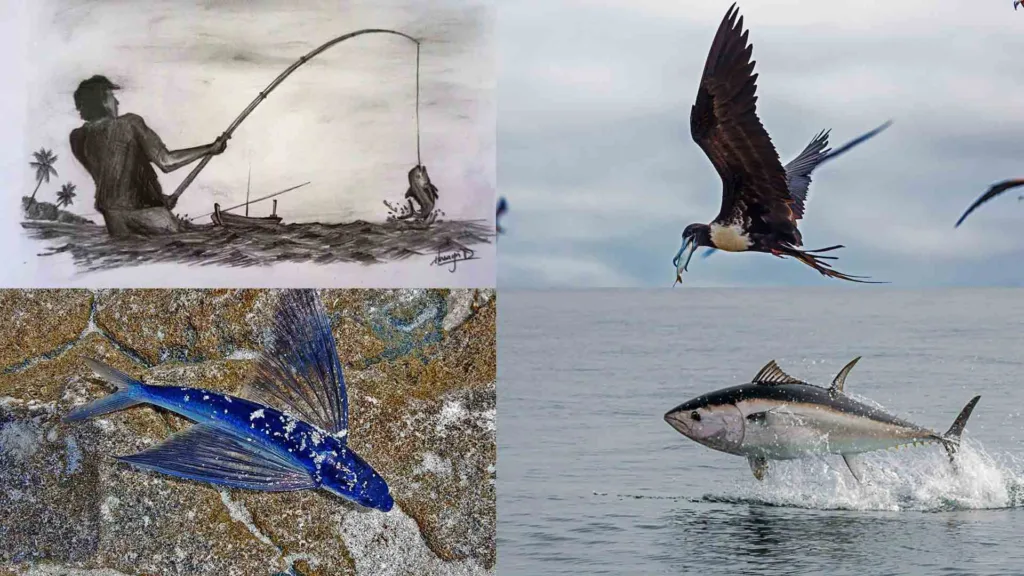
The heartbeat of the Maldivian economy is the Pole-and-Line tuna hunt. It is a chaotic, beautiful ballet. When a school of Skipjack is sighted, the “bait-thrower” begins his work, tossing shimmering handfuls of live sprats (rehi) into the turquoise wake.
FIELD NOTE: The success of the hunt lives or dies with the bait. Without the glittering dance of the silver cardinals (boadhi), the tuna remain in the depths, untouchable.
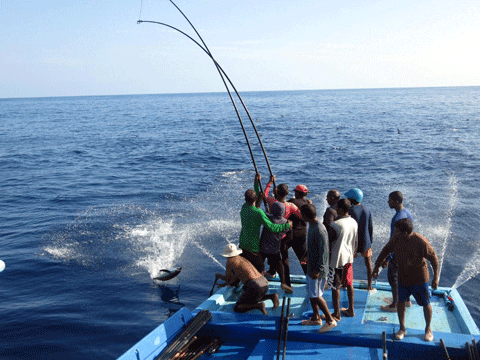
As the water erupts into a feeding frenzy, the fishermen stand shoulder-to-shoulder on the aft deck. There are no nets here. Only bamboo poles and barbless hooks. With a rhythmic flick of the wrist, ten-kilogram tunas are swung through the air in a silver arc, landing on the deck behind them. It is a method that virtually eliminates bycatch, ensuring that the only creatures taken from the sea are the ones intended for the plate.
The Silent Hunt
In the Maldives, fishing is a cultural heartbeat rather than a mere industry. Beyond its world-renowned “pole-and-line” tuna harvest lies a more primal, centuries-old tradition: Vadhu Dhun’vun (or vadhaa dhiun), the sophisticated art of trolling the reef edges.
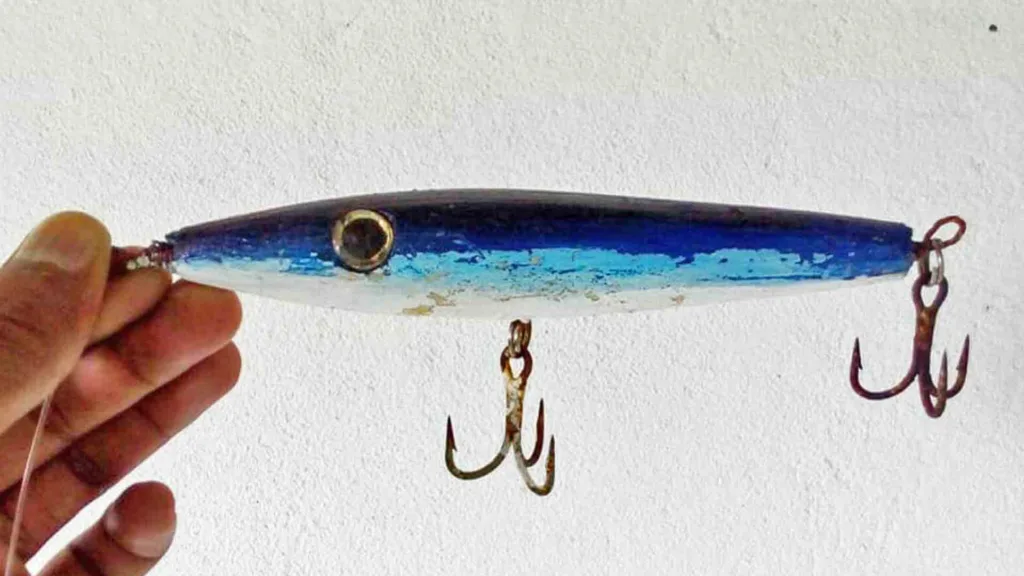
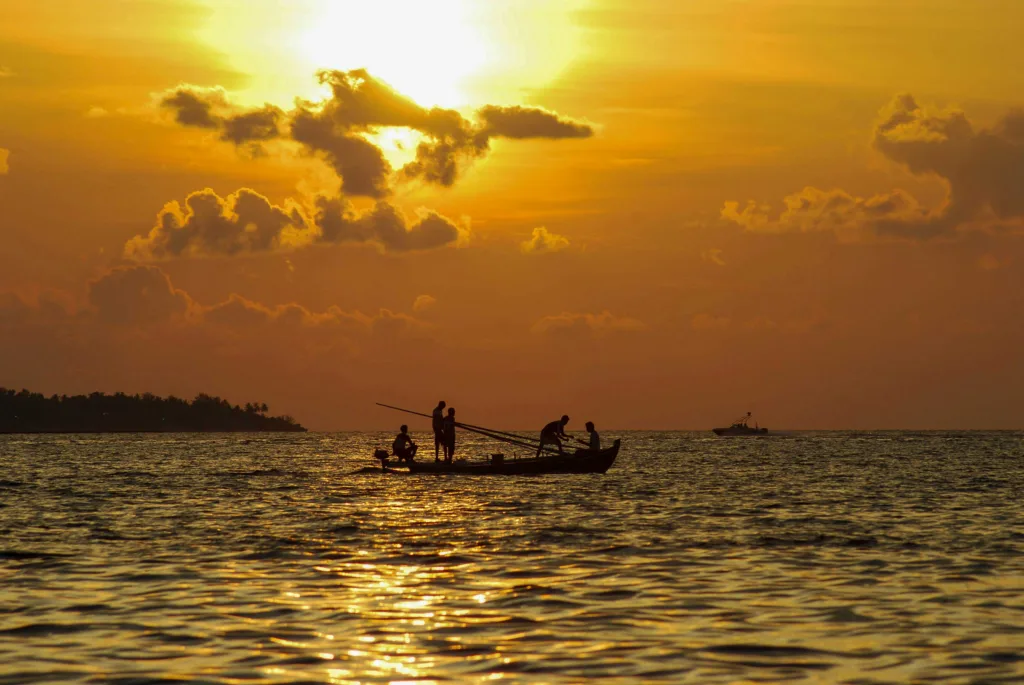
During the era of the ancient sultanates, this was a supreme test of patience and craft. Fishermen carved lures from iridescent mother-of-pearl or polished hawksbill turtle shells, designed to catch the equatorial sun and mimic the frantic shimmer of a baitfish. These vadhu (lures) were towed behind wooden sailing dhonis on hand-braided coconut fiber ropes—a silent, wind-driven pursuit of the ocean’s apex predators: Wahoo, Sailfish, Barracuda, and the formidable Giant Trevally.
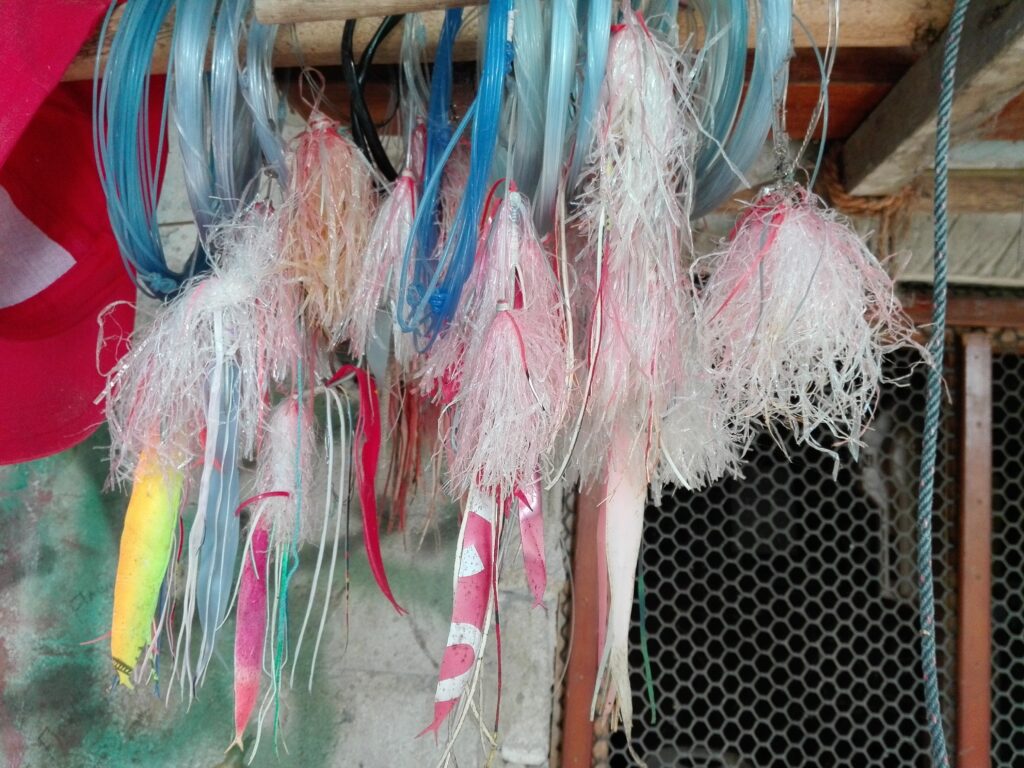
The ingenuity of the Maldivian fisherman was reflected in a diverse toolkit of lures. Artisans crafted specialized lures from banana spathes to entice Wahoo, while wooden, fish-shaped lures were carved to draw the strike of Sailfish. Feathers and striped rubber lures eventually joined this arsenal, each weighted and shaped to swim at specific depths.
The vessels were as varied as the lures. In the southern atolls, powerful dhonis manned by six oarsmen dominated the channels. Meanwhile, in the north and central reaches, the smaller bokkura—outfitted with a single sail—skimmed the inner lagoons and outer drop-offs alike. Whether by oar or by wind, the essence of the hunt remained the same: a profound intuition for the sea’s currents and a timeless reverence for the giants of the deep.
Architects of the deep
To understand the Maldivian relationship with the water, one must look below the surface—often hundreds of meters down.
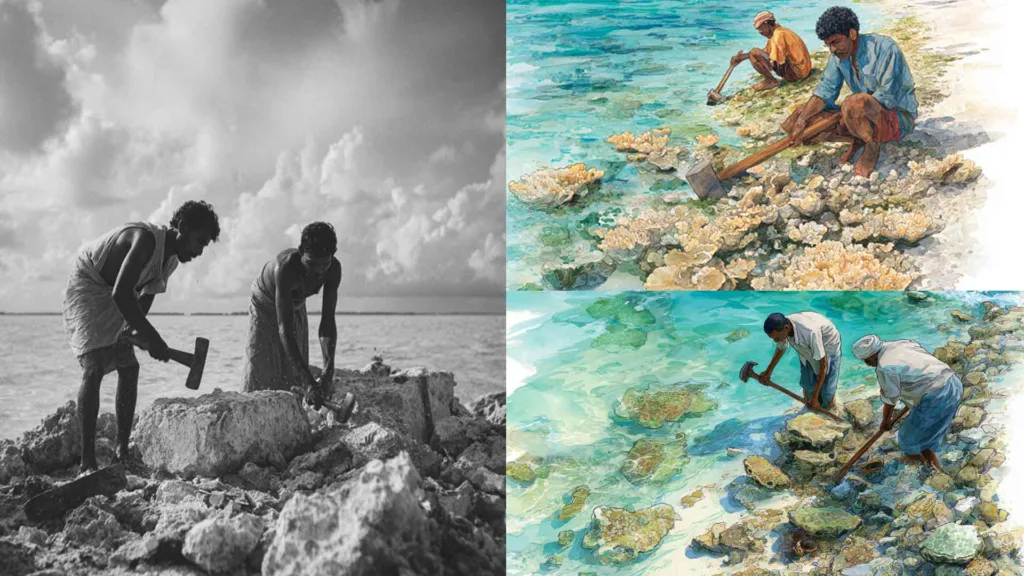
In the abyss, the Promethean Escolar, or Kattelhi, reigns supreme. In Fuvahmulah, catching this oil-rich deep-sea predator is a rite of passage. In the “old days,” this required a staggering feat of manual engineering: fishermen would bind their lines to 80 pieces of coral stone, each weighing an average of 3.5 kilograms. This massive ballast, totaling nearly 300 kilograms, was the only way to pierce the crushing depths.
A single, calculated jerk of the line would disintegrate the stone anchor, leaving the bait to flutter like a dying squid in the dark. It is a game of “Drop-Stone” physics that predates modern sonar by centuries.
The Pulse of the Deep: The Ancient Art of Koshun
In the heart of the Maldives, the ancestral tradition of “Koshun” represents a sophisticated battle of wits against the ocean’s swiftest predators. This grueling technique, also known as koshaagen kanneli beyvun, is a specialized form of chunking practiced when the sea reaches a mirror-like calm. Fishermen meticulously slice bait into thin slivers, scattering them into the depths to create a rhythmic trail of scent. This strategic chumming acts as a beacon, drawing the elusive Yellowfin Tuna from the deep-water column toward the vessel’s hull.
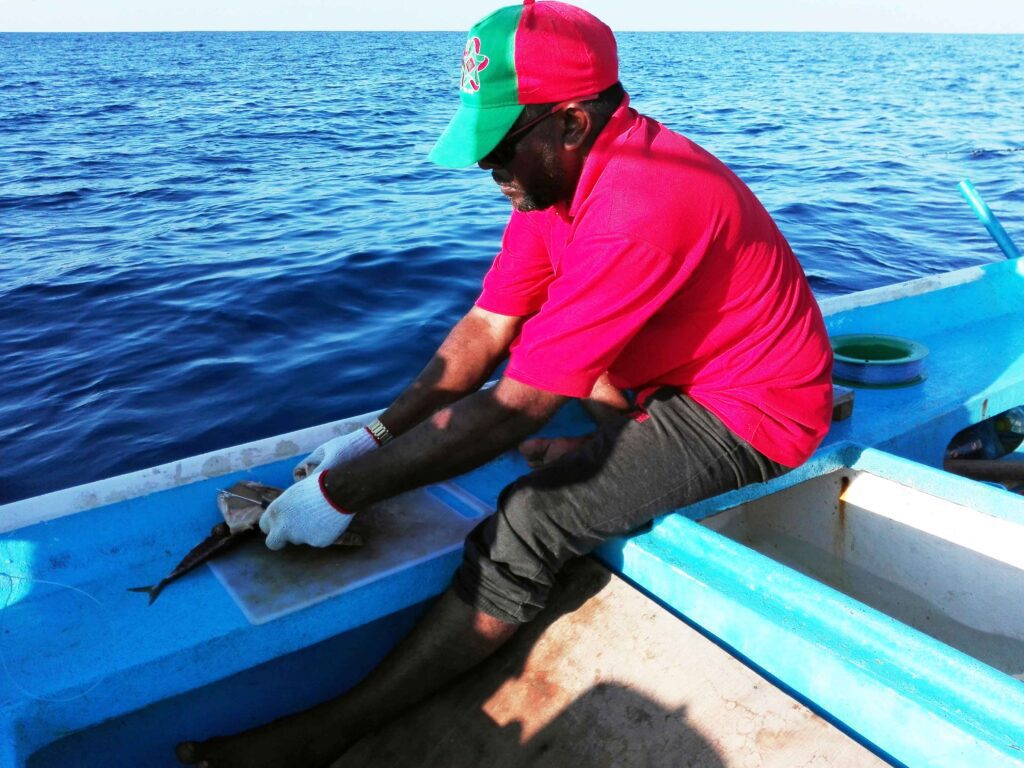
The challenge lies in the tuna’s relentless biology; as high-octane nomads, they must swim perpetually to push oxygen over their gills. By exploiting this need for constant motion, fishermen deploy multiple lines into the scent trail, intercepting the predators in their nomadic pursuit of food. Koshun is more than a harvest; it is a testament to a culture that has decoded the secrets of the sea.
Subsurface strategies: the pelagic frontier
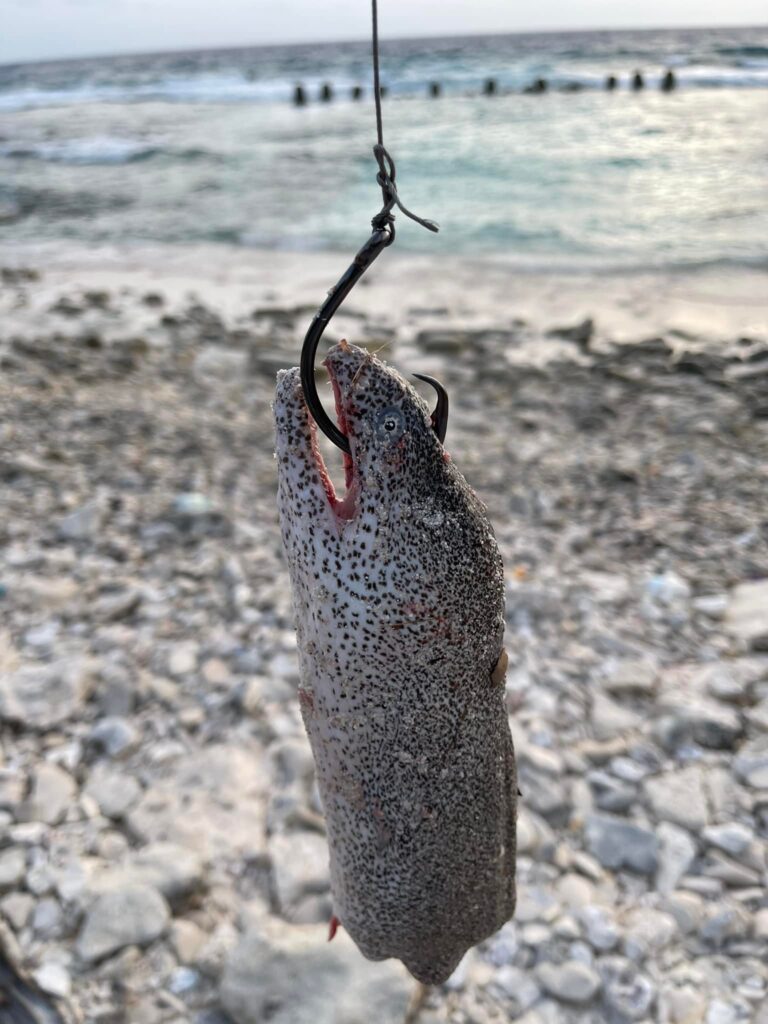
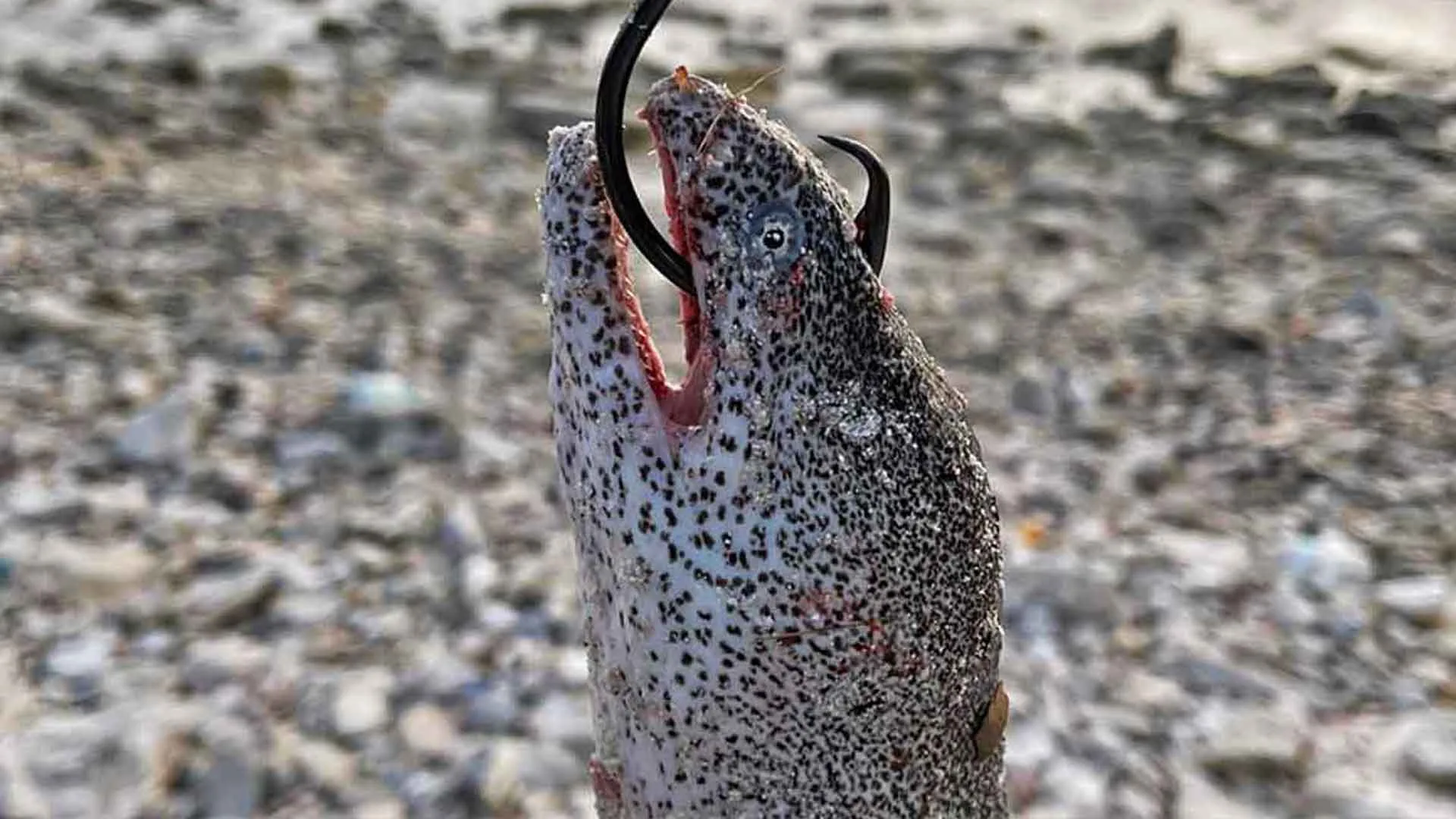
Beyond the handline, long-line fishing is conducted within the sheltered lagoons and across the volatile open sea. Hooks are rigged with a variety of lures—from supple octopus and oily strips of moray eel to carefully prepared dead bait. These lines are deployed at precise depths beneath the surface, effectively intercepting everything from sedentary reef dwellers to the nomadic giants of the pelagic zone.
The bait-binders
The Maldivian tackle box is the island itself. Their ingenuity turns the shoreline into an arsenal:
- The Sands: Fishermen probe the white beaches for the Garden Eel (Vembolhu), a prized delicacy for the powerful Trevally.
- The Thicket: In the island’s interior, even the freshwater Mosquito fish (Fenamaha) is harvested to lure the “speedsters” of the reef.
- The Shadows: Strips of Moray Eel are used as bait in the neru—the treacherous reef channels where the waves pound and the impact passes through the narrow gap.
The ghosts of the hunt
Every culture has its shadows. For the Maldivians, that shadow is the Tiger Shark. Historically, shark fishing was not merely an industry; it was a spiritual confrontation. The “deadly art” was governed by a complex web of superstitions and protective chants. It was a hunt shrouded in the belief that the shark possessed a spirit that could follow a man home.
Today, the harpoons have been laid down. The Maldives is now a sprawling shark sanctuary, a testament to a culture that realized its “formidable enemies” were actually the ocean’s most vital guardians.
The bottom line
As the world’s industrial fisheries face the looming threat of collapse, the “primitive” methods preserved throughout the islands of the Maldives are looking increasingly like the only viable way forward. From the northernmost reaches of Ihavandhippolhu to the southern tip of Addu, the Maldivian people have proven that a nation can thrive without strip-mining its waters.
In the salt-crusted hands of these islanders, there is a profound lesson for the planet: that the greatest technology we possess is not a bigger net or a faster boat, but the ancient wisdom to know when to stop. By choosing the hook over the trawl, the Maldives offers a blueprint for a world that must learn to live within the limits of the sea.