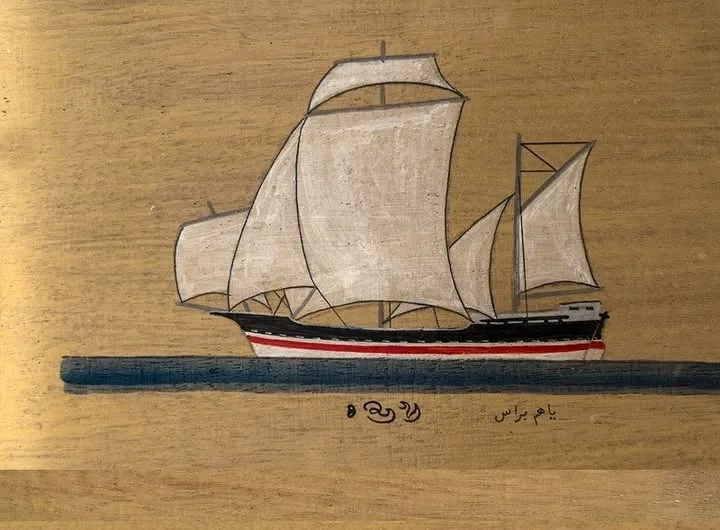
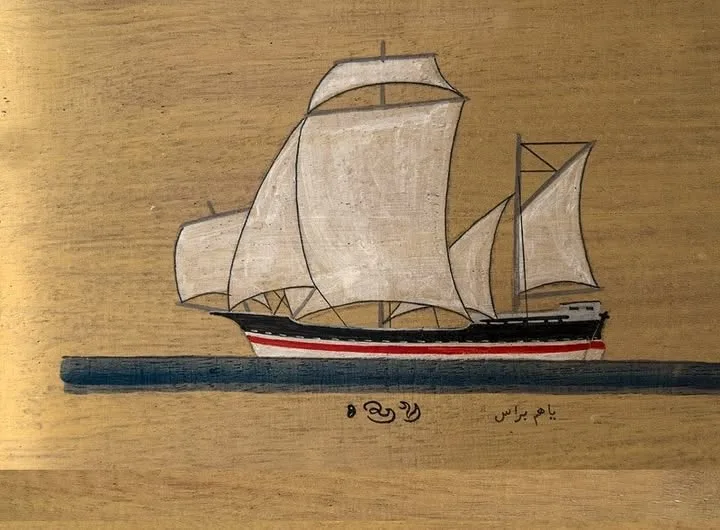
For more than a thousand years, life in the Maldives has depended on the ocean—not as a boundary, but as a bridge. Long before modern harbors, engines, and navigational instruments, islanders built vessels capable of crossing vast stretches of the Indian Ocean using little more than wind, stars, and inherited knowledge. Among these vessels, none was more vital to survival than the vedi, a sailing ship engineered not for comfort or speed, but for endurance.
Long before overwater villas and seaplanes defined the Maldivian horizon, the survival of the archipelago rested upon a masterpiece of traditional engineering: the veḍi. While Maldivian folklore is filled with tales of the sea’s dangers, the veḍi was the physical answer to those threats—a vessel built not merely for travel, but for the endurance of a nation.
The Architecture of the Horizon: Stitched Hulls and Coir
The veḍi (known as oḍi in the central atolls) was the largest traditional boat ever crafted in the Maldives, often reaching lengths of fourteen meters. What made these ships remarkable was not just their size, but their construction.
Unlike Western ships of the era, which relied on rigid frames and iron nails, the early veḍi was a stitched vessel. Maldivian shipwrights used coir rope—hand-spun from coconut husk—to lace timber planks together. This was a deliberate engineering choice: a stitched hull was flexible. When striking the heavy swells of the Indian Ocean, the ship would flex and “breathe” with the waves rather than snap under pressure. Even as metal tools were later introduced, this philosophy of flexibility remained at the heart of Maldivian boatbuilding.
The Trade Routes: From Fuvahmulah to Ceylon
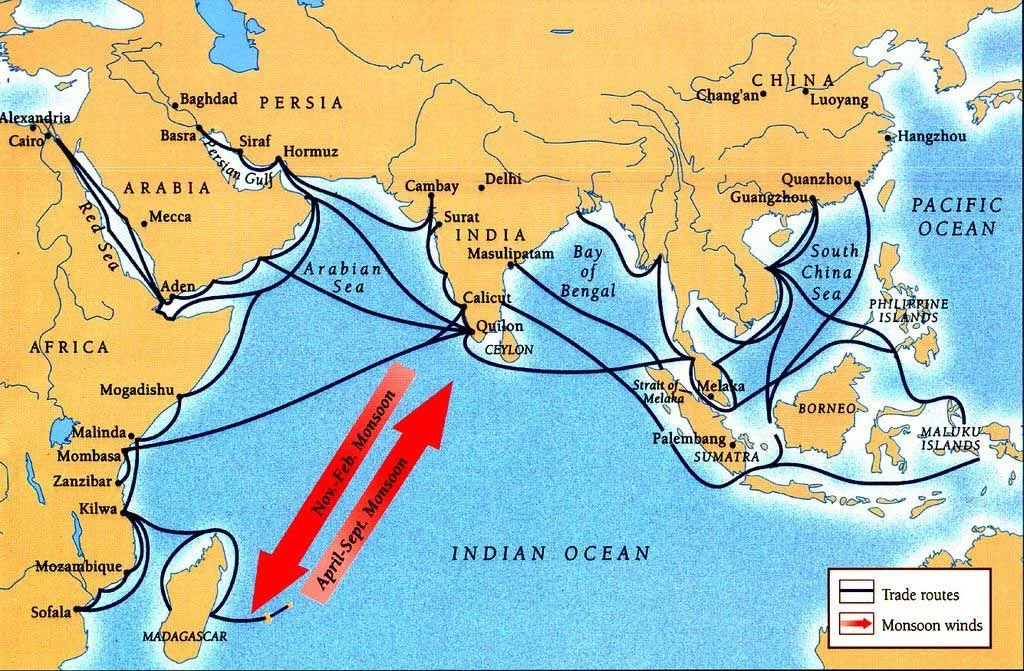
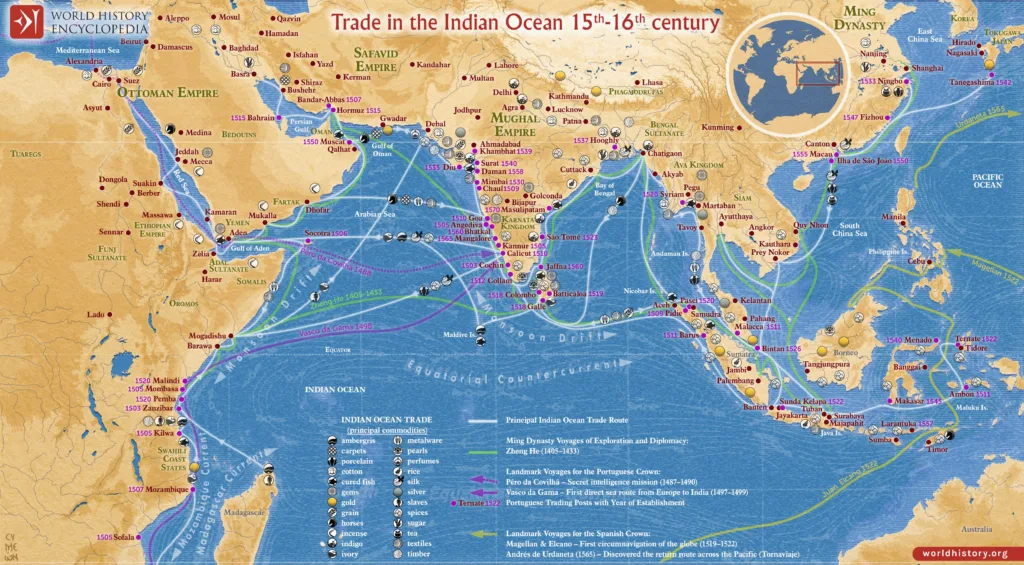
Each time a veḍi cleared the reef, it carried the economic hopes of an entire atoll. These were not leisure journeys; they were grueling, weeks-long missions to exchange island resources for basic necessities.
Navigating the “Invisible Islands”
| The Outbound Cargo | The Return Necessity |
|---|---|
| Dried Tuna (Hikimas): The primary export. | Rice & Grains: The staple diet not grown on atolls. |
| Coir Rope (Roanu): Famous for its strength. | Textiles: Cloth for clothing and sails. |
| Cowry Shells: Ancient currency of the ocean. | Metal Tools: Forged steel for carpentry and farming. |
| Ambergris: Rare finds used in perfumes. | Pottery: Essential for cooking and storage. |
One of the greatest challenges faced by a maalimee (navigator) was the nature of the Maldives itself. With no mountains and only low-lying land, the islands were difficult to detect from the open ocean until a vessel came dangerously close to the reefs. When a veḍi went astray, the maalimee employed a traditional method known locally as felaaedun to re-establish the vessel’s position and direction. According to Shah, an experienced captain from Fuvahmulah who regularly sailed between Fuvahmulah and Malé and throughout the Maldivian atolls, navigators relied on the sun, stars, moon, date, and time of day to guide the vessel back on track. Like many Indian Ocean sailors, Maldivian navigators also observed the behavior and movement of seabirds as signs that land might be nearby.
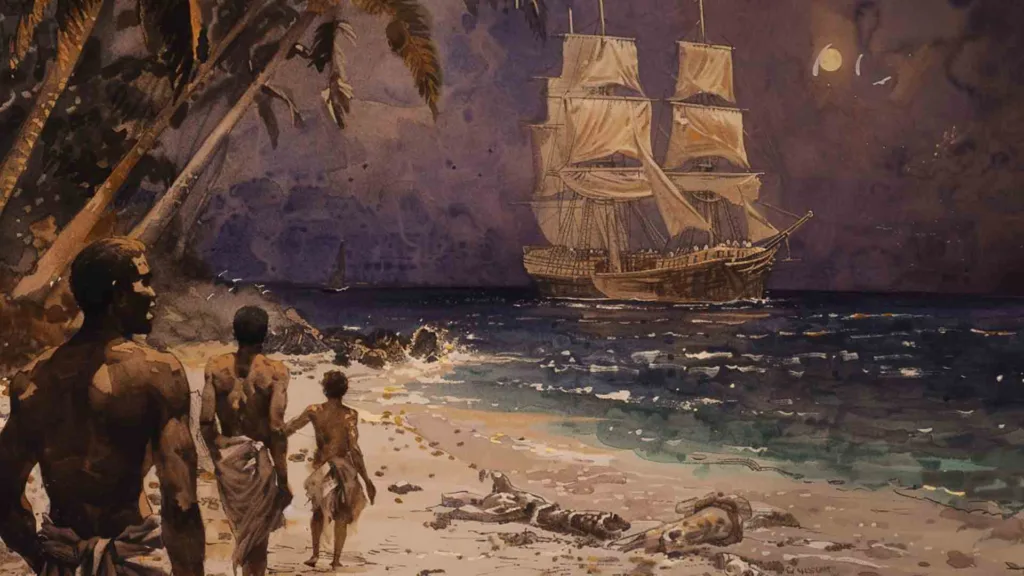
When a veḍi failed to return for many weeks, anxiety spread across the island communities. Each day, islanders climbed the tall coconut palms near the shoreline to scan the horizon for any sign of the vessel. If a veḍi was finally spotted approaching from the distance, the lookout would shout “aaley!” aloud before climbing down and running through the sandy roads of the island announcing the news. In local usage, aaley signaled that the veḍi was returning home.
A Legacy in the Blood
For my family, the veḍi is not distant history—it is personal. My grandfather, Hussain Didi (Kudhubea) of Fuvahmulah, was a respected traditional medicine practitioner who owned two veḍi. To construct and maintain these great wooden vessels, he brought skilled boat builders from other parts of the Maldives. His vessels voyaged abroad, with Sri Lanka being among their most common destinations. My late uncle, Ibrahim Didi (Beyappaa), lived the life of a maalimee, guiding these vessels across the Indian Ocean using the stars, seasonal monsoon winds, and generations of navigational knowledge.