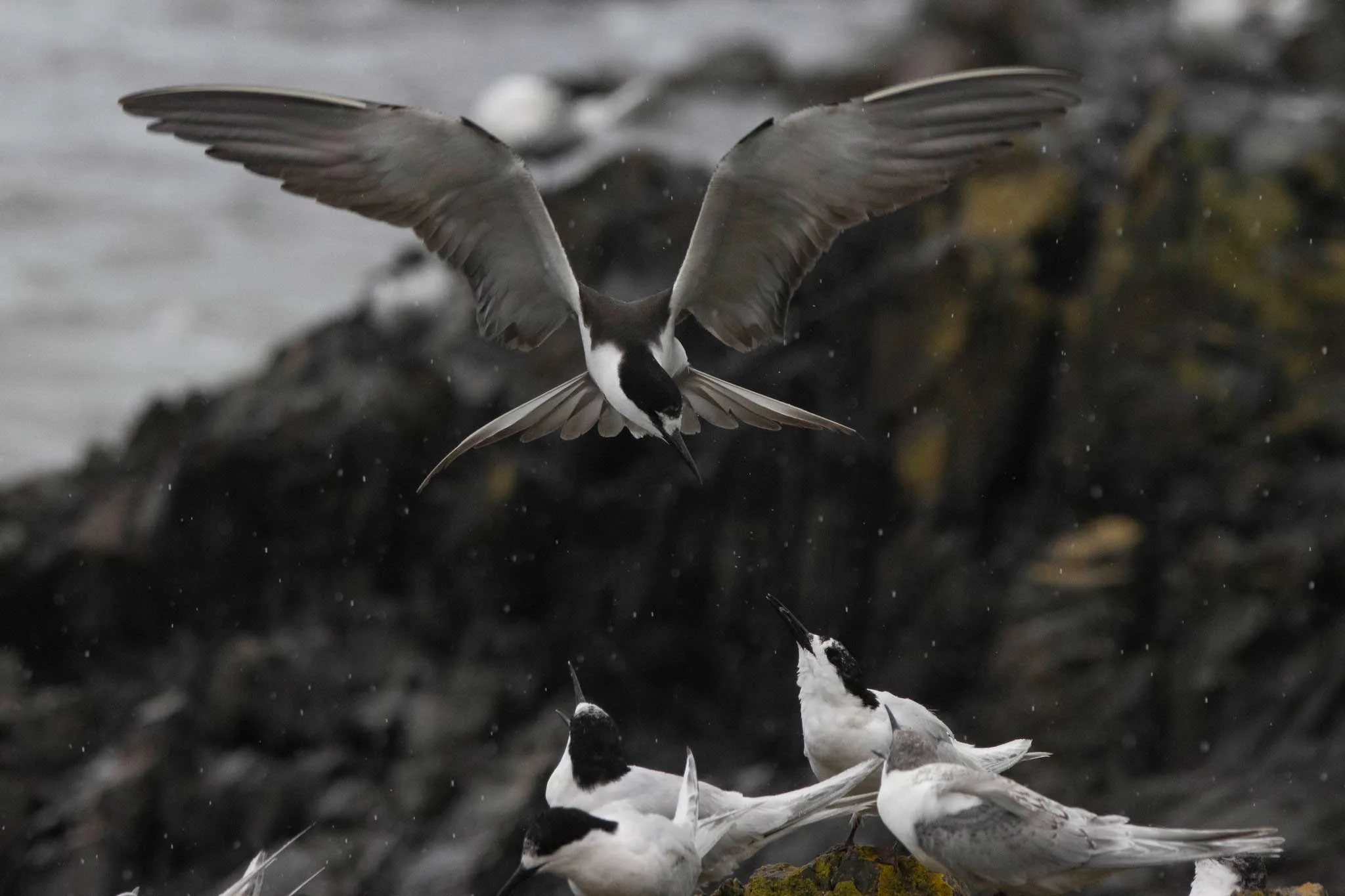
At first light in the Maldives, the islands seem to breathe with the sea. White shapes drift over coconut palms. A heron waits, motionless, at the edge of a reef flat. Out beyond the lagoon, terns cut low over the water, following shoals pushed to the surface by tide and current.
In the Central Maldives—stretching from Malé Atoll through Alifu, Vaavu, and Meemu—birdlife is shaped almost entirely by the ocean. Land is scarce, freshwater scarcer still, and vegetation limited. As a result, birds here belong mostly to the sea. Those that thrive do so by adapting to reef, lagoon, and sandbank, with only a handful of species tied closely to human settlement.
This overview draws on long-term field observations documented in Birds of the Maldive Islands, Indian Ocean by Ash and Shafeeg (2008), focusing on the species most consistently encountered across the central atolls.
Seabirds: Life Above the Lagoon
Seabirds define the everyday soundscape of the Central Maldives. Their calls carry across water and sand, their movements tracing invisible lines between island, reef, and open ocean.
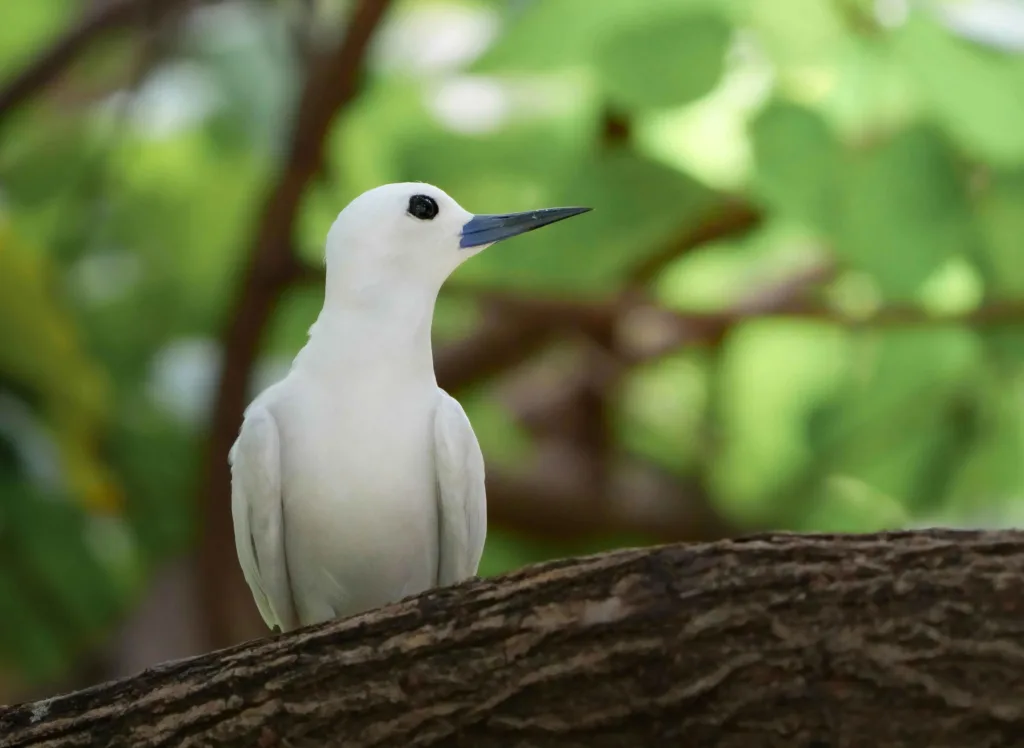
The White Tern (Gygis alba) is the most familiar presence. Ethereal and unmarked, it floats through village streets and resort gardens alike, nesting without a nest—simply balancing its single egg on a bare branch. It is a bird uniquely at home among people, and one of the most characteristic sights in the country.
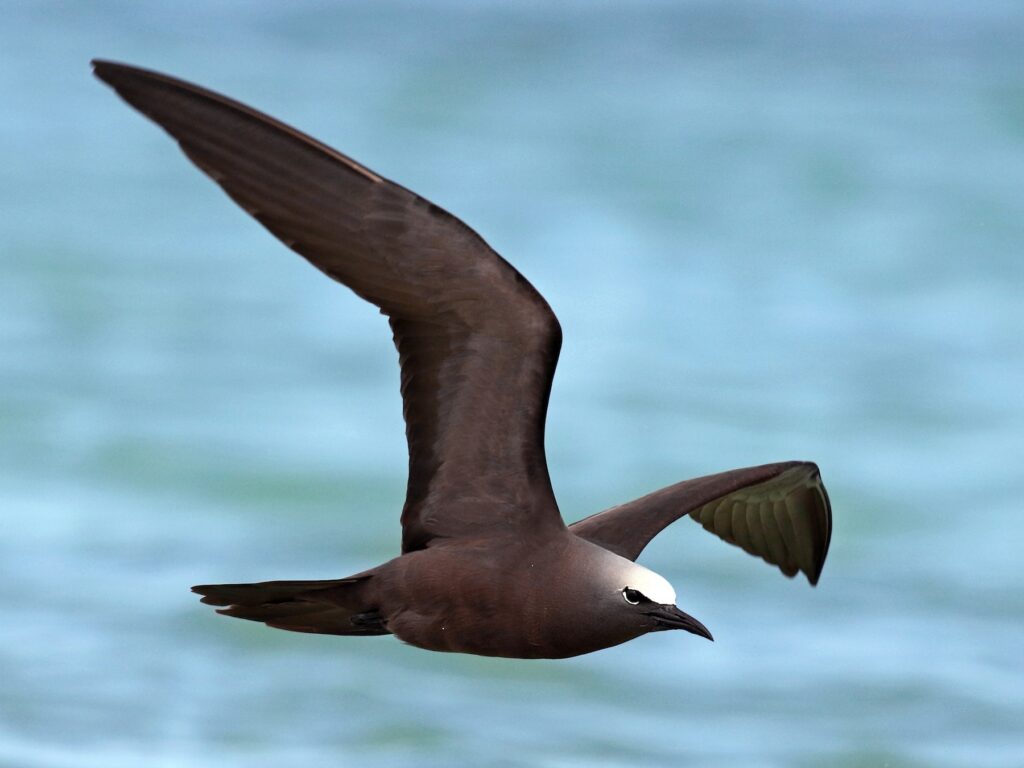
Around uninhabited islands, Brown Noddies (Anous stolidus) gather in loose, noisy colonies. Dark, compact, and purposeful, they breed on remote sandbanks and coral rubble, rarely straying far from shore.
Farther out, Sooty Terns (Onychoprion fuscatus) dominate the open sea. When breeding, their colonies can number in the thousands, transforming isolated islands into living, wheeling clouds of birds. Outside the nesting season, they vanish into the pelagic vastness.
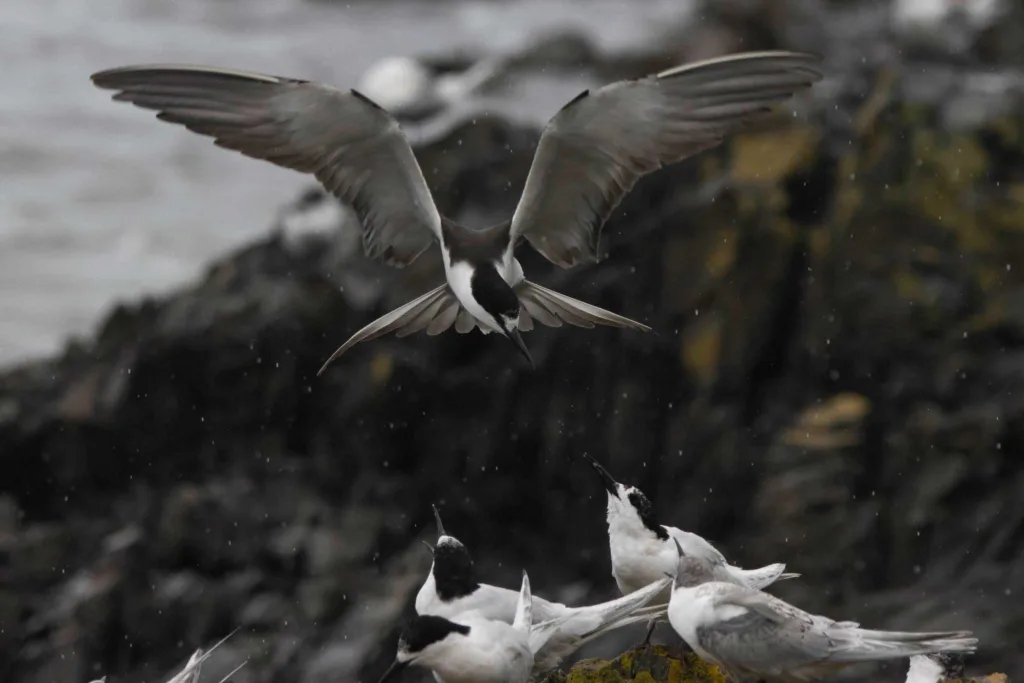
Closer to the reef edge, Black-naped Terns (Sterna sumatrana) hunt in clear, shallow water. With quick, precise dives, they seize small fish above coral heads and lagoon channels, often in full view from shore.
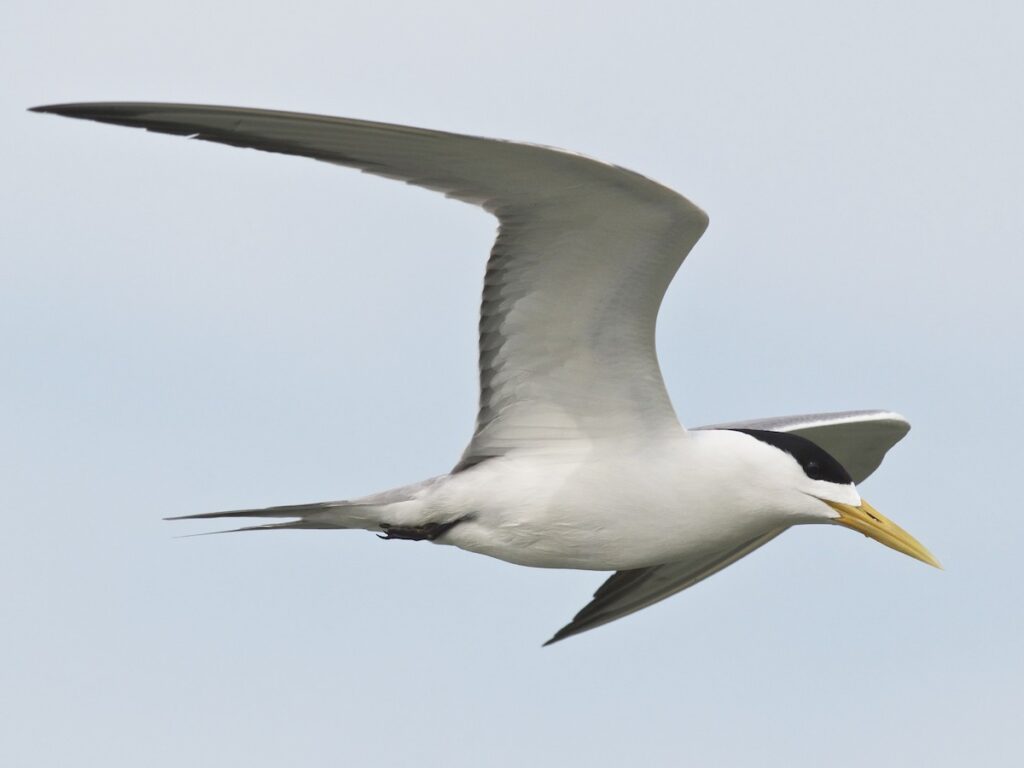
Over open water and along lagoon margins, Greater Crested Terns (Thalasseus bergii) patrol steadily, their long bills and strong flight marking them as birds built for distance and endurance.
Herons and Shoreline Hunters
Where reef meets sand, patience is rewarded. The shoreline hunters of the Central Maldives move slowly, reading tide and shadow.
The Western Reef Heron (Egretta gularis) is the most adaptable of them all. Occurring in both dark and pale forms, it stalks tidal pools, reef flats, and harbour edges, feeding on fish and crustaceans exposed by the ebbing tide.
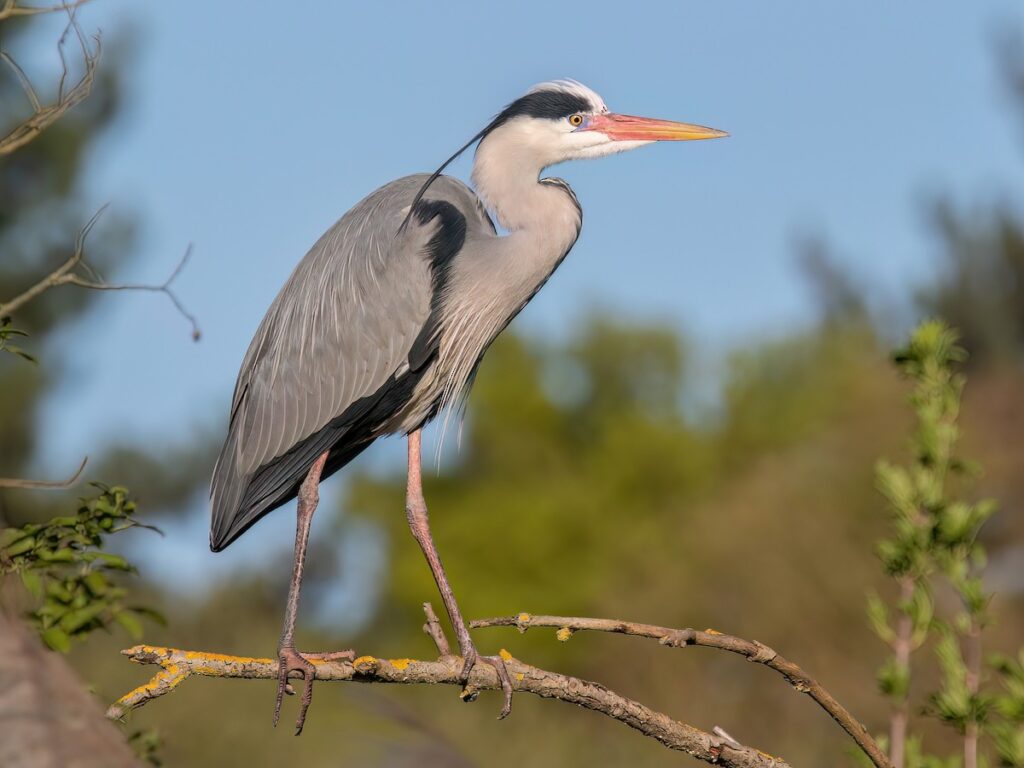
Larger and more deliberate, the Grey Heron (Ardea cinerea) is a familiar visitor, often standing solitary and statuesque in shallow lagoons. Though not a resident breeder, it is widespread and reliably encountered.
The Little Egret (Egretta garzetta), bright and active, frequents wet margins and reef edges, its quick steps and sudden strikes contrasting with the stillness of its larger relatives.
Winter Visitors from Distant Shores
As the northern winter sets in—roughly from September to April—the Central Maldives becomes a temporary refuge for migrants from far beyond the tropics.
The Common Sandpiper (Actitis hypoleucos) is the most familiar of these travelers. It appears almost anywhere water meets land: jetties, harbour walls, reef flats, even the edges of swimming platforms.
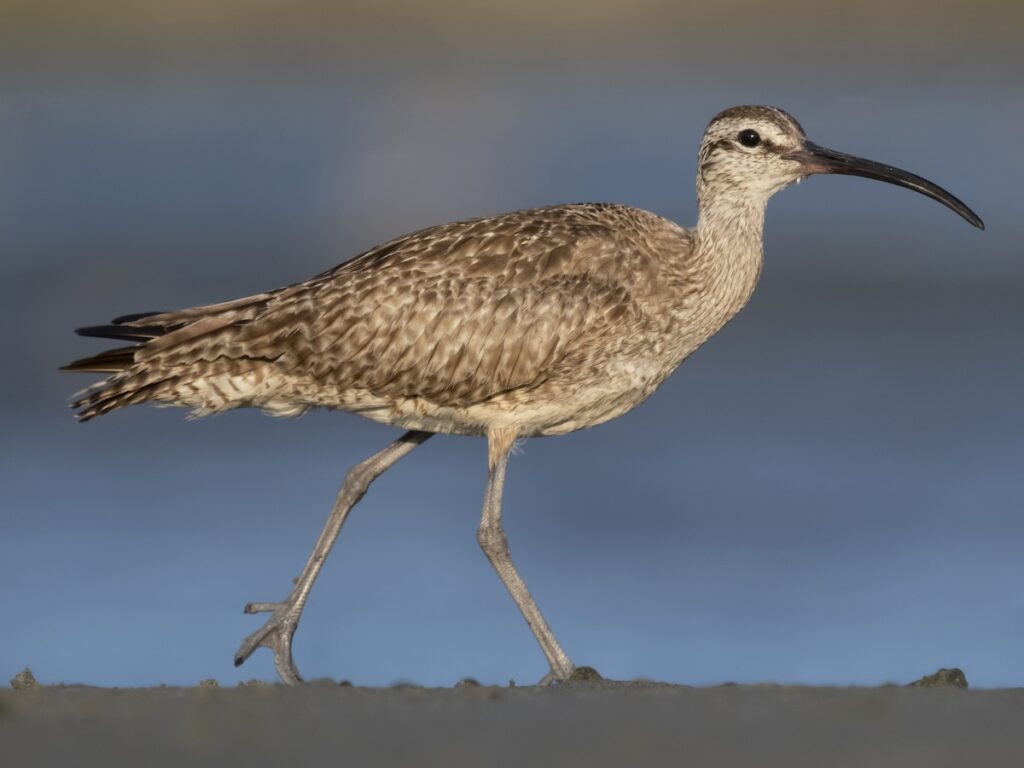
On open sand and exposed reef, Whimbrels (Numenius phaeopus) probe for crabs with long, curved bills, their calls carrying across the flats at low tide.
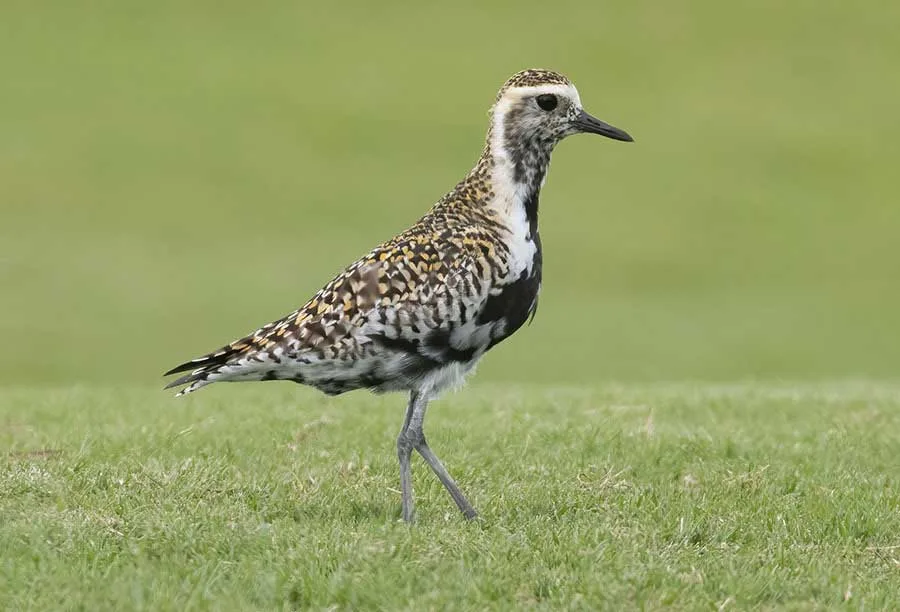
The Pacific Golden Plover (Pluvialis fulva) favors beaches, reclaimed land, and open ground, often seen standing alert and upright, scanning its surroundings before continuing its long seasonal circuit.
Birds of Human Settlement
True land birds are few in the Maldives, but where people live, a small cast of adaptable species follows.
The House Crow (Corvus splendens) is firmly established on inhabited islands, especially around harbours, markets, and urban areas. Intelligent and opportunistic, it is one of the most conspicuous birds of Maldivian towns.
The Common Mynah (Acridotheres tristis) occupies open ground, village edges, and resort service areas, its calls and movements now a familiar part of island life.
A Birdlife Shaped by Water
Birds of the Central Maldives tell a clear story. This is not a land of forests or rivers, but of reef, tide, and open sea. Seabirds dominate the sky, herons patrol the margins, and migrants arrive on schedules written thousands of kilometers away.
Together, they form a bird community defined less by land than by water—resilient, predictable, and deeply tied to the rhythms of the Indian Ocean.