

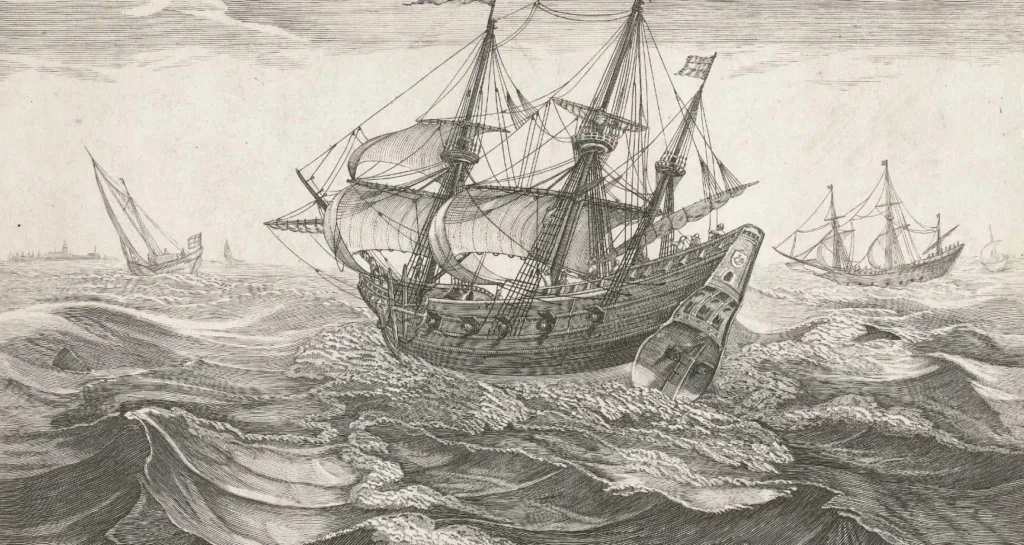
The pristine turquoise waters of the Maldives are today synonymous with vibrant coral reefs and abundant marine life. Encounters with sharks—from the gentle whale shark to the sleek reef shark—are celebrated by divers and emblematic of the archipelago’s rich biodiversity. Yet the earliest detailed European accounts of these apex predators present a far more unsettling picture, one vividly recorded by the shipwrecked French navigator François Pyrard de Laval at the dawn of the seventeenth century.
Marooned in the Maldives from 1602 to 1607, Pyrard’s five-year involuntary residence produced an unparalleled ethnographic and natural-historical record. His extensive journals, later published as The Voyage of François Pyrard of Laval to the East Indies, the Maldives, the Moluccas and Brazil, offer an unusually detailed European perspective on the islands and their environment, including their most formidable marine inhabitants. While earlier travelers such as Ibn Battuta had mentioned the Maldives, none examined its natural world with Pyrard’s sustained attention or descriptive precision.
The “Paimones”: A Name for Fear
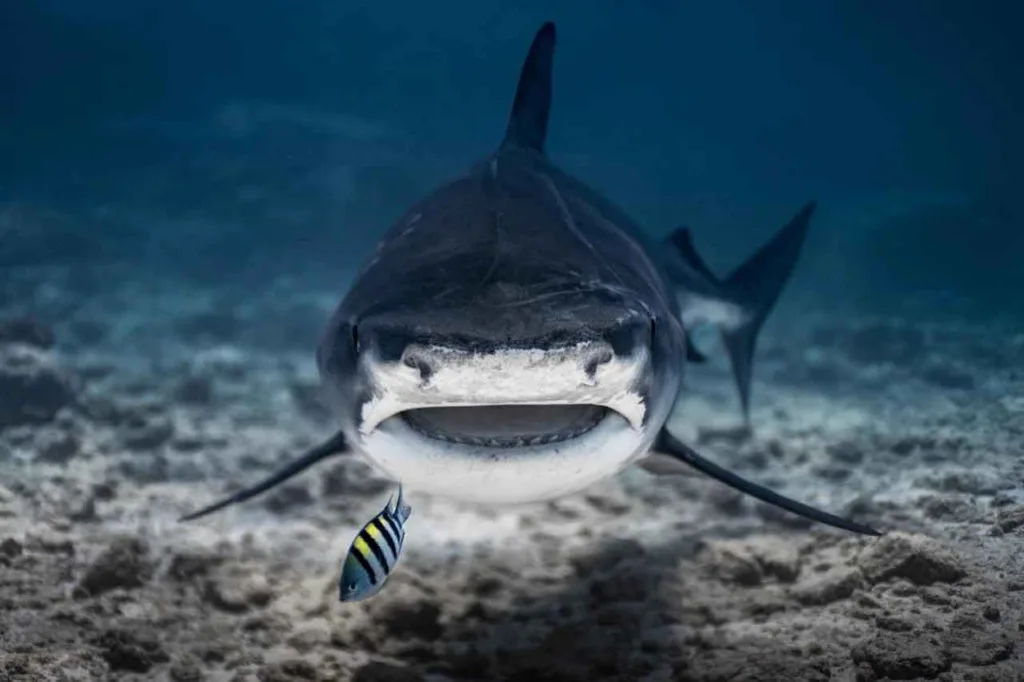
Pyrard referred to the sharks he encountered as “Paimones,” a term likely derived from a local or regional name he learned during his enforced immersion in island life. His accounts leave little doubt as to the fear these animals inspired. He repeatedly emphasized both their numbers and their proximity to human activity:
“At the Maldives are many of these, for they love the shallow water there, and roam in great numbers… The inhabitants of the Maldives are much incommoded by these animals, for they come and devour them as they fish and bathe, or, at least, dock their arms or legs. You see there many of the people crippled thereby.”
Elsewhere, Pyrard expanded on this danger, extending it beyond swimmers and lagoon fishers to small vessels operating at sea:
“The Maldivians have assured me that these fish go in troops, and have many a time attacked little boats and fishers’ wherries, and capsizing these, have devoured men. You see there many of the people that have lost a leg or an arm, or a hand, or have been wounded elsewhere in their bodies by the bites of these fish. I have seen many at the Maldives thus maimed; indeed, I have seen some of these fish caught with whole limbs of men in their bellies.”
Together, these passages convey a pervasive sense of vulnerability in both coastal and offshore environments. Contrary to modern assumptions that sharks primarily inhabit deep or open waters, Pyrard emphasized their presence in the very spaces where Maldivians lived, worked, and traveled—shallow lagoons, fishing grounds, and small boats.
Risk, Context, and Interpretation
While Pyrard’s descriptions are graphic, they invite careful contextual interpretation rather than dismissal as exaggeration. Those most exposed to shark encounters were likely individuals engaged in particularly hazardous activities: divers collecting live bait fish without masks or protective equipment, fishermen handling hooked or wounded sharks, or tuna fishermen operating small craft in open water. In such circumstances, close contact with large predatory fish would have been unavoidable.
Even today, large sharks—including tiger sharks—are known to strike or bite small boats during offshore fishing, particularly when attracted by bait, struggling prey, or discarded offal. Modern incidents of sharks damaging hulls or biting oars and motors are well documented. Seen in this light, Pyrard’s observations may reflect not unusually aggressive animals, but the intensity of human–shark interaction in a maritime society heavily dependent on nearshore and open-ocean fishing.
Beyond the Terror: Glimpses of Coexistence
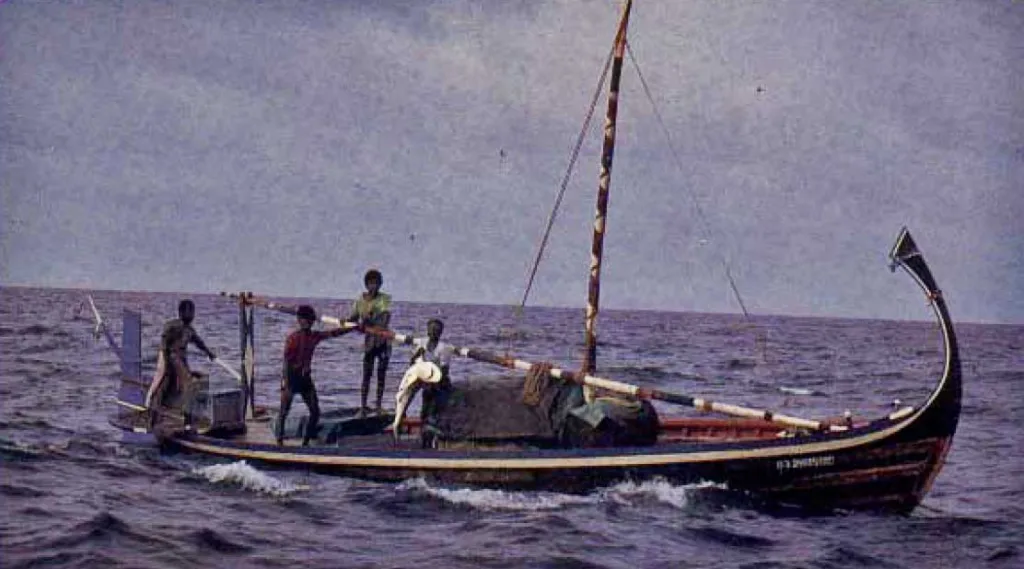
Importantly, Pyrard’s account does not depict fear alone. Alongside his descriptions of danger, he recorded evidence of the Maldivians’ practical knowledge of and adaptation to their marine environment.
He noted the use of shark liver oil, likely applied to the hulls of wooden dhonis to protect and preserve them. Sharks, therefore, were not merely objects of dread, but also valuable resources integrated into local technologies and customs.
This coexistence—marked by fear, familiarity, and utility—reflects a long-standing relationship between island communities and their oceanic surroundings. Sharks were both a threat and a necessity, creatures to be avoided when possible, exploited when required, and respected at all times.
A Lasting Legacy
Pyrard’s vivid descriptions proved influential far beyond his lifetime. For more than a century, his work served as a primary European source on the Maldives, shaping the perceptions of later explorers and writers. His “Paimones” entered the broader lore of the Indian Ocean, reinforcing its reputation as a region of both wonder and peril. Even centuries later, writers such as Herman Melville would draw upon early travel narratives like Pyrard’s to evoke the primal menace of the “Maldive Shark.”
Today, as global conservation efforts seek to protect shark populations, Pyrard’s seventeenth-century testimony remains a valuable historical document. It reminds us that while scientific understanding and cultural attitudes toward sharks have evolved, their imposing presence in the Maldivian seascape has long shaped human experience. Pyrard’s feared “Paimones” were not merely creatures of the sea; they were a powerful force in the daily life, economy, and imagination of the early Maldivian kingdom.