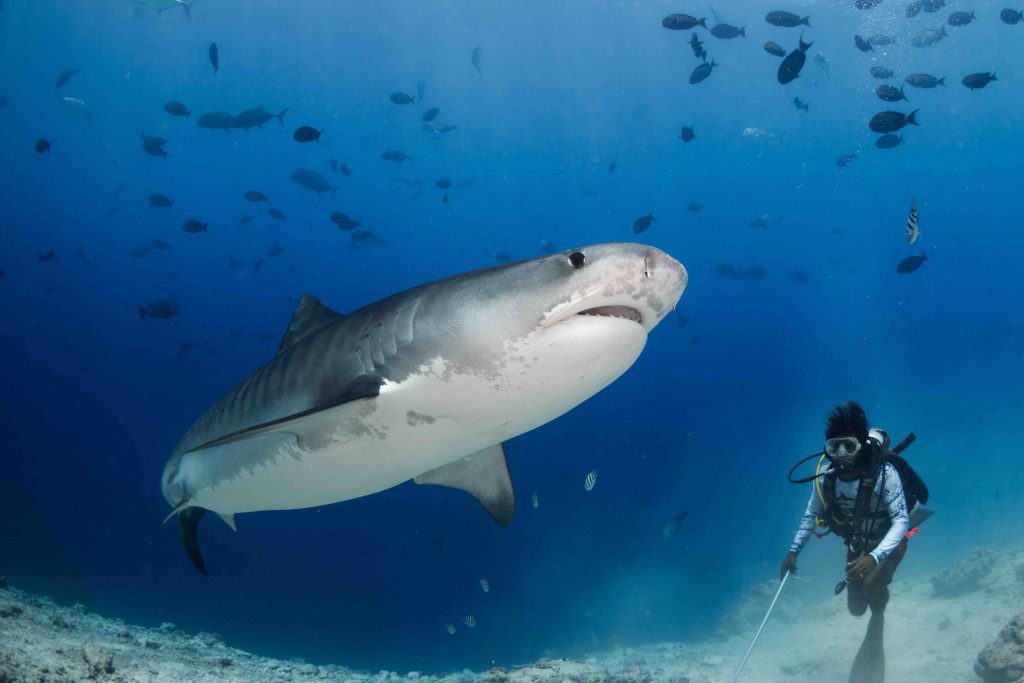
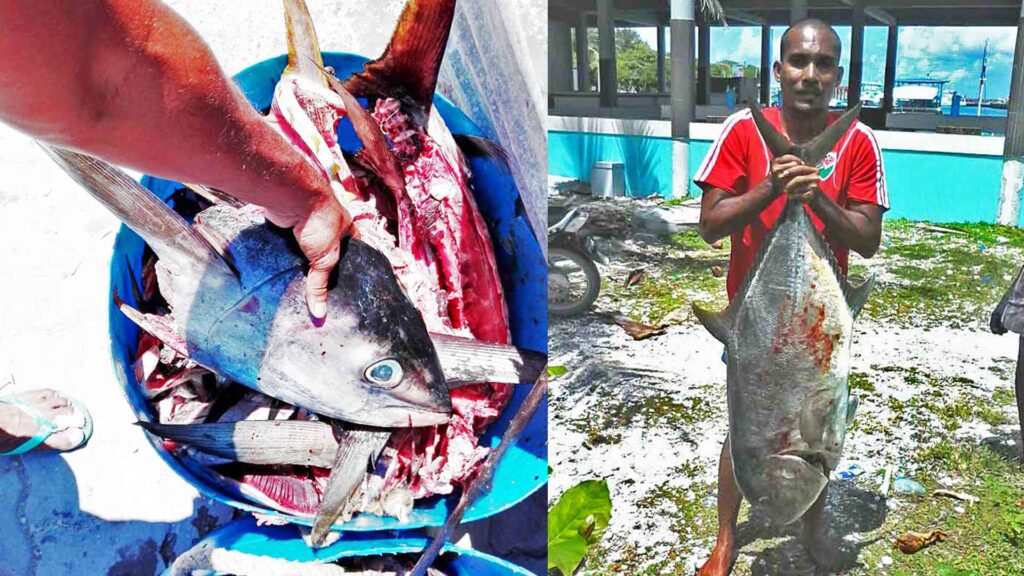
On my island of Fuvahmulah, giant trevallies are more than fish. They are forces of nature—black-backed bruisers that patrol the reef edges like sentinels, all muscle and intent. Of all the creatures in the ocean, none commands my respect quite like the GT. Landing one from shore is never casual. It is a confrontation.
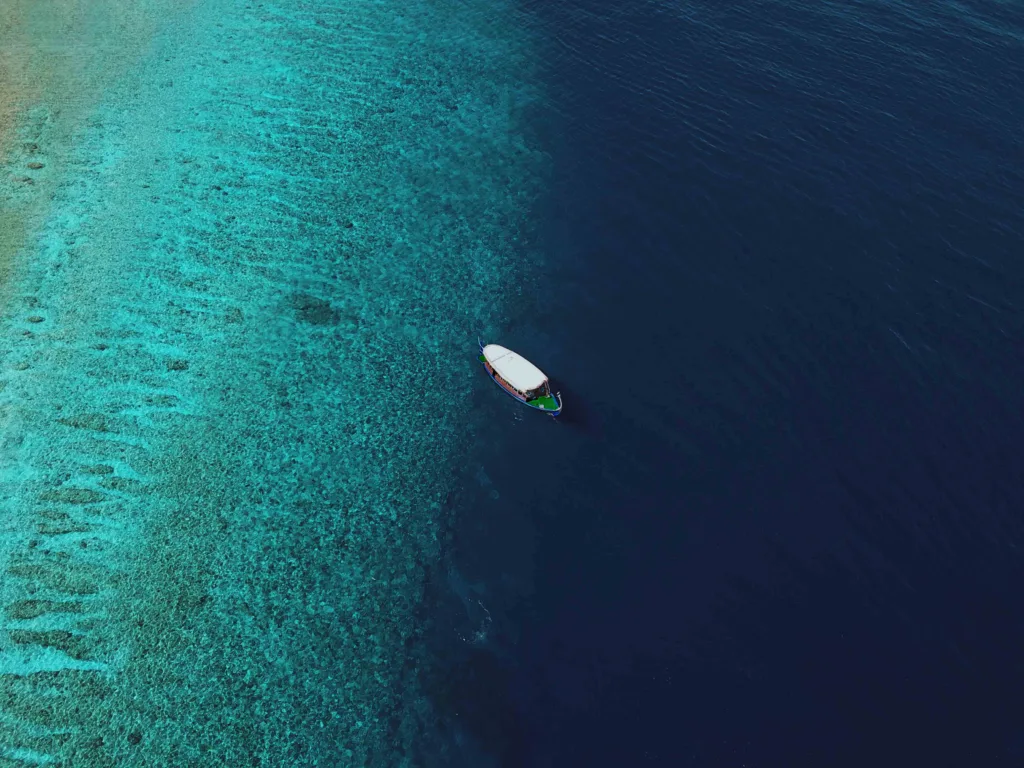
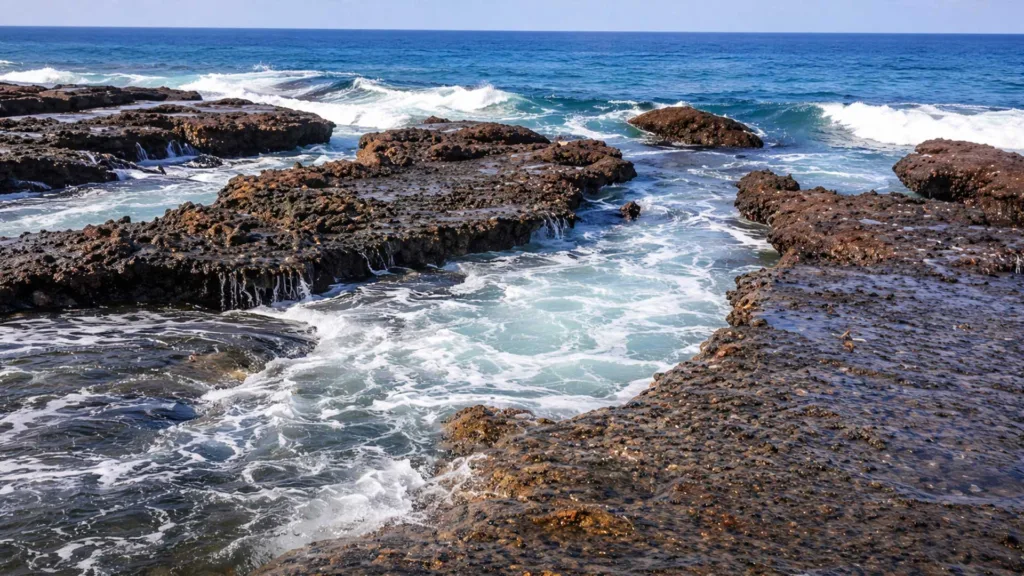
Fuvahmulah offers several places where such battles can unfold: the southern beaches, Thoondu, Neregando, and the island’s northeastern coast. Each site shares the same geography—reef flats that drop abruptly into deep blue water, pierced by narrow passages that predators use as highways. These corridors are where the giants emerge.
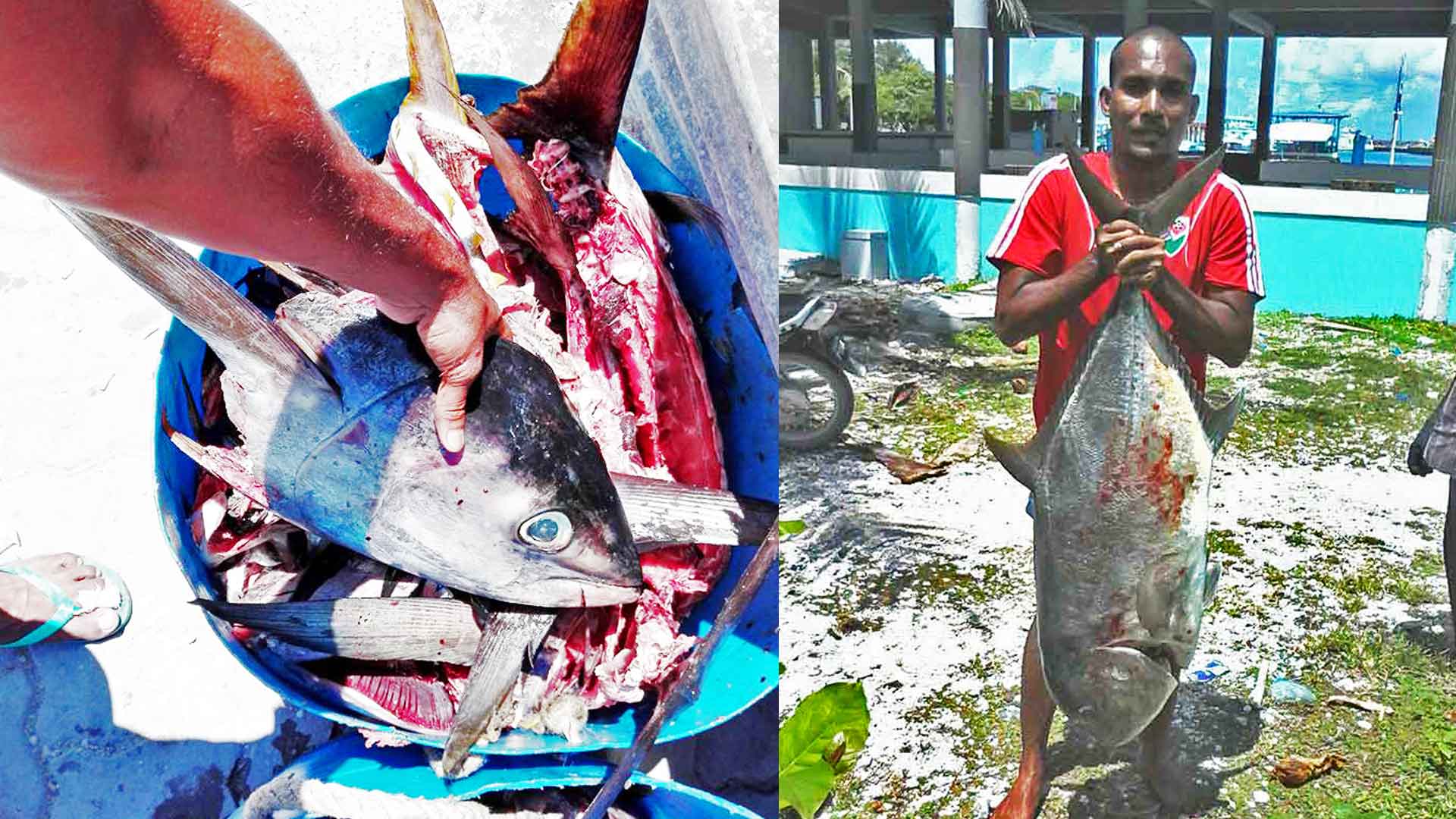
Our preparations begin early. Around 8:30 in the morning, we gather at the fish market and wait beside the cutters as they work through tuna and other large pelagics. We don’t rush them. When the time is right, they pass us the remains: heavy tuna heads and other fish waste, still slick with oil and scent. We collect them in a bucket and walk to the nearby shore, the smell trailing us like a promise.
This is not sport fishing in the modern sense. There are no rods, no reels. What we deploy instead is closer to rigging for war.
Our main line is a 300-pound monofilament—thick, unforgiving. One end is tied to a thinner rope we call nano, which allows us to grip the line and haul with our full weight. For years we relied on size-1 hooks, but recently we’ve shifted to octopus hooks, which hold better once the fish commits.
Timing matters. At low tide, the reef flat lies exposed beneath barely two feet of water. We rig the fish head and place it at the reef front, roughly 30 to 50 feet from shore, where the flat collapses into depth. As the tide begins to rise, we deploy the line and wait.
Some of us climb onto large rock boulders overlooking the reef edge. From there, we watch the water for signs—dark shapes lifting from the blue, shadows moving against the current. The GTs arrive silently, slipping through the reef passages like ghosts.
When they strike, there is no hesitation.
A giant trevally does not nibble. It swallows the fish head whole and turns instantly for open water, accelerating with terrifying speed. The line snaps tight, and chaos erupts on the beach. Three or four of us grab hold, bracing ourselves as the fish surges. We cannot let it reach the open sea; if it does, the fight is over.
The fish pulls us forward, sometimes dragging us five or ten feet toward the water before we can regain ground. Then we pull back—feet digging into sand, arms burning. The line cuts into our hands. The GT surges again. Back and forth we go.
It is one fish against five men.
The struggle is physical and intimate, lasting anywhere from 15 to 30 minutes. If the trevally stays within the reef front, the fight ends quickly. If it finds room to run, every second becomes a test of endurance and coordination. There is no finesse here—only strength, timing, and refusal to let go.
There are fishermen on Fuvahmulah who take this challenge even further.
I have watched skilled men land massive GTs while standing alone on a single rock boulder, using only their arms and judgment. They use the same 300-pound monofilament, but their method relies on anticipation rather than brute force. They wait for the GT to rise toward shore, then cast the fish head so it enters the water just as the fish turns back toward the reef. The timing must be exact. Done right, the bait appears directly in the fish’s path.
Once hooked, the fisherman allows only a few short runs. From his perch, he controls the line, pulling and yielding in measured intervals until the fish is exhausted. No helpers. No margin for error.
In about 30 minutes, the giant is beaten.
I have never attempted this method myself. But I have seen it done—most memorably by a fisherman named Abdul Haqu, who has overpowered these brutes again and again from the same massive rock. One day, I hope to stand where he stands and test myself against the same force of muscle and tide.
On Fuvahmulah, the reef does not give up its giants easily. And when it does, it leaves you with shaking arms, torn hands—and a deeper respect for the ocean’s most relentless hunter.