Scientific and general information included in these articles is referenced from the following works:
Anderson, R. (1997). Fishes of the Maldives. Marine Research Centre
Kuiter, R. (2014). Fishes of the Maldives. Atoll Editions
This series of articles is dedicated to showcasing the underwater species of the Maldives. Its purpose is to inform readers about the diverse marine life found in Maldivian waters, supported by photographs and videos captured by talented photographers and videographers. Alongside the visual content, each article provides both general and scientific information about the featured species. All photos and videos have been published with the permission of the respective photographers and divers.
View this post on Instagram
The Remarkable World of Maldivian Groupers
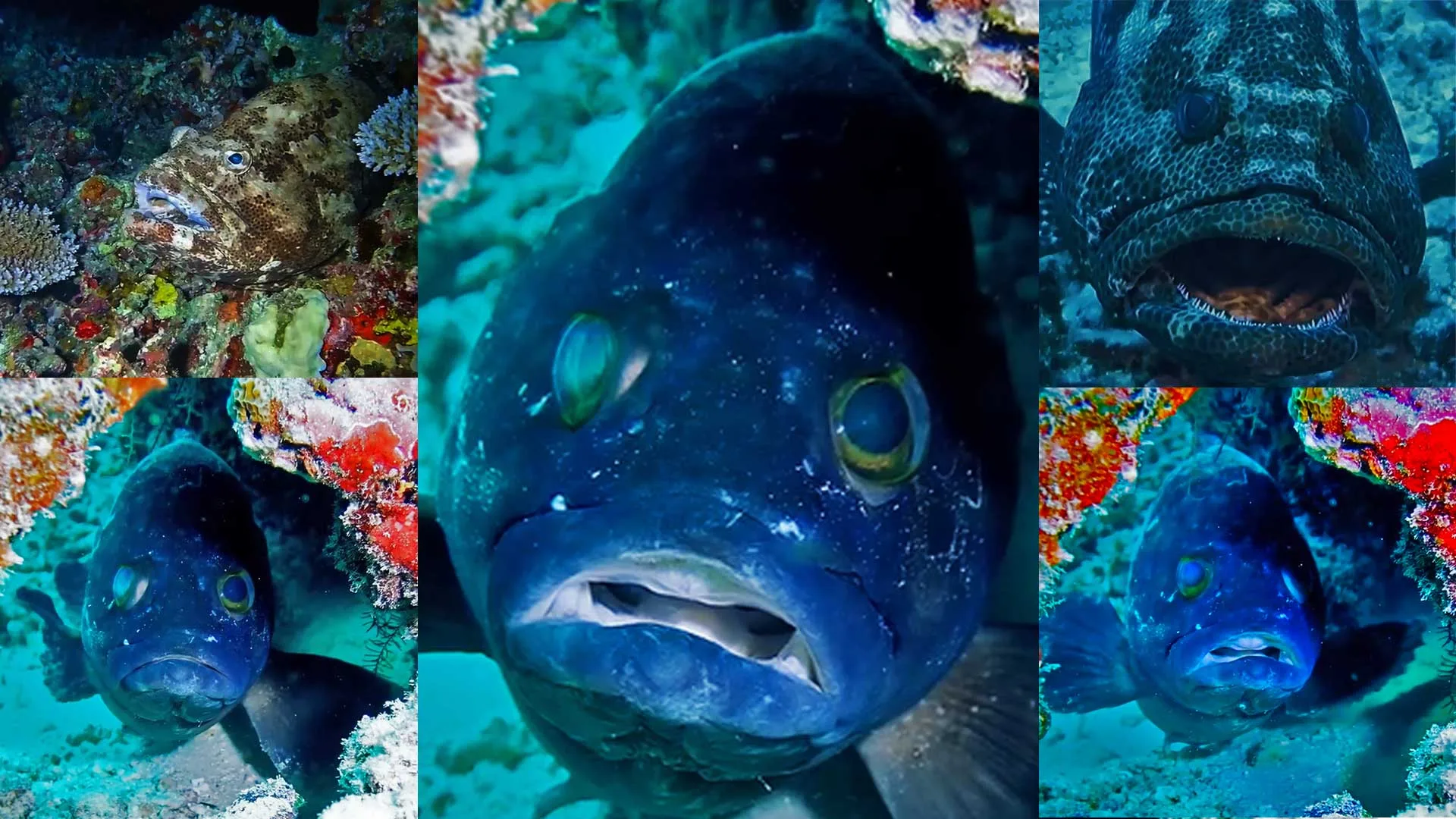
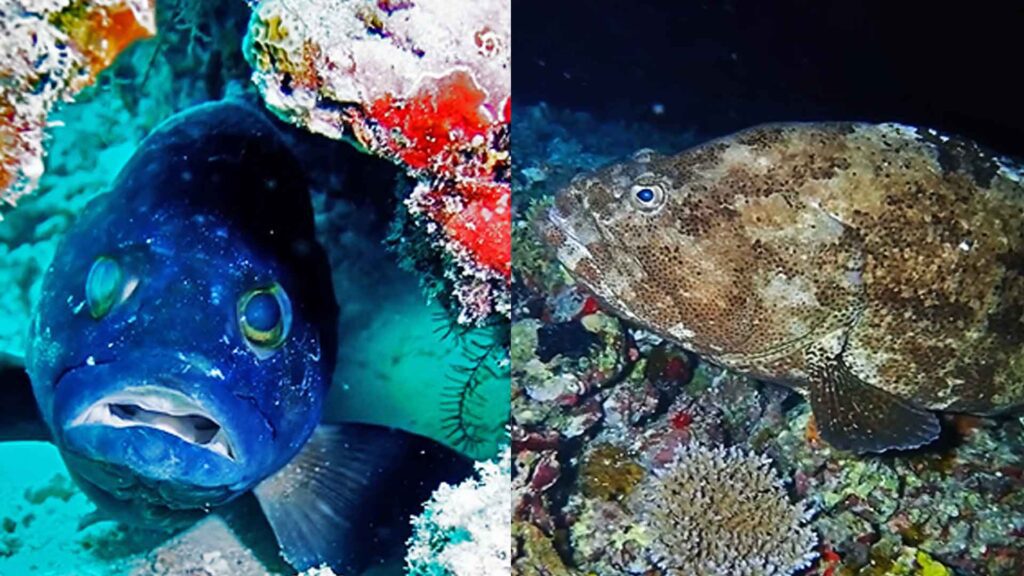
Groupers—sometimes called cods or rock cods—represent one of the most prominent groups of reef fish in the Maldives. These sturdy, thick-bodied predators vary widely in size, with the largest species, the giant or Queensland grouper, reported to reach lengths of up to three meters. While such giants are rare, most species found in Maldivian waters fall within a more typical reef-fish size range. Many grow well beyond 30 cm, and even the smallest species measure around 20 cm in adulthood.
View this post on Instagram
Habitat and Behavior
In the Maldives, most groupers inhabit reef environments where adults swim freely around coral structures, ledges, and reef slopes. Although often bold in appearance, they remain cautious by nature and will quickly retreat when approached by unfamiliar divers.
Some species are found on sandy bottoms, but even these generally stay near solid structures that offer shelter. Juvenile groupers tend to be much more secretive, remaining within the protective arms of the reef as they grow.
Feeding: Skilled Ambush Predators
Groupers are opportunistic hunters, feeding on a variety of mobile invertebrates and fish. Some species are particularly clever predators, with juvenile groupers known to mimic small-mouthed wrasses to approach unsuspecting prey.
Most grouper species are especially active at dusk. During this transitional time on the reef, many fish seek shelter for the night or are distracted by territorial disputes, providing the perfect opportunity for groupers to strike.
Diverse Habitats Across the Maldives
Different species of groupers occupy a wide range of habitats across the Maldivian archipelago, from deep outer reefs to shallow harbours and lagoons. Among the many species that call the Maldives home are:
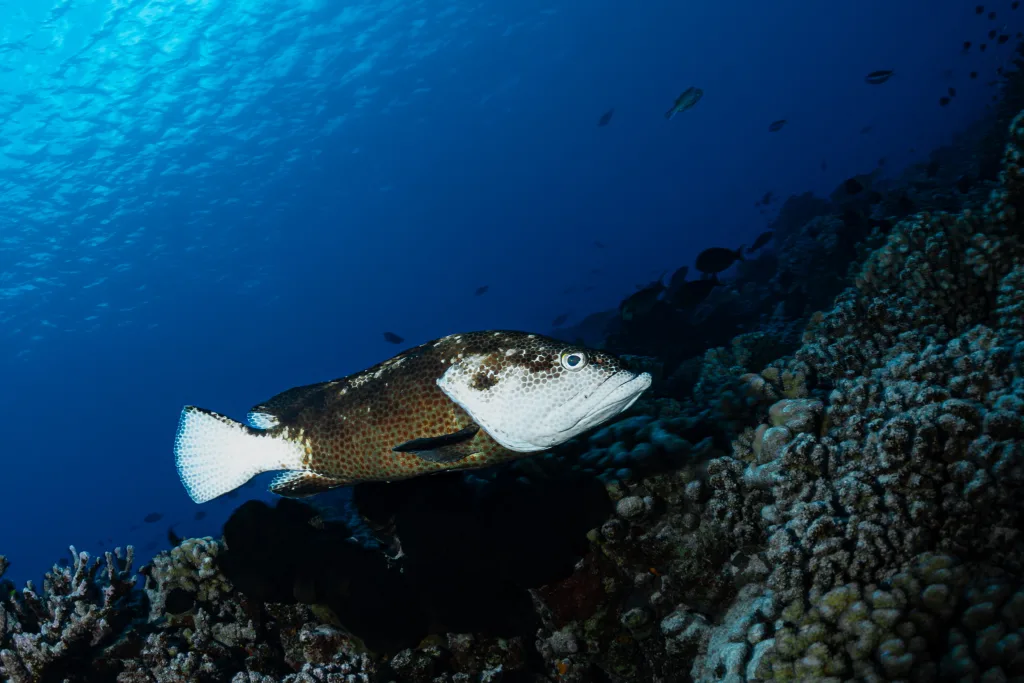
- Camouflage Grouper (Epinephelus polyphekadion)
- Peacock Grouper (Cephalopholis argus)
- Malabar Grouper (Epinephelus malabaricus)
The Malabar grouper is one of the largest commonly seen species, often encountered along deeper reef slopes. Its impressive size and distinctive markings make it a favourite subject for underwater photographers.
Unique Traits and Ecological Importance
Groupers are easily recognized by their large mouths, strong bodies, and striking patterns. Their ability to blend into their surroundings, combined with their efficient suction-based feeding strategy, makes them successful ambush predators.
Beyond their individual characteristics, groupers play an important ecological role in maintaining the balance of reef ecosystems. By regulating populations of smaller fish and invertebrates, they help support overall reef health.