
Reference: Kuiter, R. H. (1998). Fishes of the Maldives: Indian Ocean. Atoll Editions.
Abdulla Sivad is a skilled diver and underwater photographer whose work reveals the mysteries and beauty of rarely seen marine life. The deep blue waters of the Maldives are home to majestic giants, captivating fish species, and an extraordinary variety of vibrant tiny reef dwellers. As a talented diver from my home island of Fuvahmulah, Sivad has captured my attention through his stunning underwater imagery.
This article is part of a series based on photographs and videos generously contributed by Maldivian divers and underwater photographers. The goal is to introduce readers to the remarkable marine species found in the Maldivian ocean while providing scientific and general information about each species. All photographers and divers featured in this series have granted permission for their work to be published.
To support the information presented here, scientific descriptions have been referenced from Rudie H. Kuiter’s Fishes of the Maldives, Indian Ocean, a comprehensive guide to the region’s marine diversity.
Blennies: A Diverse and Fascinating Family
Blennies belong to a large and varied family of small fishes comprising over 50 genera and approximately 350 species worldwide (Kuiter, 1998). Their behaviours differ widely—some swim freely above the reef in search of food, while others remain close to the substrate, hiding in crevices for protection, nesting, or resting.
Black-toothed Blennies (Blennidae–1)
This group includes slender, often brightly patterned species that hover above the reef as they forage. When threatened, they retreat into small holes for safety. A distinctive subgroup, the sabre-tooth blennies, possesses long, sharp lower-jaw teeth that protrude when their mouths open wide—some even carry venom.
Predators often avoid blennies that resemble venomous species, and certain harmless blennies take advantage of this by mimicking their appearance. Their diet consists mainly of zooplankton, although some are specialised feeders that nip small pieces from other fish.
Reef Blennies (Blennidae–2)
The largest subgroup of blennies, reef blennies inhabit shallow coastal waters and even intertidal zones, where periodic exposure occurs as waves recede. Highly territorial, these blennies maintain small feeding paths on dead coral surfaces, scraping algae as their primary food source.
Although they may occur in loose groups, males often tolerate only selected females nearby—while females frequently engage in territorial disputes. Many combtooth blenny species exist as geographic complexes, making identification challenging. In several species, males and females differ in colouration, and males may develop a distinct head crest during maturity.
Notable Blenny Species of the Maldives
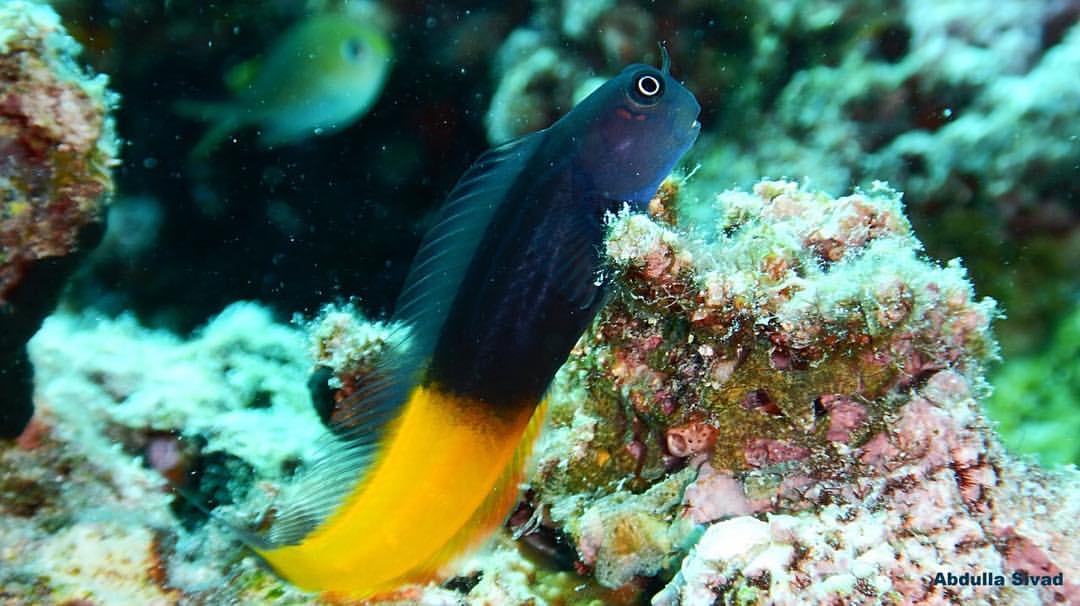
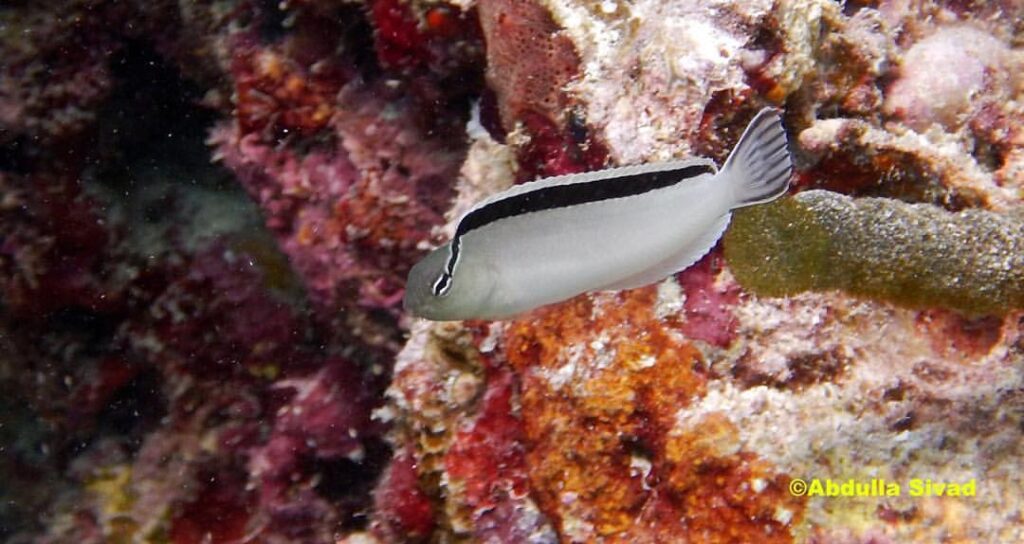
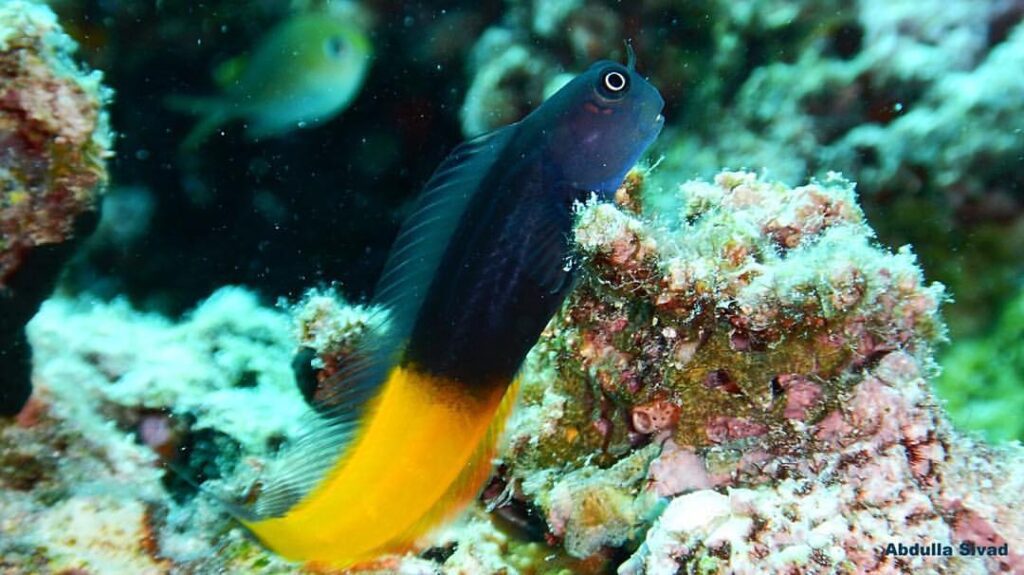
Two-color Combtooth Blenny
This species inhabits clear-water reef crests and slopes, as well as outer reef lagoons with coral bommies, at depths of up to 20 metres. It occurs in two colour forms:
- Half orange and half black
- Black upper body with a white belly
The colour variations do not appear to be sex-related. The species typically grows to around 85 mm in length (Kuiter, 1998).
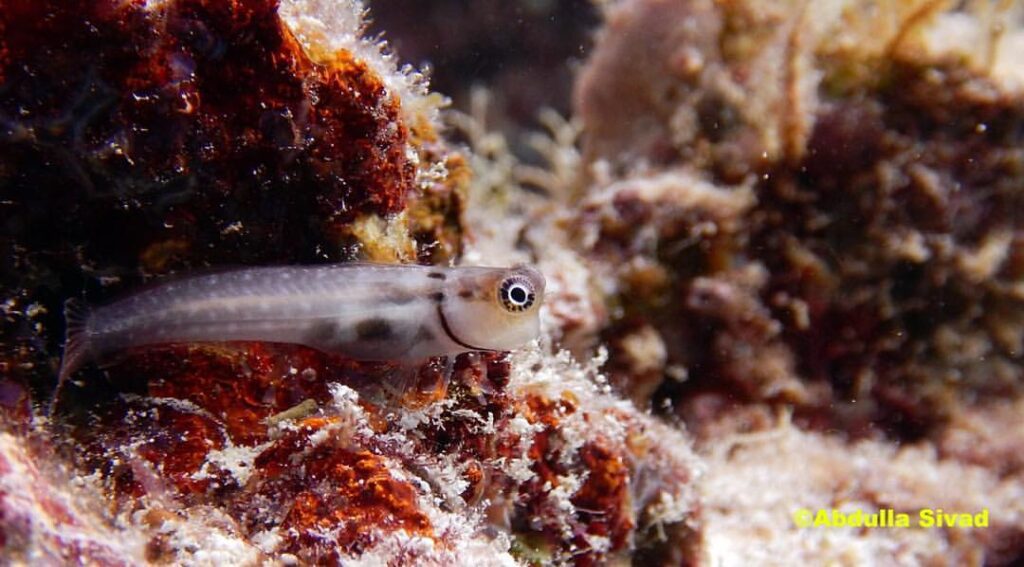
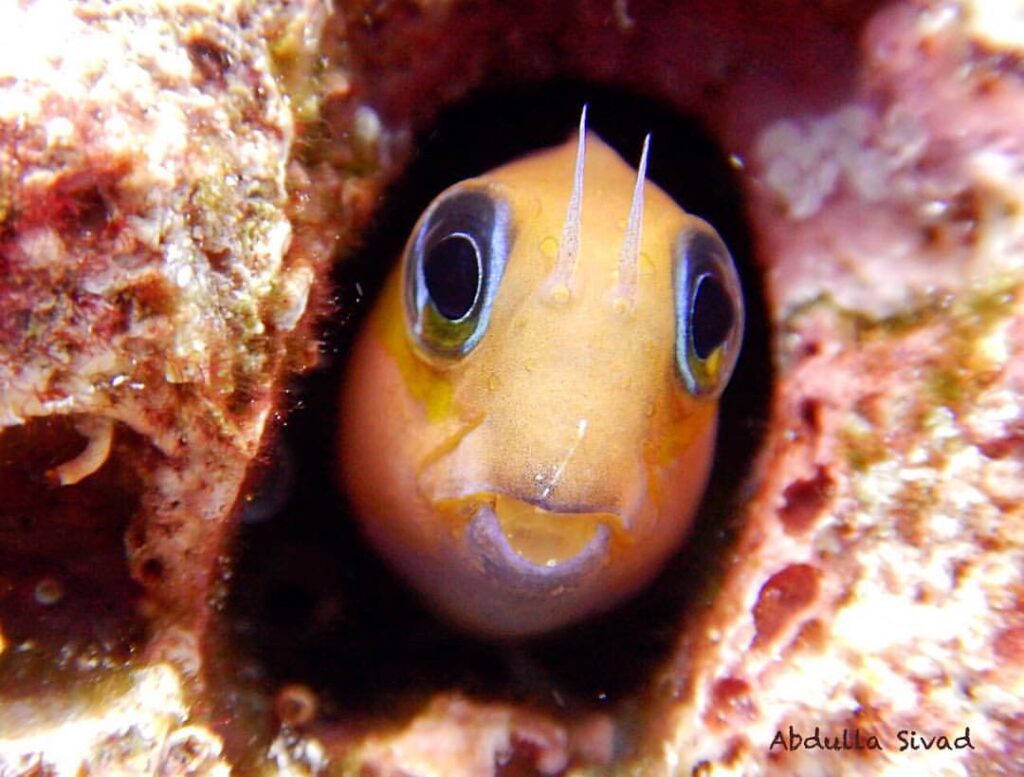
Little Combtooth Blenny
Found on inner and outer reef slopes down to 10 metres, this small blenny lives among corals or near coral bases. A series of pale body spots makes it easy to recognise. It is endemic to the Maldives, though part of an Indo-Pacific species complex. Adults reach about 65 mm in length (Kuiter, 1998).
View this post on Instagram
View this post on Instagram