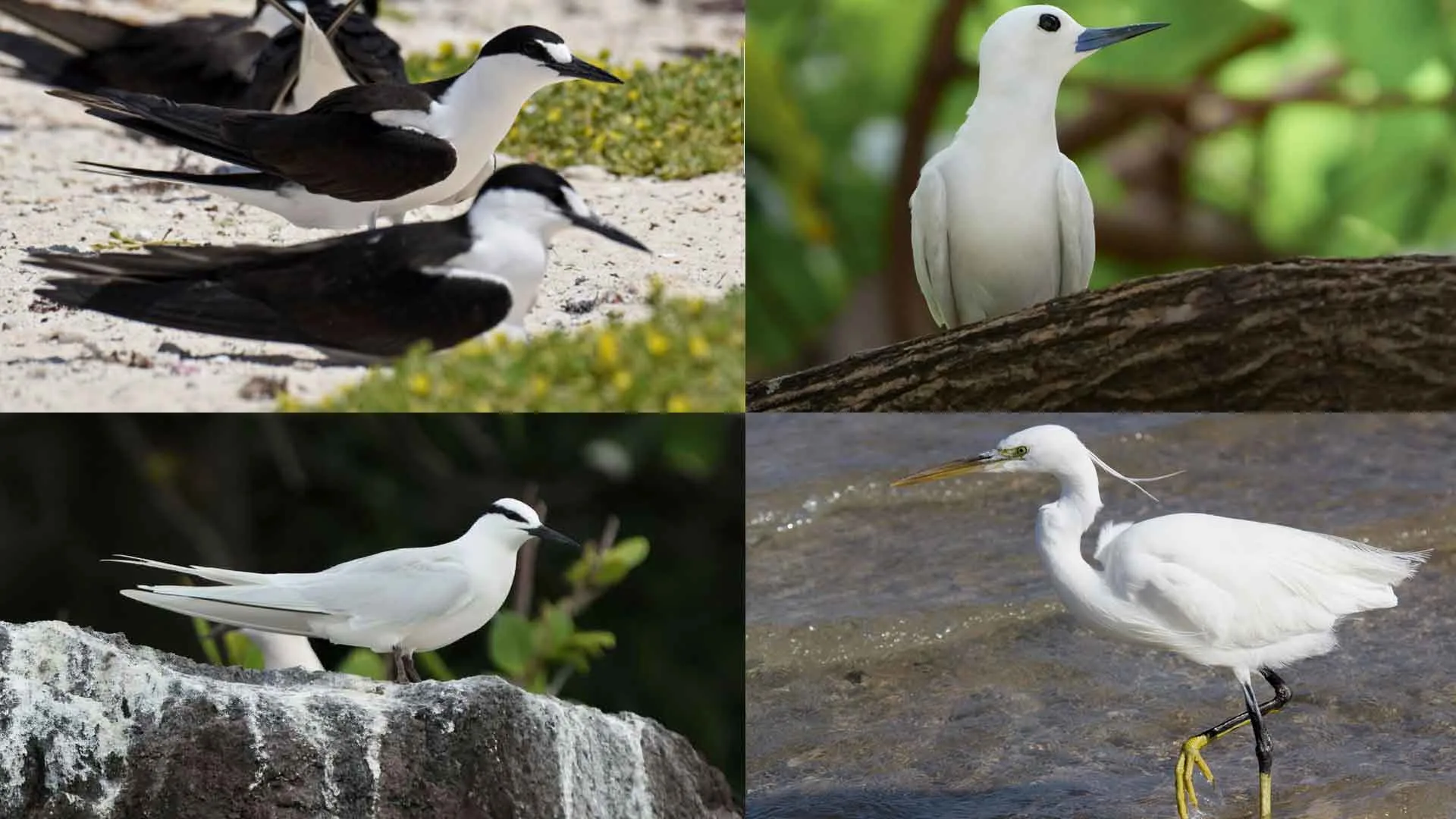
The Maldives is home to a rich and varied birdlife shaped by its island geography, lagoons, wetlands, and open ocean. This article is based on the research of Ash, J. S. & Shafeeg, A. (2008), Birds of the Maldive Islands, Indian Ocean, a comprehensive work that documents bird distribution, behaviour, and status across the country through long-term field observations. Their study provides an essential scientific foundation for understanding the avian diversity of the Maldives.
Drawing from this research, the present article highlights a selection of bird species that stand out for their distinctive appearance and visual appeal. The birds chosen here are not intended to represent a definitive list of the “most beautiful” species, as perceptions of beauty naturally vary according to individual preferences, cultural perspectives, and personal experiences with birds. Instead, this selection offers a visual and descriptive appreciation of some of the Maldives’ most striking avian species, while remaining grounded in established scientific observation.
It is also important to note that some of the birds listed in this article may now be rare or occur only as rare visitors, as comprehensive, up-to-date studies on the birds of the Maldives have not been conducted in recent years. Changes in habitat, climate, and human activity may have influenced the current status and distribution of certain species since the publication of the original research.
The Maldives may be best known for its reefs and marine life, but its birdlife includes several species that are especially striking in appearance, behaviour, or presence. From elegant seabirds that dominate island skies to distinctive land and wetland birds found on larger southern islands, these species stand out as the most visually and characteristically remarkable birds of the Maldives.
This compilation highlights birds that are notable for beauty, behaviour, or strong association with island environments, while remaining common enough to be realistically observed.
White Tern (Gygis alba)
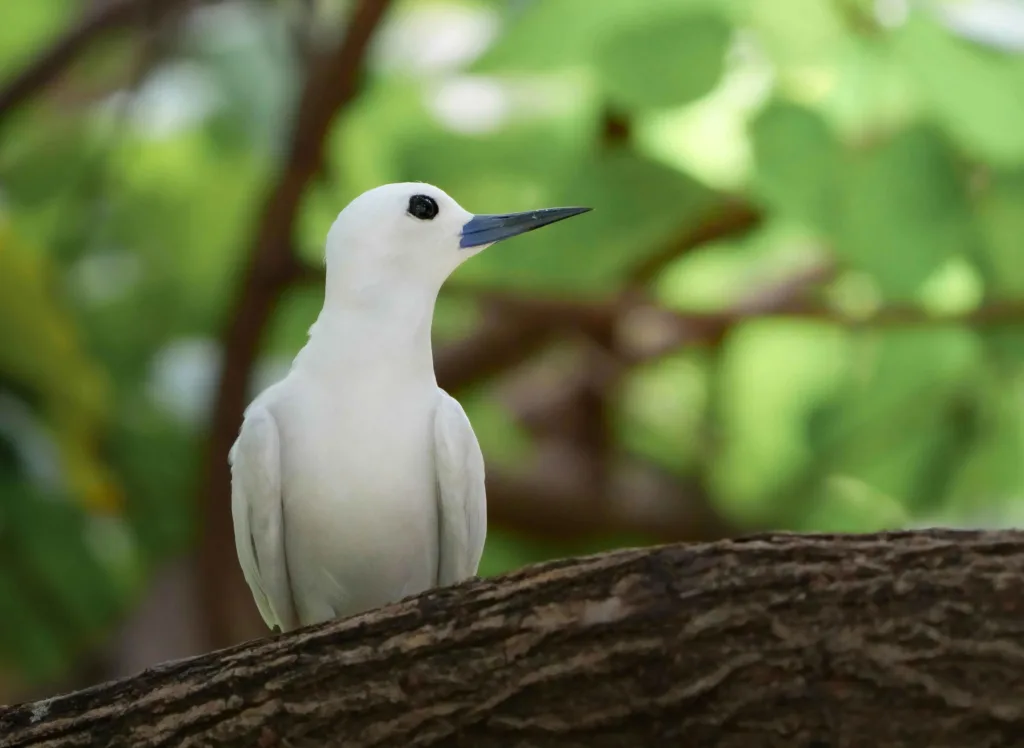
The White Tern is the most iconic bird of the Maldives. Entirely white, with dark eyes and a slender black bill, it is immediately recognisable in flight. It is widespread across the archipelago and present year-round. What makes the species exceptional is its nesting behaviour: it lays a single egg directly on bare branches or coconut palms, without building a nest. This unusual strategy, combined with its calm presence on islands, makes the White Tern one of the most distinctive birds in the country.
Sooty Tern (Onychoprion fuscatus)
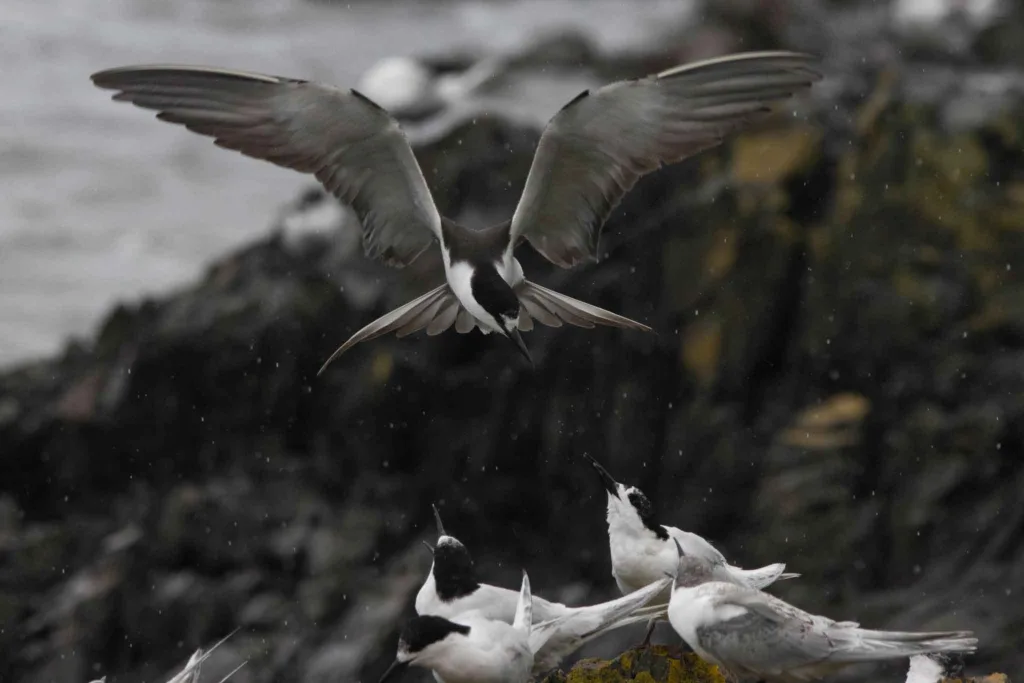
The Sooty Tern is striking not for delicacy, but for scale. This species is highly pelagic, spending most of its life at sea, yet when it comes ashore to breed it does so in vast colonies numbering many thousands of birds. Dark above and white below, Sooty Terns are powerful flyers and among the most abundant seabirds in the tropical Indian Ocean. Their mass movements and dense colonies make them one of the most dramatic birds associated with the Maldives.
Black-naped Tern (Sterna sumatrana)
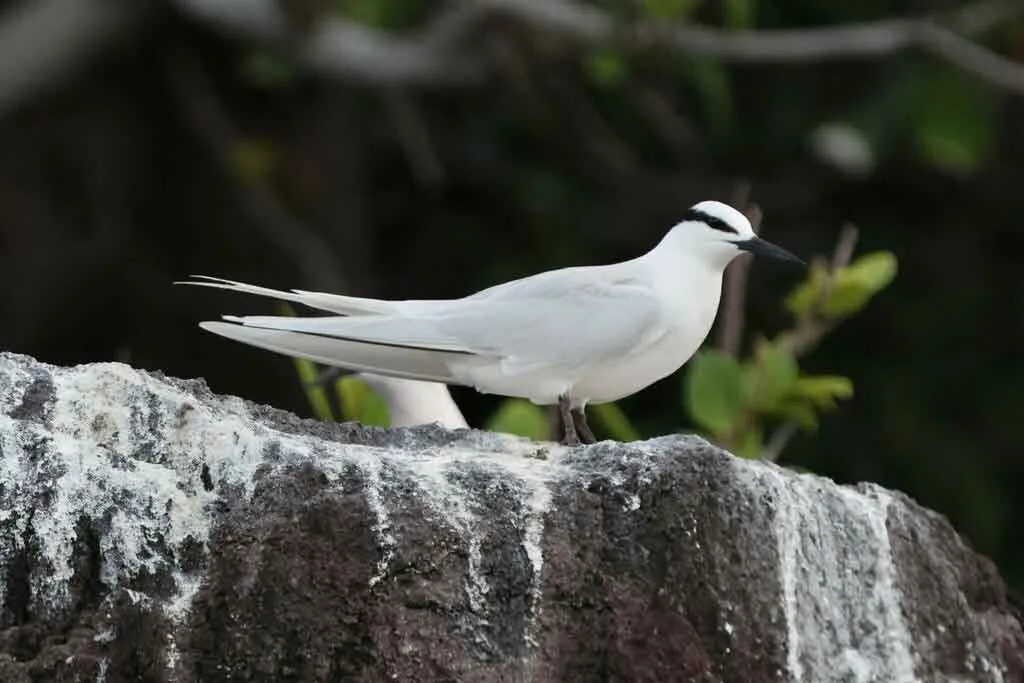
Graceful and fast-flying, the Black-naped Tern is closely associated with coral reefs and shallow lagoons. Its slim build, pale plumage, and clean black nape marking give it a refined appearance. It is commonly seen hovering briefly before plunge-diving for small fish along reef edges. Its constant activity and close link to reef environments make it one of the most visually appealing seabirds in the Maldives.
Osprey (Pandion haliaetus)
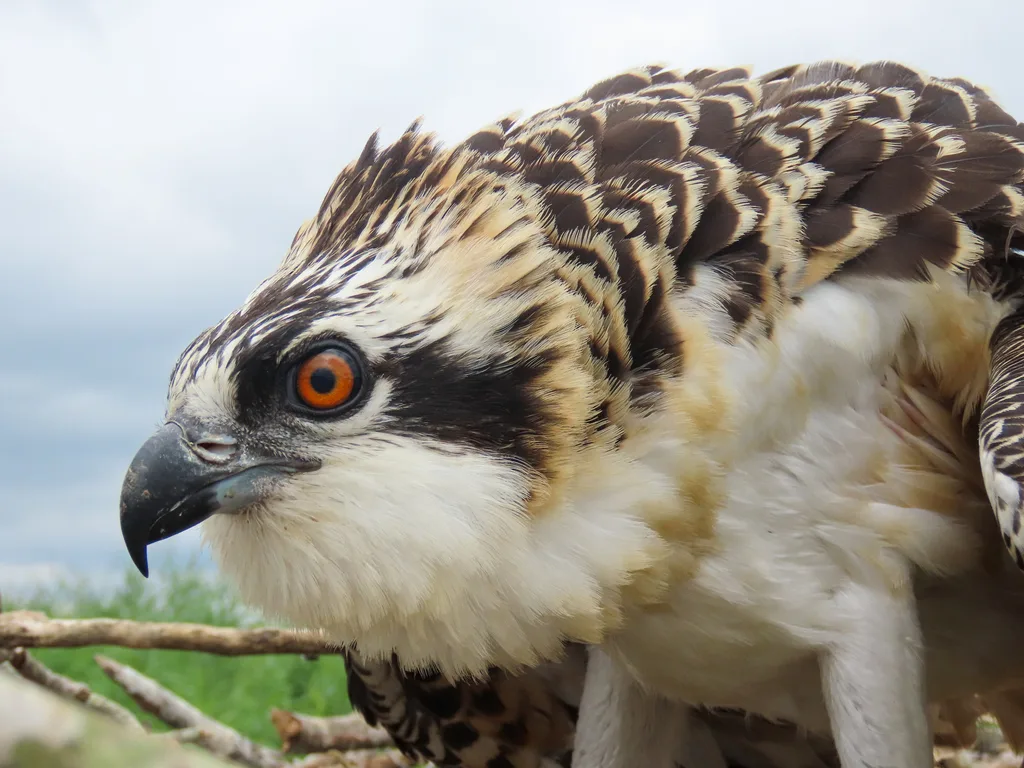
The Osprey is one of the most impressive birds of prey recorded in the Maldives. Large, powerful, and easily recognised by its long wings and dark eye stripe, it is regularly seen fishing in lagoons and coastal waters. Its hunting technique—hovering before plunging feet-first into the sea—makes it one of the most dramatic bird species visitors are likely to observe.
Western Reef Heron (Egretta gularis)
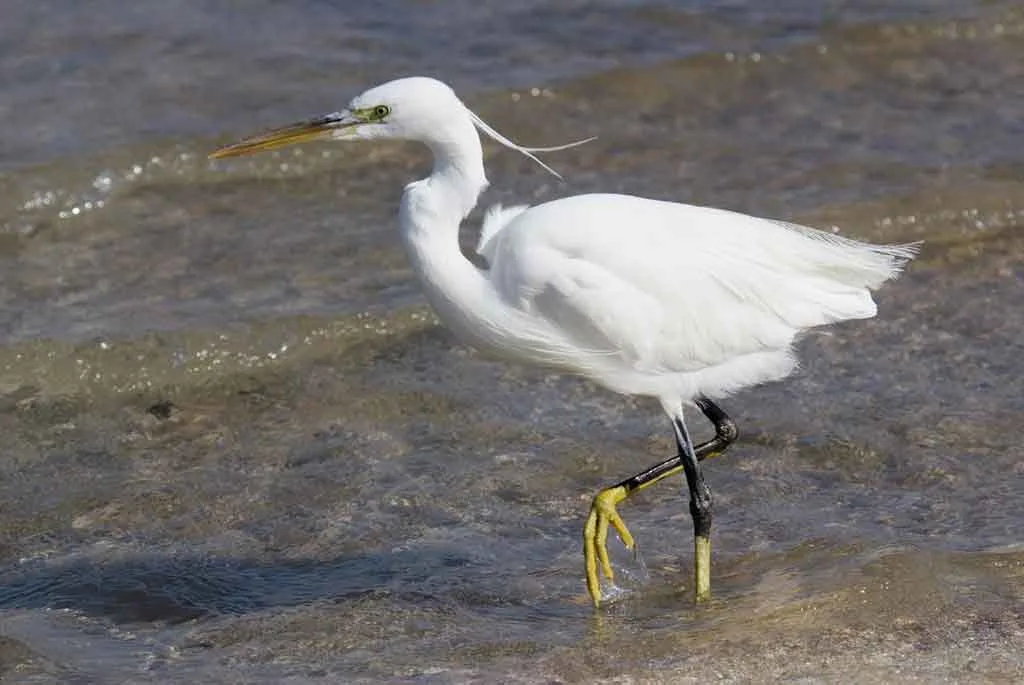
A constant presence along Maldivian shorelines, the Western Reef Heron is notable for occurring in both dark and pale colour forms. It is commonly seen stalking fish along reef flats and shallow waters, often standing motionless before striking. Its elegant posture, adaptability, and frequent visibility make it one of the most characteristic coastal birds of the Maldives.
Asian Koel (Eudynamys scolopaceus)
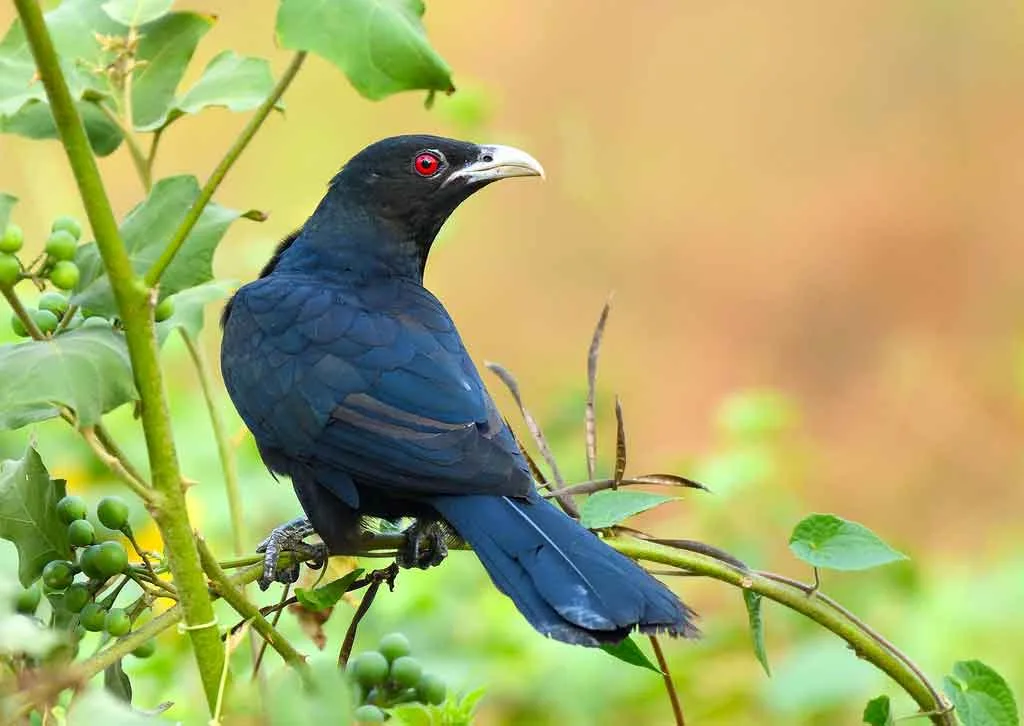
The Asian Koel is among the most striking land birds in the southern Maldives. Adult males are glossy black with vivid red eyes, while females are patterned with pale spots. Although often heard before being seen, its appearance is unmistakable. The species is closely associated with wooded islands and adds a strong auditory and visual presence to island environments, particularly in Addu Atoll and other southern islands.
White-breasted Waterhen (Amaurornis phoenicurus)
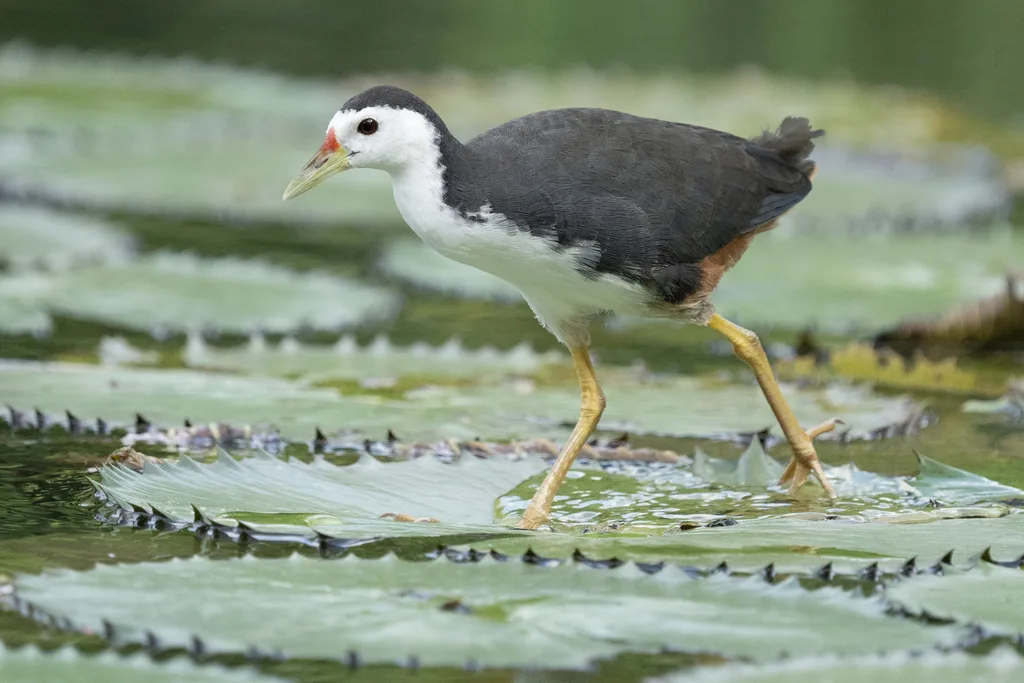
Boldly marked with a white face and breast contrasting against darker plumage, the White-breasted Waterhen is a striking wetland bird found on islands with freshwater habitats. It is often seen walking confidently along marsh edges and vegetated areas, rather than hiding. Its behaviour and strong contrast in colour make it one of the most noticeable freshwater-associated birds in the Maldives, especially on islands such as Fuvahmulah and Addu.
Common Moorhen (Gallinula chloropus)
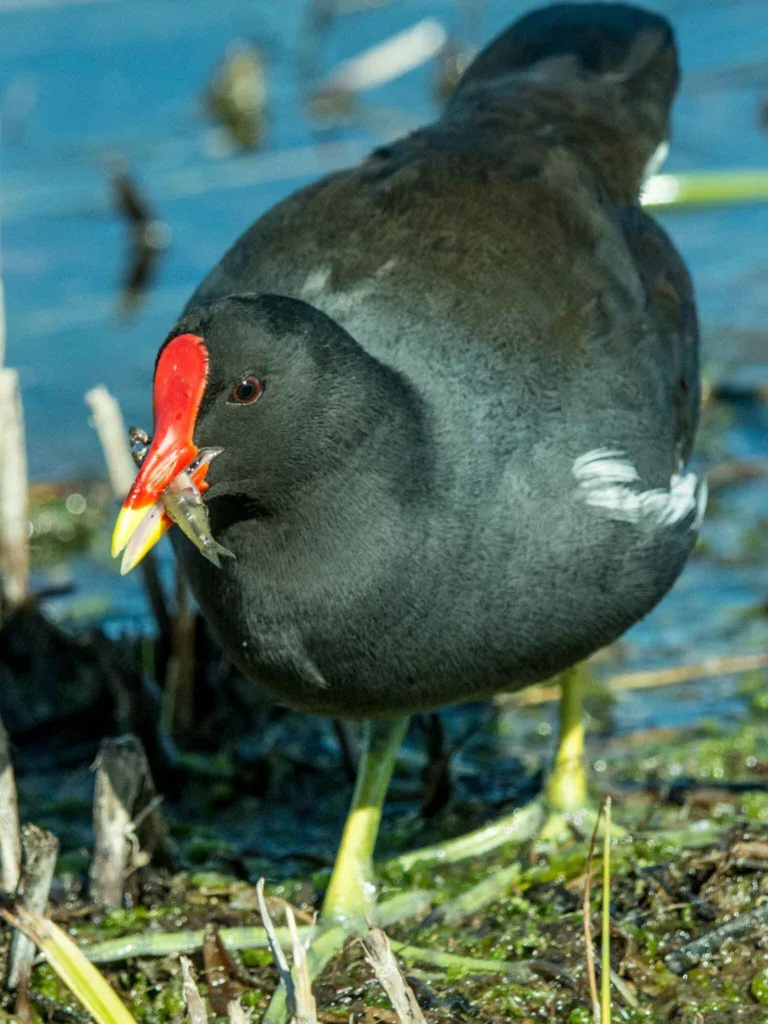
The Common Moorhen is a resident freshwater bird in the Maldives, occurring in scattered and localized populations across the islands. Its distribution is closely tied to the availability of freshwater habitats, which are naturally limited in the archipelago. The species is found in ponds, marshes, swampy areas, and artificial water bodies, including wells and water storage areas where suitable vegetation is present.
Although not widespread, the Common Moorhen is locally common where conditions allow, and there is evidence that it breeds within the Maldives. The patchy occurrence of the species reflects both the scarcity and fragility of freshwater environments on the islands. Changes in land use, drainage, and water management are therefore likely to have a significant impact on its populations.
Overall, the Common Moorhen represents one of the few bird species in the Maldives that is dependent on freshwater ecosystems, making it an important indicator of the health and conservation status of these habitats
A Distinctive Birdscape
Together, these birds represent the most visually and behaviourally striking elements of Maldivian birdlife. They reflect the diversity of habitats found across the islands—from open ocean and coral reefs to wetlands and wooded areas—and illustrate how birdlife in the Maldives is shaped by both land and sea.
For visitors and residents alike, these species form the most memorable bird encounters in the Maldives, offering a clear window into the natural character of the islands.