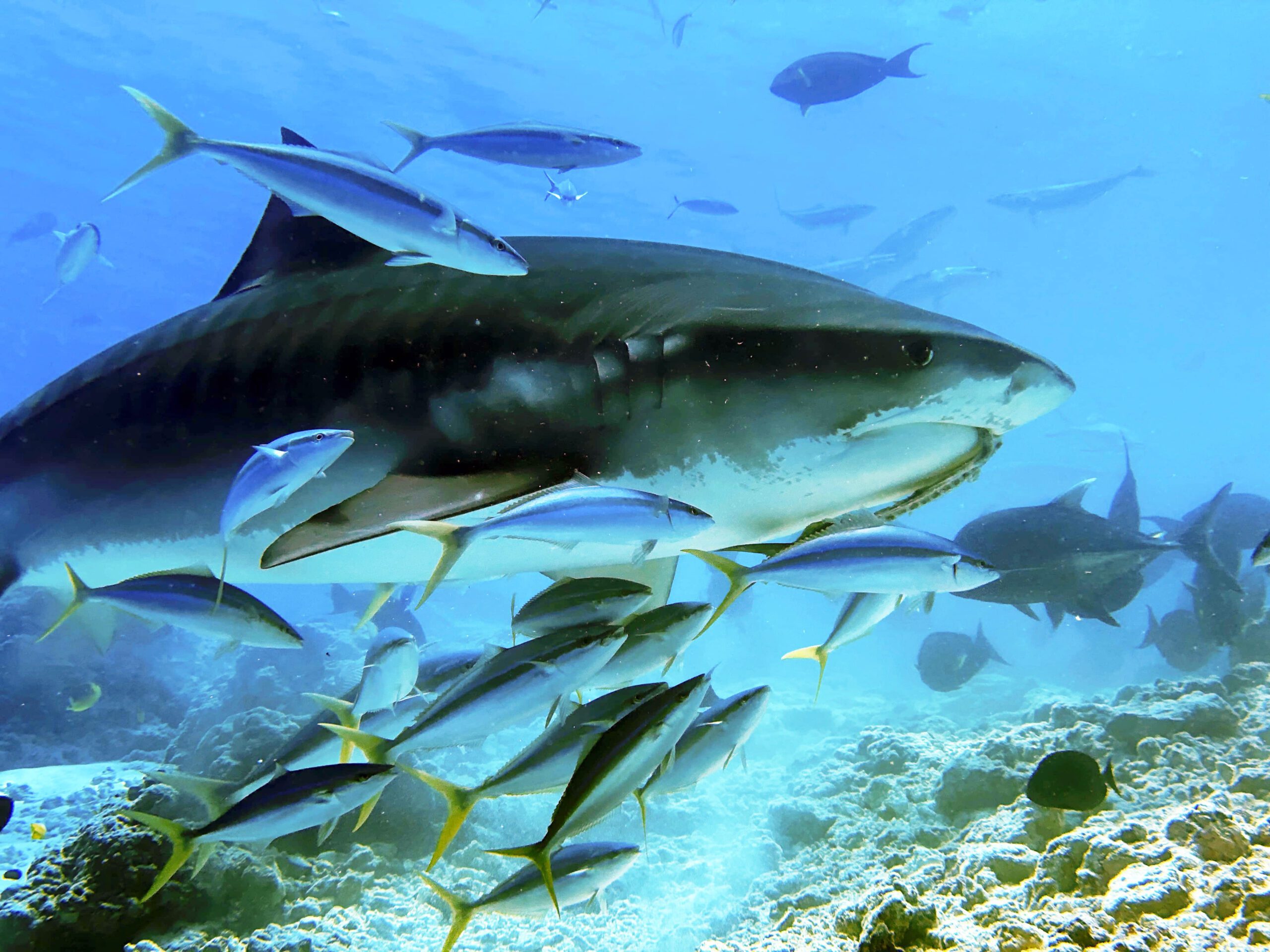
For a long time, we believed that Fuvahmulah’s two freshwater lakes were the island’s greatest natural treasures. Few of us paid attention to the southern end of the island, where land gives way abruptly to ocean. We fished the shoreline as generations before us had done, unaware that one of the Maldives’ most extraordinary marine systems lay just beyond the surf.
That southern coast—stretching past the airport and beyond the fish market—differs sharply from the rest of Fuvahmulah. It is here, along this exposed edge, that the island reveals its true power. For shore fishermen, it is the most reliable place to encounter the largest giant trevallies in the Maldives. Here, the hunters are ambushed.
Our method is simple and uncompromising. We deploy 300- to 500-pound monofilament handlines, with a thinner rope—nano—attached at the gripping end. The bait is crude but effective: eel or heavy tuna heads rigged on large hooks. At low tide, we place the bait and wait on the beach. The reef flat lies quiet, deceptively shallow.
Then the tide turns.
As high tide floods the reef, something remarkable happens. Massive giant trevallies rise from the depths through trench-like channels carved into the reef. They strike with astonishing force, often catching the unprepared off guard. These trenches are gateways—routes leading from the open ocean into a living reef system known locally as Farikede.
Farikede is not an ordinary reef. The name itself means “at the edge of the reef,” a fitting description for a place where the island drops suddenly into blue water. This echo-rich reef begins at the southernmost point of Fuvahmulah and runs uninterrupted to the island’s northern end. The reef crest sits at roughly 13 meters before plunging steeply into the open ocean, creating conditions that attract both reef and oceanic species in exceptional numbers.
It is from this reef that the giant trevallies ascend, drawn in part by scent. Fish waste discarded behind the fish market drifts into the water, and the trevallies’ acute sense of smell may guide them all the way from Farikede to the harbor area. What appears accidental is, in fact, an ecological dialogue between people and predators.
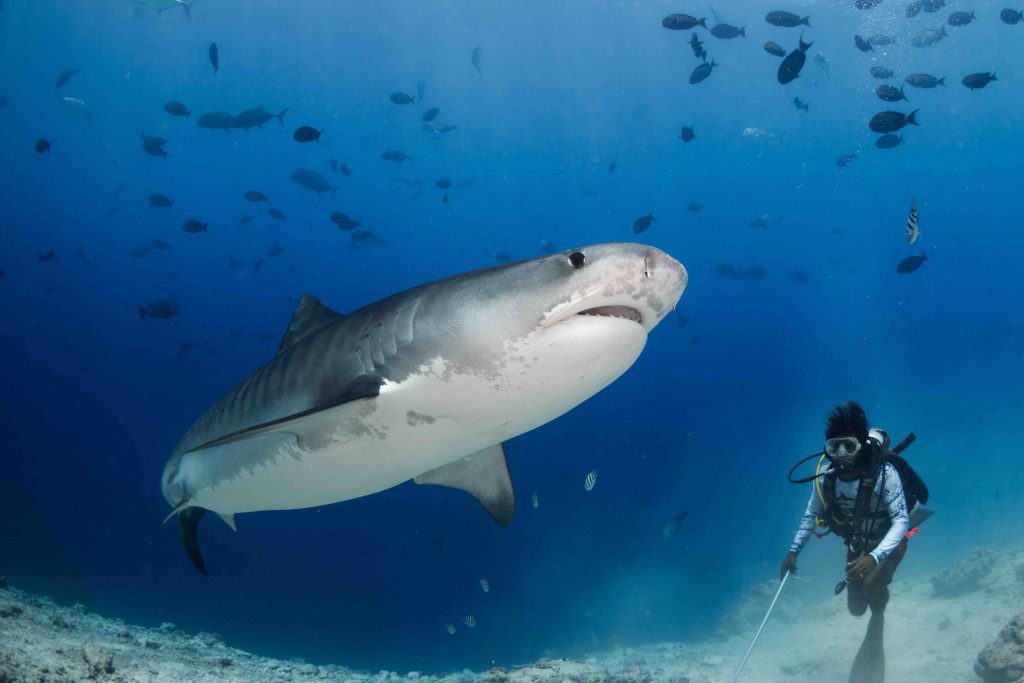
As tourism expanded in Fuvahmulah, different parts of the island revealed distinct ecological identities. Yet the southern reef remains singular. Unlike most Maldivian islands, Fuvahmulah is not encircled by a protective lagoon. Instead, it stands exposed to the open ocean, a geographical rarity that fuels extraordinary biodiversity.
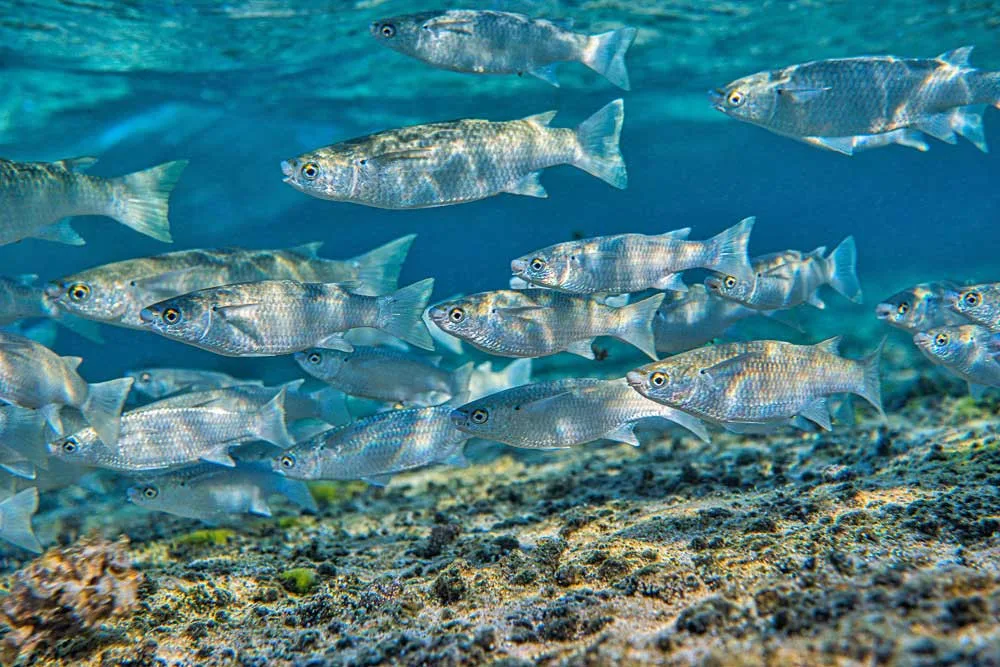
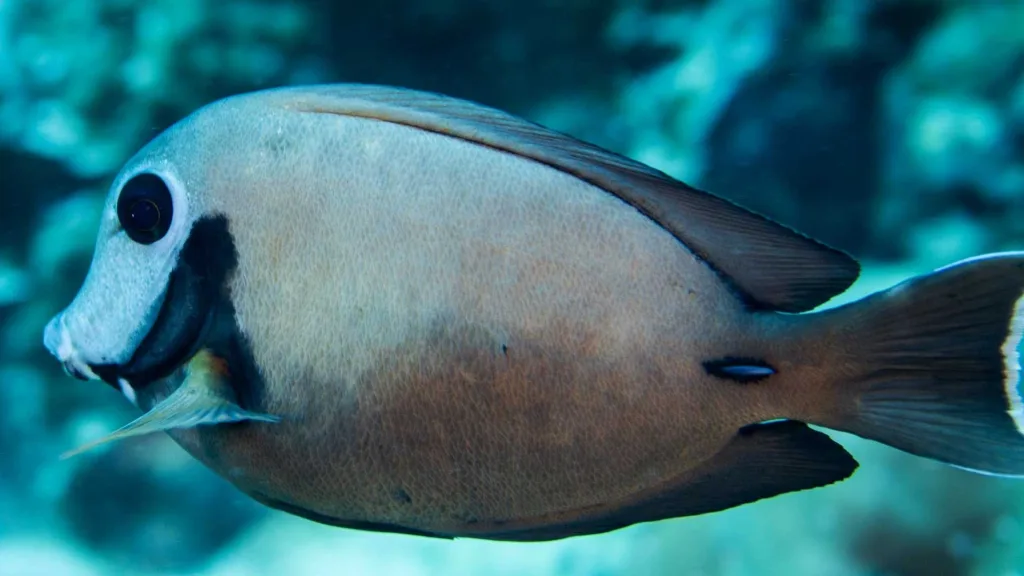
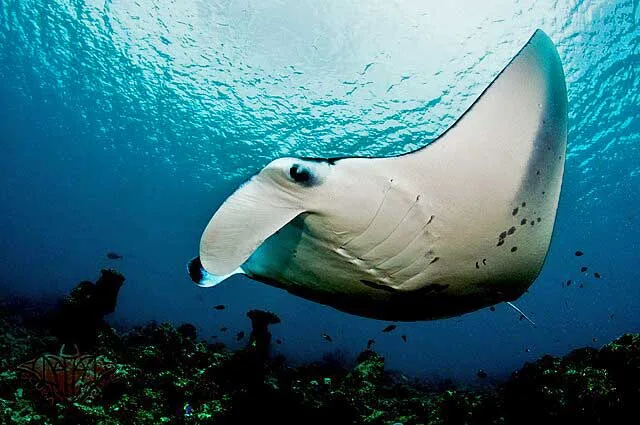
Divers describe Farikede as one of the few places in the Maldives where an astonishing range of species can be encountered in a single dive. Schools of barracuda and snapper sweep past. Groupers lurk in the reef. Reef manta rays glide overhead, while oceanic mantas appear without warning. Giant trevallies patrol the drop-off, accompanied by dogtooth and skipjack tuna.
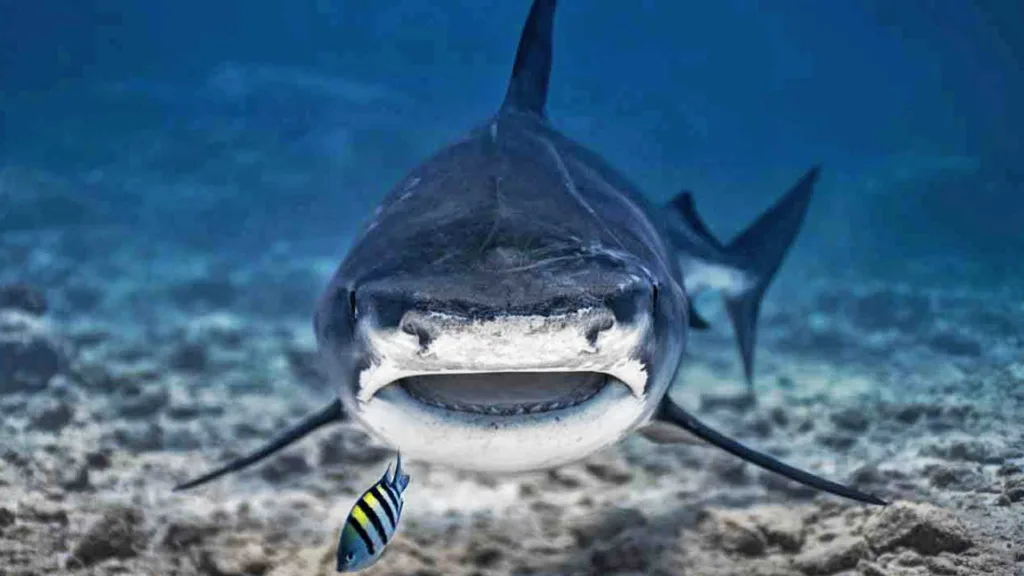
Sharks define the character of the reef. Blue sharks, zebra sharks, gray reef sharks, silvertips, and whitetips are regularly seen. Whale sharks—often massive females—appear with surprising frequency, alongside tiger sharks, hammerheads, and even thresher sharks. According to researchers and divers, no other site in the Maldives records such a consistent presence of female whale sharks. Studies suggest they may come here to breed, drawn by the shallow depth and unique conditions of Farikede.
This reef is not only biologically rich—it is culturally etched into the island’s identity. For generations, Farikede has been a fishing ground, a place where livelihoods were shaped and knowledge passed down. Its waters serve as a nursery for young fish, a cleaning station for predators, and a breeding ground for some of the ocean’s most iconic species.
Farikede is a living system—fragile, productive, and irreplaceable.
To protect it is not only an ecological responsibility, but a cultural one. Without this reef, Fuvahmulah would lose more than its giants. It would lose the unseen engine that sustains the island itself—where reef meets ocean, and nature reveals its rawest power.