Beneath the turquoise veneers of the Maldivian atolls, a master of mimicry plays a deadly game of hide-and-seek
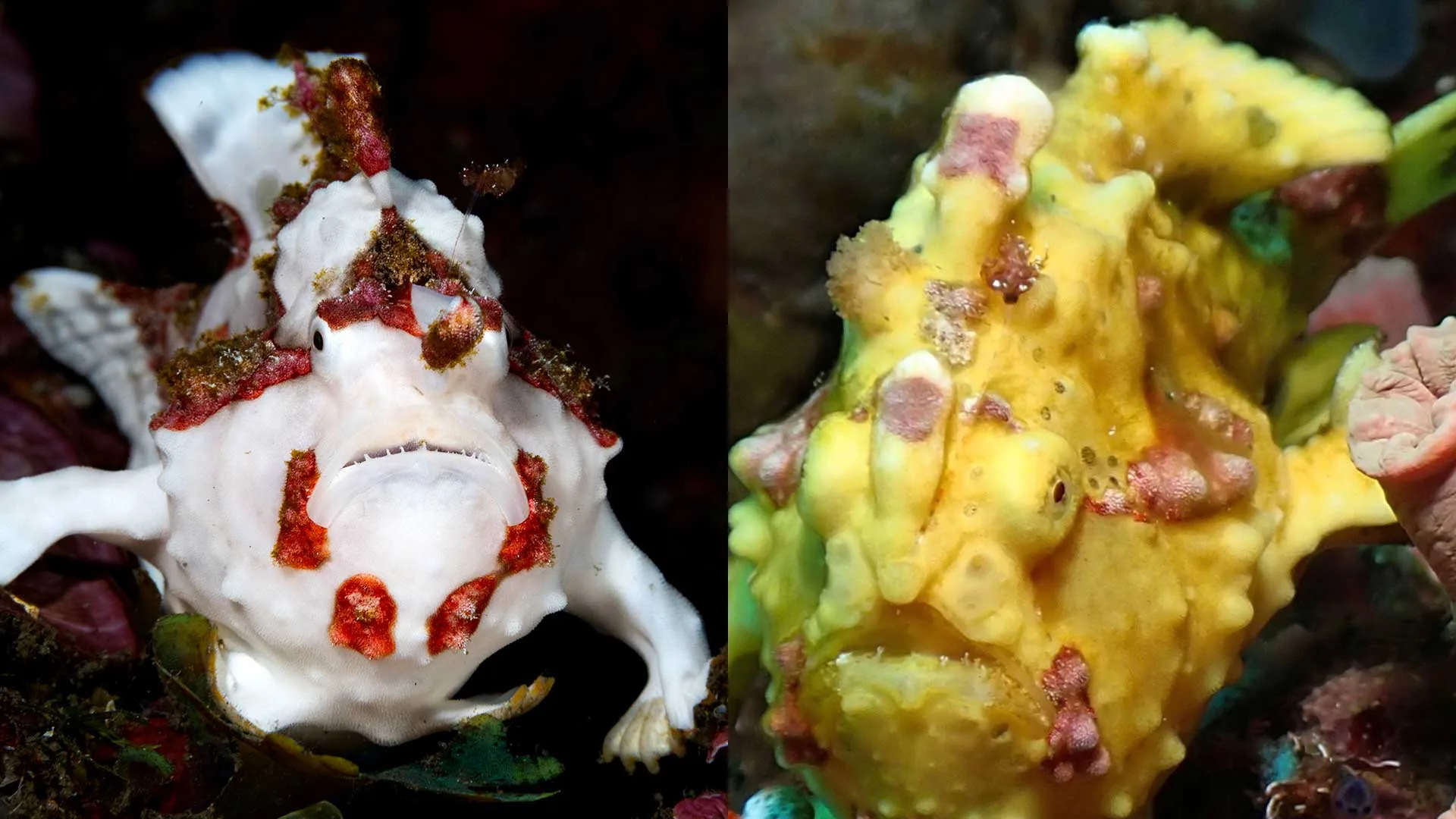
In the vibrant, chaotic world of a Maldivian coral reef, visibility is usually a death sentence. Most fish survive by being fast, being many, or being toxic. But the Warty Frogfish (Antennarius maculatus) has survived for millennia by being “nothing” at all. To the untrained eye of a diver in the North Malé Atoll, it is a clump of algae, a toxic sponge, or a weathered stone. To the reef’s smaller inhabitants, it is the last thing they never see.
A Biological Masterpiece
The Warty Frogfish, often called the Clown Frogfish, is a master of the “long con.” Its body is a canvas of fleshy protuberances and irregular dark spots that mimic the pores of sponges. In a staggering display of physiological adaptation, these creatures can change their color over several weeks to match their surroundings—even turning a ghostly white to mirror bleached coral in a desperate, instinctive bid for survival.
The Angler’s Ambush
Evolution has gifted this animal with a tool kit that would make a fisherman envious. Protruding from its forehead is the illicium—a modified dorsal spine that serves as a biological fishing rod. At its tip sits the esca, a lure that looks, moves, and twitches like a panicked worm or shrimp.
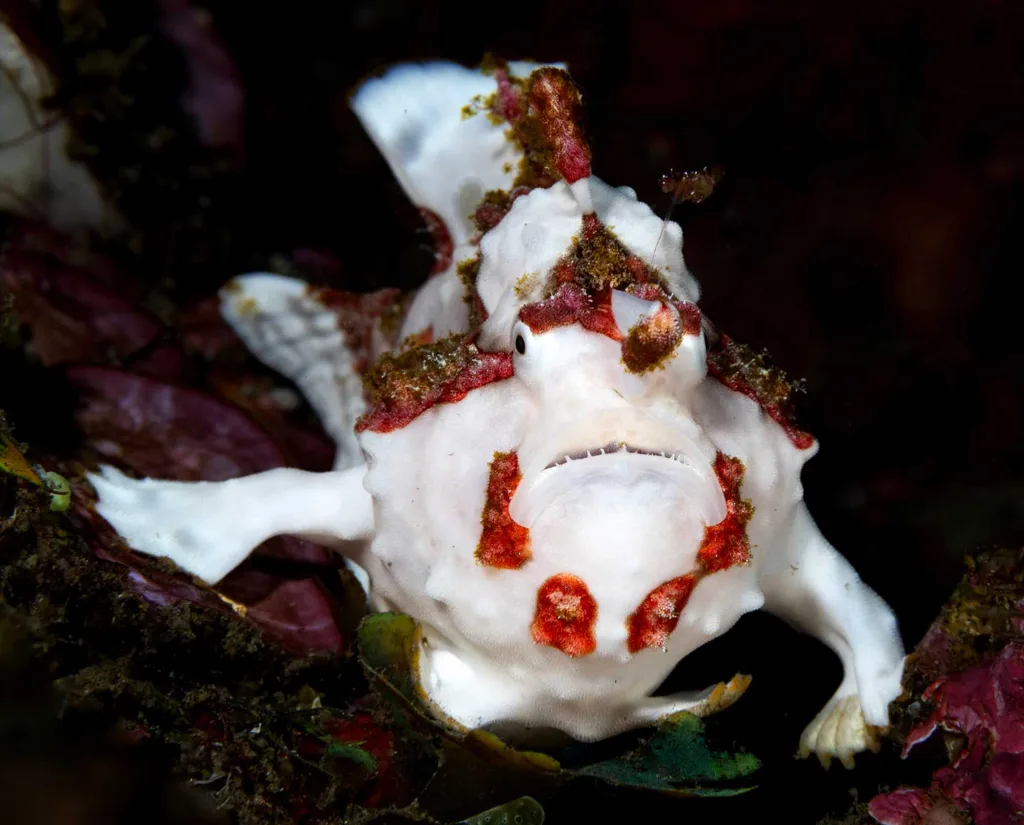
As the frogfish sits perfectly still, it begins its rhythmic “fishing.” A passing goby, sensing an easy meal, darts in. In a feat of physics that seems to defy the aquatic medium, the frogfish expands its oral cavity at a speed of six milliseconds. It creates a vacuum so powerful it literally “inhales” the prey. This is the fastest strike of any vertebrate on Earth—so rapid that it can be captured only by high-speed specialized cameras.
“Watching a Warty Frogfish in the Maldives is like watching a silent movie where the ending is always a shock. You are staring right at it, and yet, it isn’t there.”
The Fish That Forgot How to Swim
Perhaps the most “NatGeo” trait of the frogfish is its refusal to swim like a fish. Evolution has repurposed its pectoral and pelvic fins into limb-like structures. In the sheltered channels of Vaavu or Ari Atoll, you can witness these predators “walking” across the seafloor with a clumsy, primate-like gait.
When a hasty retreat is required, they abandon the walk for a specialized form of jet propulsion. By gulping water and forcefully ejecting it through small, tube-like gill openings behind their fins, they rocket across the reef like a localized burst of underwater lightning.
FIELD NOTES: THE CLOWN AT A GLANCE
- HABITAT: Sheltered reefs and thilas; common in Baa and Ari Atolls.
- MAX SIZE: 15 centimeters (6 inches).
- DIET: Anything it can fit in its mouth. Their stomachs are so elastic they can swallow prey twice their own size.
- STATUS: A favorite for macro photographers, these fish are “sedentary,” meaning they may stay on the same sponge for weeks at a time.
REFERENCES & RESEARCH
- Marine Chemistry: Bio-mimicry and Pigment Change in Antennarius species. FishBase Record
- Evolutionary Biology: The Mechanics of High-Speed Suction Feeding. National Geographic Animals
- Regional Sightings: Marine Biodiversity of the Maldivian Archipelago. Dive Club Maldives Guide
- Taxonomy: World Register of Marine Species (WoRMS)