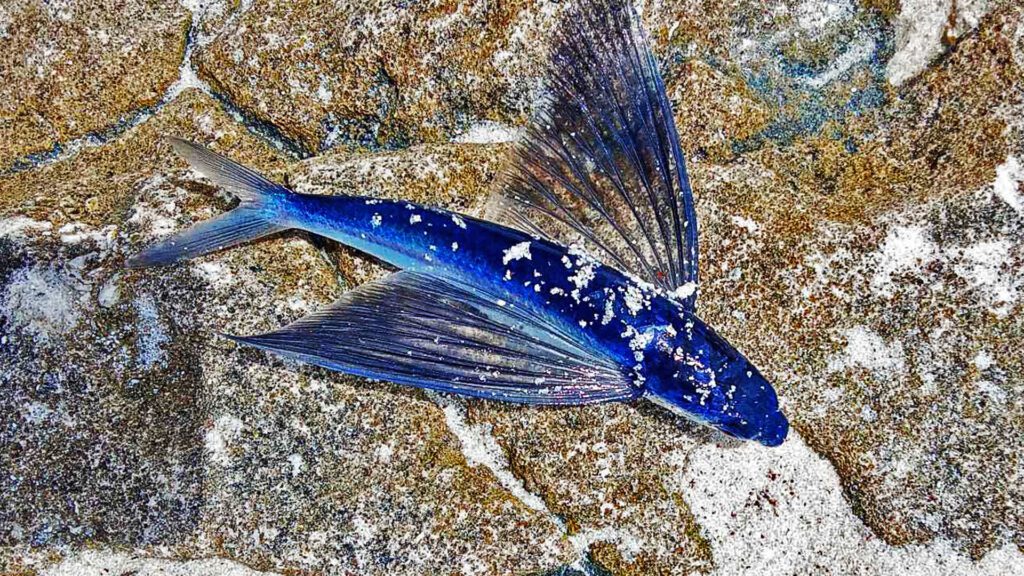
My island, Fuvahmulah, is well known for its flying fish, especially during the southwest monsoon, locally known as hulhangu. During the season, large numbers of flying fish appear around the island. Chased by yellowfin tuna, mahi-mahi, wahoo, giant trevally and other predators, they leap from the sea and glide above the waves. Some even land on the beaches and among the vegetation along the shore.
Flying fish have been part of fishing life in Fuvahmulah for generations. Our ancestors collected them when they came close to the island in their hundreds and thousands. They were eaten, but they were also valuable bait for catching some of the large fish found around the island.
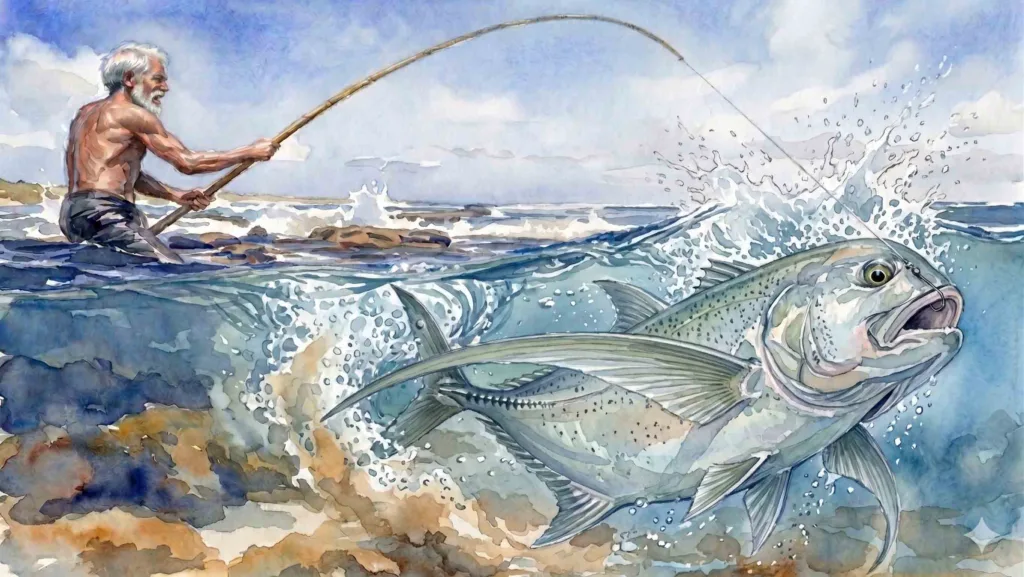
One old method of catching giant trevally, locally known as maamudu, is called vevelhejehun.
Fishermen used bamboo poles, often around eight to ten feet long, with relatively short fishing lines. In the old days, lines were also made from tree fibre called meyvaali. A dead flying fish was fixed to a large hook. The hook could be inserted through the belly, with its point coming out near the backbone, and the fish was secured with thin fibre. Some fishermen inserted the hook through the mouth and brought the point out near the backbone.
The fishermen stood on the reef flat, close to the reef edge, and cast the flying fish towards the breaking waves. The bait was then pulled along the surface of the water. Its movement attracted giant trevally hunting along the reef.
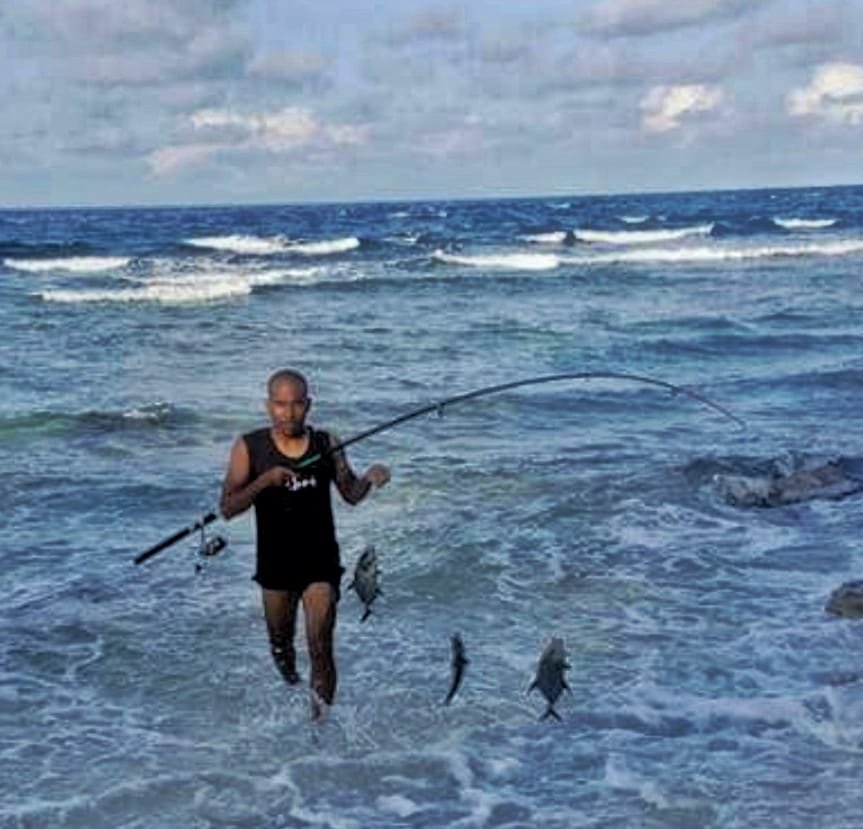
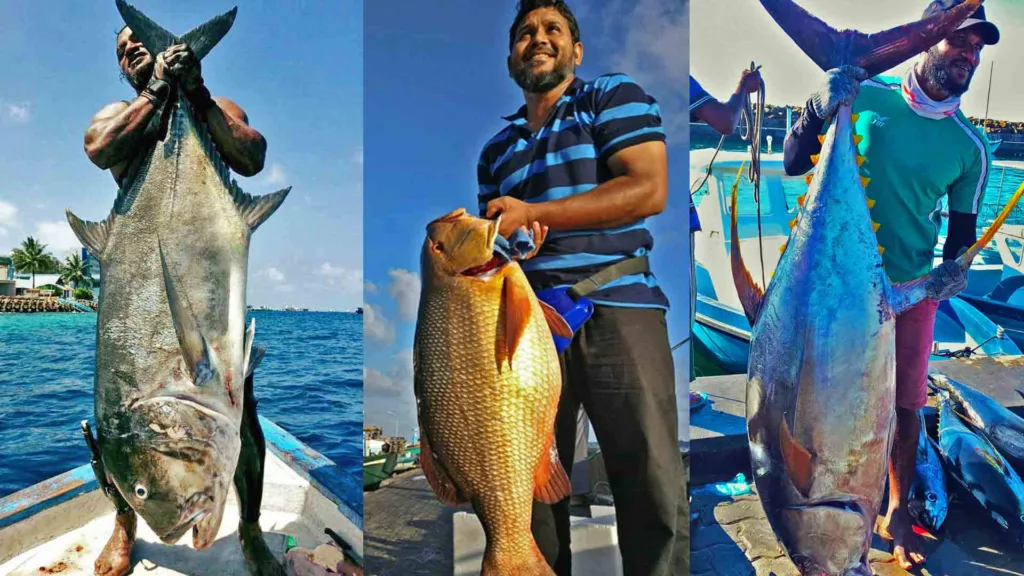
A big trevally could hit the flying fish with tremendous force. Once hooked, the fish put up a powerful fight. Some of the old masters were known to jump into the sea holding their bamboo poles when a large trevally became too difficult to control from the reef.
We continued to use the same technique when my generation came along, but the fishing gear had changed. Instead of bamboo poles and traditional lines, we used modern rods and reels. The flying fish, however, remained the bait.
It worked very well during the flying-fish season, when huge numbers of them could be seen in the waters around Fuvahmulah.
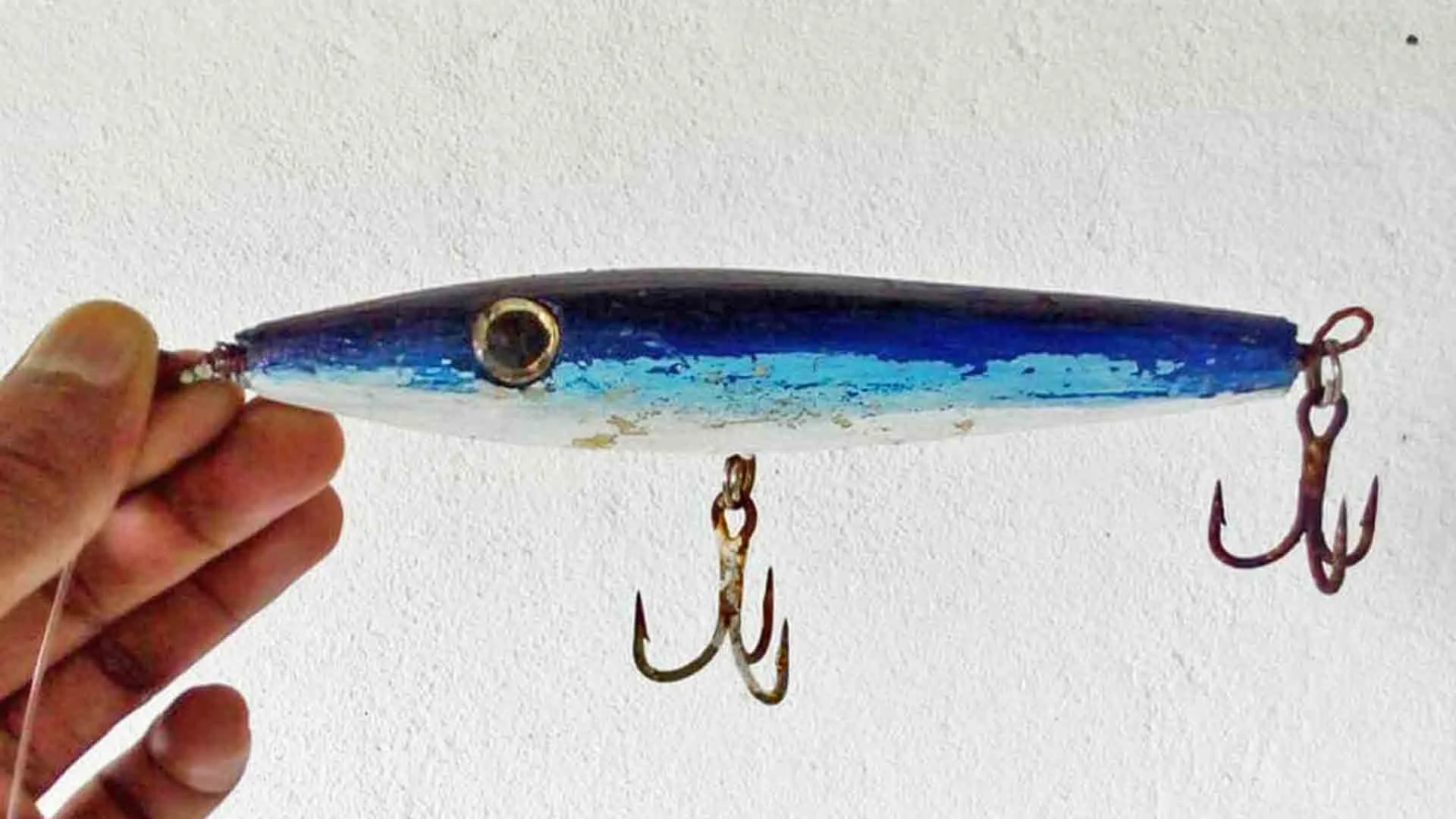
In 2014, I decided to try something different. I had a lathe machine and thought of making a wooden lure that looked like a flying fish.
I took a small piece of Alexander laurel wood and shaped it on the lathe. The lure was about nine inches long. I put lead inside it to give it more weight, fitted it with treble hooks and painted it blue and white.
I then took it to the reef front to see how it would work.
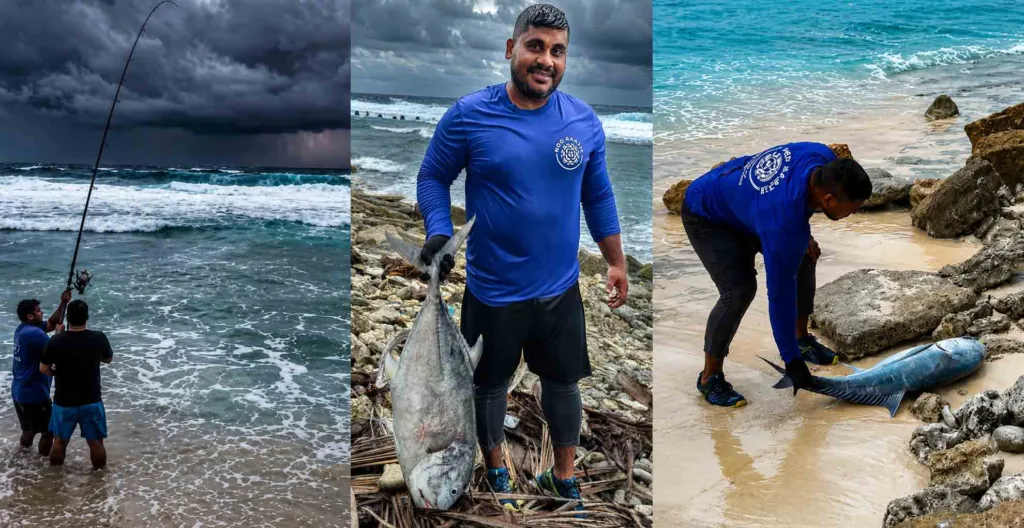
When I cast it with my rod and reel, it flew like a bullet. I made several casts that day. I did not catch a giant trevally, but I caught a fish from the snapper family. On later days, I also managed to land trevallies with the lure.
Later, I came to know that my uncle Badhuru was making his own wooden fishing lures. His lures were beautifully made, and I began getting some from him for both reef and pelagic fishing.
For me, these wooden lures were another chapter in a fishing tradition I had known since childhood. The old fishermen had bamboo poles, meyvaali lines and flying fish collected from the shore. We later had rods, reels and modern fishing lines. I even tried replacing the real flying fish with one shaped from a piece of wood.
The fishing gear changed with time, but the flying fish remained at the heart of the method.