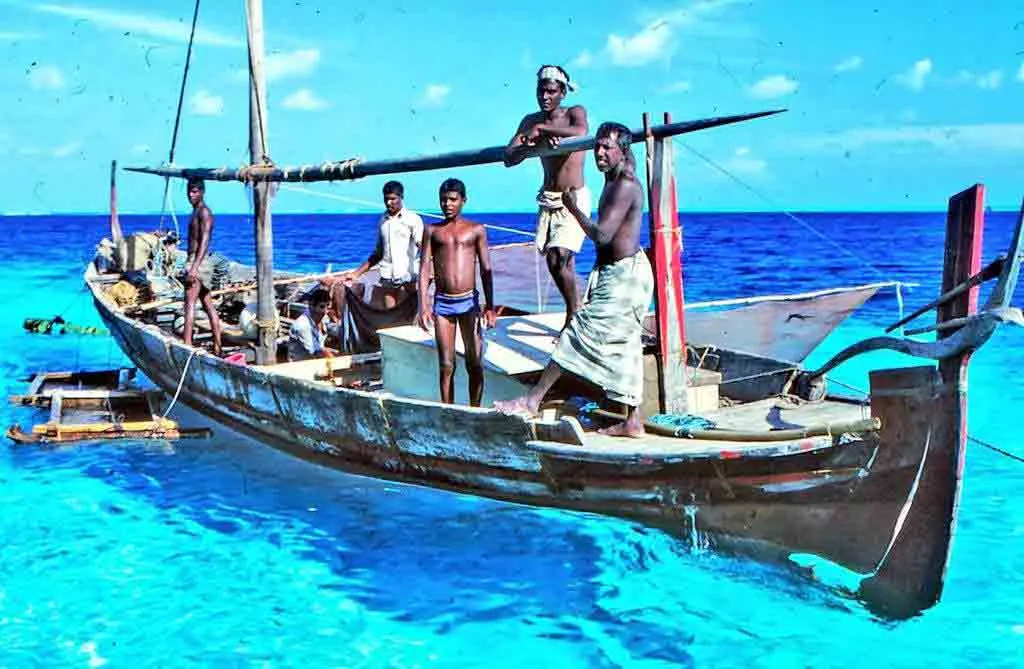
In the Maldives, fishing is not merely an industry or a hobby; it is the heartbeat of our history, culture, and daily sustenance. For centuries, islanders have navigated the unpredictable currents of the Indian Ocean, developing traditional fishing techniques, crafting their own gear, and gaining an intimate understanding of marine species.
From deep-water jigging along reef edges to shoreline angling in the shallow waters of island coasts, this guide explores the rich traditions, remarkable fish species, and evolving techniques that have shaped fishing across the Maldivian archipelago.
Traditional Gear and Fishing Techniques
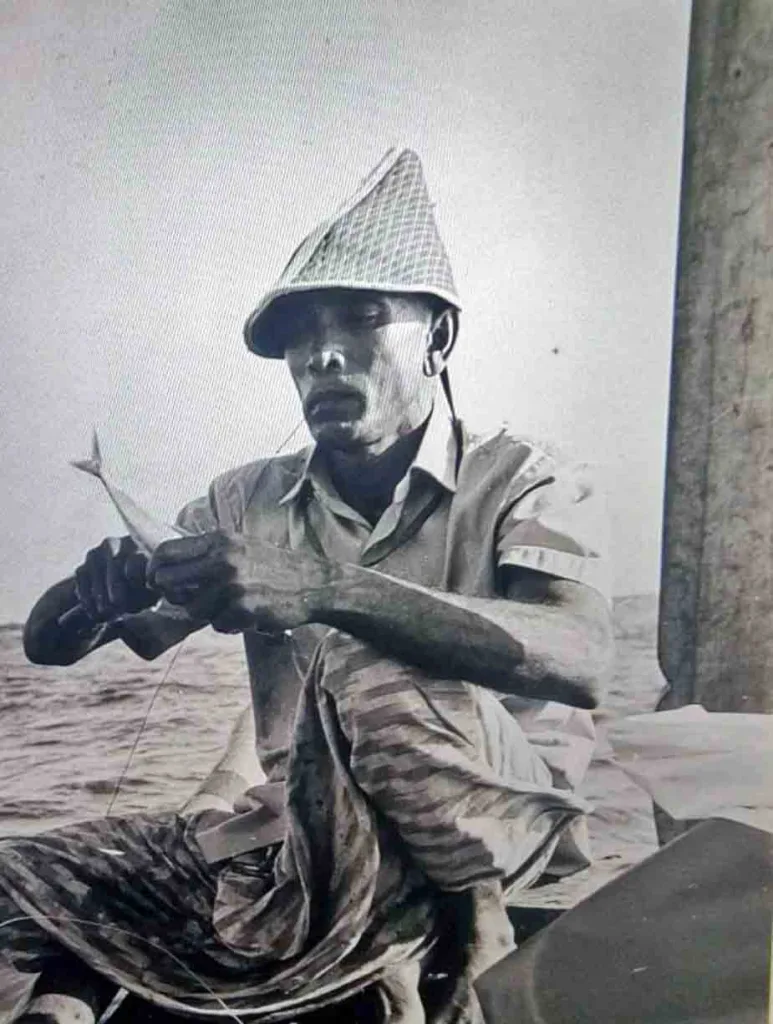
Maldivian fishing traditions reflect generations of resourcefulness, observation, and adaptation. Long before modern fishing tackle arrived, islanders relied on natural materials, handmade equipment, and their knowledge of marine environments to catch fish in shallow coastal waters and the open ocean.
Evolution of Traditional Gear and Techniques
One of the most basic forms of fishing line was made from plant fibre, known as vaanaa in the Fuvahmulah dialect. Hermit crabs, small crabs found along the shore, small fish caught on reef flats and reef fronts, fish waste, and freshwater fish were also used as bait to catch larger fish.
Reef Fishing: To catch reef fish, our ancestors mainly used hermit crabs, small crabs, barred flagtails, spotted garden eels, mosquito fish, and fish waste as bait. Thin fishing rods of varying sizes were used for reef fishing, with plant-fibre lines and handmade hooks.
Pelagic Fishing: Live bait was commonly used to target pelagic fish. These baitfish included silver sprats, blue sprats, cardinal fish, anchovies, bigeye scad, red-toothed triggerfish, mackerel scads, and fusiliers. Handmade and artificial lures were also used. Rooster feathers, polythene, plant materials such as the soft stems of beach naupaka, materials from worn-out slippers, and silicone balls were fashioned into lures. Some of these were used for trolling to target larger predators like wahoo, sailfish, and tuna.
From Coral Stones to Metal Jigs: The evolution of deep-water fishing reflects the ingenuity of Maldivian anglers. In Fuvahmulah, fishermen traditionally used heavy coral stones tied with specialized knots using palm leaves or sea hibiscus bark as sinkers. These natural weights lowered the bait deep into oceanic trenches to target Kattelhi (promethean escolar). The stones were designed to detach at depth, releasing the bait. Today, metal jigs and modern rods have transformed deep-sea fishing, but knowledge of ocean currents and fish behaviour remains important.
Drop-Stone Fishing
Drop-stone fishing is a traditional Maldivian bottom-fishing method used primarily for reef and deep-water fishing at depths ranging from 50 to 250 metres. Natural coral stones serve as heavy sinkers, taking baited hooks rapidly down towards the seafloor.
The technique traditionally uses natural materials such as vaanaa (thin strands of bark extracted from the sea hibiscus) or coconut palm leaves to bind the line, hook, and bait to the stones. Two methods are described here.
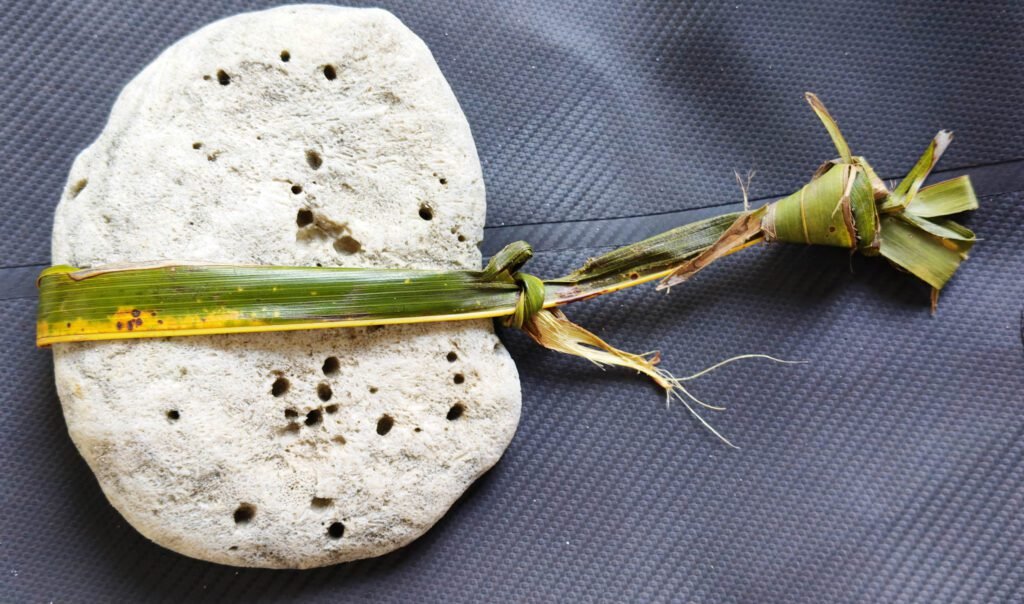
The Vaana Method: A strip of sea hibiscus bark is tied around a coral stone, securing the baited hook in place. Once the rig reaches the seafloor, a quick tug on the main line releases the weight, allowing the bait to drift and attract reef fish.
The Faanafedun Method: The bait is placed between two flat coral stones, each measuring about 6–8 inches, which are then bound together with bark strands. Once the rig reaches the desired depth, the fisherman gives the line a short, sharp upward jerk to detach the stones, releasing the bait into the water to attract predatory fish.
Read the full story: From Coral Stones to Metal Jigs — The Evolution of Kattelhi Fishing in Fuvahmulah
Read how Kattelhi fishing was conducted in the early days: Discover the Untold Story of ‘Kattelhi Fishing’ in Fuvahmulah
Handmade Lures and Flying Fish: Flying fish hold an iconic place in Maldivian waters. Crafting wooden flying-fish lures with embedded hooks represents a traditional skill developed to target aggressive surface predators such as tuna and mahi-mahi.
Discover the craft: From Flying Fish to Wooden Lures: A Fuvahmulah Fishing Tradition
Pole-and-Line Fishing
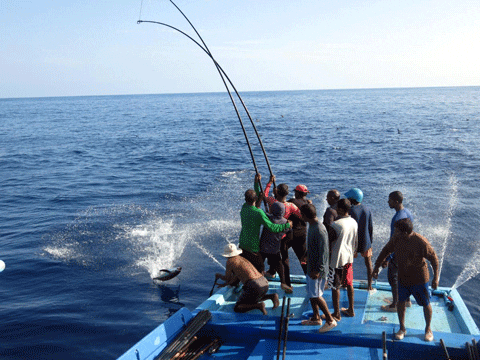
Pole-and-line fishing is a selective commercial and traditional fishing technique widely practised in the Maldives to catch tuna, including skipjack and yellowfin. Individual fish are caught one by one using a handheld pole, a short line, a barbless hook, and live bait.
Key Elements of the Method
- Live Bait and Water Spraying: The crew uses live baitfish kept alive in onboard tanks. The baitfish are released into the sea while water is sprayed onto the ocean surface from the boat (dhoni). This helps create the appearance of a feeding frenzy and encourages tuna to strike.
- Barbless Hooks: Anglers stand at the stern or on a railing platform, using fibreglass or bamboo poles fitted with short lines and unbaited, shiny barbless hooks, sometimes with feathers.
- The Flick: As tuna strike the hooks amid the feeding frenzy, anglers quickly flick the fish over their shoulders and onto the deck. The barbless hooks dislodge easily, allowing the lines to be returned to the water immediately.
- Environmental Impact: Pole-and-line fishing is widely recognised as an environmentally favourable method because it greatly reduces bycatch compared with many less selective fishing methods and avoids damage to marine habitats.
Read about pole-and-line fishing: The artistic fishing method of pole-and-line fishing
Bait Fish
Bait fishing is an integral part of island life in the Maldives. Beyond serving as essential live lure for prized ocean species like tuna, sailfish, and wahoo, baitfish historically doubled as a vital food source across the archipelago.
In earlier times, fishermen relied on nets imported from Sri Lanka and neighboring countries. Storing the catch required ingeniously designed wooden containers. In Fuvahmulah, these were known in the local dialect as medheri—crafted from areca nut wood and anchored alongside traditional dhonis. Thanks to their slatted design, fresh sea water flowed continuously through the medheri, keeping the bait alive.
Managing this live bait was a demanding, team-dependent task. Long before dawn, fishermen gathered in the calm inner lagoons to gather small pelagic forage species like silver sprats, cardinalfish, anchovies, and scads. Once out near steep reef drop-offs or deep ocean swells, this lively bait became the ultimate catalyst for action.
Longline Fishing

Longline fishing for reef species, known locally as leynu elhun, is a traditional bottom-set longline technique used to catch large predatory reef fish.
Key Characteristics of the Method
- Gear Setup: A durable main line, traditionally made from materials such as thick shielded copper wire, fibre lines, or heavy monofilament, is anchored to the seafloor using heavy coral stones or weights. Multiple short branch lines fitted with hooks are attached to the main line using swivels.
- Bait and Deployment: The hooks are baited with pieces of eel, tuna, tuna heads, octopus, or small baitfish such as triggerfish and bigeye scad.
- Soak Time: Depending on the location, including shallow, rugged reef fronts and deeper lagoon basins at depths of 60–80 metres, the lines are typically set overnight or left for a few hours before being hauled back in.
- Target Species: This method is primarily used to catch large predatory fish and other reef dwellers, including giant trevally, groupers, red snapper, green jobfish, and emperors.
Read about long line fishing: Longline Fishing for Reef Species
Trolling

In ancient times, trolling was widely practised using bokkura and small dhonis. A bokkura was normally manned by two people operating four oars. A chief fisherman, known as the keyolhu, stood at the rear of the boat while it was rowed and fishing lines were towed behind it to target tuna, including yellowfin tuna, wahoo, sailfish, and other pelagic fish.
In some islands, larger vessels than the bokkura were also used. In the Fuvahmulah dialect, these are known as Hafaali Dhoani. These vessels have six oars.
The bokkura is a distinctive traditional Maldivian vessel used to target both reef fish and pelagic fish. In addition to trolling, bokkuras are used near drop-offs, in lagoons, and around well-known reefs and thilas to catch fish using handlines and drop-stone fishing methods.
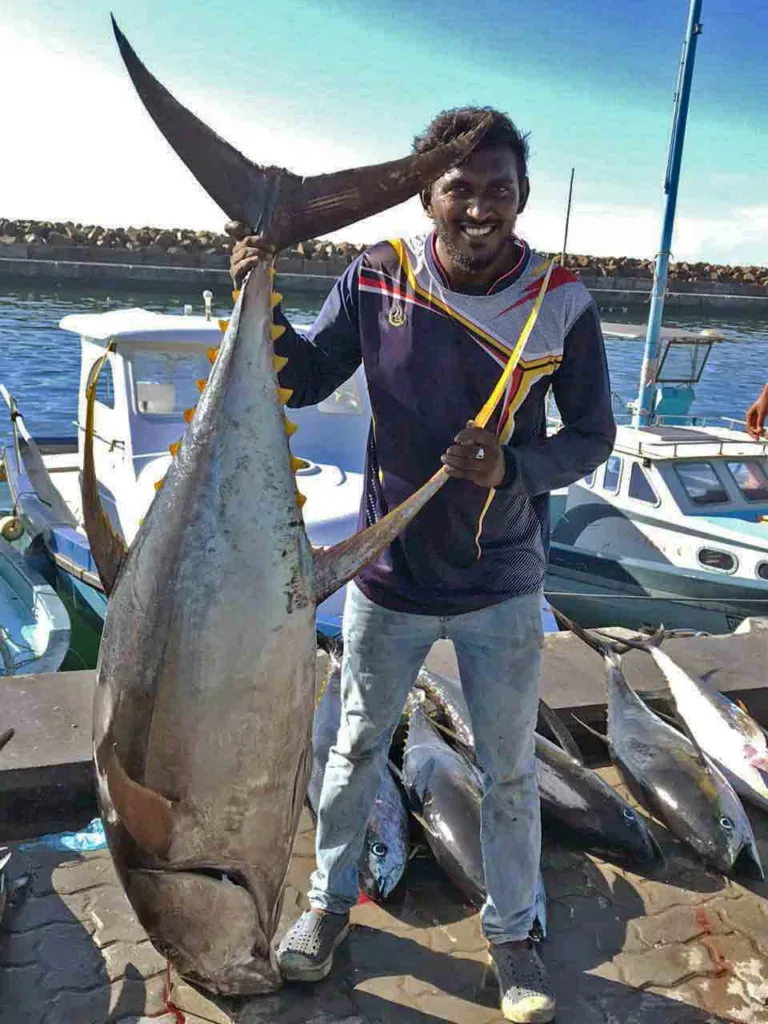
Trolling: Trolling for catching yellowfin tuna
Heymas Helun
Wahoo Surface-Strike Fishing is a traditional Maldivian technique rooted in visual stalking and fast surface strikes, closely associated with Heymas Helun. Anglers use this method to target swift pelagic predators like wahoo (locally known as kurumas).
Unlike standard trolling, this method relies on fishers deploying surface decoys or floating lures to draw wahoo into view just beneath the surface. They track the fish as it approaches the bait before attempting a precise strike or harpoon deployment from a stationary or drifting boat.
- The Setup and Decoy: Fishers use specialised wooden decoys or surface lures, such as traditional handmade flying-fish lures or components like a banana spathe, to attract predators towards the surface.
- The Stalking Phase: Once a wahoo or other predatory fish notices the decoy, it approaches and follows the bait just beneath the water’s surface. Fishers must closely observe the fish’s movements, as well as changes in the water and current.
- The Precision Strike: Requiring expert timing and considerable skill, a designated master harpooner or striker must execute a swift, precise strike or deploy the harpoon at the critical moment before the fast-moving fish can escape. Wahoo are capable of reaching high burst speeds.
Read the maskerful skill: Only a Master Can Do This: Precision Surface Strikes for Wahoo Fishing
Legendary Game Fish of the Maldives
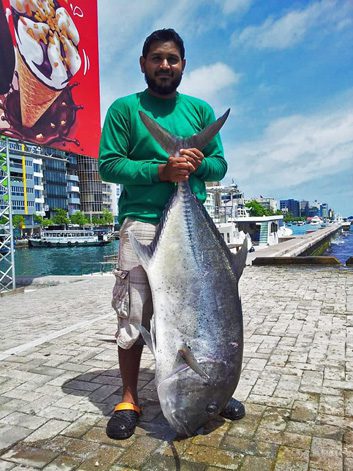
The surrounding ocean is home to some of the world’s most sought-after game fish, each presenting unique challenges for anglers. Although modern anglers continue to target pelagic species, Maldivians have caught these powerful fish for generations using traditional techniques and basic fishing tools.
Sailfish, giant trevally, wahoo, yellowfin tuna, red snapper, skipjack tuna, and dogtooth tuna are among the species that Maldivian fishermen have traditionally excelled at catching.
Giant Trevally (Maamudu): Known for testing anglers’ strength along storm-beaten reef edges, giant trevally command immense respect. Local tales often recount legendary battles between young islanders and these powerful predators.
Explore the battles: Five Legendary Game Fish of the Maldives, Hudhuhelakanfai: Fuvahmulah’s Most Formidable Giant Trevally, and Young Anglers vs. Fuvahmulah’s Giant Trevally
Tuna Species — The Ocean’s Lifeline: From skipjack and yellowfin tuna to Latti (kawakawa, the tuna of the atolls), tuna species form the backbone of both local sport fishing and the national diet.
Identify the species: Kawakawa — Latti, the Tuna of the Atolls
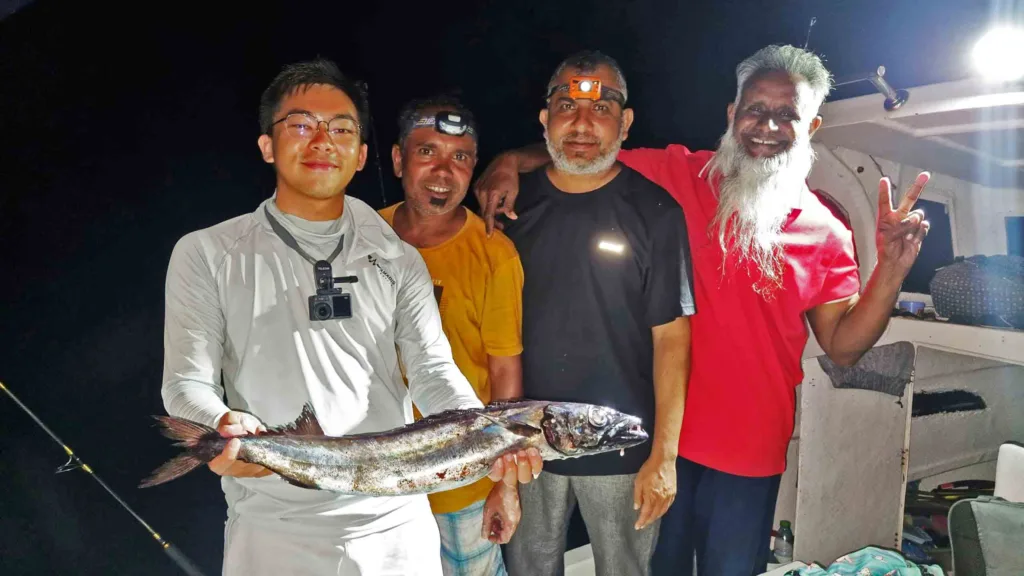
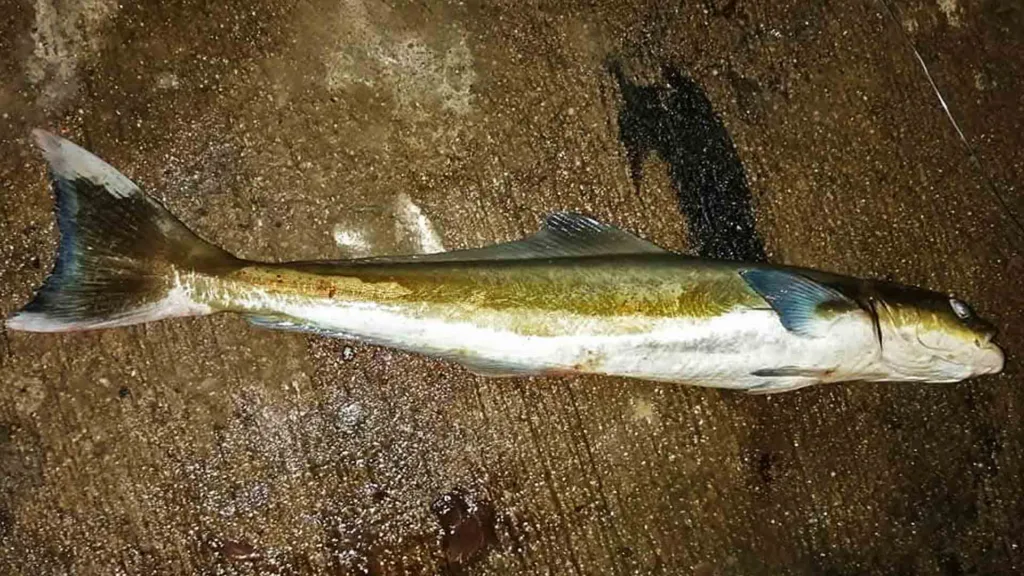
Cobia and Unique Predators: Fishing from jetties and shorelines can bring unexpected catches, including cobia, recognisable by their distinctive body shape and broad, flattened heads.
Learn more: Cobia in the Maldives — Identifying the Broad-Headed Fish with a Crescent-Shaped Tail
Shoreline Angling and Reef Treasures
While open-ocean tuna fishing dominates national exports, the quiet shallows and harbour jetties offer rich opportunities for local fishermen. Shorelines have long provided livelihoods and food for Maldivians.
Beyond fishing for reef fish on reef flats and along the shore, these coastal areas support a variety of marine life, including fish, crabs, crustaceans, molluscs, gastropods, and other invertebrates. Lobsters, squirrelfish, octopus, crabs, and many other fish species were traditionally caught along the shoreline. Birds were also caught in some contexts to provide food and support survival.
Throw Net
Even in ancient times, cast nets, also known as throw nets, were used to catch reef fish in the shallow waters of reef flats and along the shore. Fish caught using this method include goatfish, surgeonfish, snubnose rudderfish, spotted dartfish, milkfish, parrotfish, and others.
Catching Lobsters with Fire
Using fire to catch lobsters along the shoreline is one of the traditional techniques associated with coastal fishing and gathering in the Maldives.
Reel Power at the Jetty
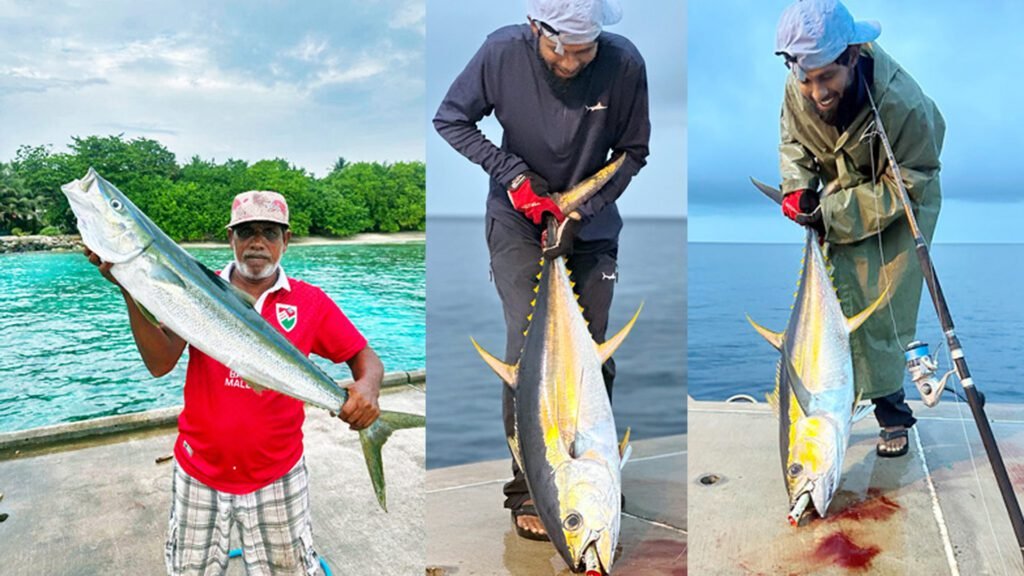
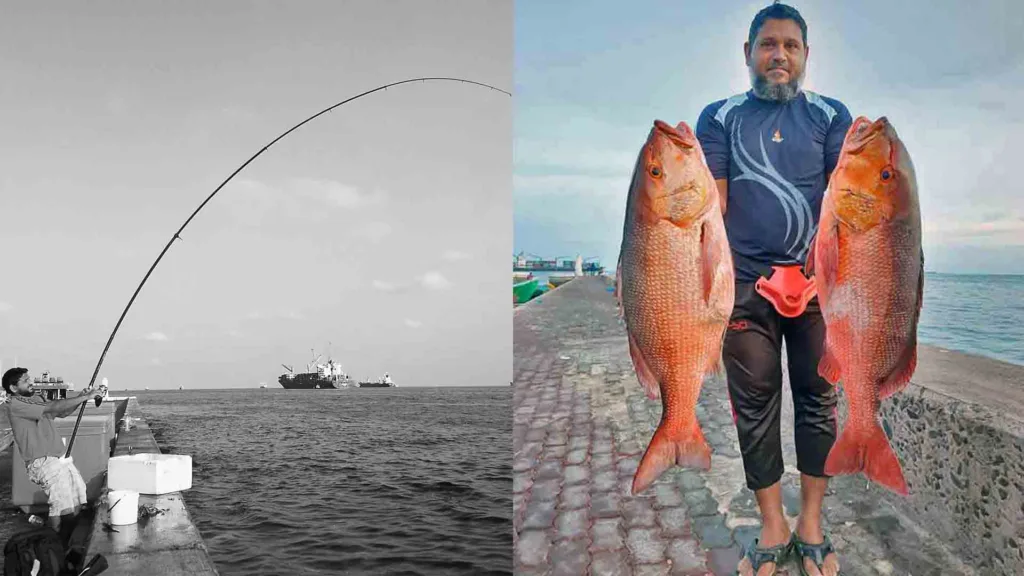
Urban jetties, such as those in Malé and Rasgetheemu, serve as popular gathering spots where local anglers test their skills against hard-fighting reef species like the two-spot red snapper (Raiy Mas)—a fish widely respected for its powerful bite.
Read the story: Reel Power – The Red Snapper Challenge at Malé Jetty
Scales of the Shallows and Sand Legends
Beyond large game fish, shallow-water species such as goatfish hold a cherished place in local culinary traditions. They are also intertwined with island stories, including tales of the “whispered sands.”
Discover shallow-water fishing: Scales of the Shallows and Goatfish of the Maldives and the Legend of the Whispered Sands
Culinary Heritage and Fish Processing
In Maldivian culture, catching fish is only half the journey; preparing and preserving it is an art in itself. The vast ocean provides an incredible variety of fish, and Maldivian cuisine reflects this abundance through countless dishes, cooking styles, and traditional preservation methods.
Garudhiya and Everyday Fish Dishes
Garudhiya is a traditional Maldivian clear fish broth made by simmering fresh tuna, typically skipjack tuna, in water with salt. It is often served with steamed white rice, lime, chillies, and onions as a staple Maldivian meal.
Beyond garudhiya, fish is enjoyed in curries and prepared by frying and grilling. These dishes reflect the central place of fish in everyday Maldivian food culture.
Traditional Fish Preservation
Traditional Maldivian fish preservation involves boiling, smoking, and sun-drying tuna, primarily skipjack and yellowfin, to produce long-lasting products such as valhomas and Maldive fish.
These preservation methods have helped island communities make use of their catches and maintain a supply of fish beyond the day of capture.
Traditional Delicacies
Every part of the catch is valued. Fish roe from freshly caught trevally or tuna is considered a local delicacy, often prepared using traditional spice blends.
Explore culinary traditions: Fish Roe: A Traditional Maldivian Favourite
Preserving the Catch
From traditional dried and smoked fish products to the rich, concentrated fish paste known as rihaakuru, Maldivian ocean-to-table traditions reflect generations of culinary knowledge shaped by island life and a close relationship with the sea.
Honouring Our Ocean Heritage
Whether it is a young angler casting a jig from a rocky shore, an experienced fisherman battling a giant trevally in the surf, or a family preparing and preserving the day’s catch at home, fishing remains deeply rooted in Maldivian identity.
For generations, Maldivians have drawn sustenance from the ocean, developing traditional fishing techniques, crafting their own gear, learning to recognise marine species, and adapting to the changing conditions of the sea. From catching reef fish along the shoreline and targeting powerful pelagic species in deeper waters to preparing garudhiya, making Maldive fish, and producing rihaakuru, every stage of the journey reflects a close relationship between island life and the ocean.
By documenting these traditions on Maldives My Islands, we aim to preserve the stories, skills, and practical knowledge passed down through generations. These are more than accounts of fishing; they are part of our living heritage, connecting the experiences of our ancestors with the knowledge and practices of future generations.