The Maldives is often described through its beaches, lagoons and overwater villas. Yet the true story of these islands begins beneath the surface of the sea.
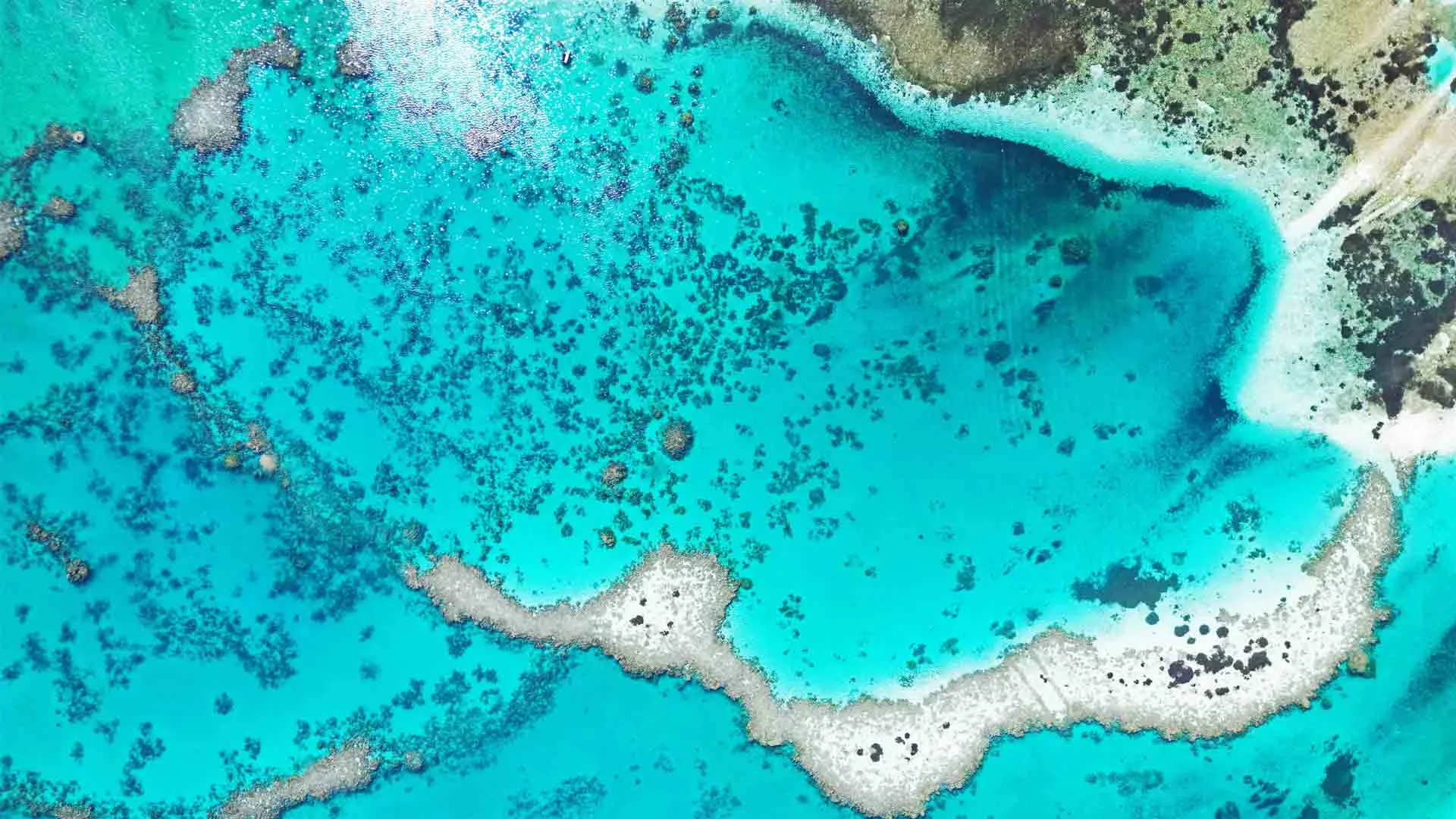
Stretching across the central Indian Ocean, the Maldives consists of 26 natural coral atolls and more than 1,000 islands scattered over nearly 900 kilometres. Less than one per cent of the country’s territory is land. Everything else is ocean—coral reefs, lagoons, reef flats, seagrass meadows, deep channels and the open sea. Together, they form one of the world’s most remarkable tropical marine ecosystems.
Every island owes its existence to coral. Over thousands of years, tiny reef-building animals created the limestone foundations upon which waves gradually deposited coral sand, giving rise to the islands we see today. The same reefs continue to protect the shoreline, support fisheries and provide habitat for an extraordinary variety of life.
The Day Begins at Sea
For many Maldivians, the rhythm of the day begins before sunrise.
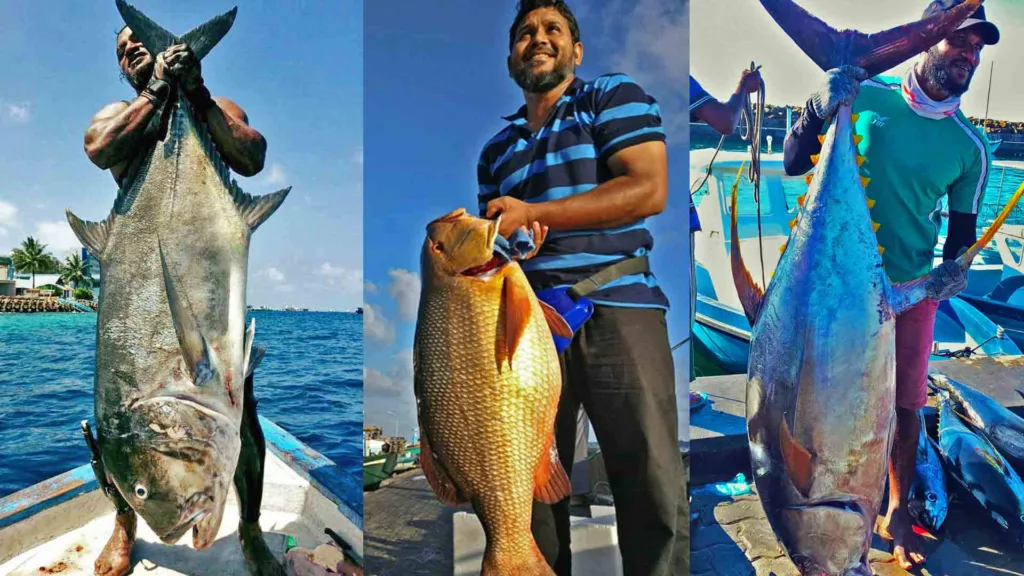
After the Fajr prayer, fishermen gather quietly along the beach. Boats are prepared under the first hint of daylight, engines come to life, and one by one they leave the harbour through the narrow reef entrance. Some remain close to the island. Others head towards the open ocean, where the currents often bring schools of skipjack tuna and yellowfin tuna within reach.
The sea can appear calm, almost empty. Then everything changes.
Flying fish burst across the surface, gliding only a few metres before disappearing again. A moment later, a school of skipjack tuna erupts from the water, chased from below by larger predators. Powerful yellowfin tuna break the surface with surprising speed, while, on fortunate days, a sailfish or marlin launches into the air before crashing back into the waves.
The first frigatebirds are usually quick to notice. Soon white terns, noddies and bridled terns join them, circling above the feeding fish. Their movements have guided generations of Maldivian fishermen, who have long understood that birds often reveal what cannot yet be seen beneath the surface.
Below the excitement lies another world. Spinner dolphins weave effortlessly through the schools of tuna, while sharks patrol the deeper water beyond the reef edge. Much of this activity remains hidden, unfolding along steep drop-offs and channels where the sea suddenly falls away into the blue.
These scenes are not limited to the early morning. As the tides change, the ocean often comes alive again in the afternoon, reminding anyone on the water that the sea is always changing.
Beneath the Reef
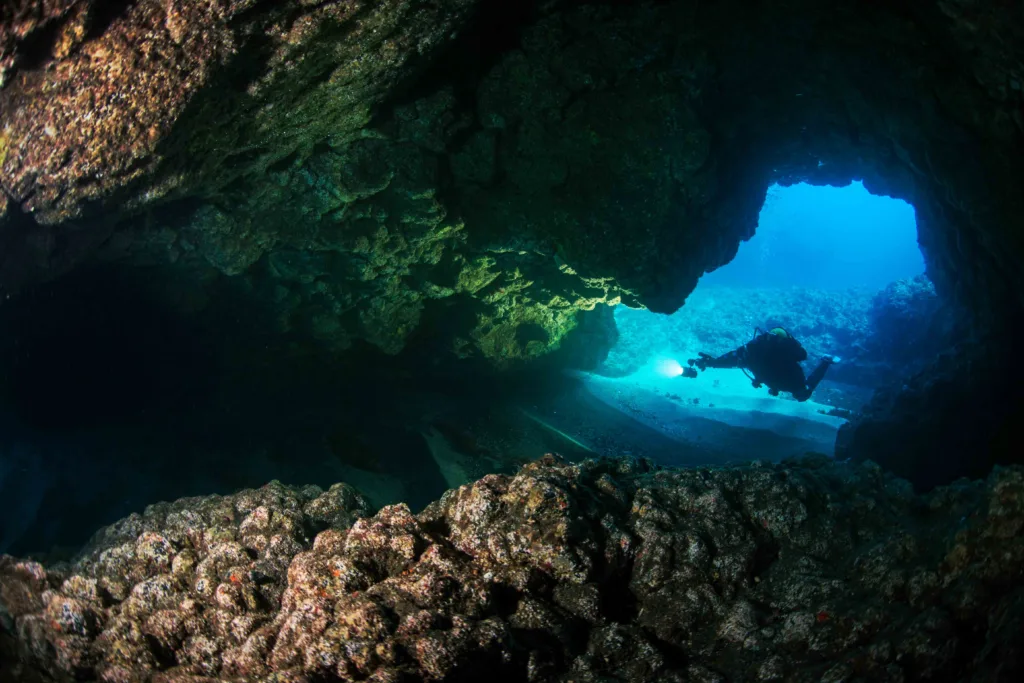
Slip beneath the surface, and the noise of the world disappears.
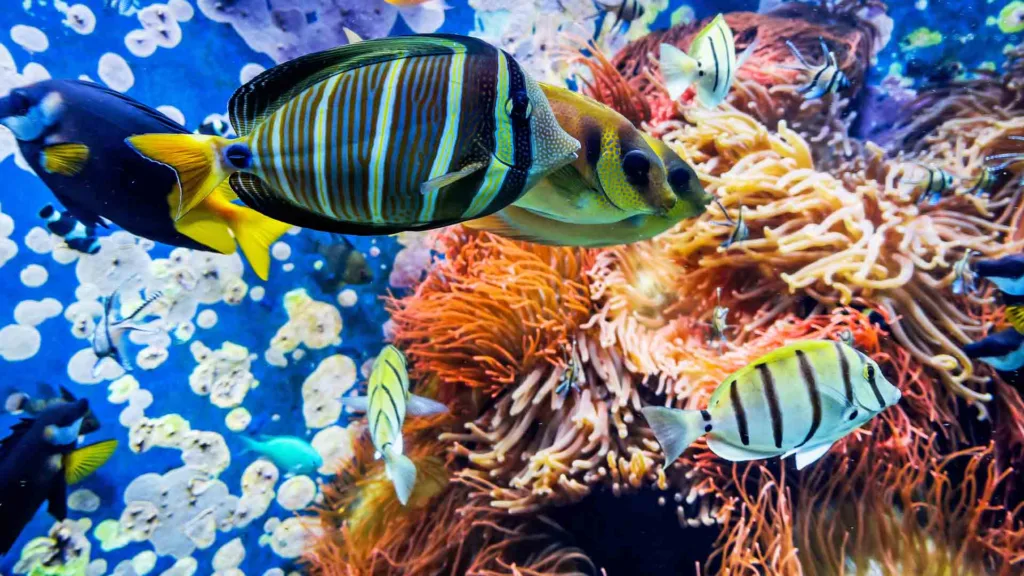
Coral colonies stretch across the seabed in forms that have taken centuries to grow. Branching corals shelter clouds of damselfish, while massive coral heads provide refuge for groupers, squirrelfish and snappers. Brightly coloured butterflyfish move carefully among the coral branches, and parrotfish graze steadily across the reef, their powerful beaks scraping algae from the limestone. Much of the fine white sand that forms the Maldives’ beaches begins here.
Green turtles browse quietly through seagrass meadows, while hawksbill turtles search the reef for sponges hidden among the corals. Blacktip reef sharks cruise the shallows with little concern for passing snorkellers, and eagle rays drift over sandy channels with slow, deliberate movements. Moray eels peer from narrow crevices, while octopuses vanish into rocky shelters almost as soon as they are spotted.
Beyond the outer reef, the ocean deepens quickly. Strong currents carry nutrient-rich water through the atolls, attracting manta rays to feeding and cleaning stations. In some parts of the Maldives, whale sharks move slowly along the reef edge, filtering plankton from the water as they pass. Pilot whales, false killer whales and several species of dolphins are also occasional visitors to these waters, reminding us that the open ocean remains as important as the reefs themselves.
Where Sea and Land Meet
The boundary between land and sea is never sharply defined.
Mangrove wetlands trap sediment and provide shelter for young fish and crustaceans. Seagrass meadows stabilise the seabed while supporting turtles, sea cucumbers and countless smaller animals. Ghost crabs emerge from their burrows after sunset, and fruit bats leave the coconut groves each evening in search of flowering trees and ripe fruit. Along the shore, herons, egrets and shorebirds patrol the water’s edge, while seabirds return to their nesting colonies before nightfall.
Every habitat is connected. Healthy reefs protect the islands. Seagrass and mangroves support the reefs. Ocean currents sustain the reefs, and in turn the reefs sustain the people who have lived beside them for generations.
More Than a Beautiful Destination
Visitors often remember the colour of the water first. Those who spend time on the sea remember something different.
They remember the sudden appearance of dolphins beside the boat, the silence that falls before a school of tuna breaks the surface, the shadow of a manta ray passing beneath clear water, or the distant circle of frigatebirds revealing life below. These are moments that cannot be planned or guaranteed. They are simply part of the rhythm of the ocean.
For generations, Maldivians have measured time by the tides, the monsoon winds and the changing seasons of the sea. These rhythms continue today, shaping both the natural world and the communities that depend upon it.
The Maldives is more than a collection of islands surrounded by water. It is a living ocean landscape where coral reefs, wildlife and people have always existed together. Here, where land gives way to the sea, every tide carries another story, and every journey across the water offers a reminder that the ocean is, and always has been, the heart of the Maldives.