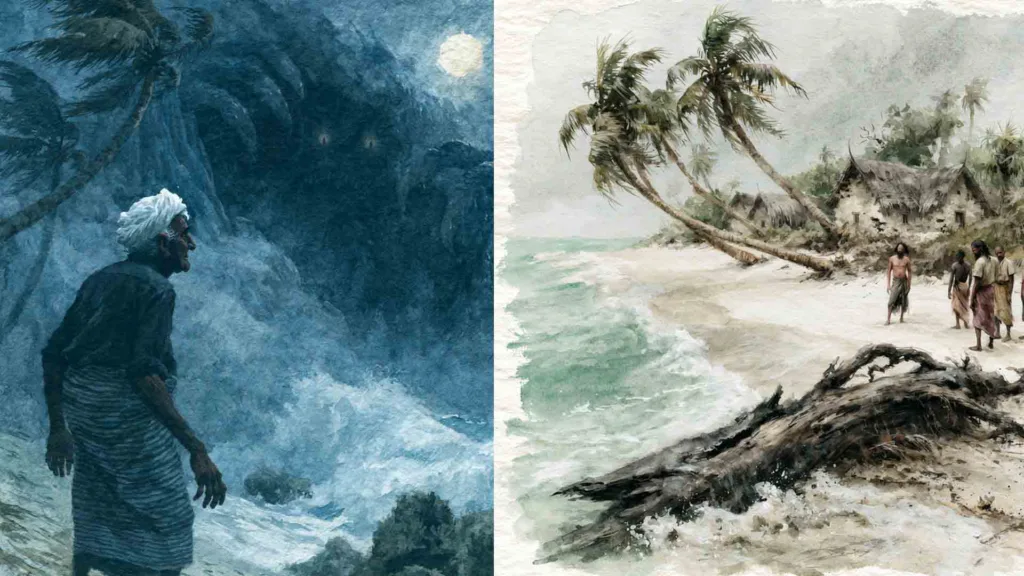
For centuries, the return of a veḍi from Ceylon or the coast of South India was among the most eagerly awaited moments in island life. These voyages could last for months, and once a vessel disappeared beyond the horizon, no message could reach those waiting at home. Families lived with uncertainty until the familiar white sail appeared once again beyond the reef.
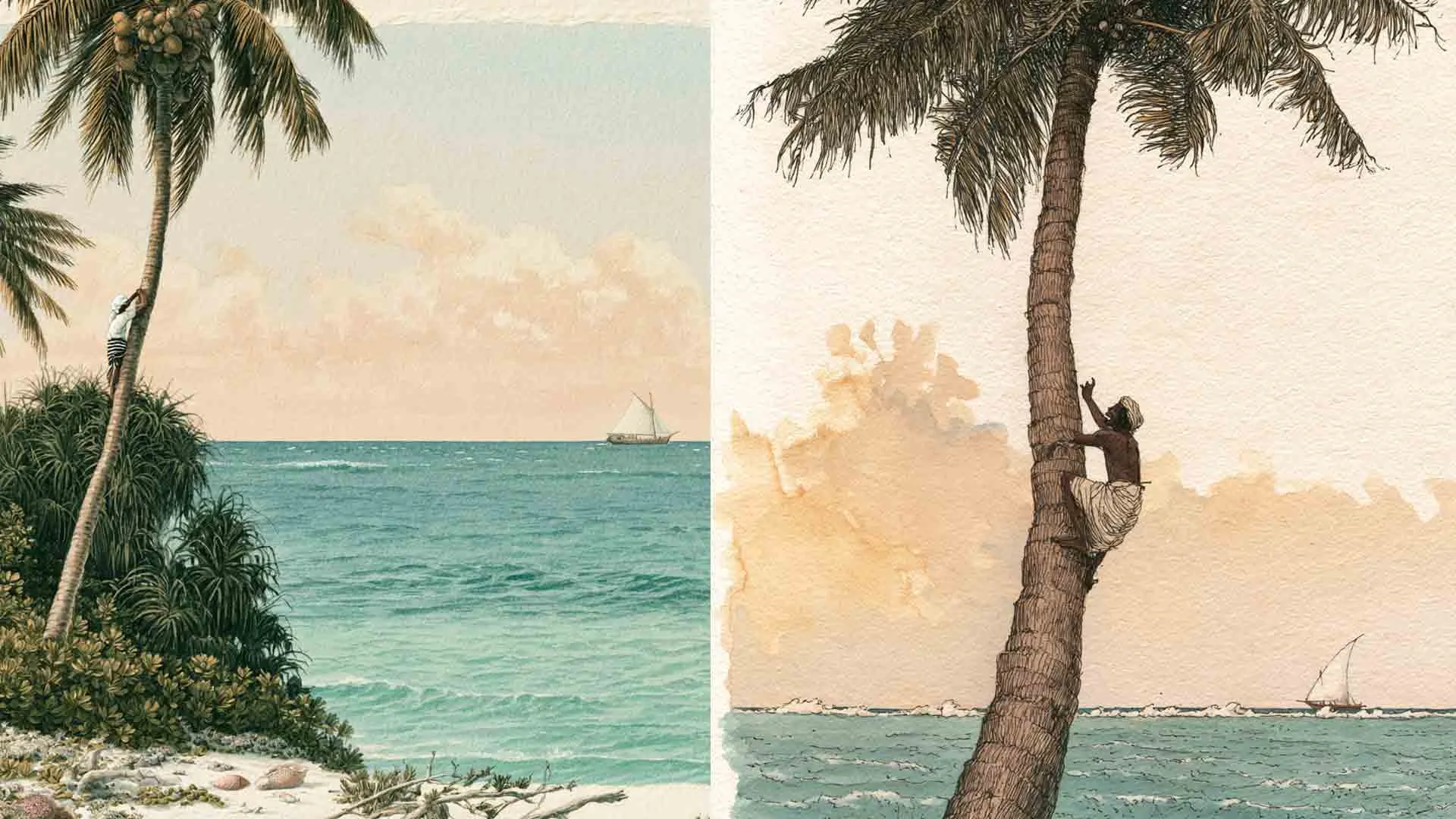
On Fuvahmulah, the task of watching the sea often fell to a few trusted individuals. They climbed the tallest coconut palms growing along the shoreline, where the height allowed them to see farther across the ocean than anyone standing on the beach. From the swaying crown of the palm, they scanned the distant horizon for the unmistakable outline of a returning veḍi. When the vessel was finally sighted, the watcher climbed quickly to the ground and hurried along the island paths calling, “Aaley! Aaley!”—”A vessel is coming!”
The cry spread rapidly from household to household. People left their work in the gardens, workshops, and homes. Children ran toward the coast while elders stepped outside to search the horizon. For many families, the approaching sail carried more than cargo. It brought fathers, husbands, sons, brothers, and friends safely home after months at sea. In an age before telegraphs, radios, or mobile phones, this simple tradition served as the island’s earliest announcement system.
The voice of the watcher became the first news of a successful voyage, carrying relief long before the vessel reached the shore. Today the cry has fallen silent, replaced by telephones and modern communication. Yet it remains part of Fuvahmulah’s maritime memory, recalling a time when the island looked to the tallest coconut palms for its first glimpse of the horizon and when a single call could fill an entire community with hope.